




Carved Wood Dower Chest
A carved wood dower chest is a sturdy domestic storehouse built to hold linens and dowries, bringing enduring timber character to any room.

Carved Wood Dower Chest
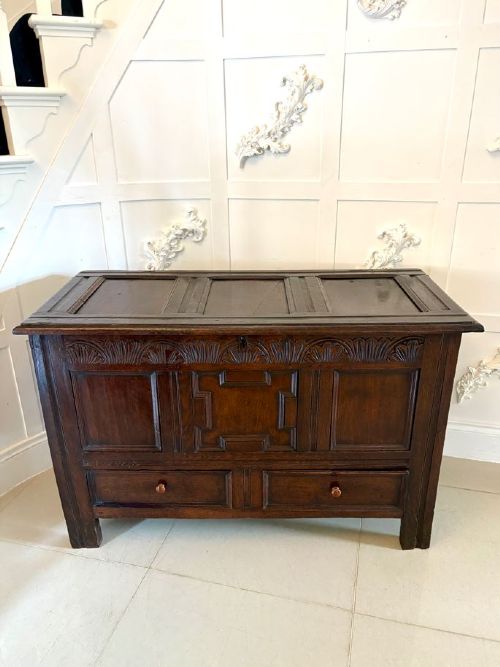
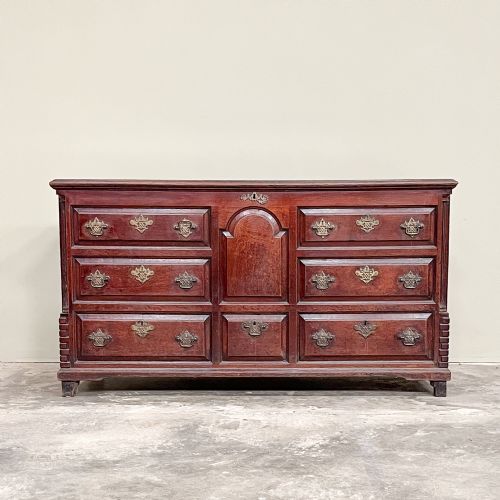
When you search for a carved wood dower chest, you encounter substantial timber receptacles designed for household storage, most frequently appearing as oak mule chests, coffers, and blanket chests from the seventeenth and eighteenth centuries.
The pieces on this page span several distinct eras, ranging from authentic seventeenth-century English coffers with geometric moulding to eighteenth-century Georgian mule chests and Welsh vernacular examples like the coffer bach.
You also find nineteenth-century interpretations built in the seventeenth-century style, demonstrating how later cabinetmakers continued to value traditional regional forms and heavy timber construction.
How they were made
Makers built these pieces primarily from solid oak, utilising its dense grain and durability to create robust bodies that could withstand generations of domestic use.
Construction relied heavily on traditional joinery techniques, complemented by surface carving and geometric moulding carved directly into the timber.
Blacksmiths provided essential functional hardware, forging iron and brass hinges, latches, and sometimes carrying handles that secured the heavy lids and reinforced the corners.
Early mule chests effectively bridged two furniture epochs by sneaking a drawer underneath, proving that even ancestors wanted easier access to their socks.
What varies in quality
The distinction between standard examples and finer pieces lies in the depth, crispness, and artistic ambition of the carved decoration on the front panels.
Proportion and timber selection also divide the range, with superior pieces displaying well-figured oak boards, harmonious dimensions, and well-integrated drawer arrangements beneath the main storage compartment as seen on mule chests.
The Carved Wood Dower Chest Glossary
- Coffer
- A heavy wooden chest traditionally used for storing valuables or documents. These pieces often feature hinged lids and robust construction.
- Mule chest
- A storage chest that includes one or more drawers at the base beneath the main compartment. This form bridges the gap between the simple blanket chest and the modern chest of drawers.
- Coffer bach
- A small Welsh vernacular chest, translated literally as little coffer. These miniature versions served specific domestic storage roles.
- Geometric moulding
- Raised wooden profiling applied in repetitive geometric patterns to the panels or rails. This decorative technique is particularly characteristic of seventeenth-century English joinery.
- Kist
- A regional term, often Scottish or northern British, used to describe a sturdy wooden chest or trunk. It denotes utility and traditional storage.
Carved Wood Dower Chest: Frequently Asked Questions
What is a carved wood dower chest used for?
These chests served primarily to store household textiles, blankets, and a bride's accumulation of linens for her marriage. Today they function practically as blanket boxes or coffee tables while providing deep concealed storage.
Their robust flat lids make them versatile furniture pieces that anchor a room, whether placed at the foot of a bed or beneath a window.
How do I tell seventeenth-century chests from eighteenth-century ones?
Seventeenth-century examples often display stricter architectural framing, panel work, and geometric mouldings directly on the timber. Eighteenth-century pieces frequently introduce lower drawers, as seen in mule chests, reflecting evolving storage needs.
Examining the underlying construction methods and the style of the surface carving helps clarify the period of origin.
What is the difference between a coffer and a mule chest?
A coffer consists of a simple chest with a hinged lid opening to a single deep storage compartment. A mule chest adds one or more pull-out drawers beneath the main box.
This addition of base drawers marks a significant development in furniture design, combining chest storage with drawer accessibility.
How do I care for antique oak furniture?
Solid oak benefits from stable indoor humidity levels away from direct heat sources and strong sunlight, which can dry out the timber. Regular dusting with a dry cloth keeps the surface clean.
Applying occasional traditional wax feeds the wood and maintains its natural lustre without sealing the grain.