

Carved Wood China Cabinet
A carved wood china cabinet organises porcelain behind glass using mahogany, oak, walnut and rosewood.
Carved Wood China Cabinet
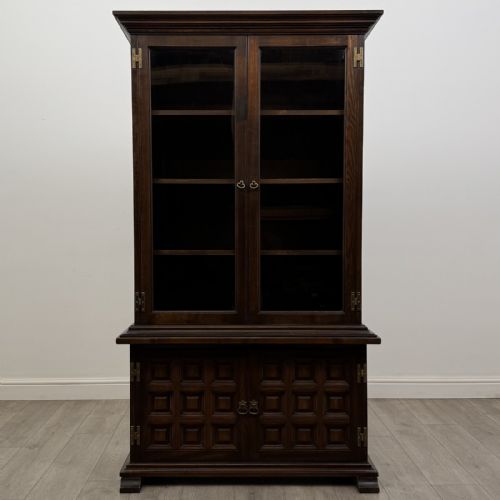
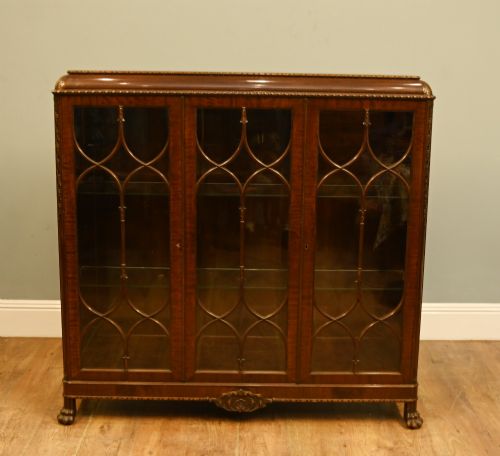
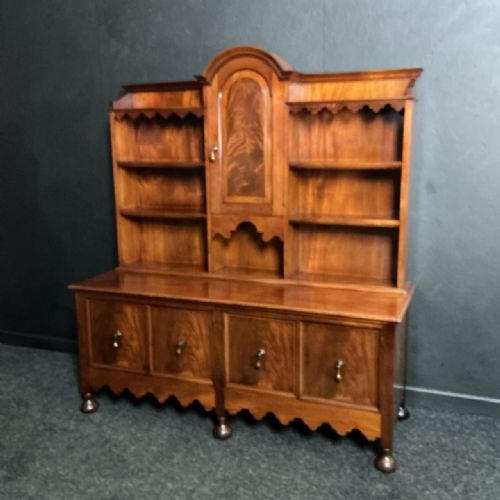
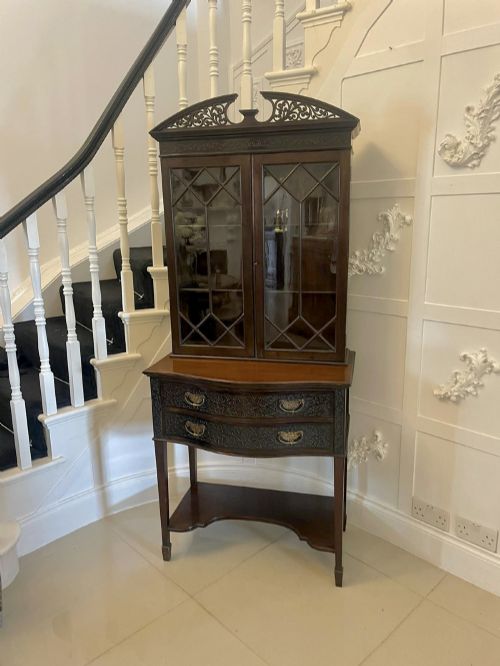
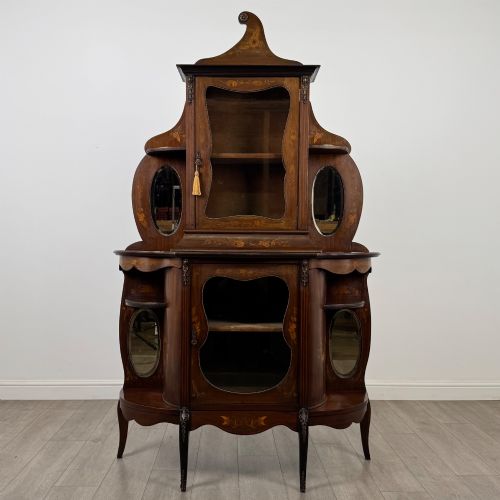
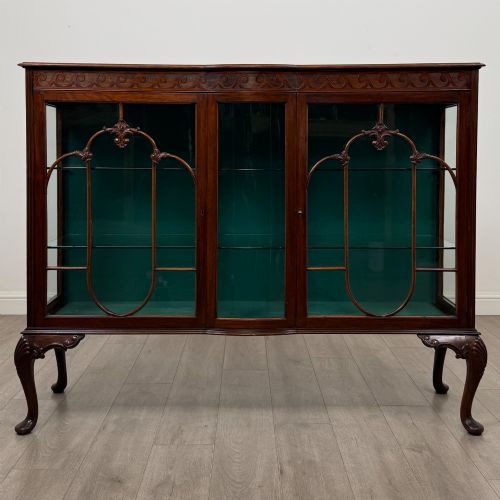
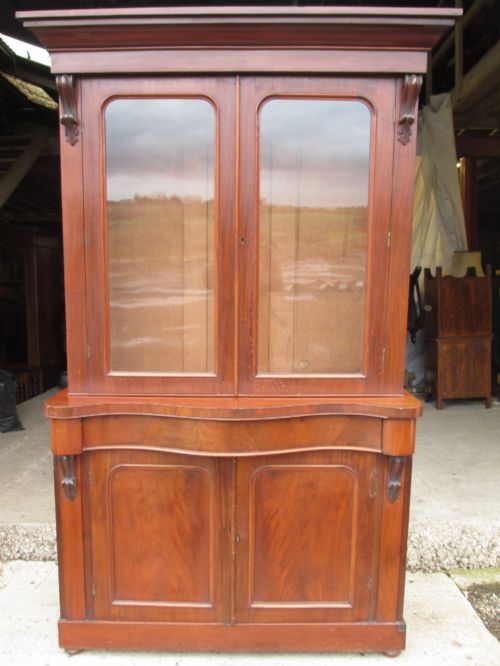
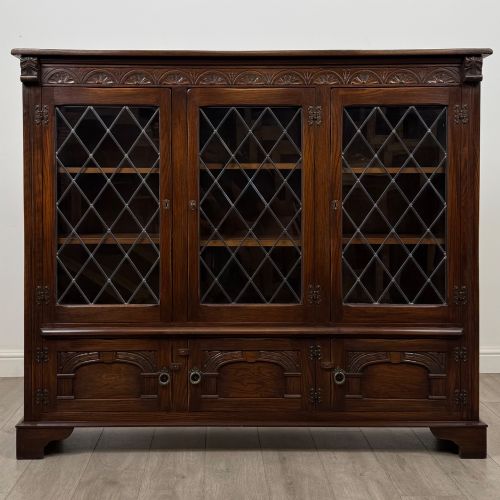
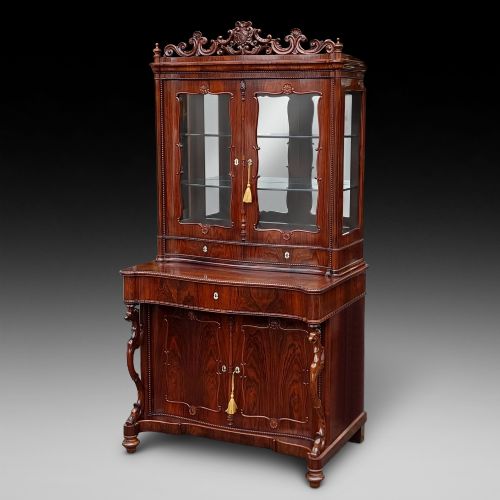
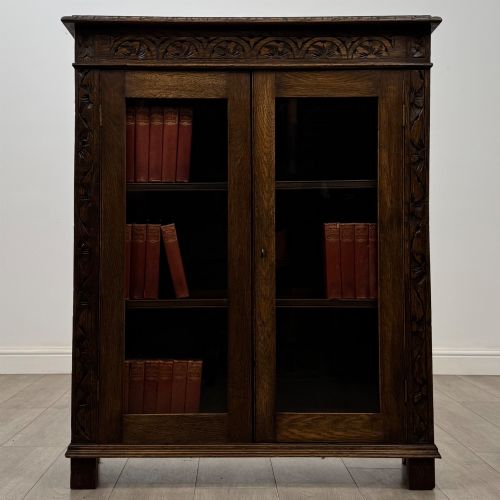
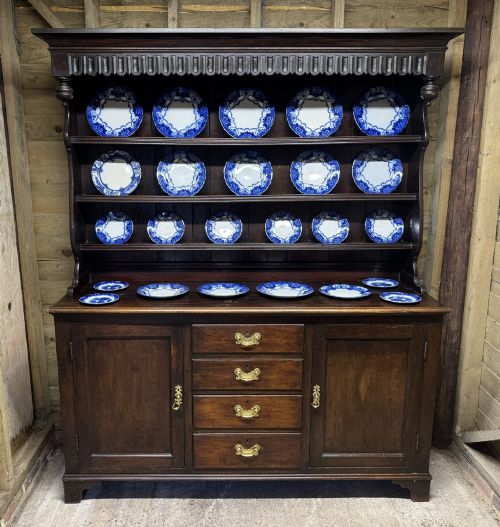
A carved wood china cabinet serves to display porcelain and silver behind glazed doors within a room. When you examine this selection, you encounter forms ranging from tall bookcases and corner cupboards to vitrines and two-piece dressers.
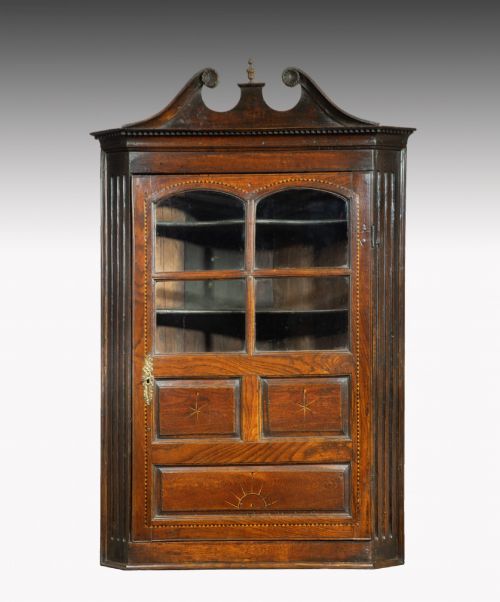
The pieces emerge from several periods, predominantly the nineteenth century, the Edwardian era, and the eighteenth century. Mahogany and oak dominate the forms, frequently styled in Chippendale Revival, Victorian, and Edwardian manners.
How they were made
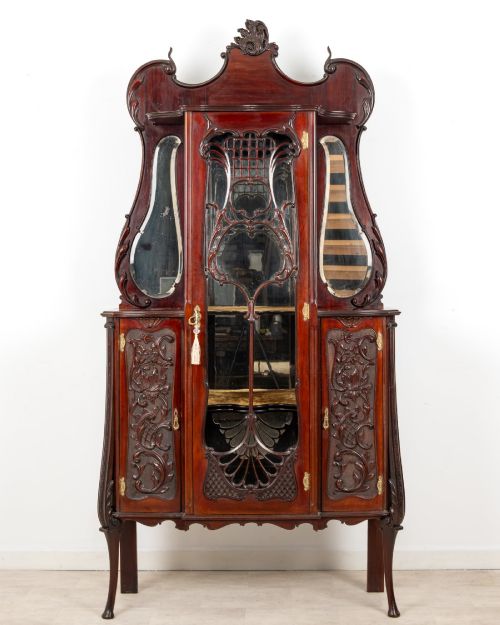
Cabinet makers utilised dense hardwoods including mahogany, oak, walnut and rosewood to construct the structural frames and shelving. Wood carving techniques created decorative relief work on cornices, friezes and cupboard bases.
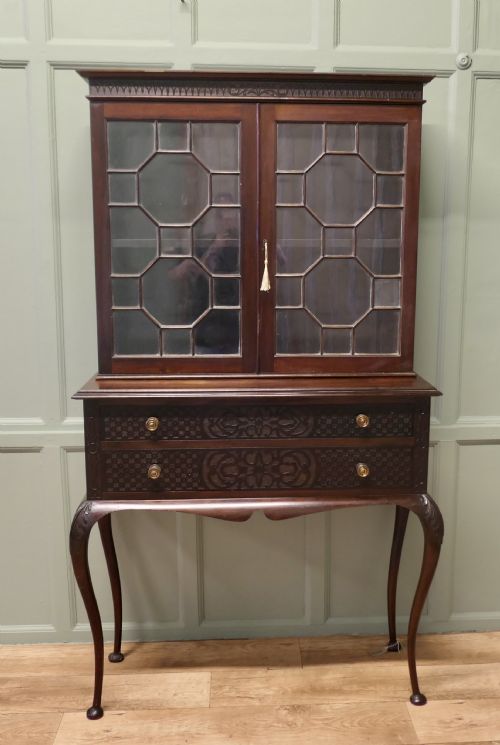
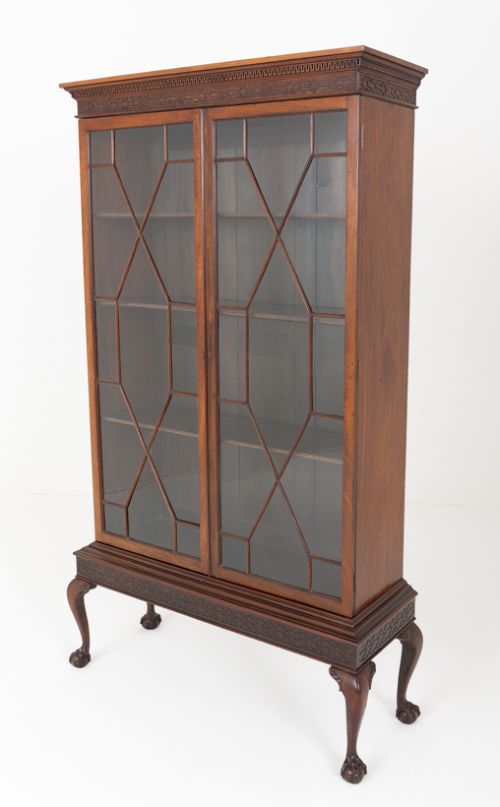
Glazing bars divided the glass panels into geometric or astragal patterns, while brass hardware secured doors and drawers. Fabric linings occasionally backed the interior display spaces behind the glass.
Several cabinets include astragal glazed doors designed specifically to let curious eyes inspect the porcelain within.
What varies in quality
The refinement of the timber carving sets examples apart, distinguishing crisp, deep relief work from softer, shallower execution. Cabinet proportions and the integration of glazed panels demonstrate the maker's competence.
Hardware selection and internal timber choice reveal construction standards, separating standard utility pieces from finely finished cabinetwork.
James Winter & Sons·Waring & Gillow·Wylie and Lochhead Ltd
The Carved Wood China Cabinet Glossary
- Astragal
- Glazing bars that hold small panes of glass within a sash. They form a lattice framework across the cabinet door.
- Vitrine
- A glass-fronted display cabinet intended for showing porcelain and objects of curiosity. The sides are frequently glazed as well as the front.
- Dresser
- A piece of furniture combining shelving or display space above with cupboards or drawers below. Welsh examples typically utilise local oak.
- Biedermeier
- A Central European style from the first half of the nineteenth century prioritising clean lines and polished veneers such as rosewood without excessive ornamentation.
Carved Wood China Cabinet: Frequently Asked Questions
What is a carved wood china cabinet used for?
These pieces function as storage and display furniture for porcelain, glassware and decorative objects. The glazed doors keep dust away while allowing visibility.
They stand in dining rooms, drawing rooms and libraries to hold table services and collections.
How do I identify a Victorian display cabinet?
Victorian pieces frequently employ solid mahogany or walnut with dark finishes and substantial proportions. Carved decoration appears on the cornices and lower cupboard doors.
Look for construction details like hand-cut dovetails in the drawers and heavy brass hinges.
What is the difference between an Edwardian and a Georgian cabinet?
Edwardian cabinets date from around 1900 to 1910 and often reproduce earlier styles like Chippendale Revival using light mahogany. Georgian pieces from the eighteenth century feature proportion and construction specific to that period.
Georgian timber shows deeper oxidation and patination from age compared to Edwardian revivals.
How should I care for a mahogany display cabinet?
Keep the timber away from direct sunlight and radiators to prevent the wood and veneer from drying out and splitting. Dust the carved sections regularly with a dry soft cloth.
Apply traditional wax polish sparingly when the wood appears dry to maintain the surface finish.