


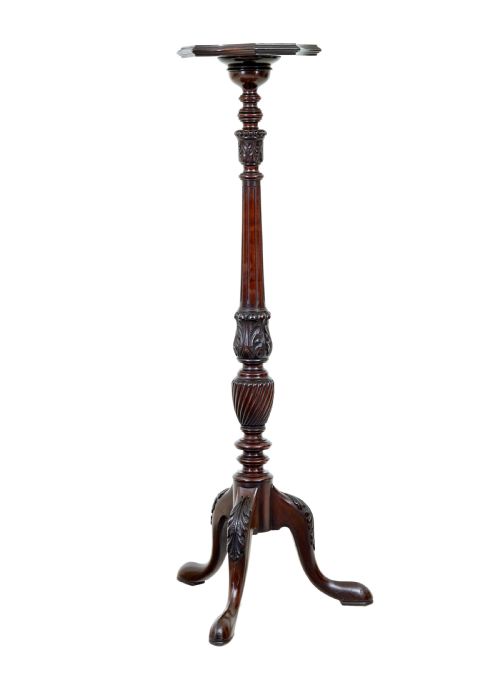

Carved Wood Candle Base
These carved wood candle base pieces bring tactile warmth to a room, turning utilitarian lighting supports into sculptural objects.
Carved Wood Candle Base
A carved wood candle base serves as a sturdy support for candles, often taking the form of a torchiere, altar candlestick, or pricket stick. These items range from small tabletop candle holders to tall floor-standing columns designed to elevate a single light source.
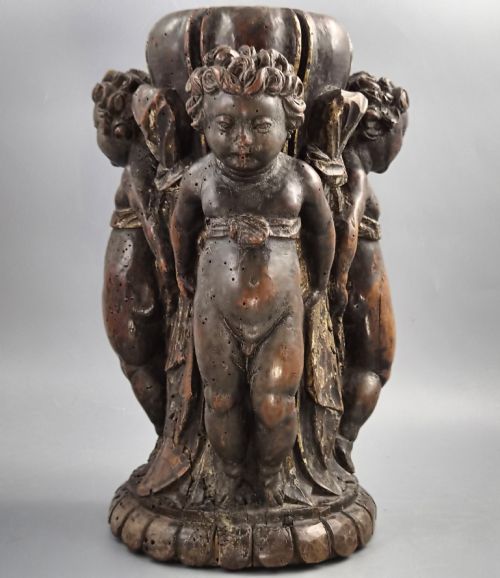
The selections available here span multiple centuries and regional workshops, featuring forms from 17th-century Italian Baroque figures to 19th-century mahogany torchere stands. Buyers encounter everything from French decorative candle holders to Chinese dragon torchieres and English Chippendale stands.
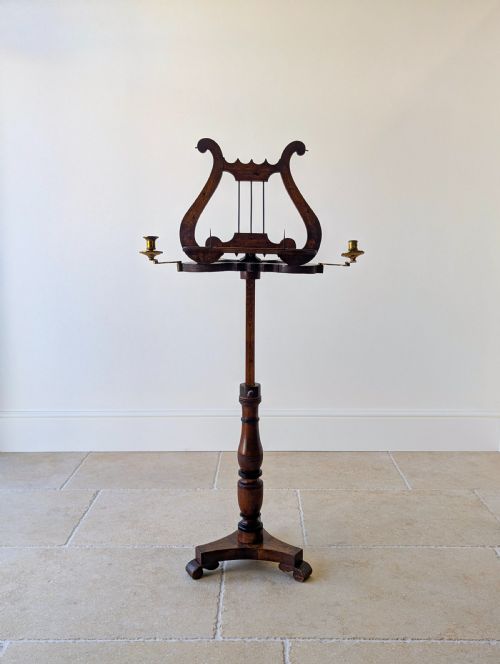
Beyond direct lighting supports, the broader category includes standard lamps, music stands, and plant pedestals that share the turned or carved columnar architecture of traditional candle bases. These secondary forms utilise the same foundational timber structures adapted for new household functions over time.
How they were made
Carpenters and turners constructed these pieces primarily from dense timbers such as mahogany, rosewood, oak, and walnut, employing the lathe for cylindrical shafts and hand-chisseling for intricate motifs. The wood was often left with a natural polish or prepared as carved wood ready to receive decorative treatments.
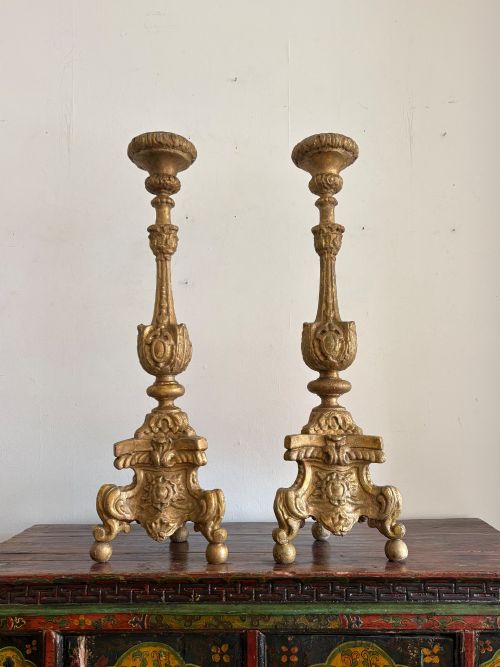
Surface ornamentation relied on applied gesso, gold leaf, or paint to enrich the carved details, particularly on Italian Baroque altar pieces and French decorative examples. These layered finishes added visual depth and protected the underlying timber from environmental wear.
Listings feature woods such as mahogany, rosewood, and oak alongside decorated surfaces of gesso, gold leaf, and paint.
What varies in quality
The distinction between ordinary utility items and exceptional works lies in the depth and fluidity of the hand-carving, especially on figurative elements like putti or drapery. Master carvers achieved a naturalistic tension in the wood that lesser workshops missed.
The integrity of the timber joints and the stability of the base dictate structural endurance, with heavier woods like mahogany providing a superior, balanced foundation for tall columns. Surface finishes that retain their original gilding or patina without heavy modern intervention hold greater visual harmony.
The Carved Wood Candle Base Glossary
- Torchiere
- A tall stand or tall candlestick designed to hold a light source high above the floor. These pieces often feature elaborate column turning or figural carvings.
- Pricket
- A sharp metal spike atop a candlestick or altar stick designed to secure a large candle in place. This form is common in ecclesiastical and continental lighting.
- Giltwood
- Timber that has been coated with a thin layer of gold leaf over a prepared gesso ground. This technique creates a luminous, reflective surface popular in Baroque design.
- Socle
- A short plain plinth or pedestal supporting a statue, figure, or candlestick base. It provides a stable footing and lifts the primary design off the ground.
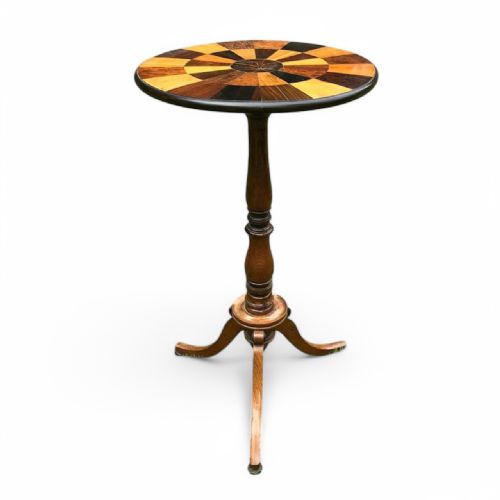
- Tripod table
- A small stand or table supported by three legs radiating from a central column. This construction prevents wobbling on uneven historical floors.
Carved Wood Candle Base: Frequently Asked Questions
How do I date a wooden candle base?
Dating relies on identifying the prevailing timber species, tool marks left by the maker, and stylistic cues from periods like the Regency or Italian Baroque. Secondary woods and construction methods often reveal the true age of the piece.
Compare the turned profiles and decorative motifs against documented examples from similar regional workshops to narrow down the decade or century of production.
What is the difference between a torchiere and a candlestick?
A torchiere is typically a much taller, floor-standing standard meant to illuminate a larger area, whereas a candlestick is shorter and designed for tabletops or altars.
Torchieres often feature heavy column designs or figural supports, while standard candlesticks focus on compact portability and balanced proportions.
Can I convert these bases for modern electricity?
Many historical tall bases are adapted into standard lamps by running a cord discreetly through the central turned column.
Professional conversion preserves the original timber structure and surface patina without permanently altering the core integrity of the antique.
How do I care for antique carved wood?
Maintain the timber by keeping pieces away from direct heat sources and sudden humidity changes that can cause the wood to split. Dust gently with a dry, soft cloth rather than using harsh chemical polishes.
Applying a microcrystalline wax occasionally helps protect old painted, gilded, or polished surfaces from environmental dryness.