

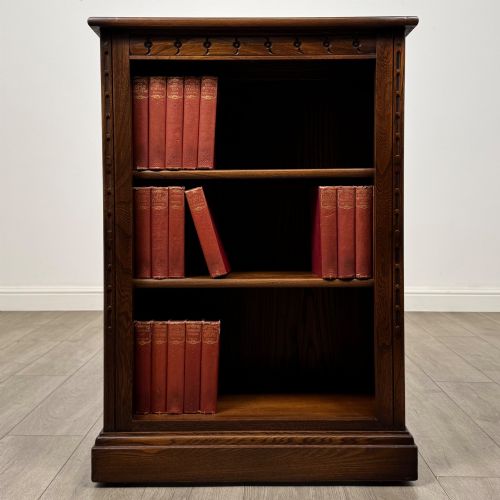
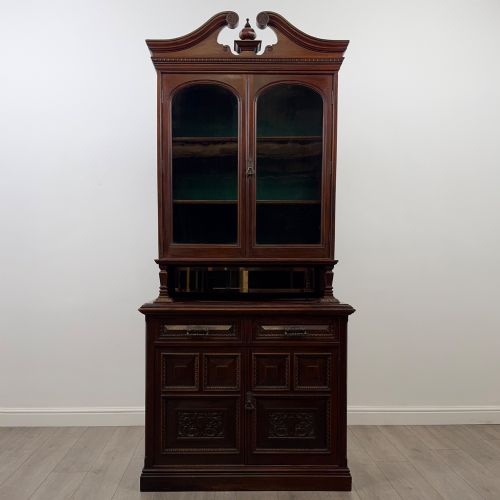
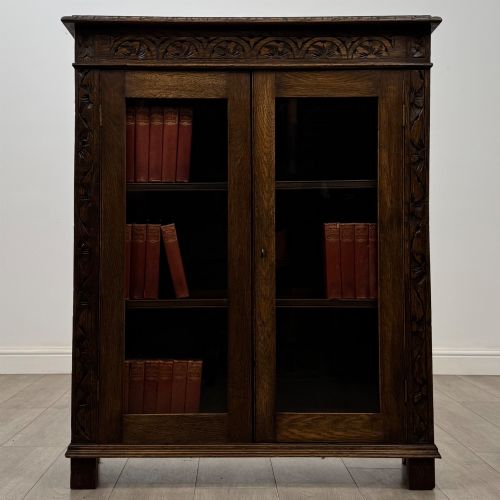
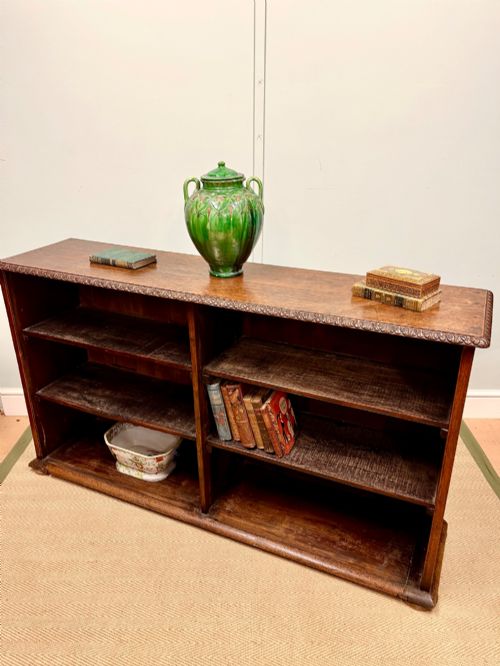



Carved Wood Book Cabinet
These carved wood book cabinet examples offer solid housing for libraries, combining robust timber construction with decorative detail across Victorian, Regency and Edwardian eras.
Carved Wood Book Cabinet
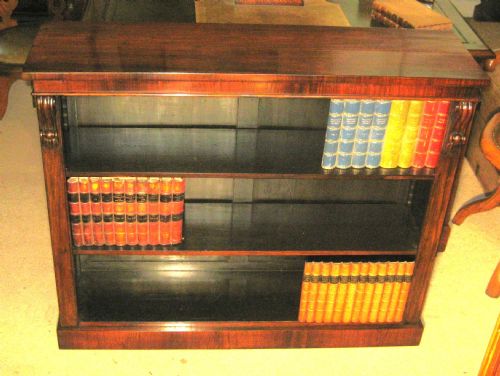
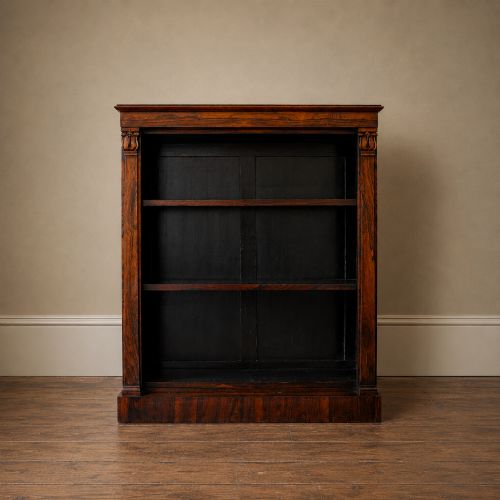
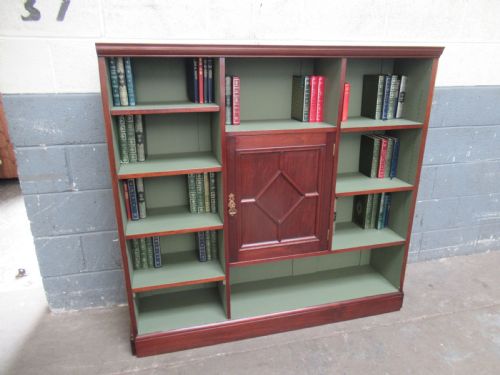
A carved wood book cabinet serves to store volumes and display objects, drawing on forms produced across the nineteenth and early twentieth centuries. Pieces range from open shelf formats to glazed double doors and corner units.
The selection here draws heavily upon Victorian and Edwardian examples, alongside Regency designs and revival styles. Timber choices span mahogany, oak, rosewood and walnut, often finished with adjustable shelving.
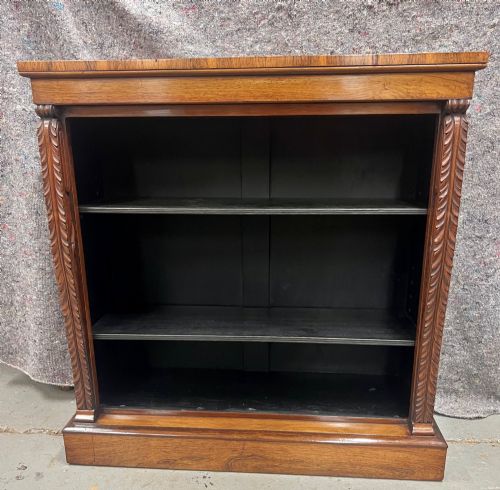
Buyers encounter both tall library pieces and dwarf bookcases suited to smaller rooms. Many incorporate carved elements such as Green Man motifs, Gothic tracery or linear mouldings.
Materials and construction methods
Cabinet makers utilised dense hardwoods like mahogany, oak, rosewood and walnut, sometimes applying flame mahogany or burr walnut veneers to primary surfaces. Secondary timbers such as pine or beech appear in internal carcases and shelving backs.
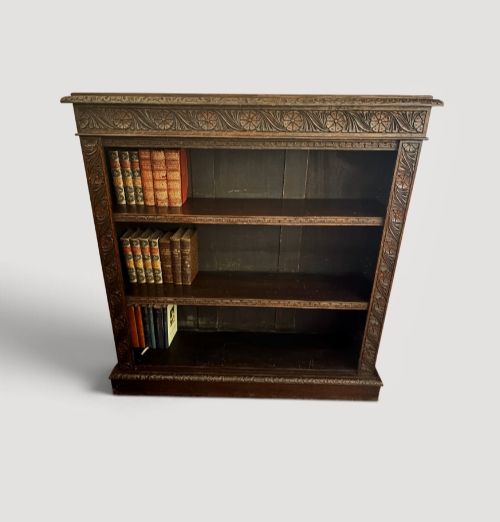
Carving was executed by hand directly into the solid timber or onto applied mouldings, ranging from geometric Jacobean revival patterns to deep foliage and figural work. Glazed sections employed brass hardware and fitted glass panes within timber framing.
One robust Victorian oak cabinet proudly bears the carved likeness of the Green Man to supervise your reading habits.
Distinguishing grades of craftsmanship
Quality rests on the selection of timber figures, such as highly figured rosewood, burr walnut or flame mahogany, paired with substantial solid secondary woods. Finer pieces demonstrate crisp, deep hand carving rather than shallow machine profiling.
Construction details dictate longevity, including closely fitted joints, sound backboards and smoothly functioning adjustable shelf mechanisms. Maker attribution also elevates certain pieces, distinguishing standard workshop production from notable firms.
Holland & Sons·Shapland & Petter·Wylie and Lochhead Ltd
The Carved Wood Book Cabinet Glossary
- Breakfront
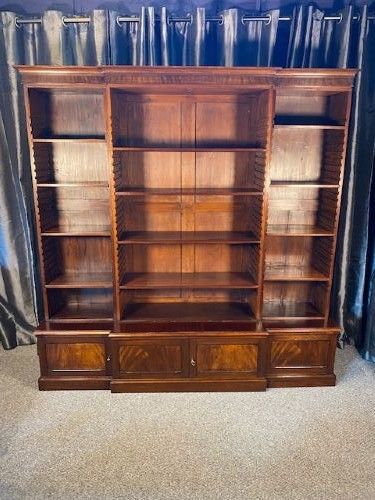
- A cabinet design where the central section projects forward from the flanking wings. This architectural arrangement adds depth and visual rhythm to larger library pieces.
- Dwarf bookcase
- A low shelving unit designed to sit beneath window height or display decorative items on top. These pieces were popular in nineteenth-century drawing rooms and libraries.
- Glazed bookcase
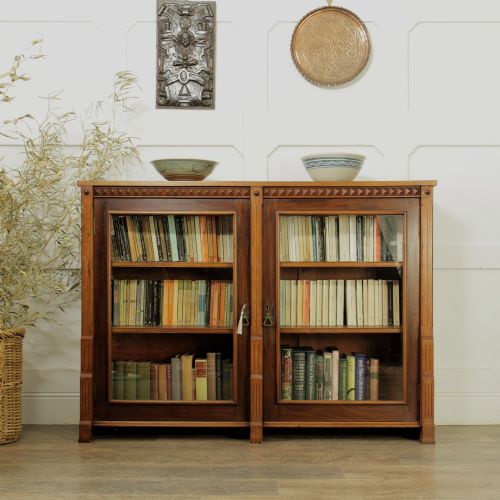
- A cabinet featuring glass-panelled doors to protect volumes from dust while maintaining visibility. Such doors often utilise timber glazing bars arranged in geometric or Gothic patterns.
- Adjustable shelves
- Shelving supported by moveable brackets or rack-and-pinion strips rather than fixed partitions. This system allowed owners to accommodate books of varying heights.
- Pollard oak
- Timber taken from trees that have been pollarded, producing dense, gnarled growth rings with distinct patterning. Cabinet makers prized this wood for decorative panels.
Carved Wood Book Cabinet: Frequently Asked Questions
What periods do these cabinets cover?
The pieces span the nineteenth and early twentieth centuries, encompassing Regency, Victorian and Edwardian eras. Revival styles drawing on Tudor, Elizabethan and Gothic motifs also appear.
Dates range from the early eighteen-hundreds through to the nineteen-thirties, reflecting shifting domestic tastes and manufacturing techniques.
How do I choose between open and glazed shelves?
Open shelves provide immediate access to working libraries and everyday volumes. They suit casual spaces but leave books exposed to ambient dust.
Glazed cabinets protect delicate bindings and antiquarian volumes behind glass doors. They work well in formal reception rooms and display settings.
Are the shelves usually adjustable?
Many examples feature adjustable shelving systems utilising wooden ratchets, brass studs or metal tracks. This allows the internal layout to change according to book sizes.
Some earlier or simpler pieces retain fixed shelves secured into the carcase sides during original construction.
What timbers were commonly used?
Mahogany and oak form the backbone of these listings, appearing across both simple and heavily carved designs. Rosewood and walnut are also prevalent, often enhanced with figured veneers.
Secondary woods like pine and beech support internal structures, while rarer exotic timbers such as padauk and goncalo alves occasionally emerge.