
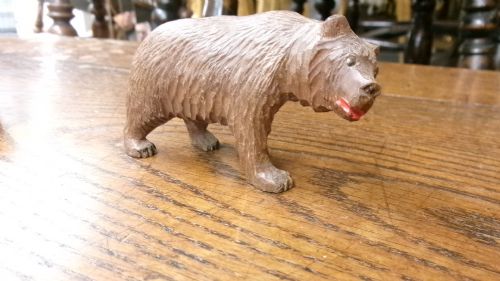
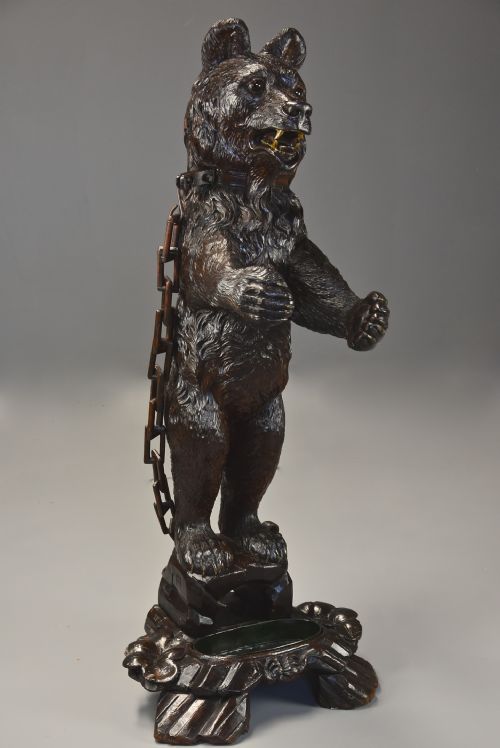
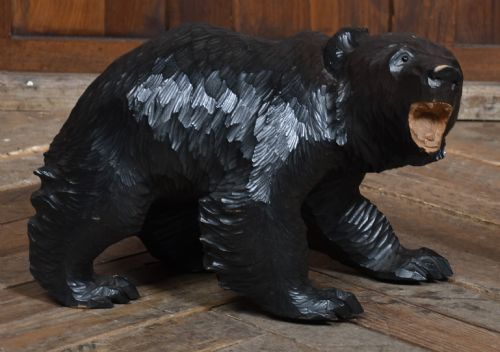


Carved Wood Bear Sculpture
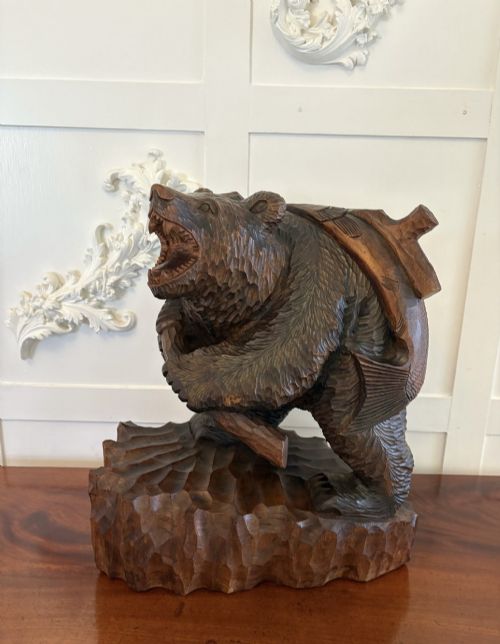
A carved wood bear sculpture brings rustic charm and exceptional animal form into a room, capturing the lively spirit of traditional carving.
Carved Wood Bear Sculpture
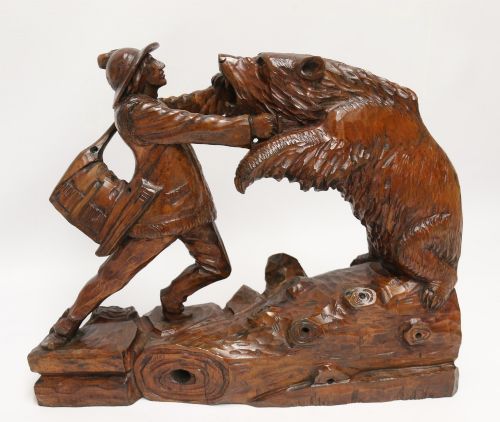
When you search for a carved wood bear sculpture, you enter a diverse world of animal figures and functional items created across the nineteenth and early twentieth centuries. These pieces span compact tabletop figurines, inkstands, tobacco boxes, and imposing hall stands or umbrella holders.
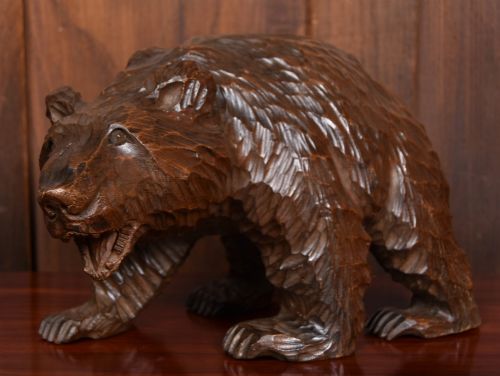
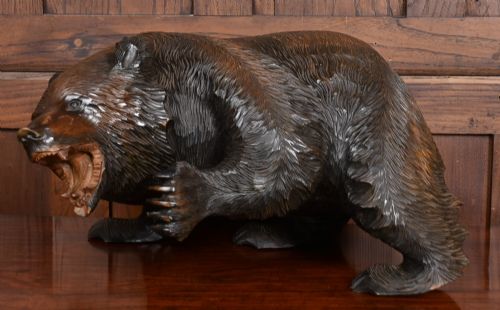
The objects frequently emerge from the Black Forest region or Japanese folk art traditions, reflecting distinct regional carving schools. You will encounter bears carrying fish, standing in pairs, or serving practical roles in the hallway.
How they were made
Carvers typically utilised linden wood, walnut, or general hardwood, selecting timbers that responded well to deep chisel work and fine detail. Linden wood provided a smooth grain suitable for intricate facial expressions and textured fur.
Artisans applied stains and hand finishes to the wood surfaces, sometimes incorporating stud eyes to enhance the realistic or whimsical appearance of the animal. Figures were carved either as freestanding sculptures or integrated into larger structural forms like hall stands.
Periods represented span the Georgian era, Victorian period, Edwardian years, and the early twentieth century.
What varies in quality
Scale and complexity also define the range, moving from simple miniature figurines to massive hall stands featuring multiple figures and integrated furniture elements. The integration of functional utility, such as a humidor or inkstand, into the sculptural form requires higher craftsmanship.
The Carved Wood Bear Sculpture Glossary
- Black Forest
- A regional style of wood carving originating in Central Europe during the nineteenth century, known for realistic animal subjects and rustic furniture. These pieces often depict bears engaged in human activities or acting as umbrella stands.
- Kibori Kuma
- A traditional style of Japanese wood-carved bear originating from Hokkaido. These sculptures are typically hand-carved with textured fur markings.
- Linden wood
- A pale, fine-grained timber frequently chosen by carvers for its softness and lack of prominent grain. It allowed artisans to execute deep undercutting and minute facial details.
- Hall stand
- A large piece of hall furniture combining coat hooks, a mirror, and a base for walking sticks. Many examples incorporate carved bears as structural supports or decorative figures.
- Humidor
- A specialised box designed to keep cigars moist, occasionally fashioned into the shape of a seated brown bear with a hinged lid.
Carved Wood Bear Sculpture: Frequently Asked Questions
What styles of carved wood bear sculpture exist?
The listings show distinct regional traditions, primarily featuring European Black Forest works alongside Japanese folk art examples known as Kibori Kuma. These range from realistic animal figures to functional objects like umbrella stands and inkstands.
European pieces often date from the nineteenth century and include linden wood or walnut creations, while Japanese items emphasise traditional hand-carved textures.
How were these bear sculptures used originally?
Many figures served purely decorative purposes as tabletop sculptures and mantelpiece ornaments. Others integrated practical functions into the carving, acting as tobacco boxes, inkstands, or large hall stands for walking sticks.
Larger furniture pieces doubled as functional hallway furniture while displaying the sculptural skill of the maker.
How can I tell the period of a carved bear?
Dating relies on stylistic traits, material choices, and the specific form of the object, spanning the Victorian, Edwardian, and Georgian eras. Nineteenth-century pieces often display deeper undercutting and distinct regional carving techniques.
Exhibition quality works and marked regional traditions provide further clues regarding the era of production.
Where should I place a bear sculpture at home?
Smaller figurines and miniature bears fit well on desks, bookshelves, or mantelpieces as decorative accents. Larger pieces, such as stick stands or hall stands, suit entrance hallways where they serve both decorative and practical roles.
Positioning them away from direct heat sources helps preserve the condition of the carved wood.