
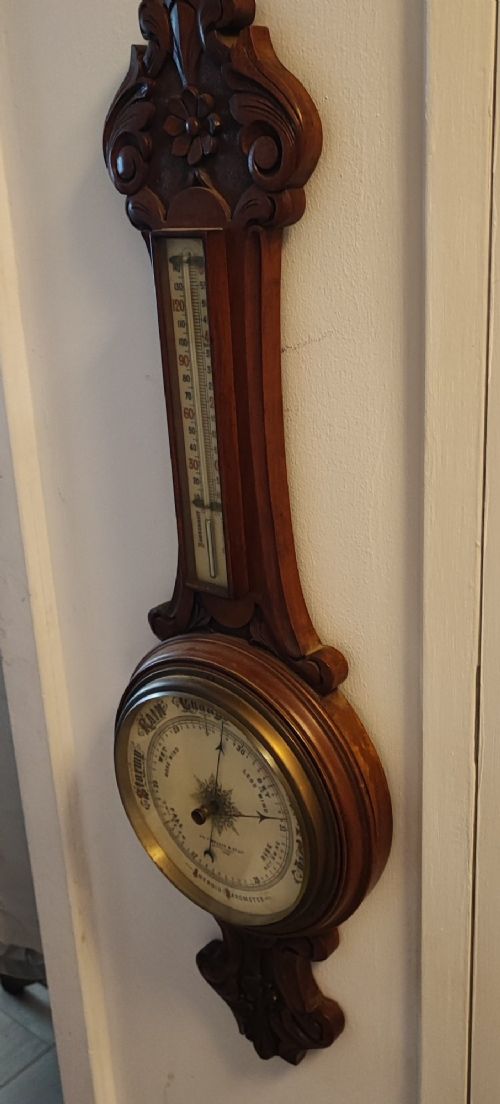
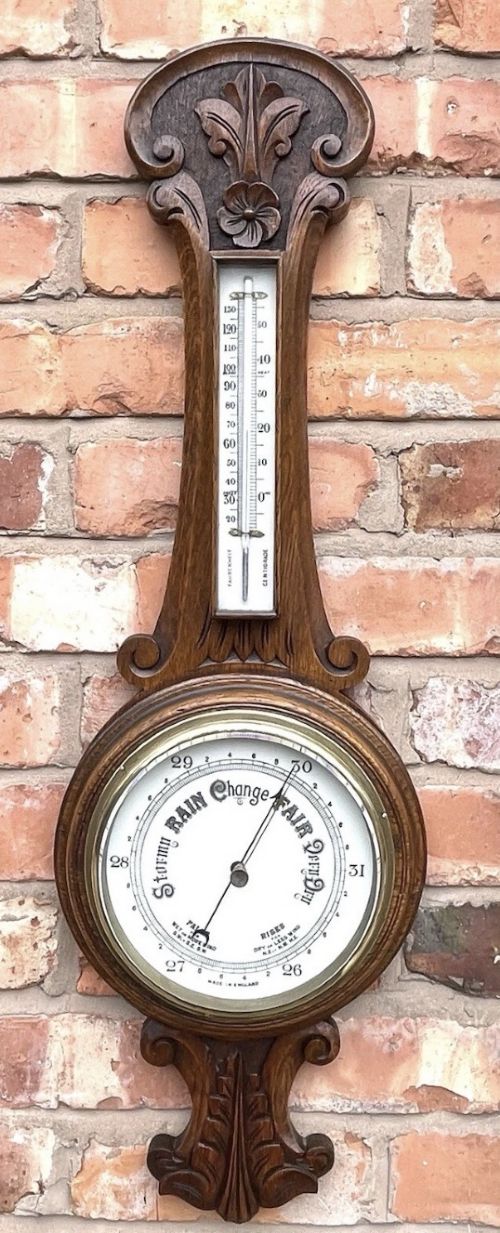


Carved Wood Banjo Barometer
These carved wood banjo barometers combine practical weather prediction with decorative woodwork, offering a classic wall-hanging focal point for period interiors.
Carved Wood Banjo Barometer
A carved wood banjo barometer is a domestic wall-hanging instrument shaped somewhat like a banjo, housing a weather dial and often a thermometer or clock alongside the main pressure gauge. You are most likely to meet Victorian and Edwardian examples on this page, originating predominantly from the nineteenth century around 1880 to 1900.
The body of a carved wood banjo barometer takes various architectural and decorative forms, featuring wall-hanging cases built from solid timbers. Oak and walnut dominate the selection, alongside mahogany, burr walnut, beechwood, and examples adorned with marquetry inlay or ceramic components.
How they were made
Cabinet makers utilised dense hardwoods such as oak, walnut, and mahogany, carving the elongated wooden frames by hand or shaping them with period machinery. These sturdy timber cases protect the delicate glass dials and internal measurement mechanisms mounted within.
Makers integrated brass bezels and fittings alongside glass faces to secure the internal dials and thermometer tubes. Selected pieces incorporate intricate marquetry inlay directly into the wooden body to elevate the visual detail of the case.
Some models managed to tell you if a storm was coming whilst stubbornly needing a good dust.
What varies in quality
The depth and execution of the carved woodwork separate standard examples from superior items, with crisp botanical or geometric relief work showing greater artisan skill. Finer pieces often employ desirable cabinet timbers like burr walnut or incorporate additional functional elements such as integrated clock faces and thermometers.
Attribution to documented makers or retailers adds distinction to an instrument, distinguishing standard domestic pieces from workshop-branded items. The choice of secondary materials, including quality brass bezels and well-fitted ceramic details, influences the overall finish of the barometer.
W Watson & Sons·Maple & Co·Negretti & Zambra
The Carved Wood Banjo Barometer Glossary
- Aneroid barometer
- An instrument that measures atmospheric pressure without using liquid, relying instead on a flexible metal box that expands or contracts.
- Banjo barometer
- A wall barometer housed in a distinctive teardrop or banjo-shaped wooden case with an elongated stem and a wider circular base.
- Marquetry
- Decorative woodwork in which pieces of thin veneer are fitted together to form geometric or pictorial patterns on the case surface.
- Bezel
- The metal ring, usually made of brass, that holds the glass face securely in front of the barometer dial.
- Thermometer
- A secondary temperature-measuring scale mounted alongside the main barometer dial within the wooden banjo frame.
Carved Wood Banjo Barometer: Frequently Asked Questions
How do aneroid barometers work?
Aneroid barometers measure atmospheric pressure using a small, flexible sealed metal capsule called an aneroid cell. As weather pressure rises and falls, the capsule flexes inward or outward.
Mechanical linkages connect this movement directly to the pointer on the dial, translating pressure changes into a visible reading for the room.
Where were they hung?
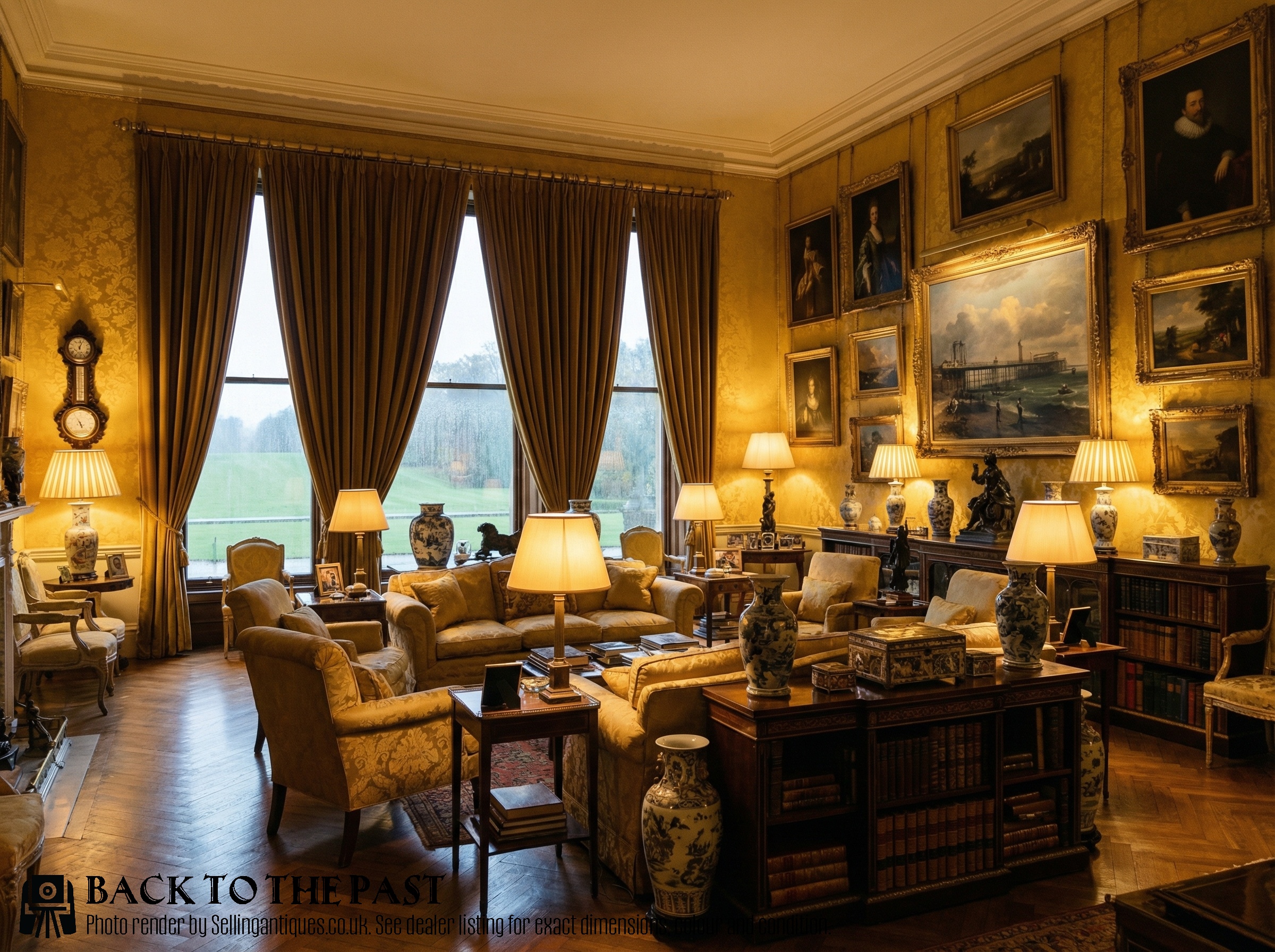
These barometers were traditionally hung in prominent domestic spaces such as hallways, libraries, or drawing rooms where residents could check the weather before stepping outside.
Because they rely on ambient air pressure, they perform best in rooms with stable temperatures away from direct heat sources.
How do I date these barometers?
Dating relies heavily on the style of the wood carving, the timber used, and the typography on the dial face. Victorian and Edwardian examples often display distinct revival styles or specific maker signatures.
Examining the construction of the wooden case and the materials of the bezel also provides clear clues to the manufacturing decade.