




Antique Oak Thermometer
An antique oak thermometer measures atmospheric warmth housed in durable timber cases spanning the Victorian and Edwardian eras.
Antique Oak Thermometer
An antique oak thermometer is typically integrated into larger weather instruments or clock sets rather than standing alone. When searching for an antique oak thermometer, a buyer encounters wall-hanging banjos, ship barometers, and desk weather stations originating from the nineteenth and early twentieth centuries.
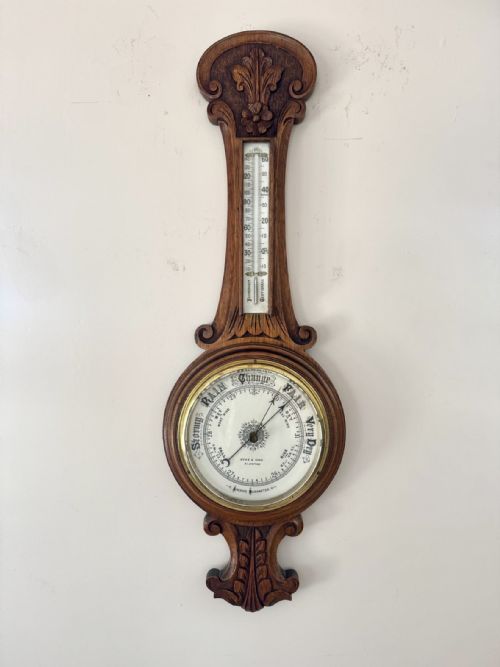
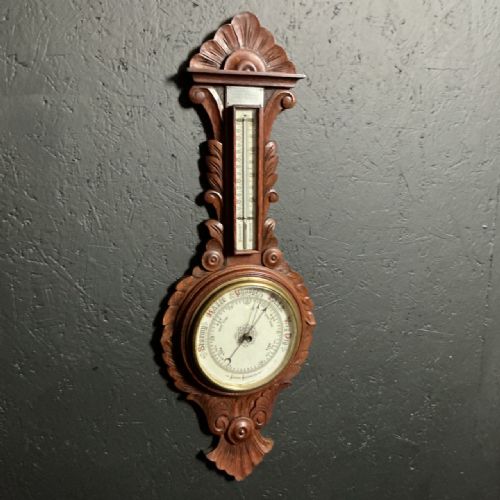
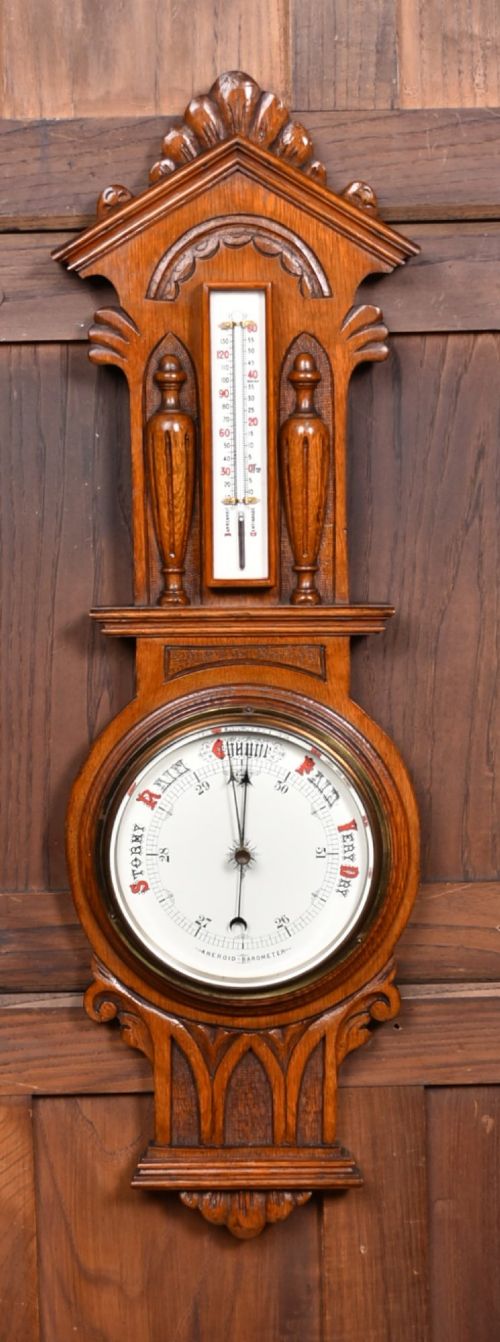
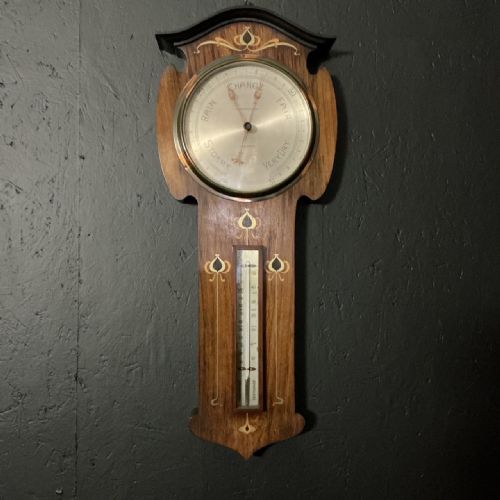
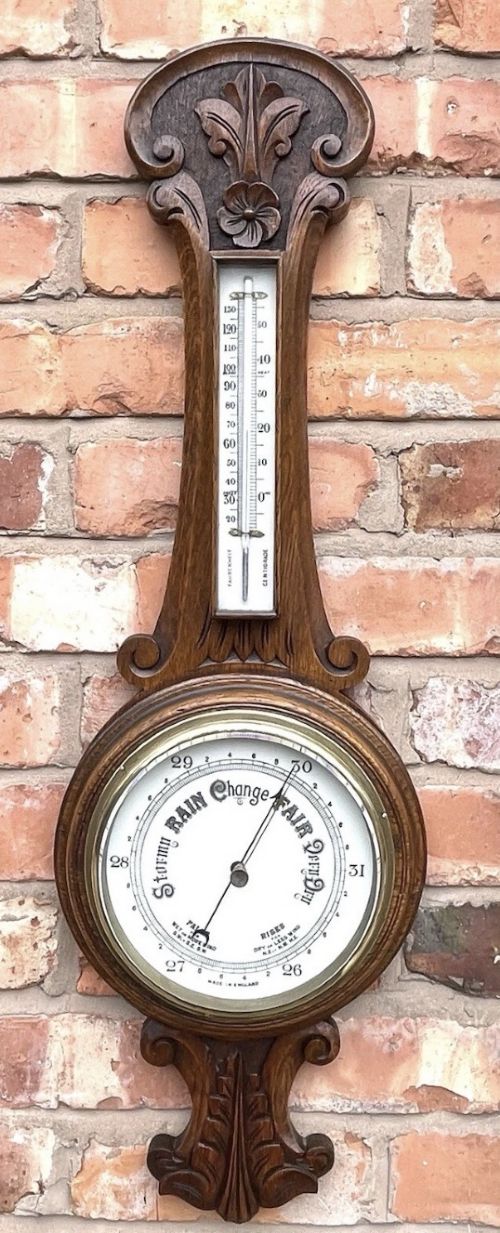
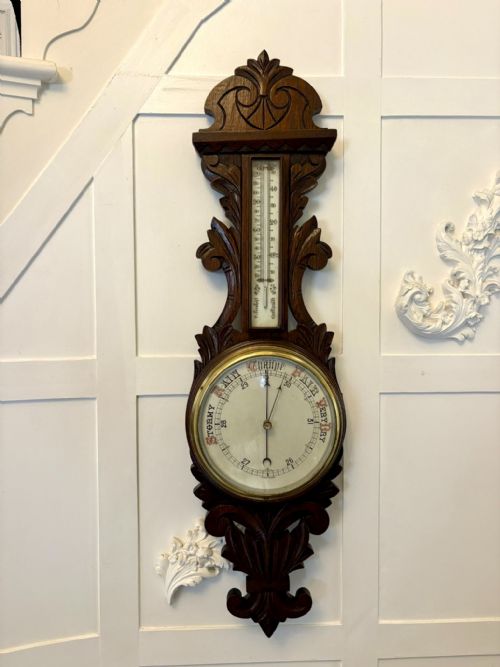
The most common versions on this page are carved oak banjo barometers and combination weather stations featuring mounted thermometer scales alongside dial faces. These pieces date predominantly from the Victorian and Edwardian periods, utilising solid or carved oak timbers in wall-mounted and desk formats.
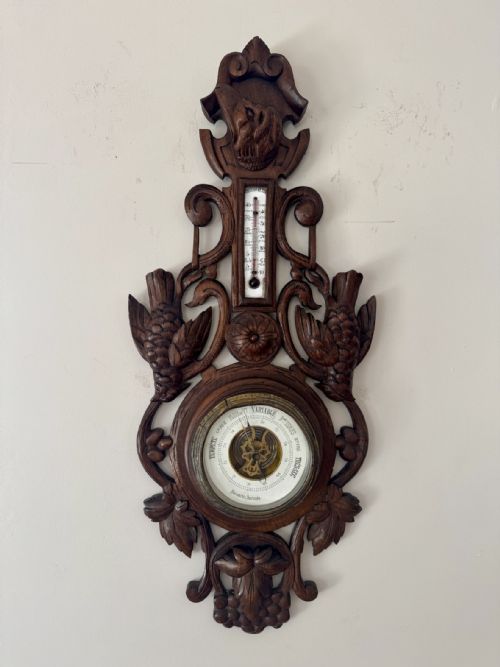
Many examples combine the thermometer with barometers, hygrometers, or clocks in architectural or Black Forest carved cases. The wood displays varied tones from polished grain to deeply carved relief work depicting birds, foliage, and scroll motifs.
How they were made
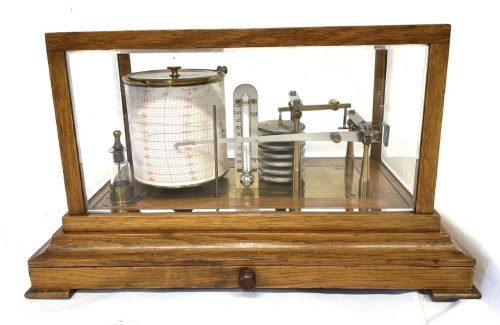
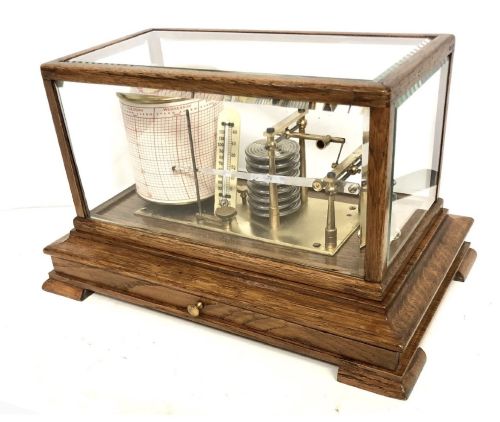
Cases utilise solid oak and carved wood substrates, often paired with bevelled glass to protect the delicate paper or porcelain indicator scales. Metal components such as brass bezels, steel mechanisms, and mercurial or aneroid barometer tubes provide the functional measurement elements.
Carving techniques range from geometric Edwardian mouldings to elaborate Victorian Black Forest foliage and avian reliefs cut directly into the timber. Dials and thermometer plates are constructed from printed ceramic, porcelain, or silvered brass, secured within the wooden housing by brass fittings.
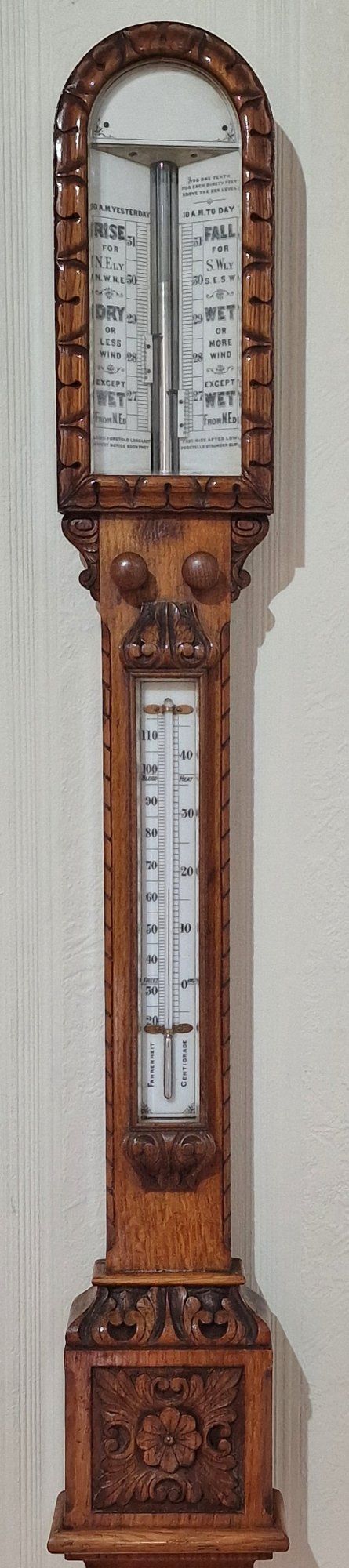
The archive records solid oak ship barometers and Admiral Fitzroy display cases alongside standard domestic wall barometers.
What varies in quality
Quality separates ordinary production pieces from exceptional works through the depth and crispness of the wood carving. Skilled makers imparted distinct relief work, whereas simpler items relied on plain turned bezels and flat timber surrounds.
The sophistication of the internal movement also defines the standard of the piece, with complex aneroid barographs or signed scientific instruments sitting above basic domestic gauges. Well-preserved ceramic scales and intact bevelled glass retain greater visual clarity than worn or replaced components.
Hyde & Sons Sleaford·Negretti & Zambra·W Watson & Sons·J Hughes London·Maple & Co·Jules Richard·Dobbie son and Hutton London·Carpenter and Westley London
The Antique Oak Thermometer Glossary
- Aneroid barometer
- An instrument that measures air pressure without liquid using a flexible metal box. Changes in pressure cause the box to expand or contract, moving a needle across a dial.
- Barograph
- A mechanical instrument that records barometric pressure continuously over a week onto a paper chart. These often incorporate a thermometer and are housed in oak cases with bevelled glass.
- Stick barometer
- A tall, narrow wall instrument containing a vertical glass tube filled with mercury to measure atmospheric pressure. Oak stick barometers often feature exposed cistern covers at the base.
- Banjo barometer
- A wall instrument shaped like a banjo featuring a circular dial at the base and a long trunk carrying a thermometer. Victorian examples frequently display carved oak scrollwork along the spine.
- Black Forest style
- A carving tradition originating in central Europe known for deeply undercut naturalistic motifs. Pieces in this style often depict carved birds, leaves, and woodland animals on oak cases.
Antique Oak Thermometer: Frequently Asked Questions
How do I read an antique thermometer?
Temperature is read by observing the fluid level or needle position against the calibrated scale mounted on the wood board. Most period scales show Fahrenheit graduations.
Ensure the instrument is hung away from direct heat sources to get an accurate reading of ambient room temperature.
Where should I hang an oak thermometer?
Hang the instrument on an interior wall away from direct sunlight and radiators to protect the oak case and wood joints. Stable indoor environments prevent the timber from warping and keep the glass secure.
Use appropriate wall fixings suited to the weight of the carved oak housing.
How do I clean the oak case?
Dust the carved wooden surfaces gently with a soft, dry cloth to remove surface particles. Avoid liquid cleaners that can penetrate unsealed wood or damage the dial face.
Periodically apply a neutral beeswax to nourish the polished oak grain without building up heavy residues.
Are these thermometers still accurate?
Many surviving instruments retain their functionality, though mercury or aneroid movements may require professional calibration. They serve as decorative historical objects as well as working weather devices.
Comparisons with modern digital gauges will reveal if the antique scale needs minor adjustments to the linkage.