

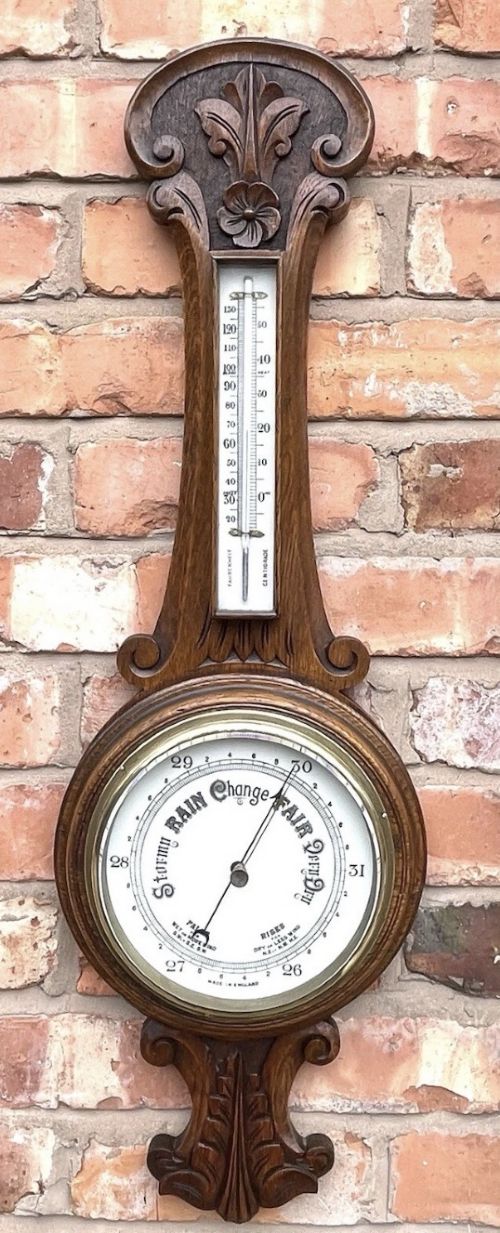


Vintage Banjo Barometer Clock
These vintage banjo barometer clock pieces combine timekeeping with barometric pressure measurement in a distinctive wall-mounted silhouette.
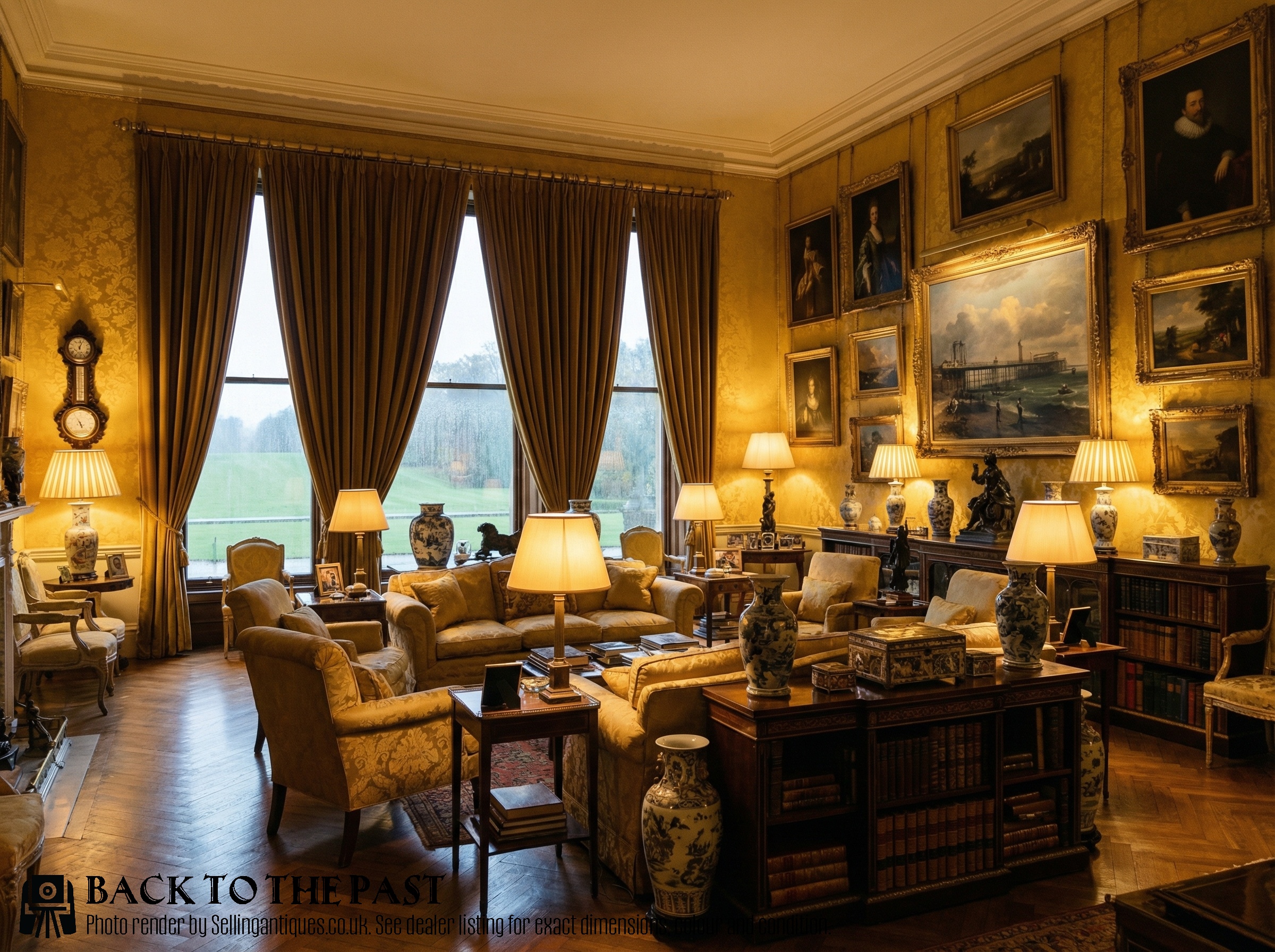
Vintage Banjo Barometer Clock
A vintage banjo barometer clock merges a circular clock face with a long, tapering body that houses a weather measuring dial, creating a striking wall hanging. Most examples encountered here hail from the nineteenth century, including Victorian and Regency eras, reflecting traditional British and American domestic interiors.
The form typically incorporates a thermometer alongside the main clock and barometer dials, offering multiple domestic functions within a single timber case. Pieces appear in various stylistic interpretations, ranging from plain George III mahogany designs to heavily carved Edwardian and Victorian oak or walnut versions.
Materials and Construction
Casework relies heavily on figured hardwoods such as mahogany, walnut, oak, and rosewood, shaped into the characteristic stringed instrument silhouette. Cabinetmakers utilised veneers and solid timbers, often adding decorative carvings along the spine and crest.
Internal instrumentation integrates brass fittings, glass dial covers, and silvered metal scales for the barometric and thermometer readings. Metal dials feature engraved numerals and inscriptions identifying makers or retail locations.
Vintage Banjo Barometer Clock Retail Price Guide 2026
Typical asking prices for vintage banjo barometer clock among the pieces listed under this phrase on Sellingantiques today, from the lower quarter to the upper quarter. They describe what is for sale here now, not the wider market.
Some nineteenth century buyers checked the weather on a banjo wall clock before deciding if a top hat was sensible.
Judging Quality
Superior quality rests in the crispness of the timber carving and the richness of the grain selection, distinguishing utilitarian items from high-end domestic pieces. The execution of brass bezels and the legibility of the silvered metal dials indicate the original maker's investment in materials.
Proportion and balance across the elongated neck and bulbous base dictate the visual harmony of the instrument. Finer examples retain intact original mechanical components and sharp detailing on the carved crests.
Ganthony of London·H Marks·Russell of Liverpool
The Vintage Banjo Barometer Clock Glossary
- Aneroid barometer
- A type of barometer that measures atmospheric pressure without using liquid, relying on a flexible metal box. This mechanism allowed makers to build compact instruments into wall clocks.
- Silvered metal
- A brass or copper dial treated with a silver finish to provide a contrasting background for dark engraved text. This treatment was standard for high-grade barometer and clock faces.
- Bezel
- The metal ring that holds the glass cover in place over a clock or barometer face. Brass bezels are common on nineteenth-century wall instruments.
- Thermometer
- A temperature-measuring instrument frequently mounted along the central trunk of a banjo barometer. It provides domestic temperature readings alongside pressure and time.
Vintage Banjo Barometer Clock: Frequently Asked Questions
What is a banjo barometer clock?
A banjo barometer clock is a wall-mounted instrument featuring a circular upper dial for time and a wider lower section for barometric pressure, shaped vaguely like a banjo.
These combination pieces served practical domestic purposes in nineteenth-century homes by consolidating household timekeeping and weather forecasting into a single wooden chassis.
Where were they hung?
These instruments were designed for prominent display in hallways, libraries, or drawing rooms where residents could check the weather and time before stepping outside. Their vertical format suited narrow wall spaces between doorways or windows.
Because of their dual function, they occupied central positions in domestic interiors throughout the nineteenth century.
Do they still measure weather?
Many surviving aneroid mechanisms retain functional sensitivity to atmospheric pressure changes, though historical accuracy can vary. The barometric scale typically indicates general weather trends like rain, change, or fair.
Collectors generally treat them as decorative historical objects while appreciating their mechanical complexity.