





Carved Wood Art Piece
These carved wood art piece selections span maritime dioramas, folk art figures and portrait busts.
Carved Wood Art Piece
When you search for a carved wood art piece, you encounter diverse objects ranging from nineteenth-century maritime dioramas and walnut portrait busts to folk art treen and alpine furniture suites. The selection includes specific regional works such as French sycamore yacht models and Scottish figurative sculpture.
The objects combine utility with decorative craft, moving from utilitarian treen snuff boxes and lace folders to complex fairground figures and architectural fireplace surrounds. Buyers frequently meet nineteenth-century and early twentieth-century examples shaped by folk, maritime and arts and crafts traditions.
How they were made
Makers utilised various woods including walnut, oak, sycamore, ash and mahogany, often combining the primary carved material with brass, glass, metal, thread, paint and marble bases. These additions provide structural support or decorative contrast to the carved elements, particularly in maritime models and architectural surrounds.
Techniques range from detailed figurative sculpture and gnarled wood shaping to precise miniature maritime construction within glass bottles. Artisans applied traditional carving methods across diverse forms, from large parlour suites and fairground pieces down to pocket-sized treen boxes.
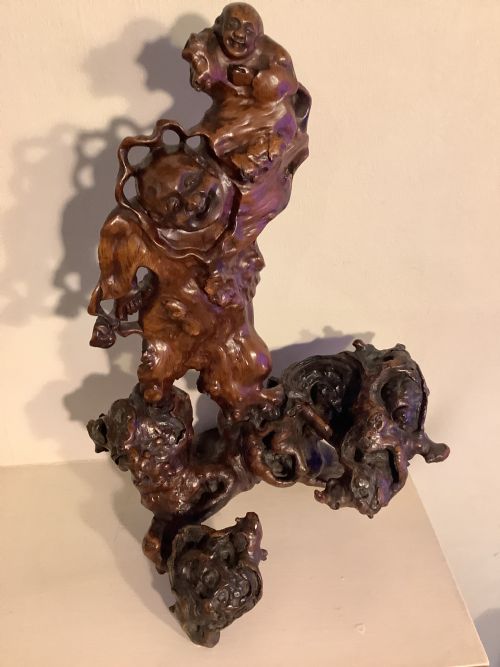
A gnarled piece of wood transformed into a man carrying a boy proves nature does half the sculpting.
What varies in quality
The standard of a carved wood art piece depends upon the ambition of the form and the precision of the carving, distinguishing simple utilitarian treen from complex figurative busts or detailed yacht models. Scale and medium integration, such as the mounting of wooden hulls on marble bases, influence the visual impact.
Material selection dictates much of the character, with dense hardwoods like walnut and mahogany holding finer sculptural detail than softer or more gnarled timbers. The directness of the hand-carving in folk art pieces and fairground figures creates distinct individual merit across the range.
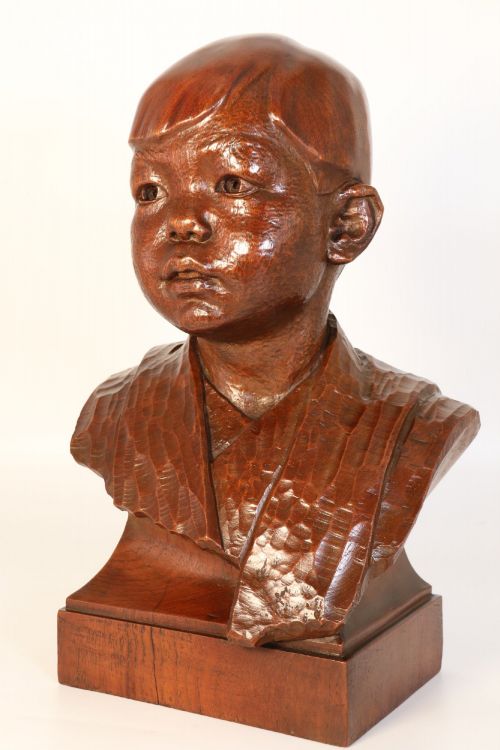
George Henry Paulin RBS
The Carved Wood Art Piece Glossary
- Treen
- Small handmade wooden objects for domestic or personal use. Examples include snuff boxes and lace folders.
- Maritime diorama
- A three-dimensional scenic representation of a ship at sea, often enclosed in a glazed case. These pieces record historical vessel types.
- Parlour suite
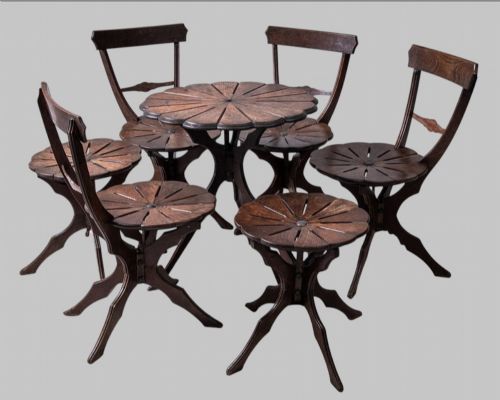
- A matching set of seating and related furniture designed for a Victorian or Edwardian reception room. They frequently incorporate carved wooden frames.
- Fairground figure
- Large carved wooden ornaments created for amusement rides and attractions. They display bold folk art aesthetics.
- Arts and Crafts
- A design movement valuing handcraft and simple materials. It produced functional wooden furniture and decorative objects.
Carved Wood Art Piece: Frequently Asked Questions
What is a carved wood art piece?
A carved wood art piece encompasses hand-shaped sculptures, decorative objects, fairground figures and maritime models produced across the nineteenth and early twentieth centuries.
These items reflect diverse cultural traditions including alpine folk art, maritime craftsmanship and arts and crafts design.
How were maritime dioramas made?
Maritime dioramas combine carved wooden ship models with painted backgrounds and physical materials like glass and thread to simulate water and rigging.
Some examples place entire sailing ship models inside glass bottles through careful miniature construction techniques.
Where do folk art carvings originate?
Folk art carvings emerge from regional traditions, notably alpine workshops, Scottish portraiture and maritime communities where local artisans shaped available timbers.
These objects serve both decorative and practical functions within domestic or public spaces.
How do I care for antique wood?
Antique wooden objects require stable indoor environments away from direct sunlight and extreme humidity fluctuations to prevent timber movement.
Gentle dusting preserves the original surface patina without stripping historical finishes or paint layers.