



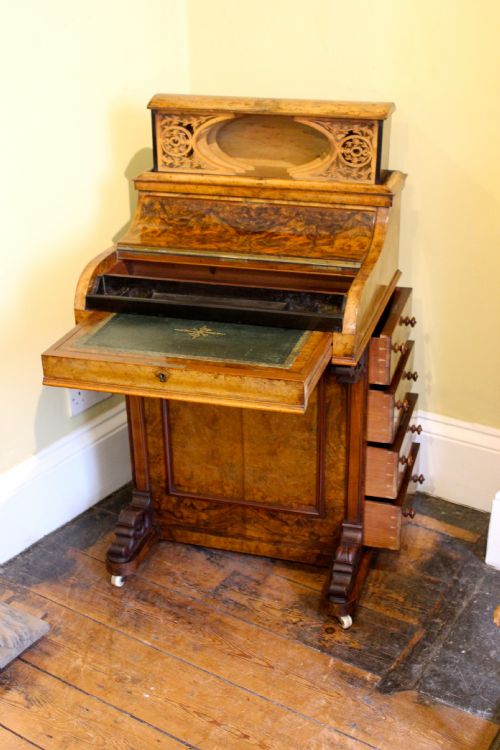


Carved Walnut Writing Slope
A carved walnut writing slope brings tactile desk furniture into daily use, offering fitted drawers and hinged surfaces designed for correspondence.

Carved Walnut Writing Slope
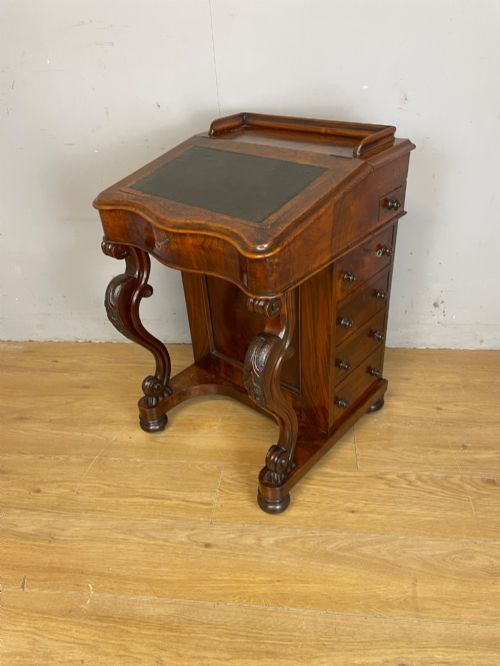
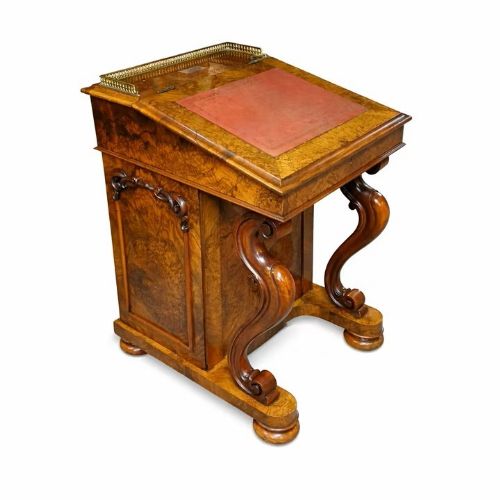
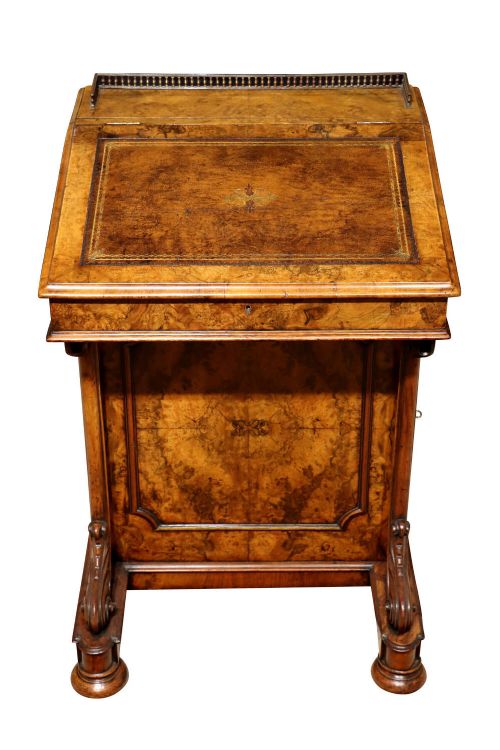
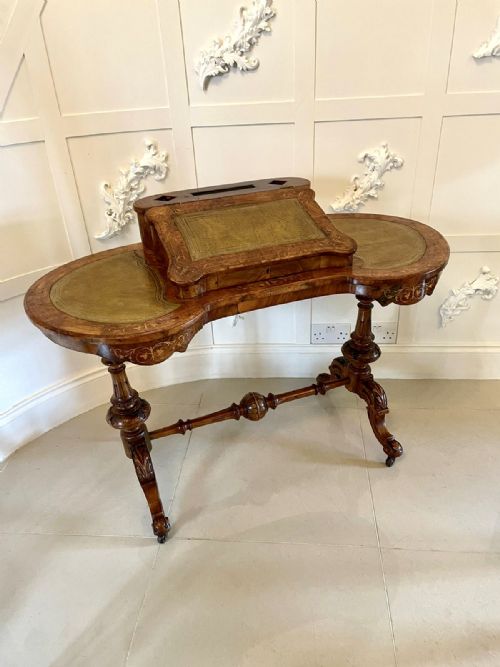
A carved walnut writing slope encompasses compact writing boxes, Davenport desks, and larger bureau forms produced during the nineteenth century. Buyers encounter Victorian pieces predominantly, often styled with burr walnut veneers, marquetry inlay, and satinwood interiors.
Many examples utilise pedestal configurations or sloping lids that lift to reveal fitted stationery compartments and writing surfaces inset with leather. Regional variations also appear, including Dutch Baroque and revival forms spanning the mid to late nineteenth century.
Materials and construction methods
Cabinet makers utilised solid walnut and decorative burr walnut veneers over secondary timbers, often applying boxwood inlay and marquetry to exterior surfaces. Brass hardware, including hinges, locks, and handles, provides structural reinforcement and functional contrast against the dark wood.
Interiors frequently incorporate satinwood for small drawers, alongside fitted leather panels on the slope surfaces intended for writing. Joinery techniques from the period ensure robust carcass construction while displaying intricate decorative carving.
Carved Walnut Writing Slope Retail Price Guide 2026
Typical asking prices for carved walnut writing slope among the pieces listed under this phrase on Sellingantiques today, from the lower quarter to the upper quarter. They describe what is for sale here now, not the wider market.
Listings feature Victorian burr walnut Davenport desks alongside Dutch Baroque and William and Mary style bureaux.
Judging execution and materials
Quality rests upon the selection of timber, particularly the depth and movement of the burr walnut grain chosen for the primary surfaces. Finer pieces demonstrate meticulous marquetry inlay, precise boxwood stringing, and well-executed carving that remains crisp across the mouldings.
Internal organisation also distinguishes standard production from superior examples, visible in secondary woods like satinwood used for small fitted drawers and concealed compartments. The integration of functional elements such as pop-up mechanisms or stationery boxes reveals the skill of the original maker.
The Carved Walnut Writing Slope Glossary
- Burr walnut
- A figured veneer harvested from the excrescences of walnut trees, prized for its swirling knot patterns.
- Davenport desk
- A compact pedestal writing desk featuring a sloping top and drawers accessed from the side.
- Marquetry
- Decorative veneer work forming pictorial or geometric patterns using various woods.
- Satinwood
- A yellowish exotic timber employed for contrasting stringing and interior drawer construction.
Carved Walnut Writing Slope: Frequently Asked Questions
What is a Davenport desk?
A Davenport is a compact form of desk that incorporates a sloping writing surface above a pedestal of drawers. The design typically includes a stationery compartment positioned at the rear.
These pieces gained popularity during the Victorian era for domestic correspondence and letter writing in smaller rooms.
How do I care for burr walnut?
Burr walnut benefits from stable indoor humidity and protection from direct sunlight to prevent veneer drying or fading. Regular dusting with a dry cloth maintains the polished finish without requiring heavy chemical treatments.
Applying a light microcrystalline wax periodically helps preserve the lustre of the timber.
What is Tunbridge ware?
Tunbridge ware involves decorative woodwork featuring mosaic patterns assembled from thousands of tiny tinted wood blocks. These geometric or floral motifs frequently adorn nineteenth-century writing boxes and small desk accessories.
The technique originated in Kent and represents a high degree of Victorian miniature carpentry.
How do I identify a Victorian writing box?
Victorian writing boxes display period construction methods, such as dovetailed joints in secondary woods and brass escutcheons around the keyholes. They often open to reveal fitted compartments for inkwells and pens alongside a leather-lined slope.
Materials commonly include walnut, mahogany, or rosewood, frequently accented with inlay.