
Carved Walnut Vanity Table
A carved walnut vanity table brings rich timber grain and period charm to a bedroom, offering a dedicated surface for daily grooming.
Carved Walnut Vanity Table
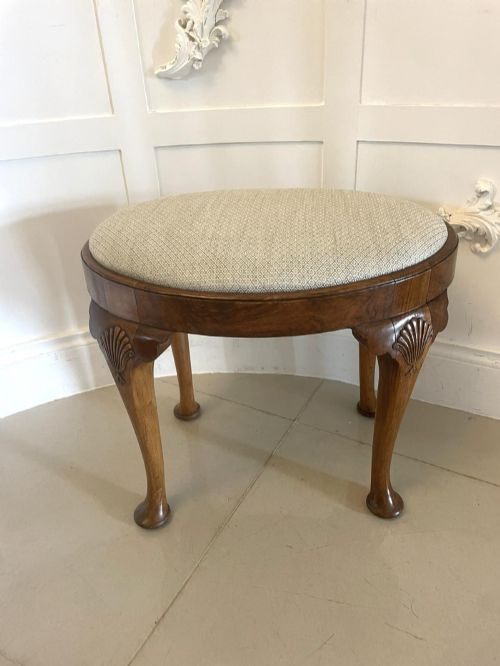
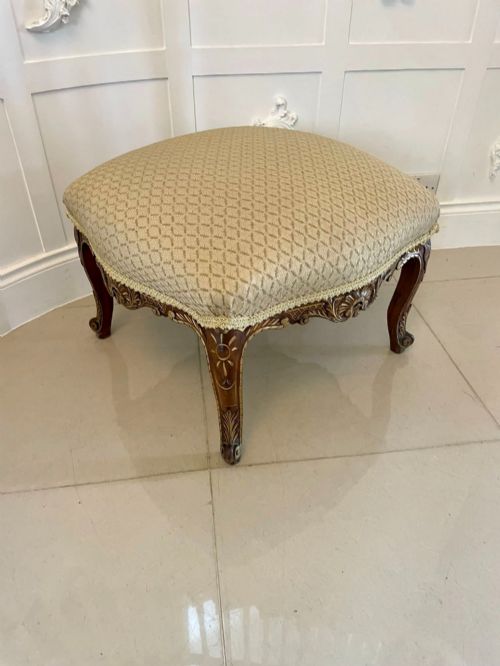
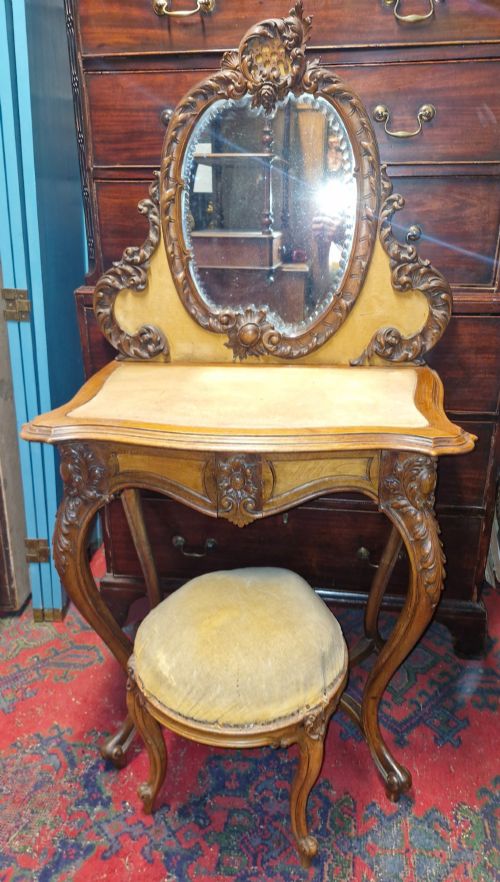
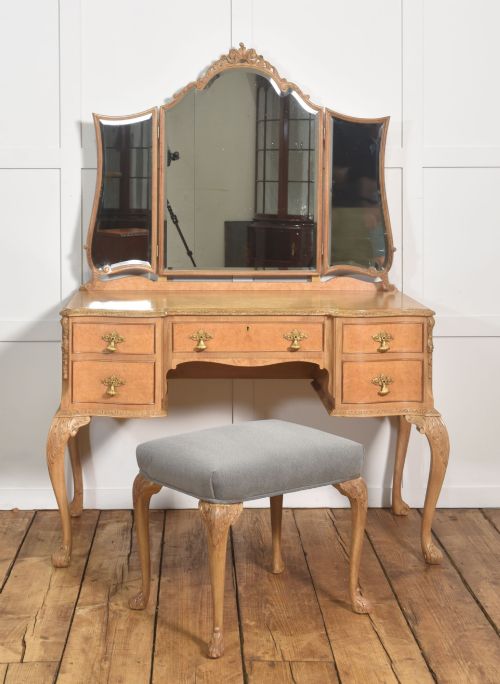
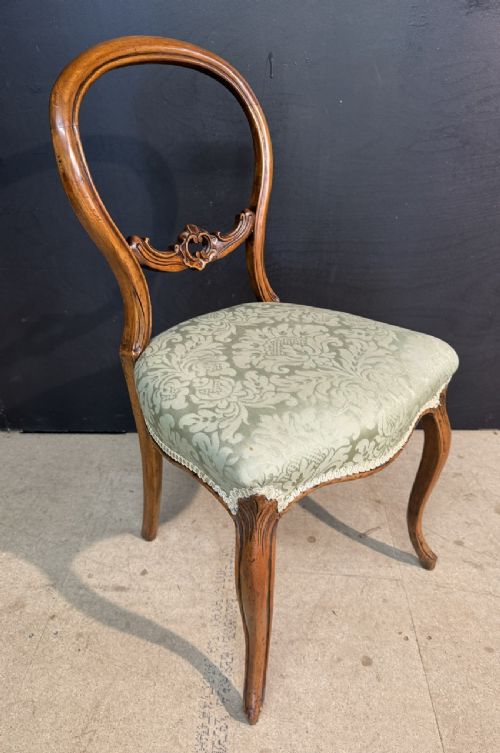
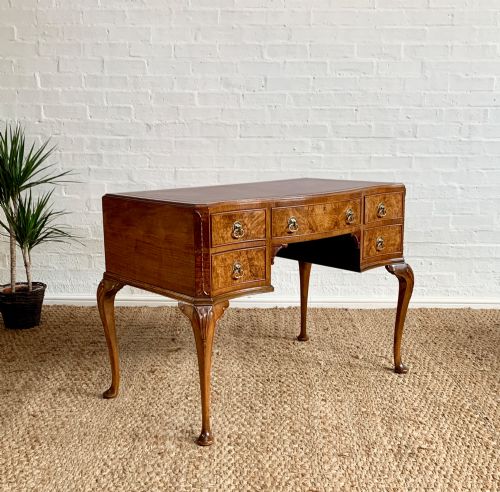
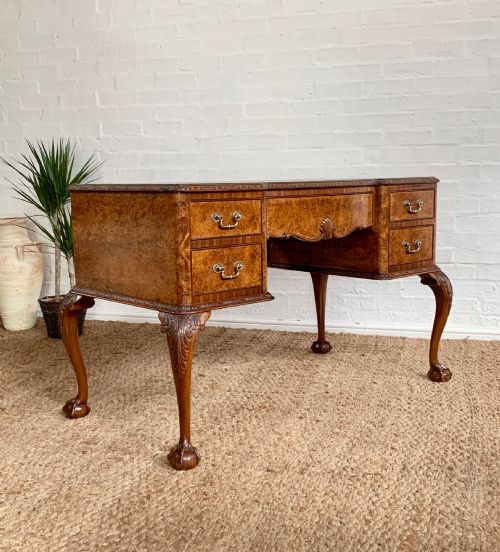
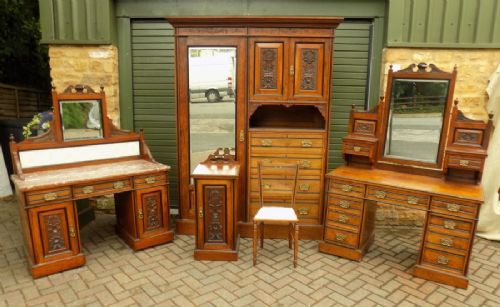
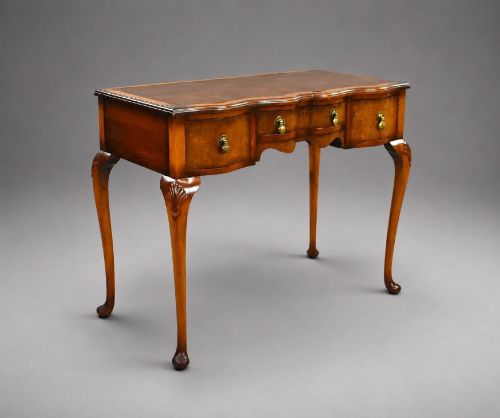
When you search for a carved walnut vanity table, you encounter an array of dressing tables, writing desks, and matching stools spanning the eighteenth century to the 1930s. The selection on this page largely comprises Victorian and early twentieth-century examples, alongside earlier Georgian and Queen Anne style pieces.
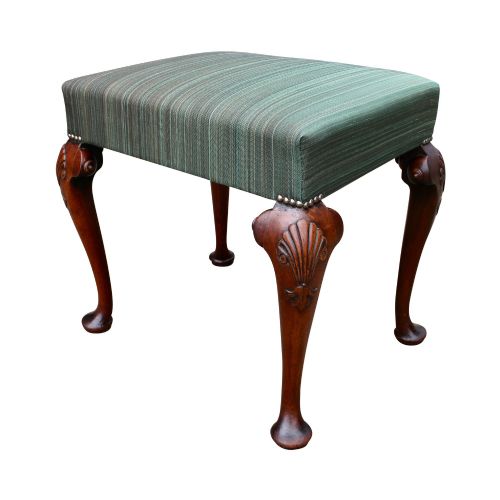
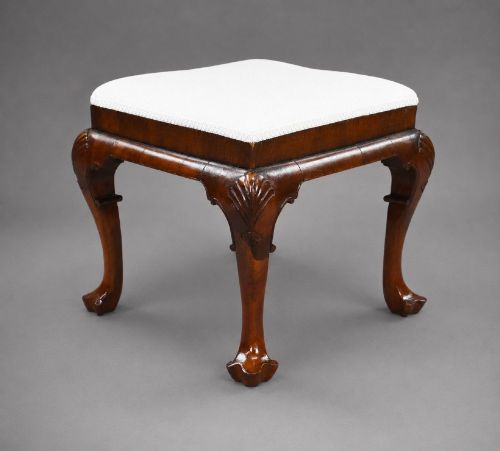
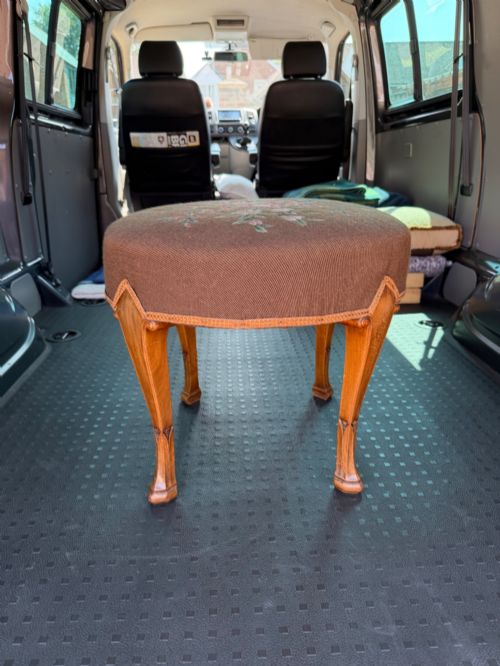
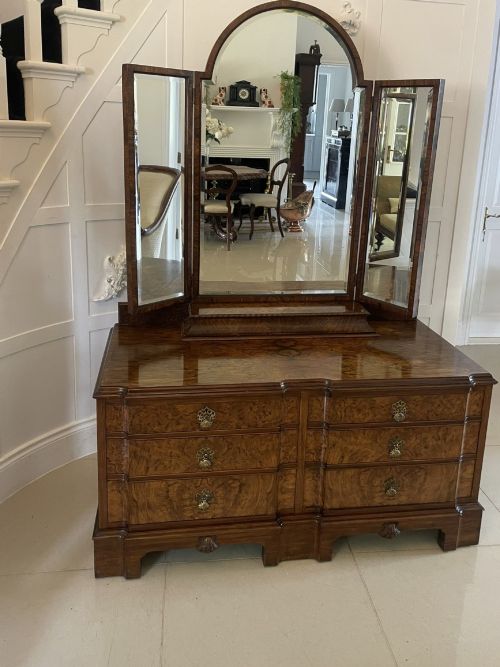
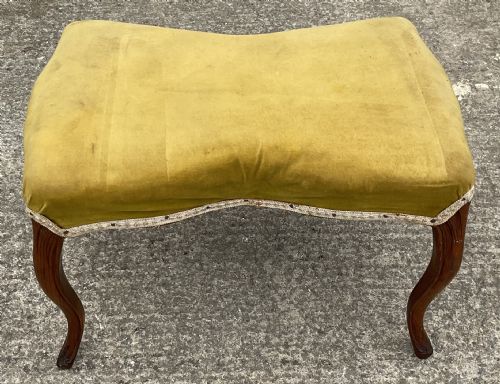
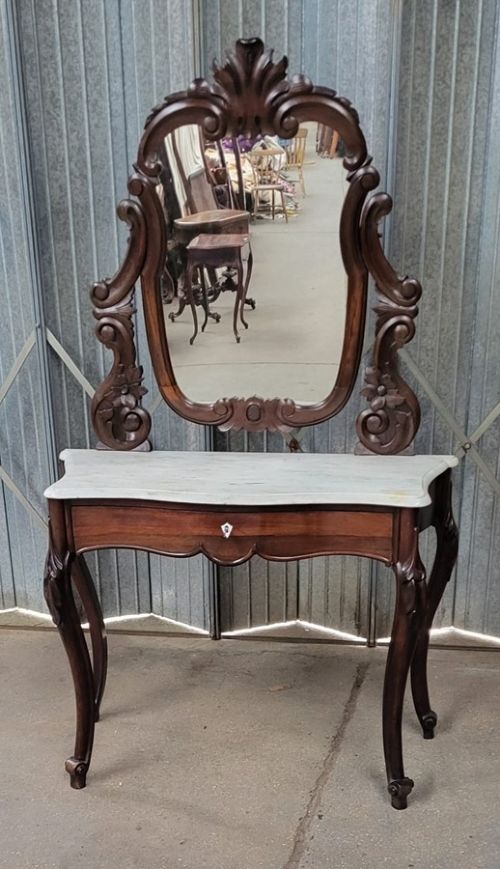
These items take various forms, from triple-mirror dressing tables and Duchess suites to kneehole desks, lowboys, and toilet mirrors. Stools frequently accompany the tables, upholstered in fabric, needlepoint, or leather.
Origins stretch across English, French, and regional workshops, capturing revivalist movements such as Rococo and Queen Anne styles. Buyers will find both solid timber constructions and burr walnut veneers utilised across the different periods.
Materials and construction methods
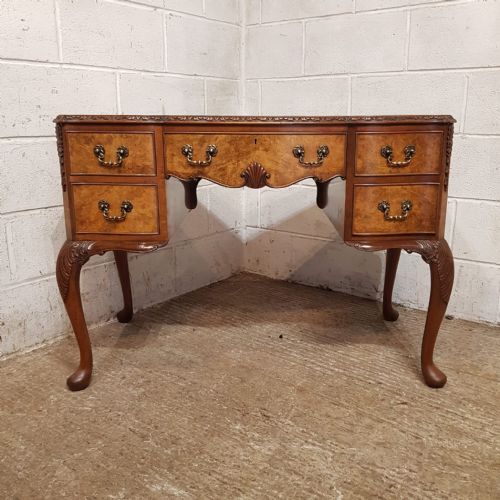
Cabinetmakers utilised walnut and burr walnut for its distinct grain patterns, often applying veneers over secondary timbers to create decorative surfaces on desks and dressing tables. Solid walnut served for structural elements and carved details.
Makers incorporated supplementary materials including brass hardware, mirror glass, marble tops, and leather writing surfaces. Upholstered pieces integrated fabric and textile coverings, occasionally supported by twisted rope legs or cabriole supports.
Some nineteenth-century dressing stools hide newly restored rope legs beneath their traditional upholstery.
Discerning quality in walnut pieces
Quality rests upon the crispness of the carving and the selection of the walnut timber itself. Burr walnut surfaces display intricate figuration that distinguishes finer cabinetwork from simpler utility pieces.
Construction integrity separates standard items from superior examples. Well-executed joinery, original mirror plates, and intact leather or textile inserts indicate higher craftsmanship across Victorian and Georgian workshops.
Wylie & Lochhead Glasgow
The Carved Walnut Vanity Table Glossary
- Burr walnut
- A wood figure obtained from the growths on walnut trees, yielding highly decorative swirls and patterns utilised in fine cabinet veneers.
- Lowboy
- A small oak, walnut, or mahogany table with drawers, resembling a low chest of drawers on tall legs, dating back to the eighteenth century.
- Cabriole leg
- A furniture leg that curves out and then narrows inward, frequently terminating in a pad or claw foot on Queen Anne and Georgian pieces.
- Kneehole desk
- A compact desk featuring a recessed central space for the user's knees, flanked by pedestals of small drawers.
- Duchess dressing table
- A large nineteenth-century dressing table typically featuring an attached swing mirror and multiple small trinket drawers.
Carved Walnut Vanity Table: Frequently Asked Questions
How do I date a walnut vanity table?
Dating relies on observing structural characteristics, hardware, and stylistic revival cues such as Queen Anne or Rococo details. Eighteenth-century pieces exhibit different joinery and timber patination compared to Victorian or 1930s examples.
Examining secondary woods and mirror construction further assists in narrowing the decade or century of manufacture.
Are stools usually sold with the tables?
Many dressing tables and desks on this page are listed alongside matching stools, though some are sold independently. These stools frequently feature upholstered seats in fabric, leather, or needlepoint.
Checking individual listings confirms whether a seating element forms part of the ensemble.
What is the difference between a lowboy and a dressing table?
A lowboy is a small, functional table with drawers dating primarily from the eighteenth century, often utilised for grooming before dedicated dressing furniture evolved. Dressing tables often incorporate mirrors, multiple tiers, and specialised compartments.
Both types share compact proportions suited to bedroom or dressing room placement.
How do I care for burr walnut veneer?
Burr walnut requires protection from direct sunlight and excessive moisture to prevent the delicate veneer from fading or lifting. Regular dusting with a soft, dry cloth preserves the polished surface.
Applying specialised furniture wax occasionally helps maintain the timber's natural lustre without harming the finish.