


Carved Walnut Server Table
These carved walnut server tables bring together deep timber and confident proportion, serving dining rooms and halls with centuries of practical elegance.
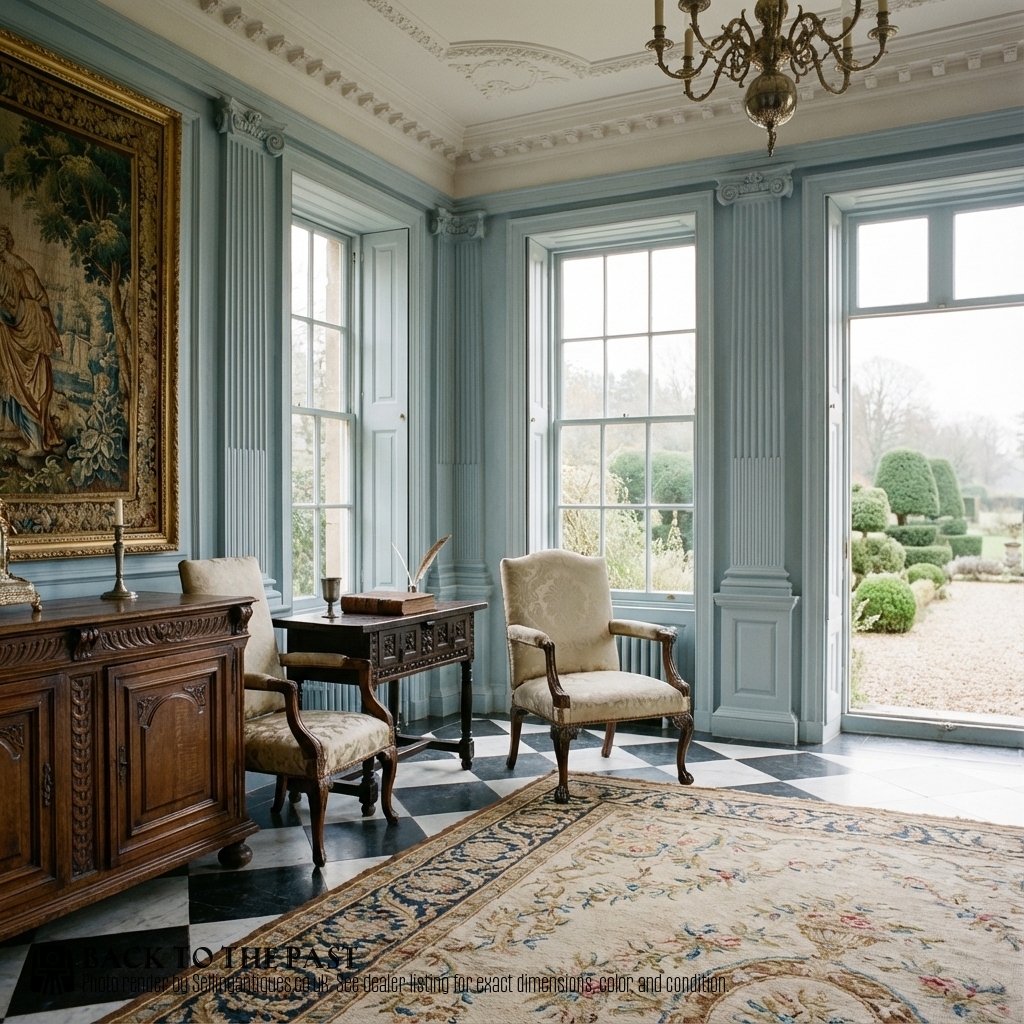
Carved Walnut Server Table
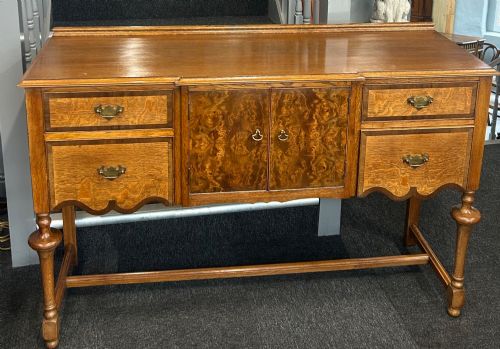
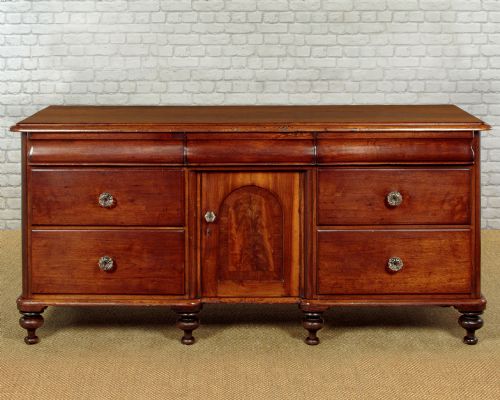
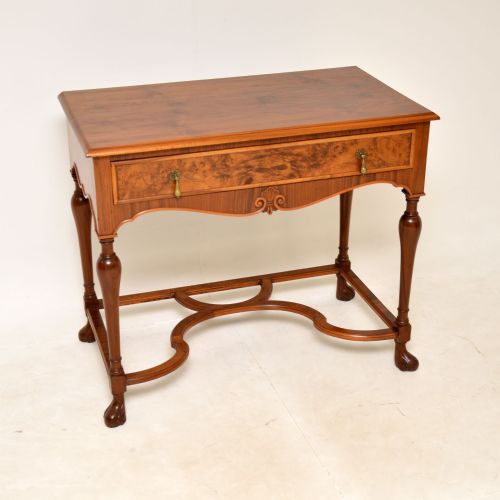
A carved walnut server table is a substantial piece of furniture designed for service and display in dining spaces, halls, and reception rooms. The pieces gathered here span from the seventeenth century through to the Edwardian era, taking forms such as side tables, lowboys, buffets, and consoles.
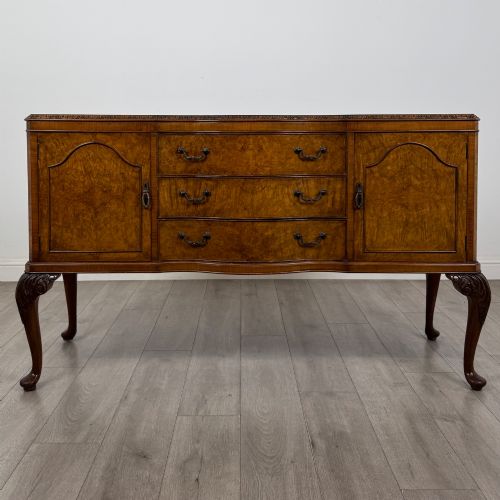
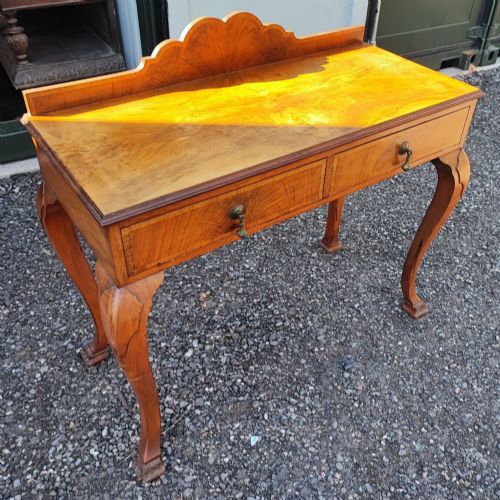
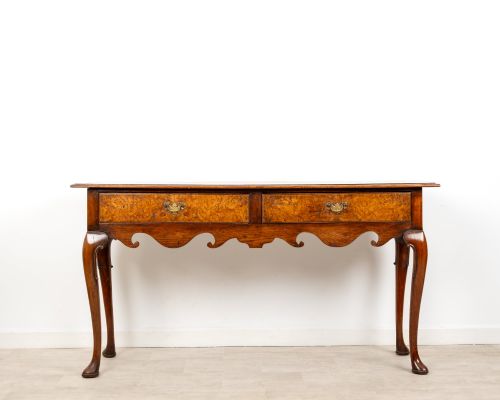
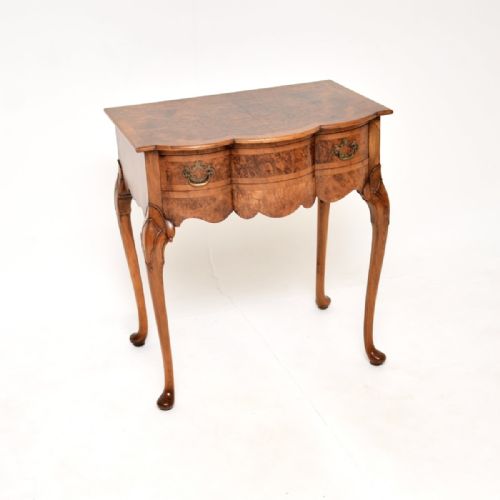
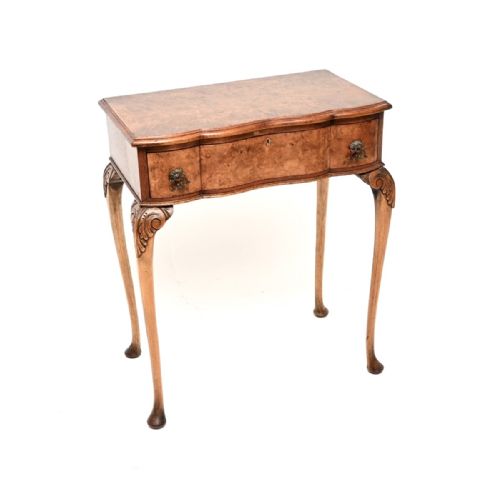
The version most commonly met on this page is the early twentieth-century burr walnut server or console table, often channelling Queen Anne revival tastes with cabriole legs and rich figuring. Alongside these are earlier eighteenth-century lowboys and nineteenth-century French and Spanish buffets.
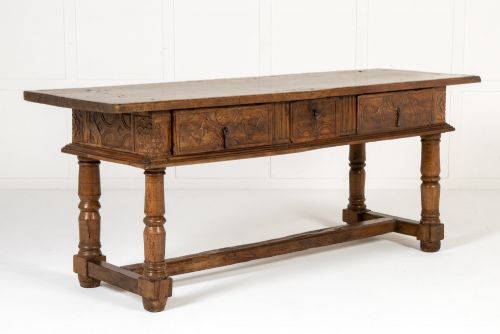
Every example functions primarily as a surface for serving or display, whether equipped with drawers for linen and cutlery or built with open tiers. Their origins stretch across Britain, France, Spain, and Italy, reflecting diverse regional tastes in carving and joinery.
Materials and construction methods
Walnut is the defining timber here, utilised both as solid stock and as highly figured burr walnut veneer laid over secondary woods to create mesmerising grain patterns on tabletops and drawer fronts. Cabinetmakers also incorporated oak for structural framing and drawer linings.
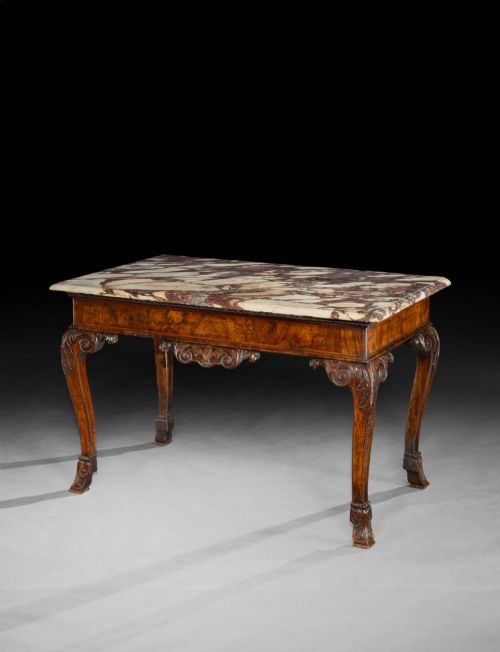
Carving and joinery form the backbone of these pieces, with craftsmen employing hand-carved details such as cabriole legs, shell motifs, and scrolling foliage. Brass hardware, including drop handles and keyplates, accents the timber, while occasional marble inserts provide durable serving surfaces.
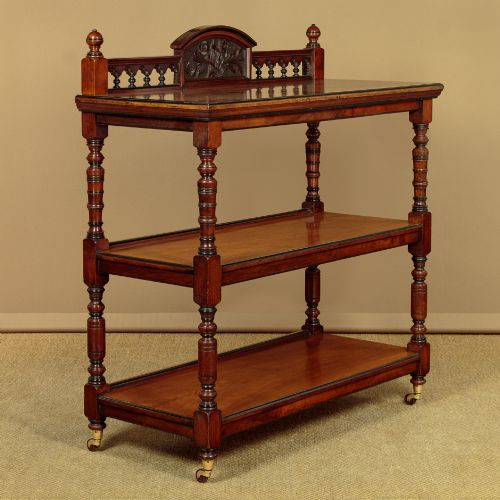
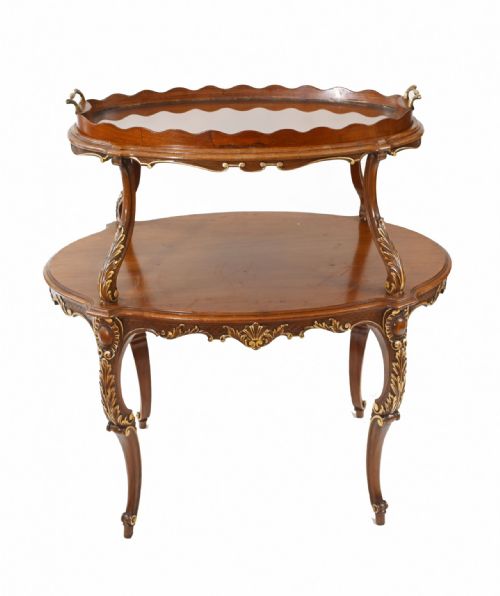
Some Victorian and Edwardian servers arrive equipped with fully adjustable tiers or dumb waiter mechanisms, ready to host impromptu tea service.
Judging the quality of a server
Quality rests principally on the choice of timber and the ambition of the carving. Tables featuring tightly swirled burr walnut veneer and crisp, deep-relief hand carving stand well apart from plainer, mechanically produced alternatives.
Proportion and structural integrity dictate the standing of a piece. The finest examples maintain a balanced silhouette where the weight of the timber matches the strength of the underframe, whether supported by slender cabriole legs or robust turned stretchers.
Epstein·Hille of London·Whytock & Reid
The Carved Walnut Server Table Glossary
- Burr walnut
- A specialised timber veneer harvested from the growth warts or burls of walnut trees. It yields a tumultuous, swirling grain pattern prized by cabinetmakers for decorative surfaces.
- Lowboy
- A small dressing or serving table featuring one or more rows of drawers beneath a flat top, typically raised on slender legs. Eighteenth-century examples are particularly sought after for their refined proportions.
- Console table
- A wall-mounted or freestanding table designed to stand against a vertical surface, frequently topped with marble or richly figured wood. They often feature elaborate front legs while relying on the wall for rear stability.
- Cabriole leg
- A furniture leg that curves out gracefully and then tapers down to a pad or claw foot, mimicking the shape of an animal's limb. This form became a hallmark of Queen Anne and eighteenth-century revival styles.
- Dumb waiter
- A tiered serving table or trolley designed to hold dishes and silverware without the need for attendants. Victorian and Edwardian iterations often feature revolving or adjustable trays.
Carved Walnut Server Table: Frequently Asked Questions
What is the difference between a server and a sideboard?
A server table typically presents a lighter, more open structure with slender legs and a shallow profile, designed primarily for holding dishes during a meal. Sideboards tend to be heavier, enclosed cabinets with extensive storage cupboards for dining china and linens.
While both share a domestic lineage in the dining room, servers prioritize surface display and graceful proportions over bulk.
How do I date a walnut server?
Dating relies on examining construction techniques, hardware, and stylistic revival cues. Seventeenth and eighteenth-century pieces display hand-cut dovetails and pegged joints, whereas twentieth-century revivals often incorporate twentieth-century glues and machine milling.
Cabinetmakers working in the 1920s and 1930s frequently revived Queen Anne forms using burr walnut veneers, making timber preparation a key diagnostic tool.
Where should I place a server table at home?
These tables find a natural home in dining rooms as serving stations or against hallway walls for keys, mail, and decorative lamps. Their shallow depth ensures they do not obstruct traffic flow in narrow spaces.
Pairing a console or server with a mirror creates a striking focal point in entrance halls or drawing rooms.
How do I care for burr walnut veneer?
Burr walnut requires protection from direct sunlight and extreme humidity fluctuations to prevent the delicate veneer from lifting or fading. Regular dusting with a soft, dry cloth maintains the sheen.
Application of appropriate beeswax feeds the timber and preserves the depth of the grain without building up synthetic residues.