






Carved Walnut Parlour Table
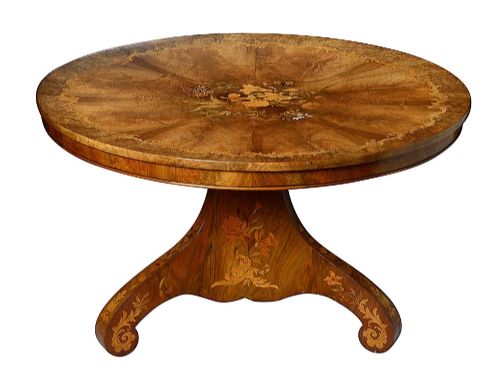
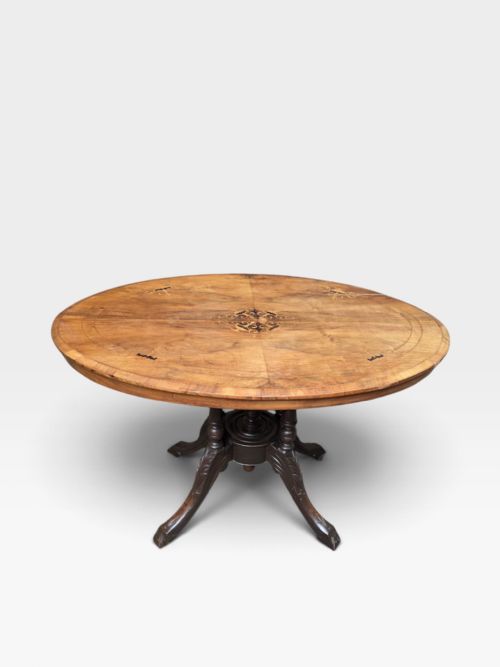
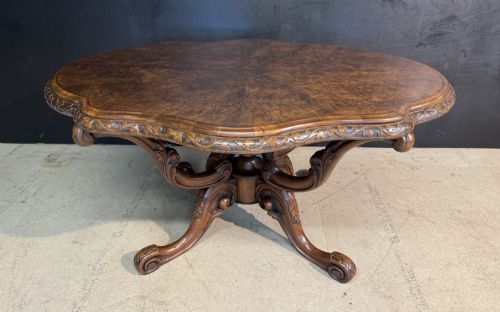
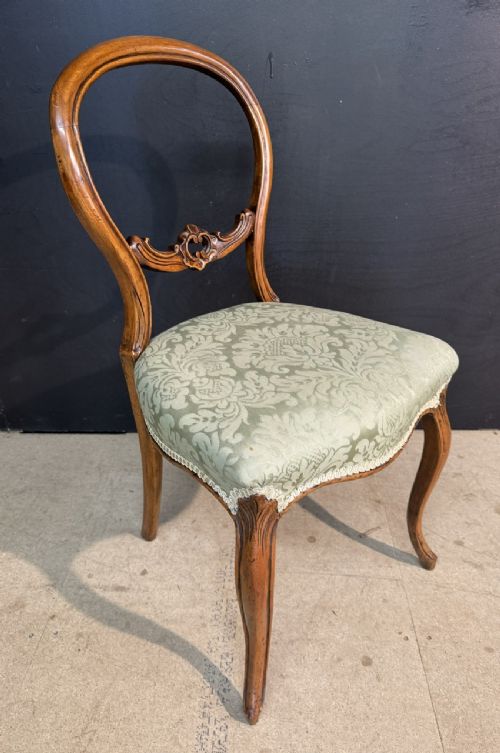
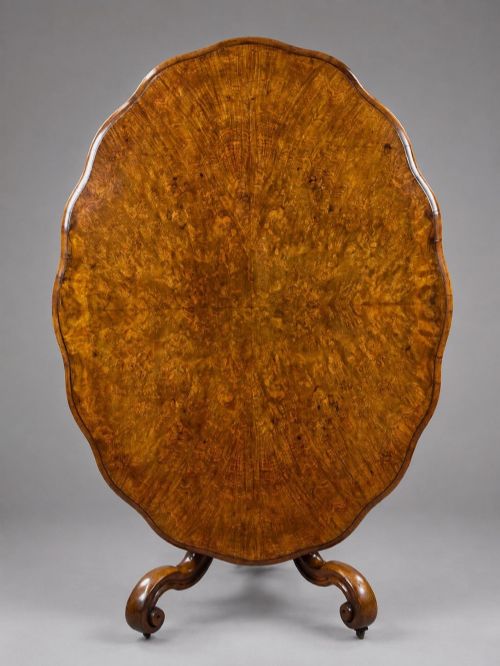
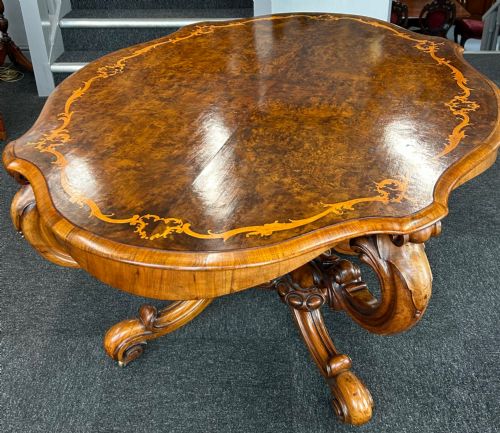
These carved walnut parlour table examples bring Victorian and Edwardian drawing rooms alive with rich timber grain and intricate marquetry.
Carved Walnut Parlour Table
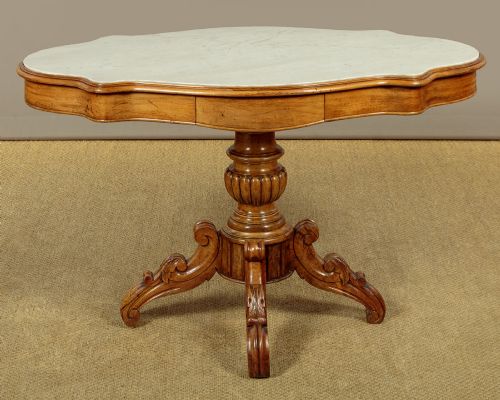
A carved walnut parlour table sits at the heart of nineteenth-century entertaining, designed to hold lamps, books, or visiting cards in a reception room. Most pieces found here belong to the Victorian period, spanning centre tables, loo tables, and occasional tables with oval or circular tops.
Makers of this era favoured walnut and burr walnut for its rich figuring, often shaping the timber into freestanding centre tables with basket bases or pillar supports. Alongside these larger forms, the selection includes smaller side and window tables from the Edwardian years.
The styles range from robust Victorian Rococo Revival to delicate Aesthetic Movement and French-influenced designs. Buyers will frequently encounter marquetry and boxwood inlay embellishing the polished tops, reflecting the formal demands of period domestic interiors.
Judging Quality
Quality rests primarily on the choice of timber veneer and the crispness of the carved ornamentation. Finer examples display symmetrical burr walnut figuring across the entire table top rather than pieced-together sections with mismatched grain.
The precision of the boxwood and marquetry inlay distinguishes superior pieces from standard production work. Clean, tight joints where individual wood segments meet indicate high workshop standards during construction.
Stability and proportion dictate the success of the form, particularly in pedestal and basket bases that must support heavy timber tops without wobble. Original hardware, castors, and tilt mechanisms add considerable merit to a table.
Carved Walnut Parlour Table Retail Price Guide 2026
Typical asking prices for carved walnut parlour table among the pieces listed under this phrase on Sellingantiques today, from the lower quarter to the upper quarter. They describe what is for sale here now, not the wider market.
Scissors-action tables fold flat like utility shears, proving the Victorians loved mechanical furniture tricks just as much as heavy velvet.
James Winter
The Carved Walnut Parlour Table Glossary
- Burr walnut
- A prized veneer sliced from the deformed growth or burl of a walnut tree, yielding dense, swirling grain patterns. Cabinet makers used this timber for the primary decorative surfaces of high-status parlour furniture.
- Centre table
- A freestanding table designed to be viewed from all sides, placed in the middle of a room rather than against a wall. These pieces formed the focal point of Victorian drawing rooms.
- Loo table
- A large round or oval tilt-top table originating in the Georgian period and remaining popular through the Victorian era for card games and tea. The top pivots vertically on a central pillar to save space when not in use.
- Marquetry inlay
- Decorative patterns formed by fitting contrasting veneers into cut-outs on a solid wood base. Common motifs include floral sprays, scrolls, and geometric strapwork.
- Cabriole leg
- A furniture leg that curves outward at the knee and tapers inward toward the foot, mimicking animal limbs. This form appears frequently on Victorian revival seating and table supports.
Carved Walnut Parlour Table: Frequently Asked Questions
What is a parlour table used for?
A parlour table served as a functional surface for displaying decorative items, holding reading lamps, or receiving visiting cards in the formal reception rooms of nineteenth-century homes.
They also accommodated gatherings for tea or games, with tilt-top variants allowing the surface to be stored vertically against a wall when floor space was needed.
How do I identify a Victorian walnut table?
Victorian walnut tables typically display dark, richly figured grain, often enhanced by burr walnut veneer on the top and intricate boxwood marquetry inlay. They feature sturdy pedestal bases, cabriole legs, or scissor actions characteristic of mid to late nineteenth-century cabinet making.
Construction details such as hand-cut dovetails on internal framing and original brass castors further confirm the period origin.
How do I care for a walnut table top?
Protect the polished French finish by keeping the table away from direct sunlight and heat sources that can dry out and crack the timber veneer. Use coasters and mats under any objects placed on the surface to prevent moisture rings and scratches.
Dust regularly with a soft, dry cloth and occasionally apply a quality beeswax polish recommended for antique furniture to nourish the wood.
What is the difference between a centre table and a side table?
A centre table is finished on all sides and designed to stand in the middle of a room as a freestanding decorative and functional object. Its ornamentation is distributed evenly around the perimeter.
A side table is typically constructed with one finished side meant to sit flush against a wall, making it suited for narrower spaces like hallways or drawing-room edges.