


Carved Walnut Parlour Chairs
These carved walnut parlour chairs bring nineteenth-century reception rooms to life with deep timber grain and curved revival forms.
Carved Walnut Parlour Chairs
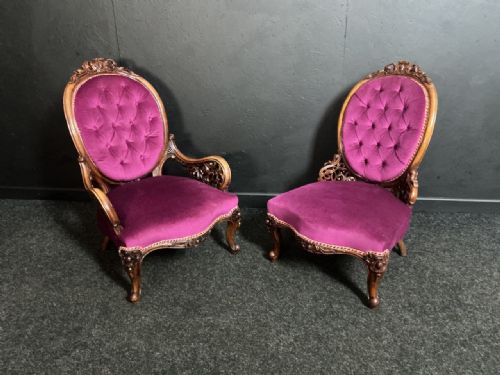
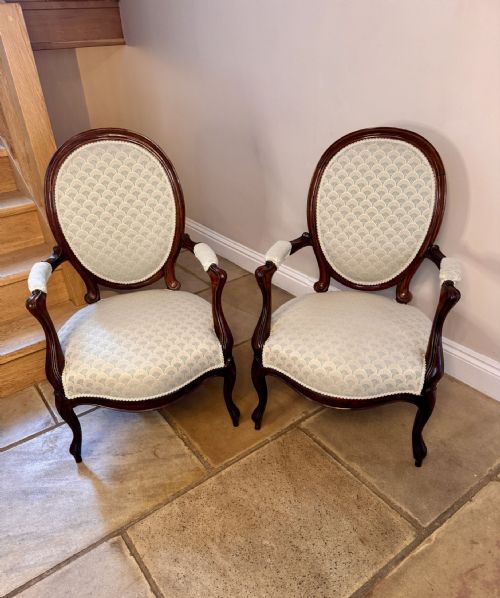
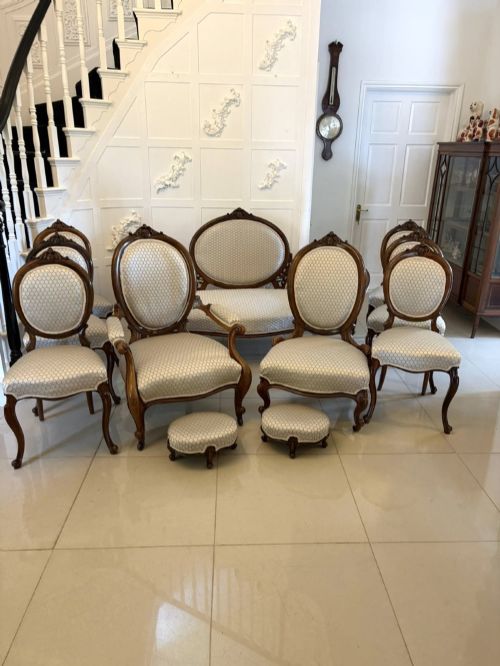
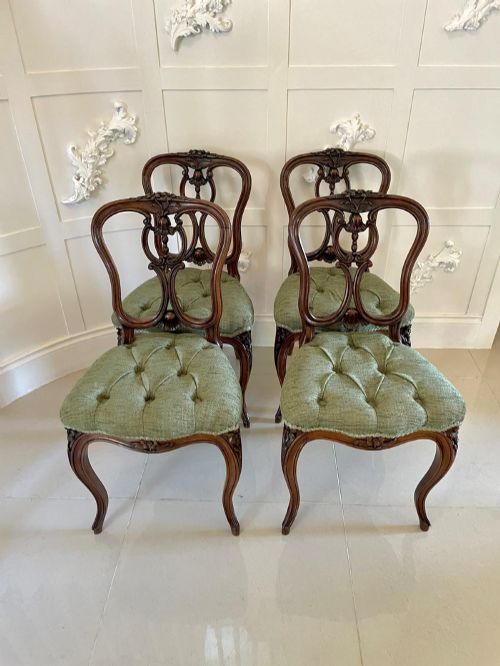
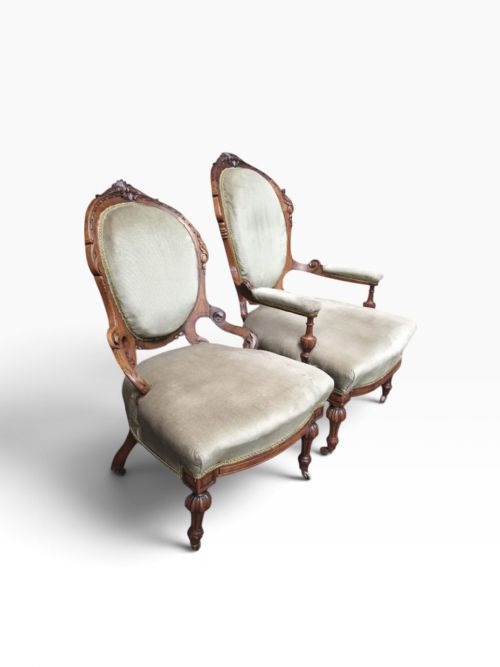
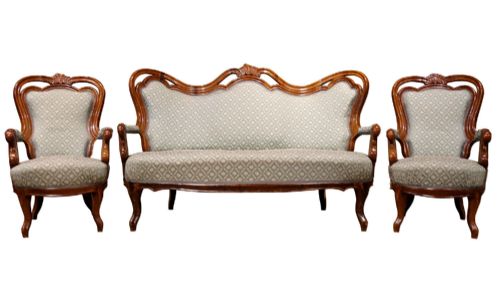
Carved walnut parlour chairs encompass seating designed for formal reception rooms, drawing rooms and private sitting spaces during the nineteenth and early twentieth centuries. The selection spans single side chairs, matched dining sets, pairs of ladies and gentlemen chairs, and larger salon suites complete with settees.
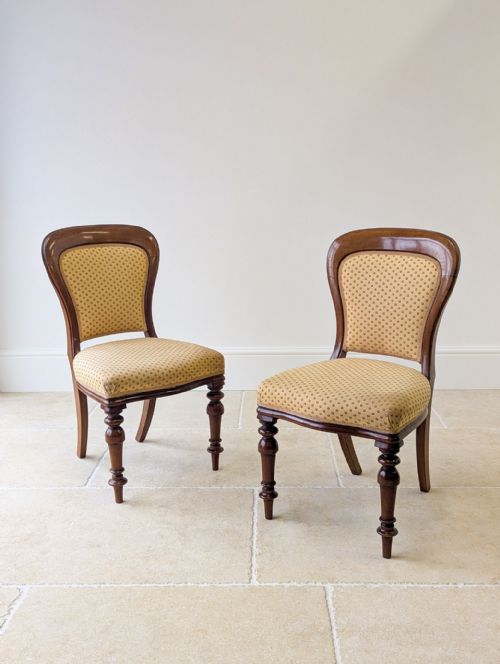
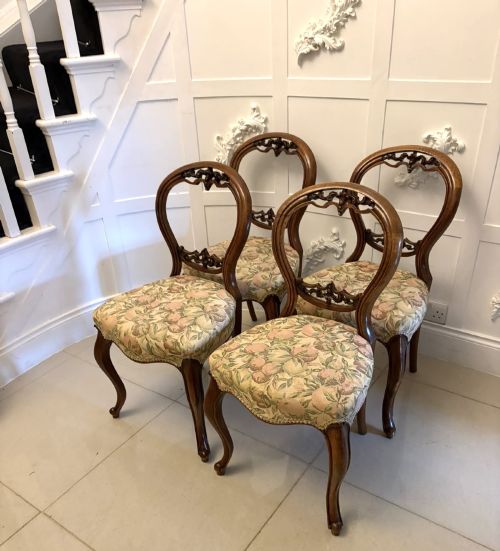
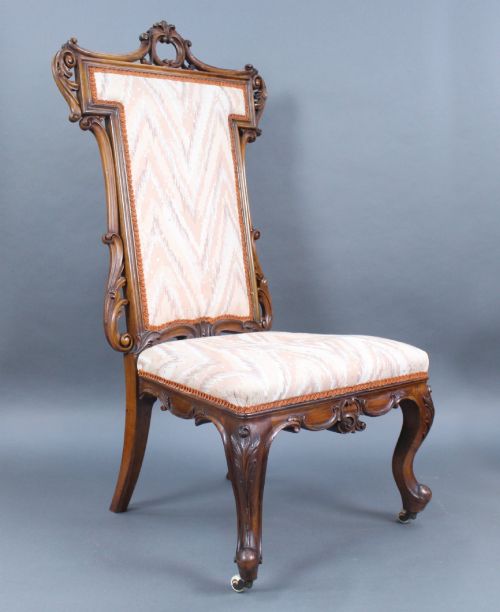
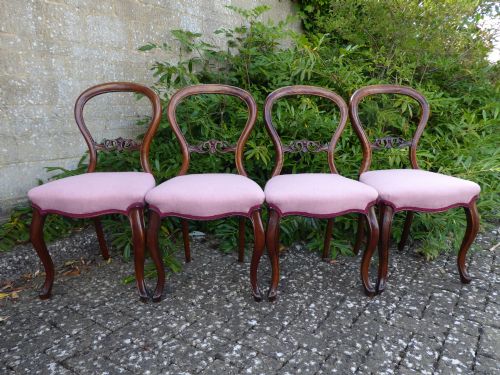
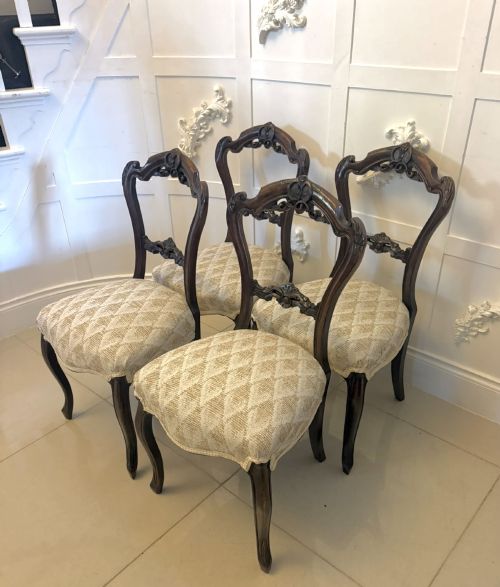
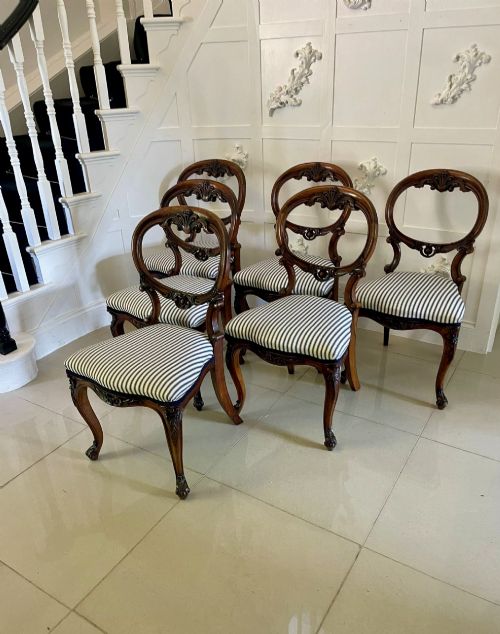
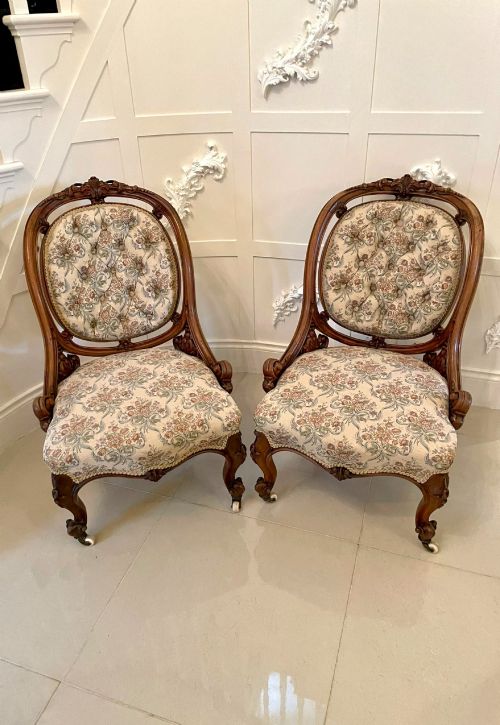
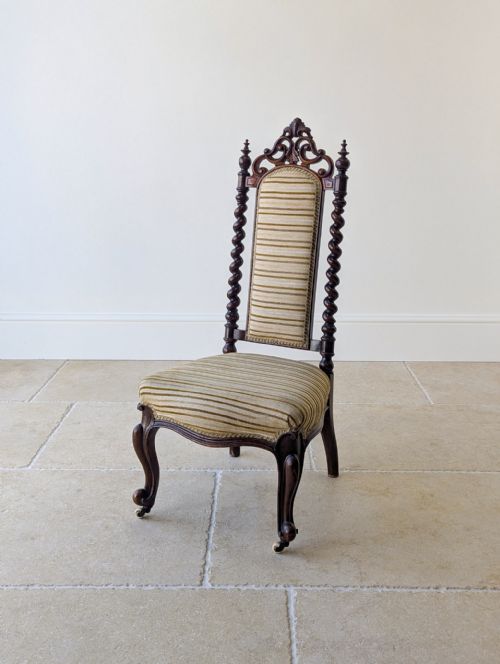
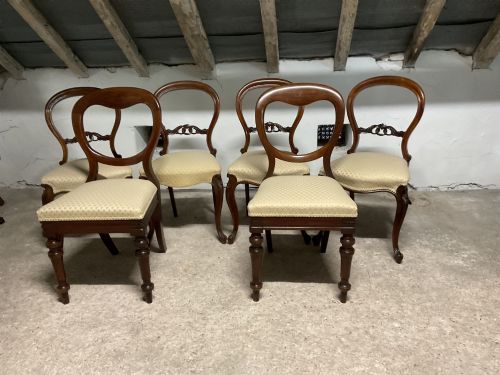
Victorian examples dominate the selection, often taking the form of balloon back dining chairs or low-seated parlour and nursing chairs with cabriole legs. Pieces range from mid-century Rococo Revival designs to later Edwardian and Empire Revival interpretations.
Makers produced these seats in both single pieces and comprehensive parlour suites, utilising rich timber frames to support elaborate carved details and upholstered pads. Buyers encounter everything from intimate corner salon seats to sets intended around a formal table.
Judging Quality
Quality rests upon the depth and crispness of the timber carving, distinguishing mass-produced commercial items from exhibition pieces worked by skilled hands. Sharp relief work on crest rails and smooth, flowing cabriole legs indicate a higher standard of craftsmanship.
The choice of timber and the integrity of the frame construction further separate tiers of production, alongside the quality of the original upholstery materials. Pieces showing harmonious proportions and unified design across an entire salon suite command greater attention than mismatched assemblies.
Carved Walnut Parlour Chairs Retail Price Guide 2026
Typical asking prices for carved walnut parlour chairs among the pieces listed under this phrase on Sellingantiques today, from the lower quarter to the upper quarter. They describe what is for sale here now, not the wider market.
Some chairs retain tiny brass castors designed to glide smoothly across thick carpets without scuffing the parlour floor.
Morison & Co of Edinburgh
The Carved Walnut Parlour Chairs Glossary
- Balloon Back
- A chair back shaped in an open oval resembling a balloon, popular throughout the Victorian period. This profile provided strong ergonomic support while allowing cabinet makers space for carved decoration.
- Cabriole Leg
- A furniture leg that curves out in a convex arc before tapering inward to a concave foot, inspired by animal limbs. This form defined much of the Rococo Revival seating seen in nineteenth-century salons.
- Pierced Splat
- The central vertical upright of a chair back that has been cut through to create open decorative patterns. Artisans used this technique to lighten the visual weight of heavy walnut frames.
- Salon Suite
- A matched set of seating furniture, typically comprising a sofa or settee alongside multiple armchairs and side chairs. These suites unified the decorative scheme of a formal drawing room.
Carved Walnut Parlour Chairs: Frequently Asked Questions
How do I identify Victorian walnut chairs?
Victorian walnut chairs typically display dark, rich timber tones combined with revival styles like Rococo or balloon back profiles. Look for deep hand-carved floral details on the crest rail and sturdy cabriole legs characteristic of the mid-nineteenth century.
Makers of this era frequently paired the carved walnut frames with upholstered seats covered in velvet, fabric, or tapestry textiles. Checking the joinery and timber grain helps confirm the nineteenth-century origin.
What is a salon suite?
A salon suite is a matched collection of reception room seating designed to furnish a formal drawing room in a uniform style. These suites usually include a settee, armchairs, and side chairs sharing identical walnut carving and upholstery.
Wealthy households utilised these larger ensembles to receive guests in rooms dedicated to entertaining. Today, finding a complete surviving suite offers a cohesive snapshot of nineteenth-century interior taste.
How were parlour chairs used?
Parlour chairs served as occasional seating in formal reception rooms where families entertained visitors and held social gatherings. Ladies and gentlemen often used specific chair designs tailored to their attire, such as low-seated nursing chairs.
These pieces were arranged around the edges of the room or gathered near tables for conversation and tea. Their mobility allowed hosts to rearrange the seating depending on the size of the gathering.
Are these chairs suitable for daily use?
These antique chairs function well in modern homes provided they receive careful treatment appropriate for nineteenth-century timber and joinery. Regular inspection of the structural frame ensures the vintage walnut remains stable under normal sitting conditions.
Placing them in low-traffic areas helps preserve fragile upholstery fabrics and delicate carved details. Many owners utilise them as accent pieces in studies, bedrooms, or quiet sitting corners.