
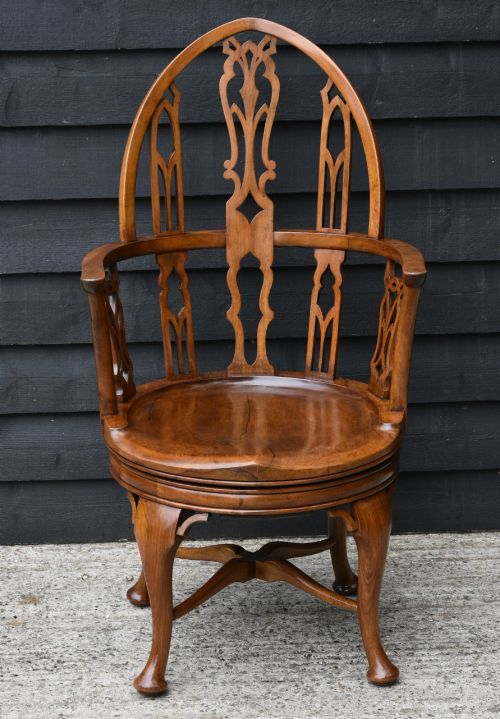
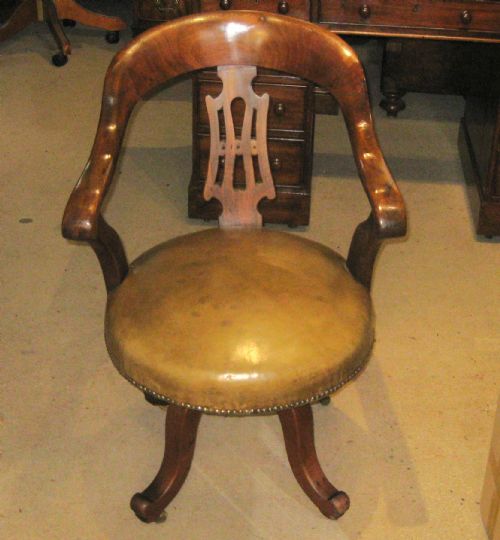
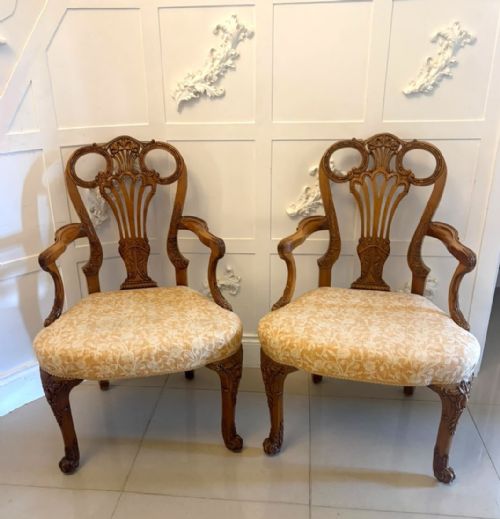
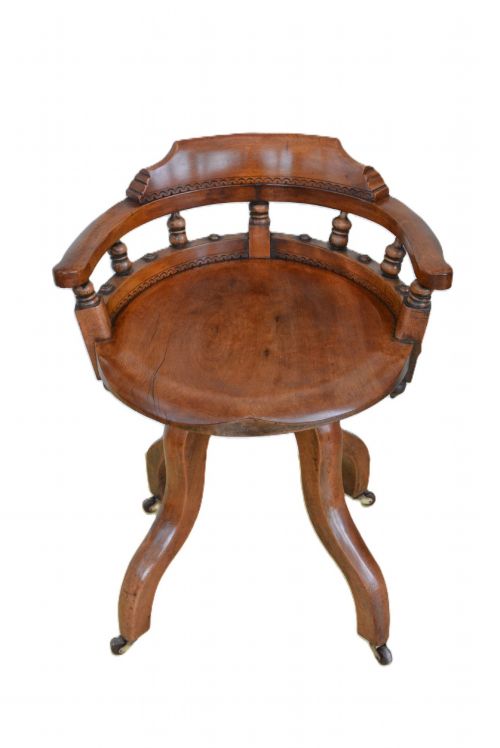
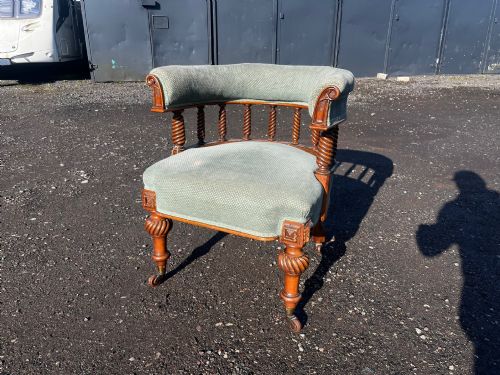

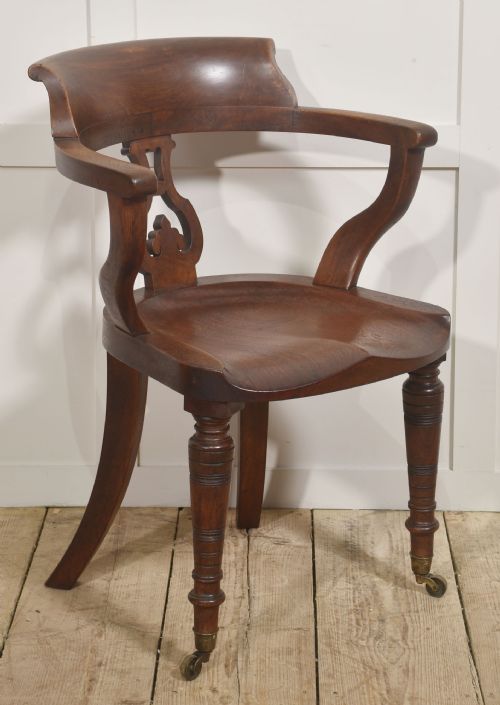


Carved Walnut Office Chair
A carved walnut office chair brings deep timber grain and sturdy support to a room, offering both practical seating and traditional presence.

Carved Walnut Office Chair
When searching for a carved walnut office chair, buyers encounter seating designed for workspaces, libraries, and studies during the nineteenth and early twentieth centuries. These pieces combine rich timber frames with practical forms such as revolving mechanisms and desk armchairs.
The most common examples on this page date from the Victorian and Edwardian periods, alongside revival styles like Queen Anne and Chippendale. They appear primarily as desk chairs, office armchairs, and library armchairs.
Makers often shaped these seats with open arms, bow backs, or swivel bases to suit the working requirements of past decades. They bridge the gap between heavy domestic furniture and functional office equipment.
How they were made
Makers shaped the primary structure from walnut, utilising its rich grain and reliable density for carved frames, curved backs, and supportive arms. This timber was often worked into elaborate revival styles, incorporating intricate surface carving alongside structural joinery.
Working mechanisms frequently integrated cast iron and brass to enable swiveling and revolving movement on desk chairs. Upholstery materials such as leather, fabric, velvet, and oil cloth swab cushions were added for comfort.
Some nineteenth century workers clearly enjoyed a gentle spin while pondering ledgers, thanks to early cast iron revolving mechanisms.
What varies in quality
The distinction between standard examples and finer pieces lies in the depth and crispness of the timber carving on the frame. Superior items display careful hand-shaping on the arms and backrests, whereas simpler versions rely on plain turned members.
The sophistication of the revolving mechanism and the choice of secondary materials, such as heavy brass fittings or quality leather upholstery, elevate a piece. The integrity of the original walnut construction ultimately dictates the overall standard.
The Carved Walnut Office Chair Glossary
- Walnut
- A hard, dark timber valued for its rich grain and strength in furniture making. It accepts intricate carving exceptionally well.
- Revolving desk chair
- A workspace seat fitted with a swivel mechanism allowing rotation. These often include an adjustable height function.
- Bow back
- A curved upper frame that sweeps around the sitter in a continuous arc. It provides enclosed support for the back and arms.
- Oil cloth
- A heavy, treated fabric used historically for durable upholstery. It offered a wipe-clean surface resistant to heavy daily wear.
Carved Walnut Office Chair: Frequently Asked Questions
How do I date a walnut office chair?
Dating relies on examining the construction methods, style influences, and mechanical hardware integrated into the frame. Periods such as the Victorian era or Edwardian times often display specific revival characteristics.
Reference points include the presence of cast iron swivels and the prevailing aesthetic tastes of the nineteenth and early twentieth centuries shown in the listings.
Were these chairs used for working?
These seats served administrative and reading purposes in studies, offices, and libraries. Their revolving bases and desk armchair designs facilitated movement while working at large tables.
Upholstered surfaces in leather or fabric provided comfort for extended periods of reading or writing.
How do I care for walnut furniture?
Walnut timber benefits from stable indoor humidity and protection from direct sunlight to preserve the finish. Regular dusting with a soft cloth maintains the natural surface.
Leather or fabric upholstery requires cleaning appropriate to the specific textile used on the seat pad.