

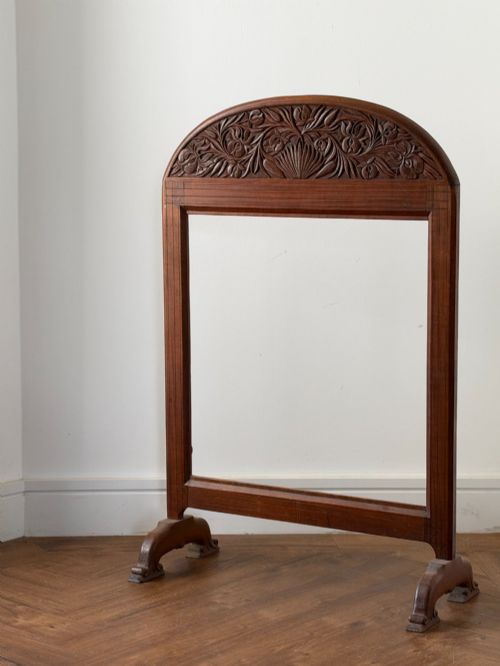
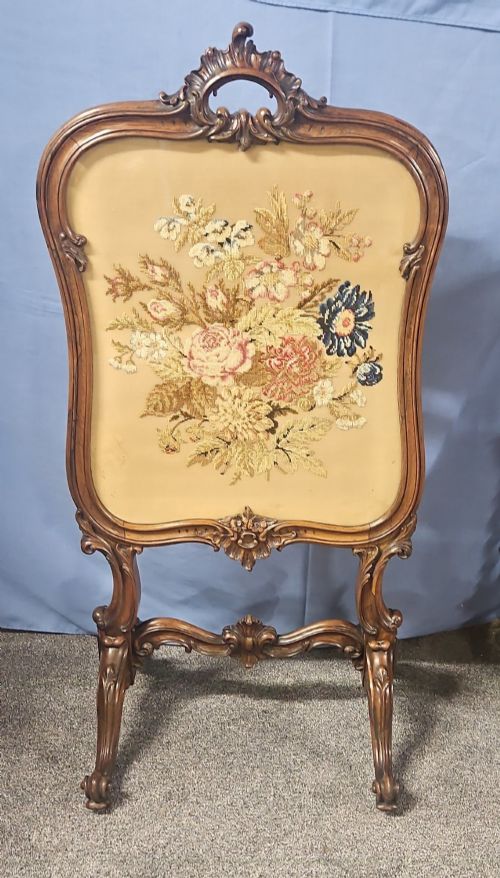
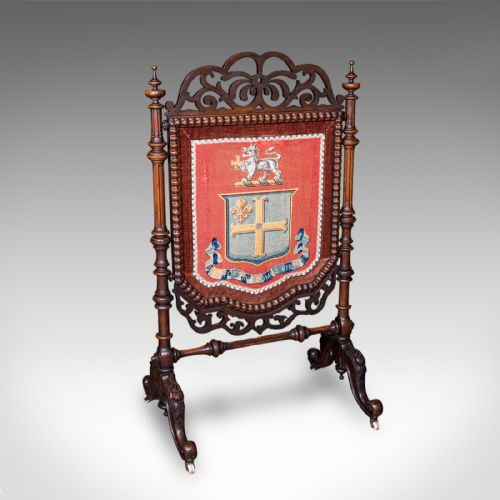


Carved Walnut Fire Screen
These carved walnut fire screen examples bring warmth and period decoration to a room, offering tactile wood and intricate needlework panels.
Carved Walnut Fire Screen
When you search for a carved walnut fire screen, you are looking at practical household accessories designed to shield inhabitants from excessive fireplace heat. These pieces range from upright floor-standing items to adjustable designs equipped with doors or panels.
The versions you are most likely to meet on this page hail from the nineteenth century and the Victorian era, alongside earlier Georgian and Regency iterations. They typically combine a dark wooden frame with textile insertions.
Makers utilised various formats, including pole screens on decorative stands and larger tapestry screens with needlework pictures. Origin notes across the inventory point towards English and Irish craftsmanship.
How they were made
Makers fashioned the primary structures from solid walnut and carved hardwood, shaping frames with decorative flourishes characteristic of the Rococo Revival style. Structural joints relied on traditional carpentry techniques suitable for upright furniture.
Interior panels incorporated hand-woven tapestry, woolwork, needlepoint, and embroidered textiles depicting pastoral scenes or armorial motifs. Certain pieces integrated glass, bronze, and brass elements alongside adjustable components.
Carved Walnut Fire Screen Retail Price Guide 2026
Typical asking prices for carved walnut fire screen among the pieces listed under this phrase on Sellingantiques today, from the lower quarter to the upper quarter. They describe what is for sale here now, not the wider market.
The listings span the Georgian, Regency, and Victorian periods, utilising walnut, wool, glass, silk, brass, and tapestry.
What varies in quality
The distinction between standard examples and finer items rests in the depth and crispness of the woodwork carvings. Elaborate Rococo Revival curves and baronial styling demand greater skill from the artisan than plain framing.
Needlework quality dictates much of the visual appeal, where finely executed hand-woven tapestry and detailed armorial embroidery elevate the piece. The inclusion of specialised materials like etched glass or bronze adjustments also marks out superior manufacture.
The Carved Walnut Fire Screen Glossary
- Walnut
- A dense, dark hardwood favored for its rich grain and suitability for intricate carving. It provides the sturdy framework for these screens.
- Needlepoint
- A type of canvas work embroidery used to create pictorial panels within the wooden frames. These often depict pastoral or armorial subjects.
- Pole screen
- A vertical stand featuring an adjustable sliding panel mounted on a central shaft. This design allowed users to position the shield against the heat.
- Rococo Revival
- A nineteenth-century design movement characterised by asymmetrical scrolls, naturalistic plant motifs, and ornate curves. It heavily influenced the ornamentation of these frames.
Carved Walnut Fire Screen: Frequently Asked Questions
What is a carved walnut fire screen?
A carved walnut fire screen is a decorative wooden furnishing designed to block radiant heat from an open hearth. They typically feature an upright frame holding a fabric panel or glass screen.
Historically placed in front of fireplaces when fires were unlit, these items also served to protect ladies' facial complexions from melting wax makeup.
How do I date a fire screen?
Dating relies on examining the timber, the style of the carving, and the technique used in any accompanying textile panel. Victorian and nineteenth-century examples often display revival motifs.
Earlier pieces from the Georgian and Regency periods show different proportions and simpler structural framing. Comparing the construction methods helps confirm the era of manufacture.
Were these screens used for heat?
Yes, their primary historical purpose was to shield occupants sitting near a roaring coal or wood fire from sudden heat surges. They could be moved around the room as needed.
As heating methods evolved, their practical utility declined, leading to their preservation primarily as decorative interior furnishings.
How should I clean the woodwork?
Maintenance involves dusting the walnut frame gently with a dry, soft cloth to prevent the accumulation of dirt within the carved recesses. Avoid using harsh chemical sprays or abrasive polish.
For the textile panels, professional conservation advice is recommended to protect fragile historic needlework and tapestry threads from damage.