



Antique Fire Guard Frame
An antique fire guard frame protects a room from stray embers while bringing period character to a hearth.
Antique Fire Guard Frame
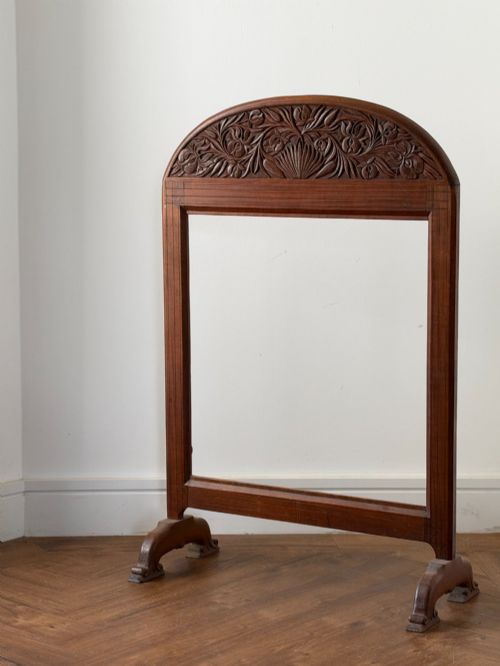
When you search for an antique fire guard frame, you encounter a practical hearth accessory that doubles as a decorative room divider. These pieces shield rooms from open flames and sparks while framing decorative panels of glass, textile, or mirror.
The versions most commonly met on this page span the Victorian era, the Art Nouveau period, and the 1920s. They take the form of fire screens, nursery guards, and club fenders fashioned from metals and woods.
Makers designed these frames to stand independently or attach securely around a fireplace opening. Their evolution traces changes in domestic heating, shifting from functional nursery protection to refined parlour decoration.
How they were made
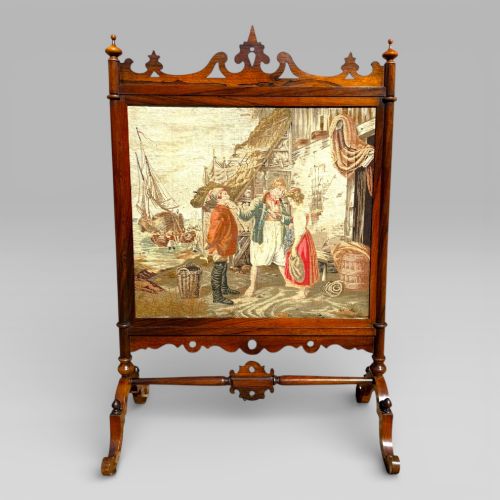
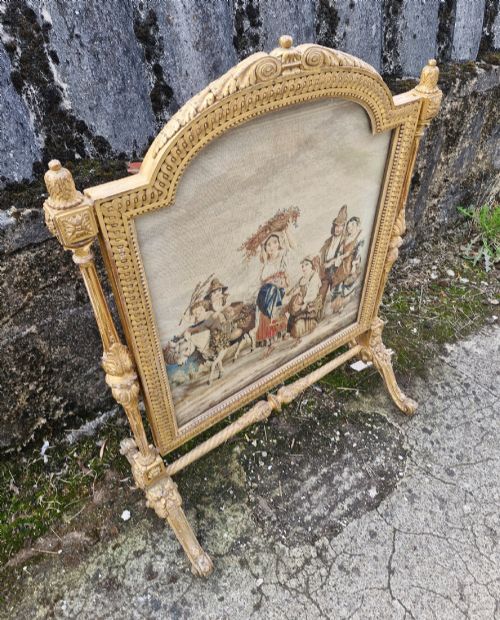
Craftsmen shaped these frames using cast or beaten brass, carved hardwoods like walnut and rosewood, and giltwood. Metal elements involved foundry work and polishing, whilst wooden examples relied on traditional joinery and hand carving.
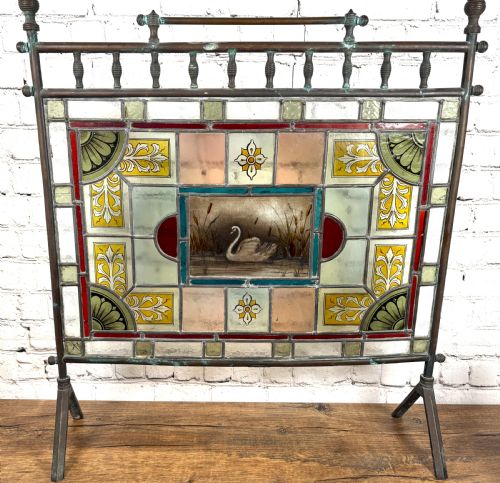
Makers set various infills into the structural frames, including stained glass, cut glass, needlework textiles, wool panels, and sunburst mirrors. These varied materials required specialised mounting techniques to hold delicate glass or tensioned fabric securely within rigid metal or wood borders.
Antique Fire Guard Frame Retail Price Guide 2026
Typical asking prices for fire guard frame among the pieces listed under this phrase on Sellingantiques today, from the lower quarter to the upper quarter. They describe what is for sale here now, not the wider market.
Materials utilised across the current selection include brass, rosewood, walnut, giltwood, stained glass, cut glass, wool, and textile.
What varies in quality
The distinction between ordinary and exceptional frames lies in the crispness of the casting or the depth of the wood carving. Fine examples display well-defined details in brass work and precise joinery that holds heavy glass or mirror panels without distortion.
The Antique Fire Guard Frame Glossary
- Fire screen
- A movable panel placed before a fireplace to block radiant heat when the fire is low. These freestanding frames hold glass, mirror, or fabric inserts.
- Club fender
- A low, padded hearth seat built over a metal frame. They often feature leather upholstery and open brass or iron balustrades.
- Nursery guard
- A tall, protective barrier enclosing the hearth to keep children and pets away from flames. Early examples utilise sturdy brass frames and fine mesh.
- Giltwood
- Timber treated with gold leaf or a gold-coloured metallic finish. This technique creates a bright, reflective surface popular on decorative Victorian frames.
- Needlework
- Hand-stitched textile art created with yarn on canvas. Victorian screens frequently housed these elaborate embroidered panels behind protective glass.
Antique Fire Guard Frame: Frequently Asked Questions
What is a fire guard frame?
A fire guard frame is a structural barrier designed to stand in front of a fireplace. It holds decorative panels or protective mesh.
These pieces keep rooms safe from sparks while adding a distinct stylistic focal point to the hearth.
How were fire screens used?
Historically, occupants positioned fire screens to block excessive heat radiating from large coal or wood fires. They also concealed unlit hearths during warmer months.
In grand rooms, ornamental versions showcased fine needlework or stained glass to enhance the interior decor.
Are these frames safe to use?
Most antique frames are designed for decorative display or gentle hearth use rather than containment of roaring modern fires. Sturdy brass nursery guards offer physical protection, while delicate glass or fabric screens suit unlit fireplaces.
Buyers should assess the stability and material resilience of each piece before placing it near an active flame.
How do I date a frame?
Dating relies on stylistic clues and material combinations, such as the sinuous organic lines typical of Art Nouveau brass work or the heavy rosewood of the Victorian era. Construction methods and fastening types also provide clear indicators of age.
Comparing the decorative motifs against established design periods helps determine the likely decade of manufacture.