


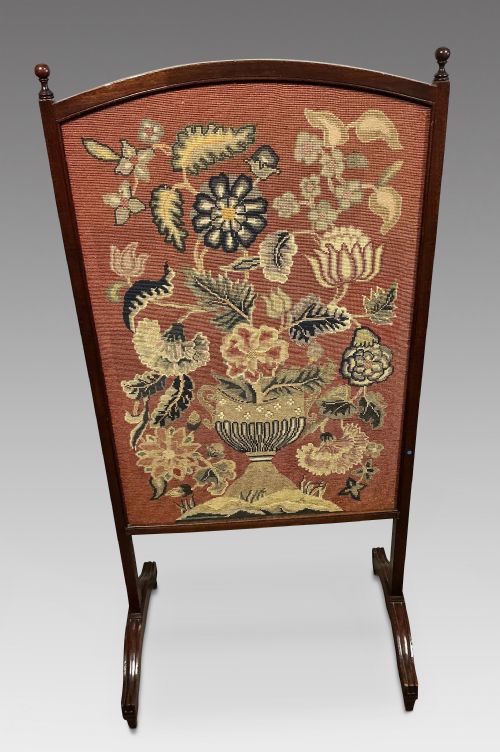


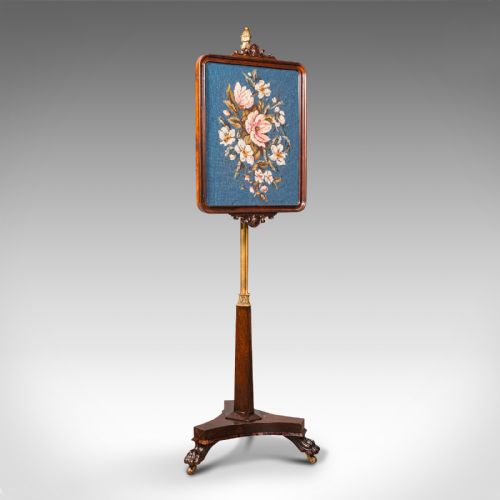


Floral Carved Fire Screen
These floral carved fire screen pieces block the draught while adding texture to a room, spanning nineteenth-century styles.
Floral Carved Fire Screen
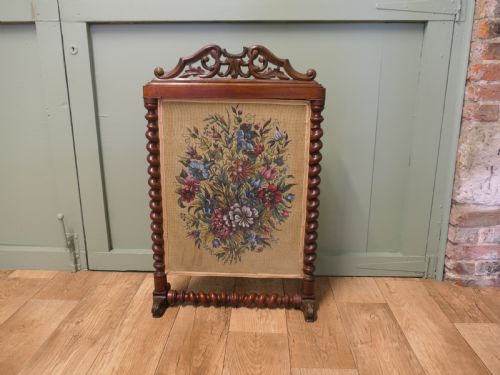
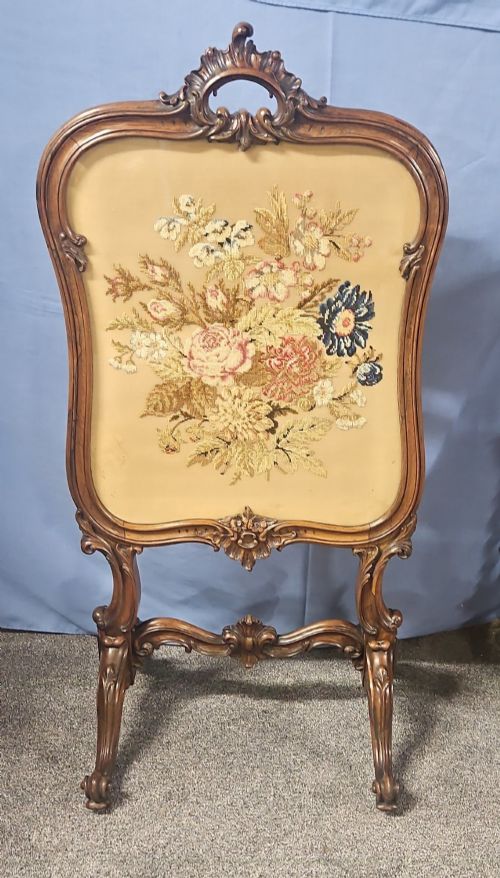
A floral carved fire screen protects sitting room occupants from the direct heat of an open grate whilst framing a decorative textile panel. Most examples found here date from the nineteenth century, encompassing Victorian and Regency periods.
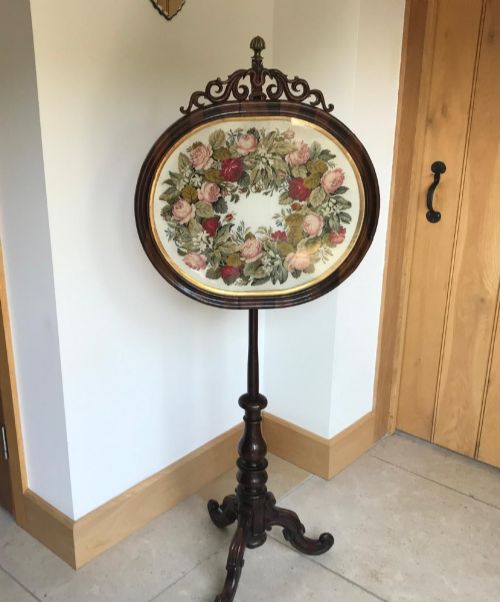
Makers utilised woods such as rosewood, mahogany, walnut, and giltwood. Forms range from grand country house mahogany frames to adjustable pole screens.
How they were made
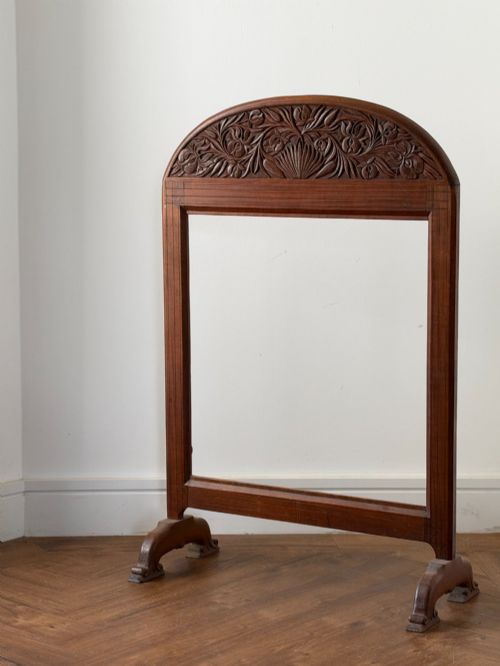
Cabinetmakers shaped dense hardwoods like rosewood, walnut, and mahogany into sturdy frames and turned pillars. Carving appears on bases and crestings, often showing floral details.
Textile panels rely on woolwork, canvas work, and needlepoint tapestry stitched by hand. Some pieces employ brass fittings for adjustable pole mechanisms or canvas backing.
Floral Carved Fire Screen Retail Price Guide 2026
Typical asking prices for floral carved fire screen among the pieces listed under this phrase on Sellingantiques today, from the lower quarter to the upper quarter. They describe what is for sale here now, not the wider market.
Materials recorded across the inventory include rosewood, brass, mahogany, canvas, tapestry, wool, walnut, and textile.
What varies in quality
The crispness of the timber carving distinguishes finer workshop output from simpler production. Deeply carved foliage and well-proportioned tripod bases indicate skilled joinery.
The complexity and preservation of the needlework panel dictate visual success. Intricate floral tapestry work with secure stitching and original canvas elevates the piece.
The Floral Carved Fire Screen Glossary
- Pole screen
- A vertical stand holding an adjustable sliding panel designed to shield the face from fireplace heat. The panel moves up and down on a central shaft.
- Tapestry
- Hand-stitched textile work using wool or silk threads on a canvas ground. These panels frequently display floral scenes within fire screens.
- Tripod base
- A three-legged support structure commonly found beneath pole screens. This design ensures stability on uneven floorboards.
- Needlepoint
- Embroidery stitched over a stiff open-weave canvas grid. It forms the durable pictorial surface seen on many nineteenth-century screens.
- Giltwood
- Timber treated with a thin layer of gold leaf or metallic gilt finish. Regency examples occasionally employ this technique for decorative effect.
Floral Carved Fire Screen: Frequently Asked Questions
What is a pole screen?
A pole screen is a tall stand featuring a sliding panel that adjusts vertically. It was placed near a fireplace to protect the face from excessive heat.
Users moved the screen up or down the central wooden shaft depending on where the heat hit.
How were these screens used?
These screens stood between seating areas and open hearths to block radiant heat and drafts. They doubled as decorative focal points in nineteenth-century drawing rooms.
The textile panels displayed domestic needlework skills and added colour to the interior.
How do I spot a Regency screen?
Regency pieces often display classical influence, featuring giltwood, slender turned columns, and neat tripod bases. They frequently date from the early nineteenth century.
The proportions tend to be crisp and restrained compared to later Victorian iterations.
What woods were used?
Cabinetmakers relied on durable timbers such as rosewood, mahogany, and walnut. Anglo-Indian variants constructed from walnut also appear in the selection.
These dense hardwoods provided the weight needed for stable floor stands.