





Floral Embroidered Screen
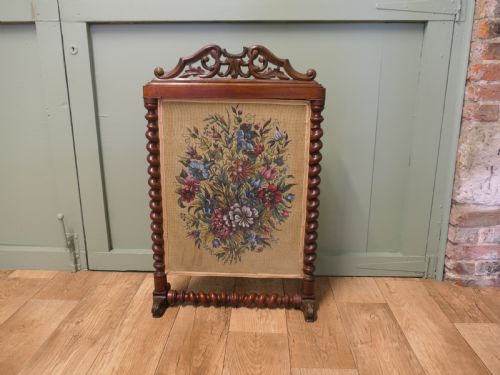
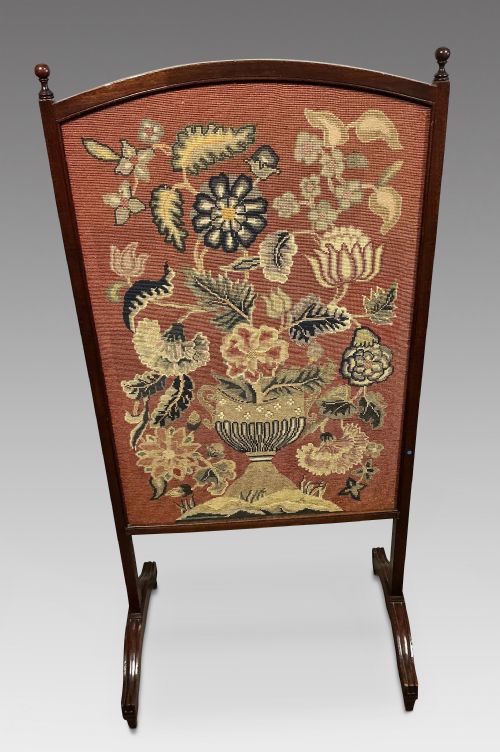
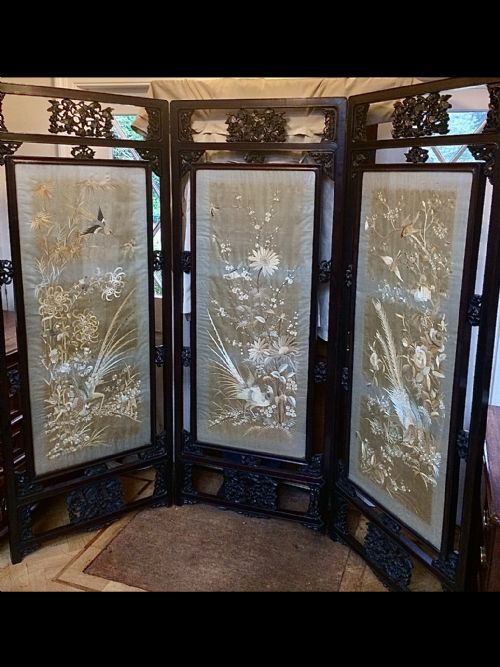
These floral embroidered screen examples bring needlework and carved timber together, offering both decorative charm and practical warmth to a room.
Floral Embroidered Screen
A floral embroidered screen is a decorative furnishing designed to stand before a fireplace or divide a room, combining textile art with a wooden frame. When searching for a floral embroidered screen, buyers typically encounter examples from the Georgian, Regency, and Victorian periods.
The selection ranges from upright pole screens with adjustable panels to larger folding screens and firescreens. Most pieces feature stitched panels of wool, silk, or tapestry mounted in timber frames such as mahogany, rosewood, walnut, or giltwood.
How they were made
Craftsmen built the structural frames using hardwoods like mahogany, walnut, rosewood, and goncalo alves, often incorporating carved bases and gilded details. Pole screens utilised sliding mechanisms to adjust the height of the central viewing panel according to the heat of the fire.
The textile panels display needlework techniques including woolwork, silkwork, and tapestry canvas stitching. These panels were stretched and secured within wooden surrounds, sometimes protected behind glass in fireside reflector models.
Floral Embroidered Screen Retail Price Guide 2026
Typical asking prices for floral embroidered screen among the pieces listed under this phrase on Sellingantiques today, from the lower quarter to the upper quarter. They describe what is for sale here now, not the wider market.
Listings feature items spanning the Georgian, Regency, and Victorian periods, constructed from mahogany, walnut, rosewood, and silk textiles.
What varies in quality
The distinction between standard examples and finer pieces lies in the crispness of the timber carving and the complexity of the needlework. Superior frames feature detailed moulding and substantial turning, while lesser pieces rely on simpler construction.
The artistic merit and tightness of the stitching within the wool, silk, or tapestry panel also define the tier of the piece. Well-preserved textiles with vibrant thread work elevate the overall standing of the item.
The Floral Embroidered Screen Glossary
- Pole screen
- A standing firescreen featuring a vertical shaft and an adjustable panel that slides up and down. This design allowed occupants to shield their faces from the intense heat of an open hearth.
- Tapestry
- A form of textile art woven on a loom or stitched by hand onto canvas. These panels frequently depict floral motifs and historical scenes within antique furnishings.
- Giltwood
- Timber that has been coated with a thin layer of gold leaf or gilt paint. It appears on decorative frames and mounts from the Regency and Victorian eras.
- Goncalo alves
- A dense exotic hardwood prized for its striking contrasting grain patterns. It was occasionally utilised for high-status furniture frames during the Regency period.
Floral Embroidered Screen: Frequently Asked Questions
What is a pole screen?
A pole screen is a slender antique stand featuring a vertical wooden rod and a movable embroidered panel. The panel could be raised or lowered to protect a person's face from the glare and heat of an open fire.
These pieces were typically placed near hearths in formal reception rooms. They combined practical temperature control with a display of fine needlework skill.
How do I date a firescreen?
Dating relies on examining the timber species, the turning of the woodwork, and the style of the frame. Regency pieces often feature goncalo alves or rosewood with refined classical proportions, while Victorian items lean towards heavier walnut or rosewood revival styles.
The stitching style on the textile panel also offers clues, as needlework techniques shifted across the Georgian, Regency, and Victorian decades.
What woods were used?
Cabinetmakers utilised a variety of native and exotic timbers depending on the period and status of the piece. Mahogany, walnut, and rosewood appear frequently across the nineteenth-century examples.
Finer decorative items also incorporated giltwood frames or exotic hardwoods like goncalo alves to add visual presence to the room.