
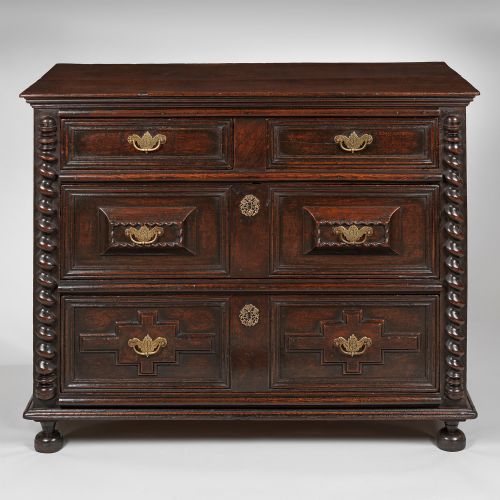


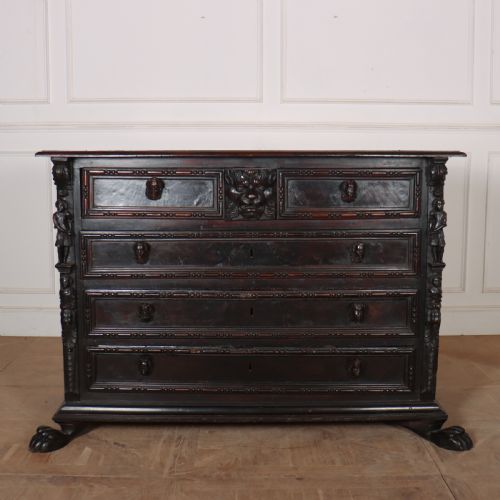


Carved Walnut Coffer
A carved walnut coffer is a robust storage chest built for historic interiors, prized for rich figure and relief work.
Carved Walnut Coffer
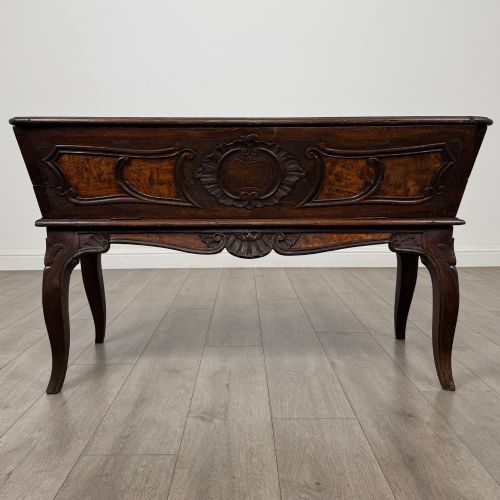
A carved walnut coffer serves as a heavy-duty container fashioned from dark timber, found across the sixteenth, seventeenth, and eighteenth centuries. You meet examples spanning Italian Renaissance cassone forms, Spanish royal boxes, and French provincial dough bins or plank chests.
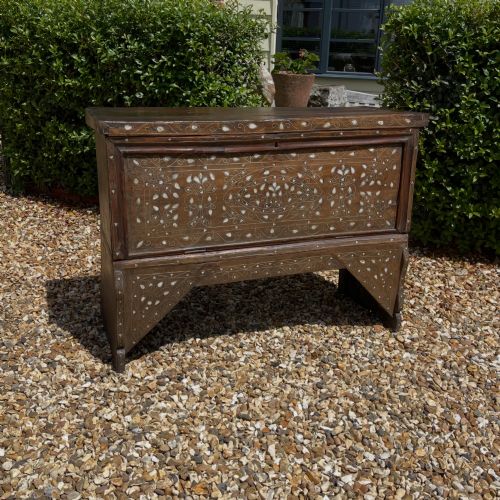
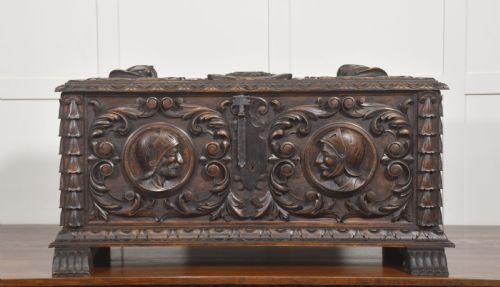
The evidence shows these storage pieces appear in various guises, from miniature seventeenth-century boxes to large Italian marriage chests fitted with carved feet and candle boxes. Buyers encounter distinct regional carving styles, including figural medallions, gilt Gothic decoration, and simpler provincial panels.
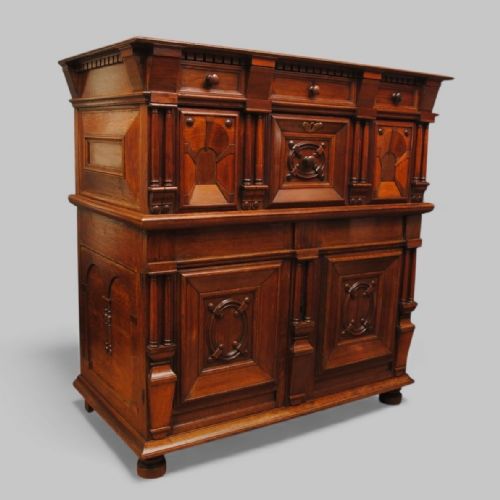
Most entries belong to the seventeenth and nineteenth centuries, merging functional utility with decorative relief. They function equally well as low tables, hallway benches, or focal storage trunks in contemporary rooms.
Assessing Quality and Handiwork
Quality rests upon the crispness of the relief carving and the depth of figure in the walnut timber itself. Pieces displaying integrated figural medallions or gilt Gothic decoration stand apart from plain plank-built versions.
Structural integrity and the retention of original iron hardware, feet, and internal candle boxes determine the standing of an individual chest. Finer examples maintain untouched patination across the walnut surfaces.
Secret candle boxes hide inside sixteenth-century coffers, preserving fragrant tallow candles away from hungry household mice.
The Carved Walnut Coffer Glossary
- Cassone
- A large Italian chest or coffer, often decorated with carving or gilt work, traditionally used as a marriage chest. These storage pieces hold household linens and valuables.
- Dough bin
- A provincial furniture form combining storage and utility, frequently constructed in walnut with a lift top. It serves as a rustic cousin to the formal coffer.
- Commode
- A low chest of drawers or cabinet with a lift top or drawer configuration. French and Italian examples often utilise serpentine fronts.
- Plank chest
- A primitive trunk constructed from thick vertical timber boards joined at the corners. They represent early storage solutions before panel-and-frame construction became standard.
- Burr walnut
- A prized timber figure showing swirling grain patterns caused by tree growths. Cabinet makers sliced this wood for decorative veneers on eighteenth-century furniture.
Carved Walnut Coffer: Frequently Asked Questions
How do I clean a carved walnut coffer?
Dust the relief carving regularly with a soft, dry brush to prevent dirt accumulation in the recesses. Apply a traditional beeswax polish sparingly to nourish the timber.
Avoid modern liquid cleaners or silicone sprays, which damage historic finishes. Keep the wood away from direct heat sources to prevent splitting.
Where should I place a coffer at home?
Position the chest at the foot of a bed or beneath a window for practical blanket storage. They also anchor an entrance hall when paired with cushions.
Ensure the room maintains stable humidity levels to protect the antique walnut timber. Allow clearance above the lid so it opens fully without striking walls.
What is the difference between a coffer and a cassone?
A coffer is a general term for a heavy storage chest, while a cassone specifically denotes an Italian Renaissance marriage chest. Cassoni often feature elaborate gilt decoration and figural medallions.
Both forms served identical storage functions in historic households. Italian examples lean toward sculptural architectural motifs.
Can I use an antique coffer for daily storage?
These sturdy chests handle heavy household items like spare blankets, winter woollens, and bulky textiles with ease. The internal space accommodates numerous linens.
Check that interior surfaces remain clean and free from rough splinters before storing delicate fabrics. Use acid-free tissue paper for valuable textiles.