


Antique Cassone Coffer
An antique cassone coffer brings sculptural wood, centuries of storage history, and Italian Renaissance form straight into a room.
Antique Cassone Coffer
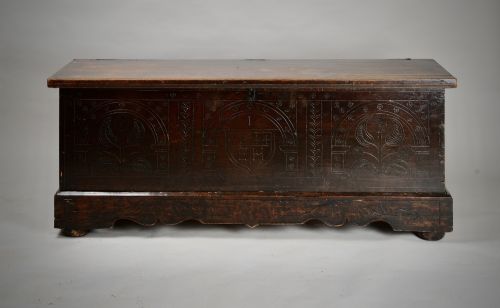
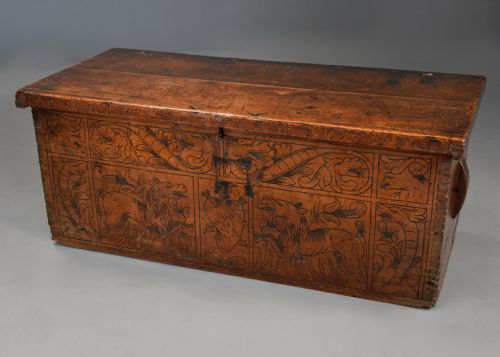
An antique cassone coffer serves as a substantial storage chest that evolved from medieval utility into an ornate domestic centrepiece. You encounter heavy walnut and cypress examples originating from seventeenth-century Italy alongside later nineteenth-century revivals and painted marriage chests.
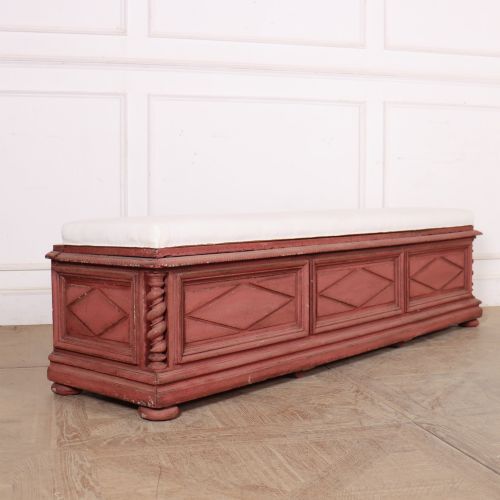
The pieces on this page span seventeenth-century continental craftsmanship to nineteenth-century interpretations, including carved walnut, painted wood, and oak variations. These large chests function traditionally as blanket boxes, benches, or dramatic focal points in hallways and living spaces.
How they were made
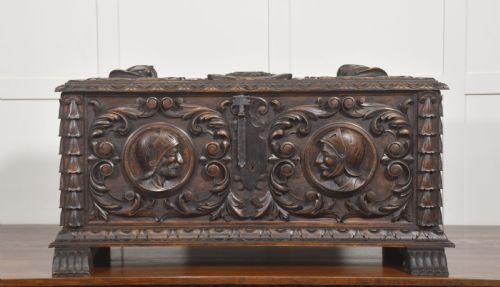
Cabinetmakers constructed these coffers using dense hardwoods like walnut, oak, and cypress, often joining heavy panels with traditional woodcraft techniques. Surfaces received elaborate treatment through deep chisel carving, figural medallions, or tempera paint and gilding applied over gesso.
Iron hardware such as hinges and locks provided structural security and functional endurance. Artisans selected timber for grain pattern and durability, finishing surfaces with oils and waxes that developed rich patinas over centuries of handling.
The furniture spans distinct periods from seventeenth-century continental workshops to nineteenth-century Italian folk art and Renaissance revivals.
What varies in quality
The distinction between standard and exceptional pieces rests upon the depth and artistry of the carving, particularly where figural medallions and gothic decorations appear. Original surfaces and untouched patinas elevate a piece far above examples that have undergone heavy modern restoration or re-painting.
Timber selection dictates overall character, with dense North Italian cypress and finely figured seventeenth-century walnut representing the stronger tier of construction. The survival of original gilding, tempera paint, and authentic iron work marks the difference between basic utility items and masterwork marriage chests.
The Antique Cassone Coffer Glossary
- Cassone
- A large Italian chest or coffer, traditionally commissioned as a marriage chest to hold a bride's trousseau. These pieces often feature elaborate carving, painting, or gilding.
- Coffer
- A sturdy wooden box used for storing valuables, textiles, or documents. They frequently double as benches and feature hinged lids.
- Tempera paint
- A permanent, fast-drying painting medium consisting of coloured pigments mixed with a water-binder agent such as egg yolk. This technique appears on decorated Italian cassones.
- Patina
- The surface sheen and colour developed by wood and metal over long periods through age, handling, and wax polishing. A desirable patination indicates genuine historical depth.
- Gilt
- Covered thinly with gold leaf or gold paint. Many renaissance cassones utilise gilding to highlight carved architectural details and figural medallions.
Antique Cassone Coffer: Frequently Asked Questions
What is a cassone coffer?
A cassone coffer is a traditional large storage chest, deeply rooted in Italian domestic history where they served as marriage chests for household goods.
Over time these heavy wooden chests transformed from simple utility boxes into highly decorative furniture featuring carved panels, painted scenes, and gilded accents.
How were they used historically?
Wealthy families utilised these large chests to transport and store a bride's trousseau, including linens, garments, and valuables. Their sturdy construction also allowed them to function as tables, benches, or sleeping platforms during long journeys.
In the main hall of a palazzo, a decorated cassone displayed the status and wealth of the household through heraldry and mythological carvings.
How do I style a cassone in a modern room?
Place a heavy walnut or painted coffer at the foot of a bed, in a wide hallway, or beneath a large painting as a focal anchor. Their substantial proportions and flat tops provide practical surface space while keeping blankets or winter items hidden away.
Allow the natural timber grain or historic painted finish to contrast against neutral walls to highlight the age of the piece.
How can I tell seventeenth-century pieces from nineteenth-century revivals?
Seventeenth-century examples display authentic tool marks, dense walnut or cypress construction, and deep natural patinas accumulated over hundreds of years. Iron hardware and hinges on older pieces usually show hand-forged irregularities.
Nineteenth-century revival pieces often utilise machine-sawn timbers, different secondary woods, or decorative treatments that attempt to mimic earlier Renaissance motifs without the same depth of wear.