

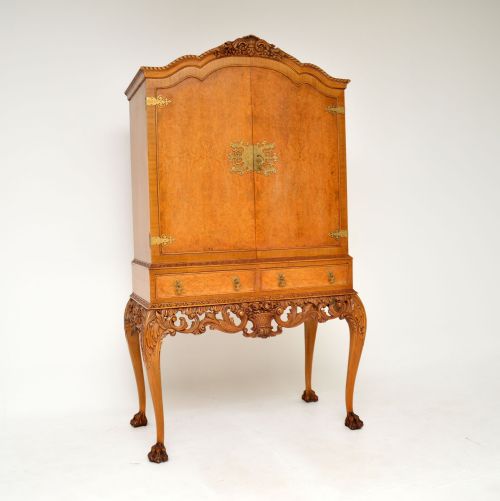
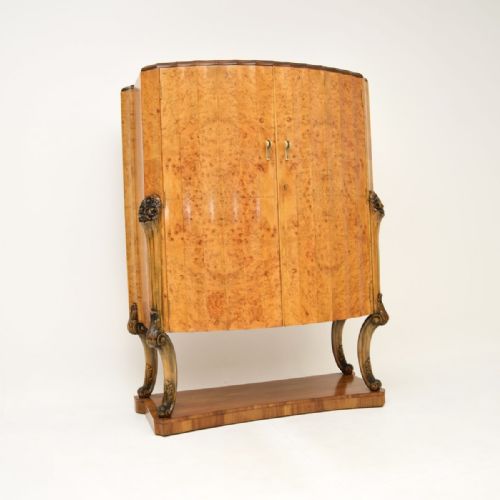
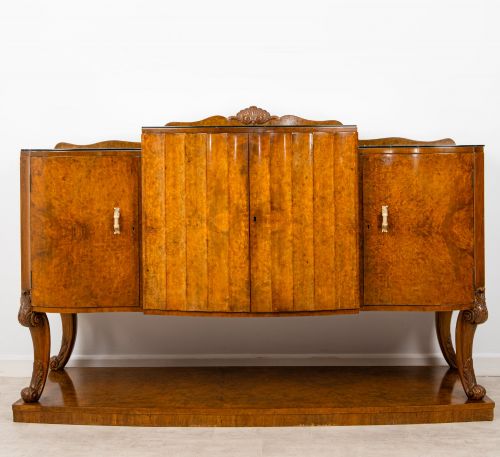
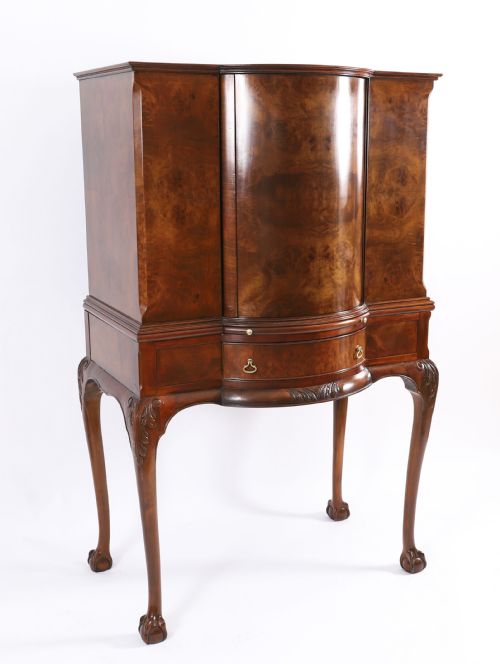
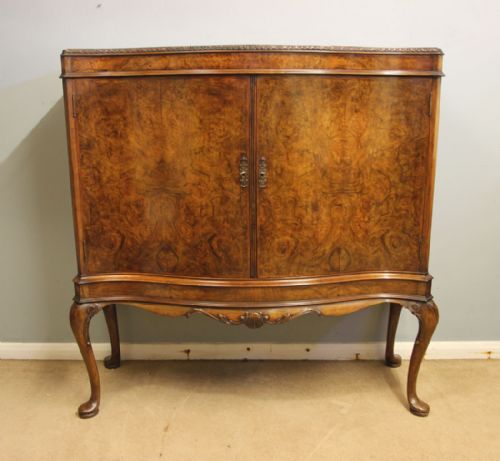
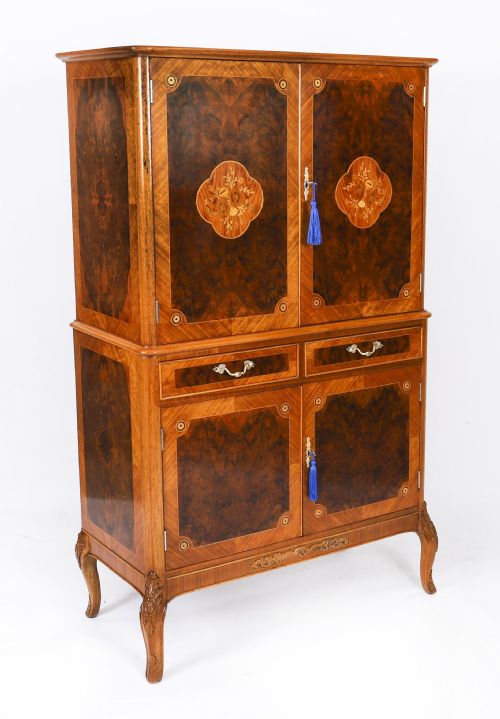


Carved Walnut Cocktail Cabinet
A carved walnut cocktail cabinet brings period glamour to a modern room, housing your glassware and bottles in style.
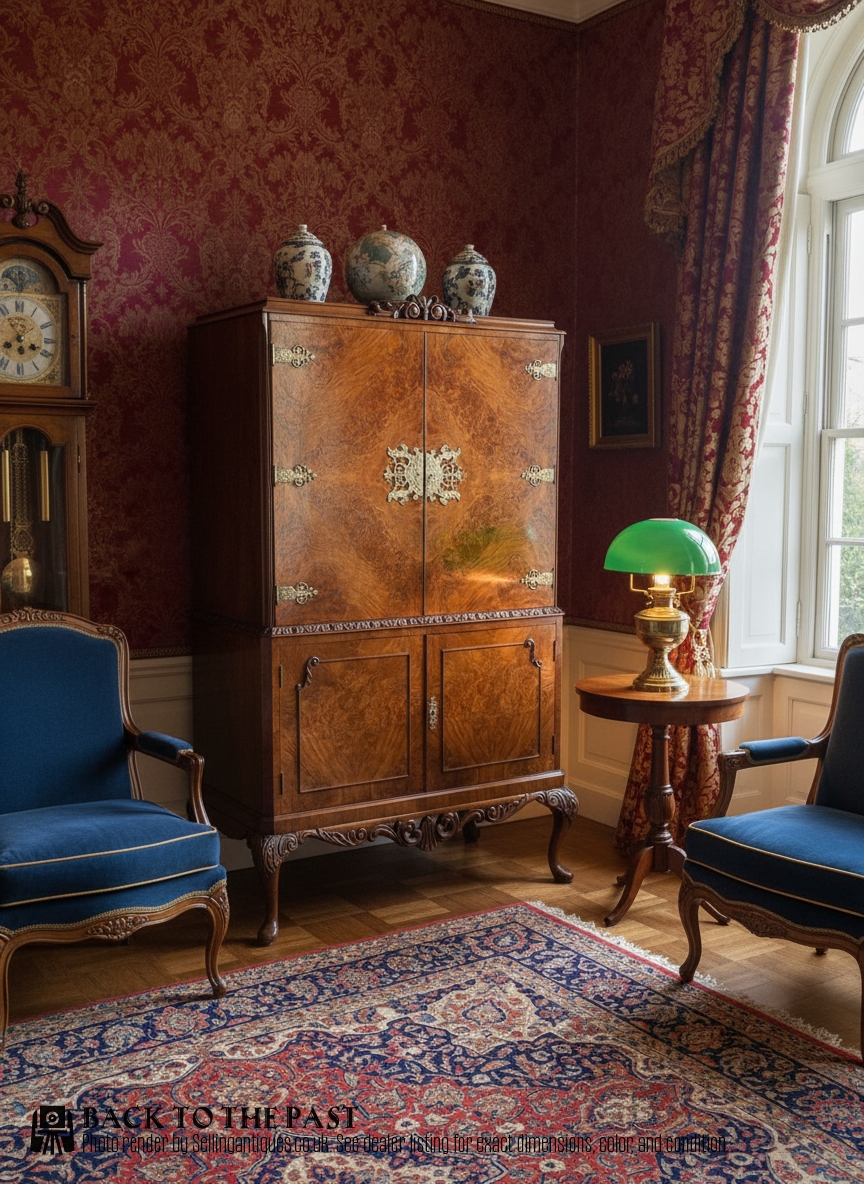
What a carved walnut cocktail cabinet is
When you search for a carved walnut cocktail cabinet, you are looking at sophisticated home entertaining furniture from the early twentieth century. These pieces bridge the gap between practical storage and decorative statement furniture, emerging from periods such as the nineteen-twenties and nineteen-thirties.
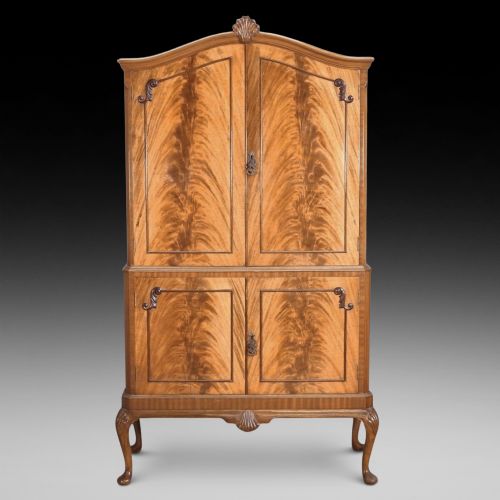
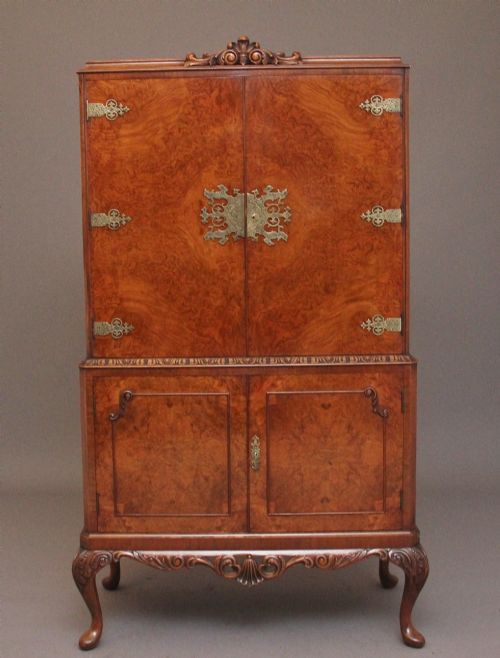
You are most likely to meet pieces finished in rich burr walnut, flame walnut veneer, or standard walnut timber. The designs range from streamlined Art Deco creations to revivalist forms featuring traditional carved details.
Many examples arrive with specialised storage for bottles, glasses, and bar accessories. Whether standing independently or raised on decorative stands and bases, these cabinets reflect the social habits of their era.
How they were made
Cabinet makers utilised solid walnut alongside decorative veneers like burr walnut and flame walnut to create striking exterior patterns. The natural grain of the wood took centre stage on the main body and doors of the piece.
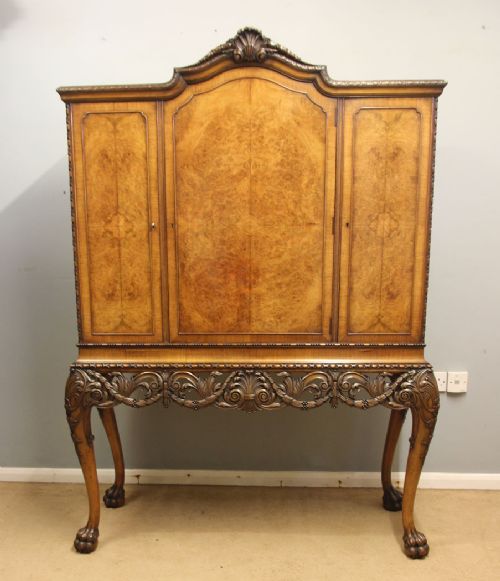
Metal components such as brass hardware provided functional accents and decorative contrast to the dark timber surfaces. Carving was applied to specific structural elements, including cabriole legs and supportive bases, to add texture and decorative flair.
Retail Price Guide 2026
Typical UK retail prices for carved walnut cocktail cabinet, calculated from the Sellingantiques database of over a million retail prices indexed since 2003. This retail price guide relies exclusively on Sellingantiques data; no external sources or auction records are used, so the figures do not describe the wider market.
The documented pieces originate primarily from the nineteen-twenties and nineteen-thirties decades.
What varies in quality
The sophistication of the veneer work largely determines the visual hierarchy of these cabinets. Finely matched burr walnut and flame walnut grain patterns across the front doors elevate a piece far above simpler plain timber surfaces.
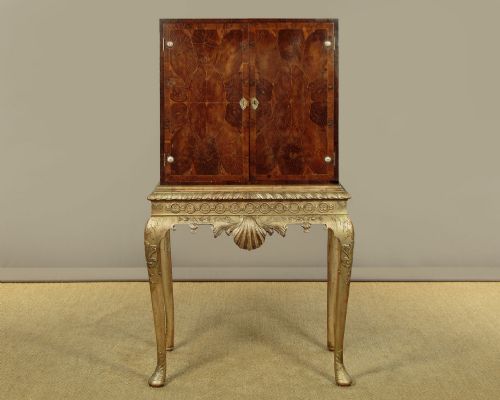
The ambition of the supporting structure also shifts the character of the object, moving from straightforward floor cabinets to elaborate designs raised on carved giltwood bases or bespoke stands. Maker attribution, such as work associated with Epstein, shifts the standing of a piece considerably within the market.
Epstein
The Carved Walnut Cocktail Cabinet Glossary
- Burr walnut
- A figured wood grain obtained from walnut tree growths, prized for its swirling, intricate patterns. It appears frequently on the exterior doors of high-end drinks cabinets.
- Art Deco
- A design style from the nineteen-twenties and nineteen-thirties characterised by sleek geometric shapes and stylized motifs. Cabinets from this movement often feature streamlined silhouettes.
- Cabriole leg
- A furniture leg that curves outward and then tapers inward, finishing in a decorative foot. This traditional form appears on revivalist cocktail furniture.
- Marquetry
- The art of applying pieces of veneer to a structure to form decorative patterns. Some examples incorporate this detailed wood inlay across the front panels.
Frequently Asked Questions
How do I date a cocktail cabinet?
Dating these cabinets involves examining the overall design style, materials, and structural characteristics. Pieces exhibiting geometric lines and streamlined forms generally align with Art Deco aesthetics from the nineteen-thirties.
Conversely, cabinets featuring cabriole legs and traditional carving often point toward revivalist styles or earlier twentieth-century production. Examining the hardware and interior fittings also helps narrow down the period of manufacture.
Where should I place my cabinet?
These cabinets work effectively in living rooms, dining rooms, or home entertaining spaces as both functional storage and focal points. Position them away from direct sunlight and heat sources to protect the delicate walnut and burr walnut veneers from drying out.
Ensure there is adequate clearance around the doors for opening and accessing the internal bottle storage and glassware shelves. Placing the cabinet against a sturdy interior wall keeps the structure stable.
How do I care for walnut veneer?
Maintain walnut veneer by dusting gently with a soft, dry cloth on a regular basis. Avoid using harsh chemical cleaners, silicone polishes, or excessive moisture, which can damage the delicate wooden surface.
Applying a quality traditional wax periodically helps nourish the wood and preserve the depth of the grain. Keeping the cabinet in a room with stable humidity prevents the veneer from warping or cracking over time.