


Carved Walnut Bergere
A carved walnut bergere is a deep, enclosed armchair built for comfort, bringing substantial French style and warm timber frames into a room.
Carved Walnut Bergere
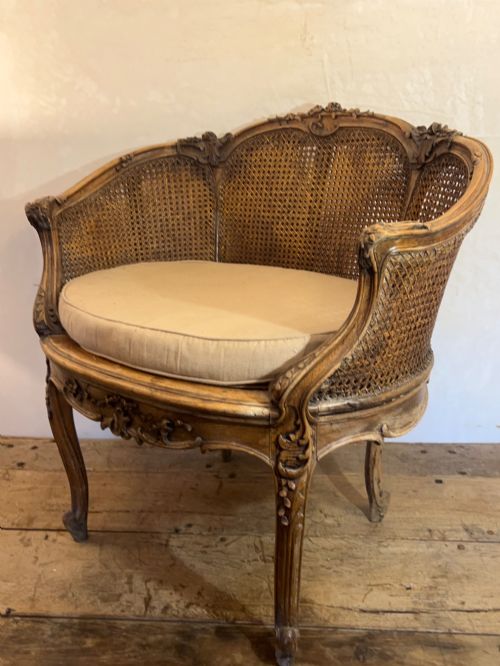
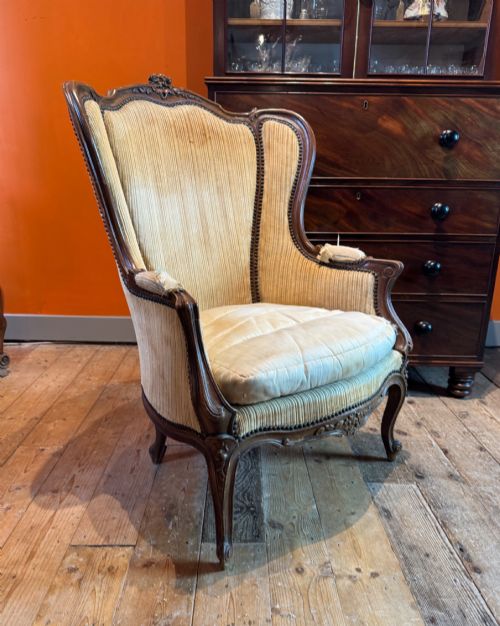
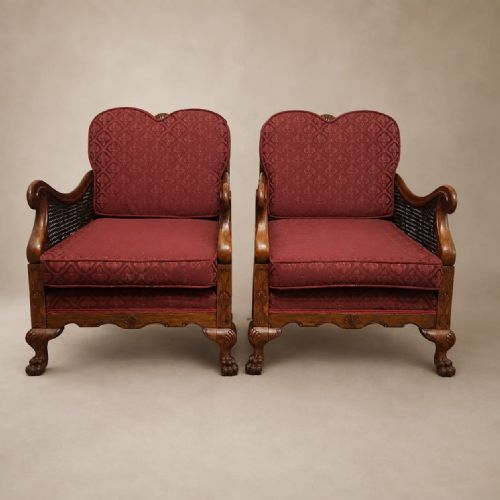
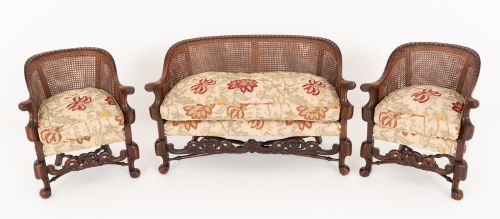
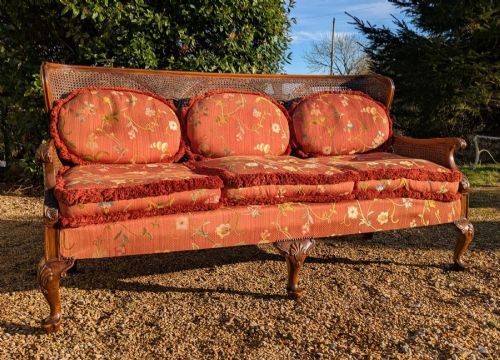
The selections span from the late nineteenth century through to the interwar decades, showing strong ties to French revival designs. Pieces range from single library armchairs and children's seats to large three-piece suites and window seats.
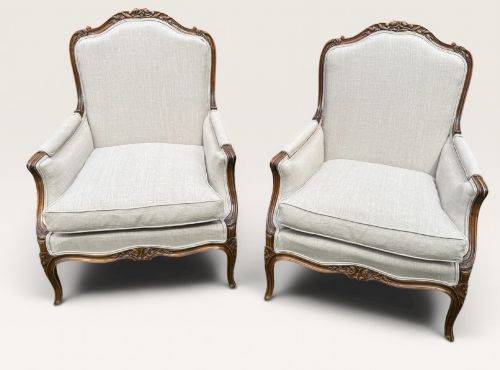
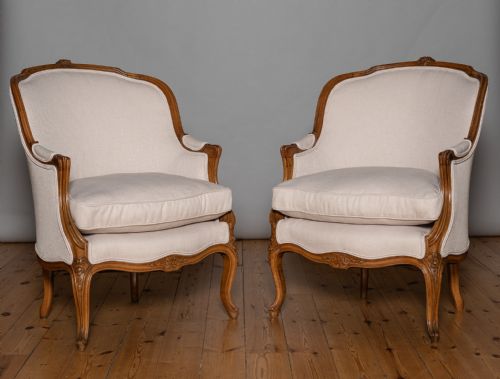
Louis XV and Louis XVI styles dominate the aesthetic, featuring curved lines, carved floral motifs and exposed walnut frames. These seating options combine solid woodwork with soft loose cushions for practical daily use.
What varies in quality
The crispness and depth of the wood carving distinguish finer examples from simpler production. Skilled carvers produced lively, undercut foliage and smooth, flowing contours rather than shallow, mechanical stamping.
The tightness and regularity of the cane work indicate the skill of the artisan who made the frame. Finer seating also relies on robust joinery and high-grade walnut that retains a rich grain and deep colour.
Inventive makers occasionally scaled down these grand designs, producing tiny child-sized armchairs complete with full-size cane work.
The Carved Walnut Bergere Glossary
- Bergere
- An enclosed upholstered armchair with solid wooden sides, often featuring cane panels. This form originated in France and remains popular for its deep seating comfort.
- Cane
- Woven rattan material used for the back and side panels of seating furniture. It provides a light, breathable structure within a heavy timber frame.
- Louis XV Style
- A decorative aesthetic characterised by asymmetrical curves, cabriole legs and floral carvings. It heavily influences nineteenth-century French revival furniture.
- Carolean Style
- A seventeenth-century British design tradition noted for rich carving, scrolls and crown motifs. Pieces in this style utilise dark woods and high backs.
- Giltwood
- Timber treated with gold leaf or metallic paint to create a lustrous surface. It appears on select decorative frames alongside polished walnut.
Carved Walnut Bergere: Frequently Asked Questions
How do I clean cane panels?
Dust cane panels gently with a soft brush to prevent dirt accumulation in the weaves. Avoid excess moisture, which can weaken the natural fibres over time.
Condition the cane occasionally with a damp cloth and let it dry completely in a well-ventilated space to maintain its natural elasticity.
Are these chairs comfortable for daily use?
These armchairs feature deep seats and often include loose feather cushions for added comfort. Their enclosed sides provide a supportive posture for reading or relaxing.
Many period examples have been updated with modern upholstery interiors while retaining their historic wooden frames and woven cane sides.
How do I identify a Louis XV style frame?
Louis XV style frames show sweeping curved lines, scroll feet and asymmetrical floral carvings on the crest rail. The woodwork flows continuously from the arms down to the cabriole legs.
These frames avoid straight lines, preferring organic contours that soften the substantial walnut structure.
Can I mix these with modern furniture?
The rich walnut timber and classic silhouettes pair well with contemporary minimalist interiors. The dark wood tones anchor a room, adding texture and historical contrast.
Placing a single armchair alongside modern sofas creates a focal point that highlights the craftsmanship of the carved frame.