


1930s French Armchair
A 1930s French armchair brings robust leather comfort and striking geometric lines to a room, offering an inviting seat with genuine period character.
1930s French Armchair
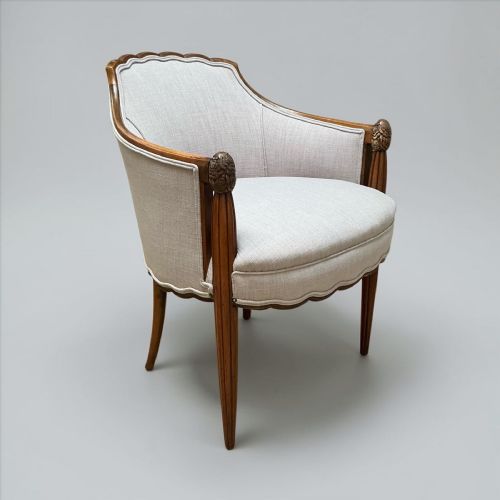
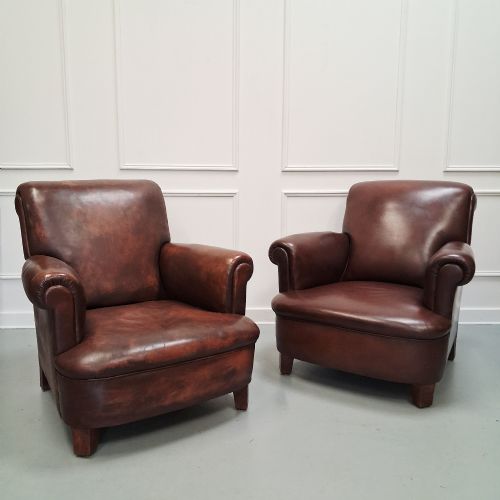
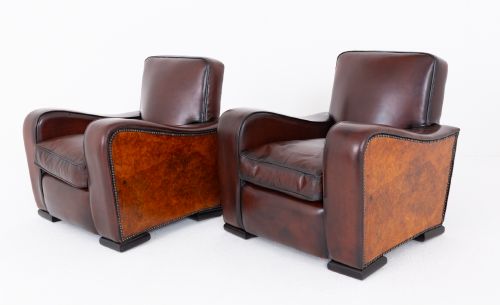
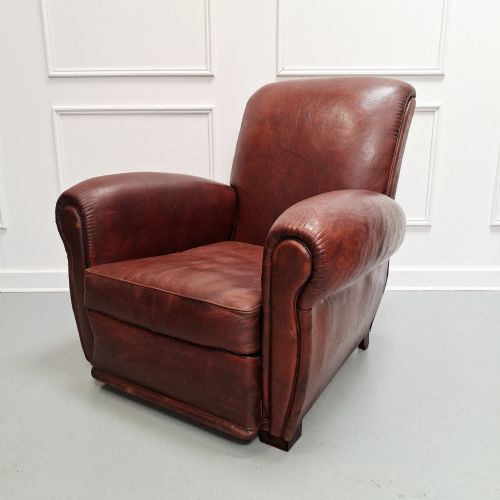
A 1930s French armchair encompasses substantial club chairs, slender bridge chairs, and revival seating forms originating from France during the interwar years. Buyers seeking this phrase encounter sturdy leather club chairs alongside walnut frames and painted revival pieces.
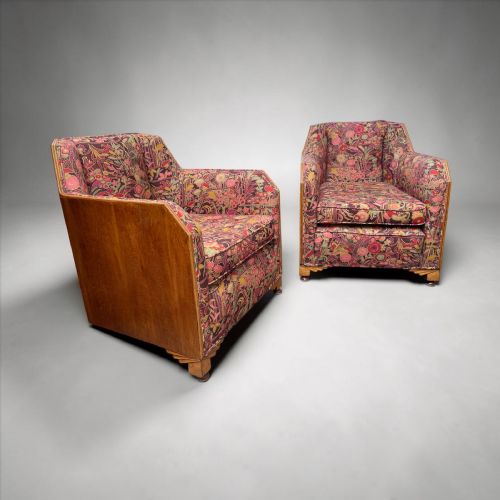
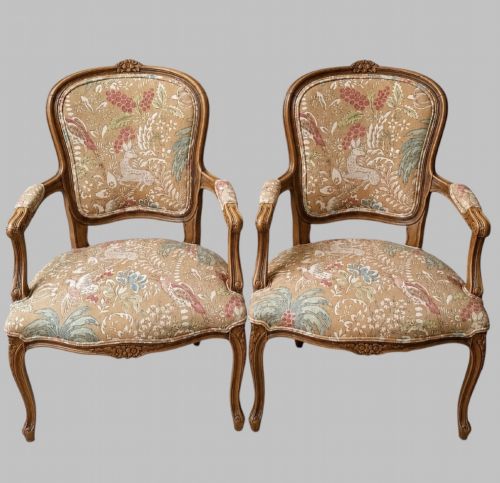
The selection ranges from imposing button-back library chairs to matched pairs and three-piece suites combining sofas and armchairs. Art Deco styles dominate the offerings, though Neo-Rococo and Louis XV revival pieces appear alongside compact bridge chairs.
How they were made
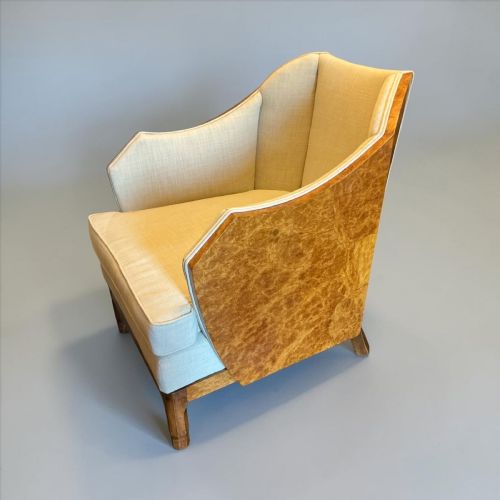
Constructed primarily from timber frames of walnut, beech, hardwood, and burr walnut, these armchairs rely on solid foundational woodwork. Leather upholstery forms the dominant finish for club chairs, often complemented by fabric and brass details.
Makers utilised traditional joinery paired with upholstered sprung interiors to achieve deep comfort. Decorative elements include painted finishes and carved wooden accents seen in revival pieces.
Some bridge chairs were built light enough to be pivoted swiftly during a tense hand of cards.
What varies in quality
The distinction between tiers rests upon the choice of timber and the richness of the leather upholstery. Burr walnut veneers and thick cigar brown leather elevate a piece above standard hardwood frames and plain fabric.
Execution of style marks another division, where clean architectural Art Deco lines and well-executed revival carving demonstrate superior workshop standards compared to simpler forms.
The 1930s French Armchair Glossary
- Club chair
- A deep, comfortable armchair upholstered in leather, designed for relaxed seating in a library or lounge. These chairs often feature rounded backs and generous armrests.
- Bridge chair
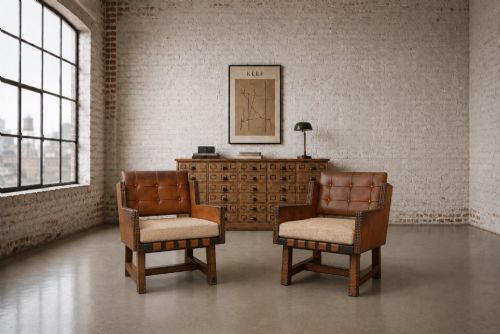
- A compact, lightweight armchair originally used for card games or occasional seating. They typically feature open arms and a smaller footprint than a club chair.
- Burr walnut
- A highly figured wood veneer taken from the burl growths of walnut trees. It provides a swirling, decorative pattern highly prized in high-end cabinet making.
- Neo-Rococo
- A revival style drawing on eighteenth-century decorative motifs characterised by asymmetrical curves and naturalistic ornament. It brings ornate detailing to interwar seating.
1930s French Armchair: Frequently Asked Questions
Are these armchairs comfortable for daily use?
These armchairs are built with deep, sprung seats and supportive backs designed for relaxation. Their robust construction makes them well-suited for everyday sitting in a living room or study.
Leather club versions offer a yielding surface that softens further with age and use. Fabric and bridge variants provide a firmer, upright seat suited to reading or social spaces.
How do I identify an Art Deco armchair?
Art Deco armchairs display clean geometric lines, streamlined forms, and symmetrical designs that break away from heavy historical revival styles. They often incorporate polished walnut or burr walnut veneers alongside smooth leather.
Look for rounded or stepped silhouettes and minimal applied ornament, focusing instead on the natural grain of the wood and the quality of the hide.
What is a bridge chair?
A bridge chair is a smaller, lighter armchair featuring an open wooden frame and upholstered seat and back. They were originally designed for card games and bridge tables where players needed to move seats easily.
Their compact scale makes them useful for smaller rooms or as occasional seating where a large club chair would overwhelm the space.
How do I care for vintage leather?
Vintage leather benefits from regular dusting and occasional treatment with appropriate leather balms to maintain flexibility. Keeping the material away from direct heat sources prevents drying and cracking.
Allowing the leather to develop a natural patina preserves its historic character while ensuring the material remains strong and supple.