
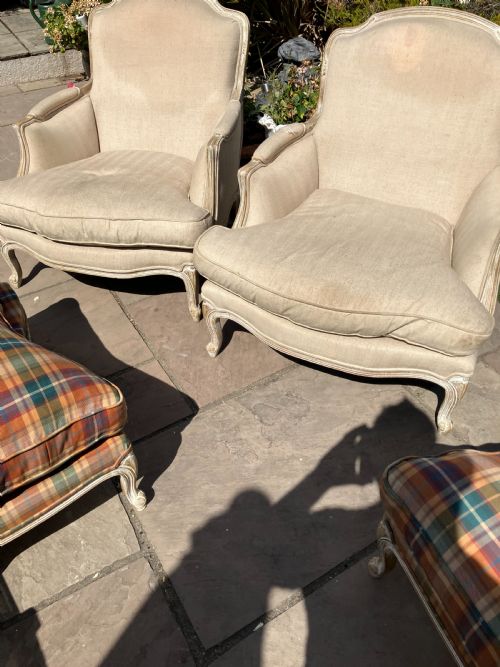
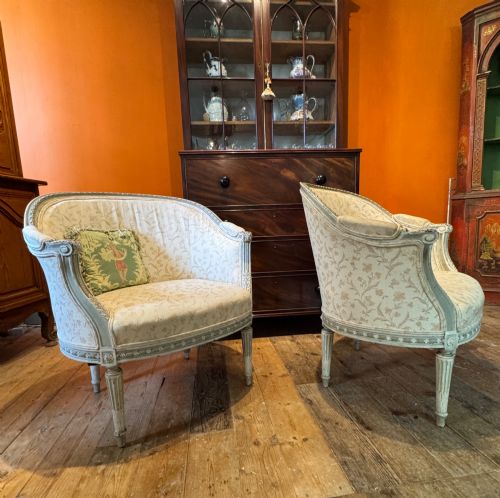
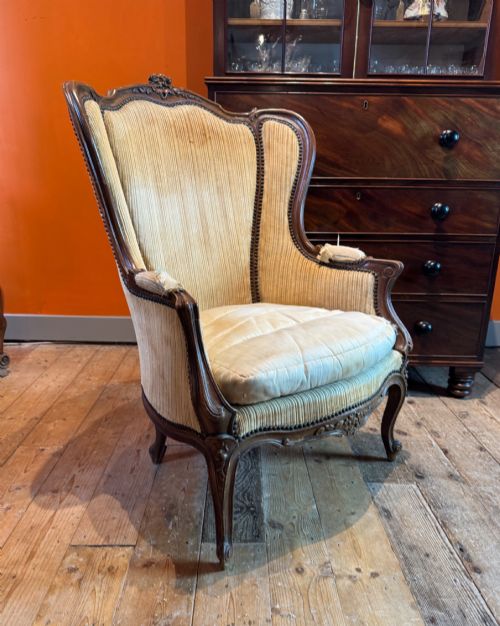
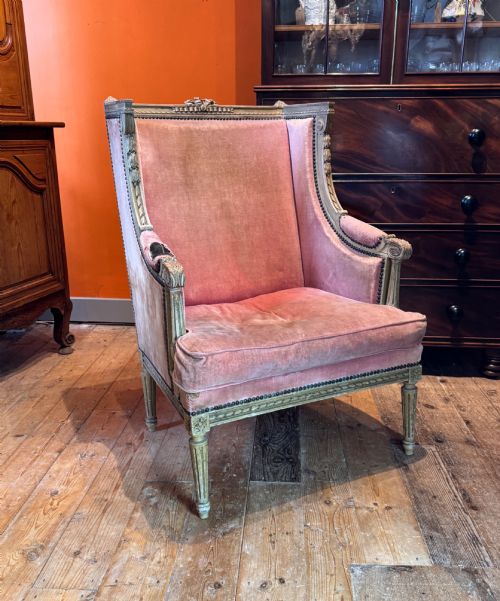


Vintage Bergere Chair
A vintage bergere chair offers deep seated comfort through traditional woven panels, bringing French and English period seating into modern rooms.
Vintage Bergere Chair
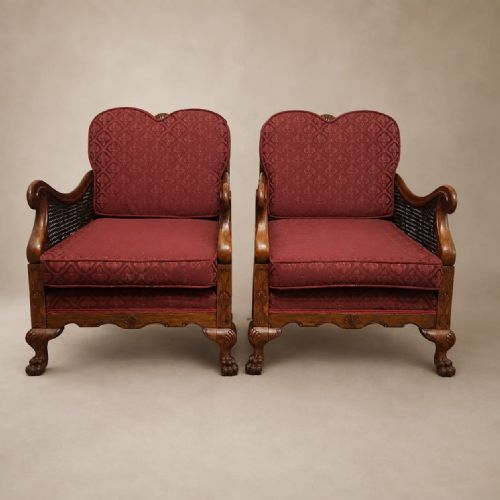
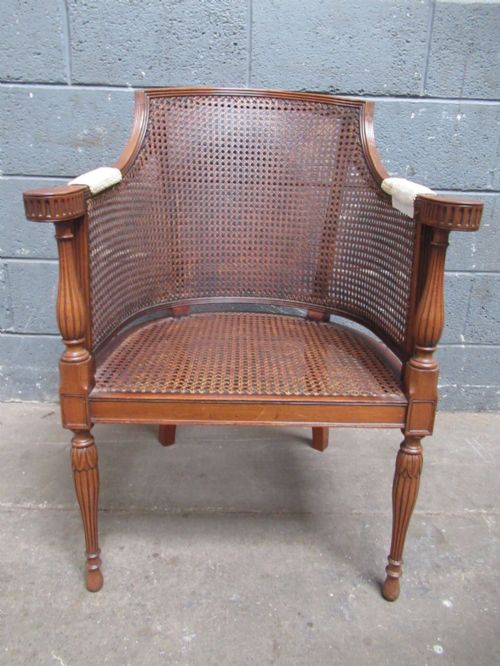
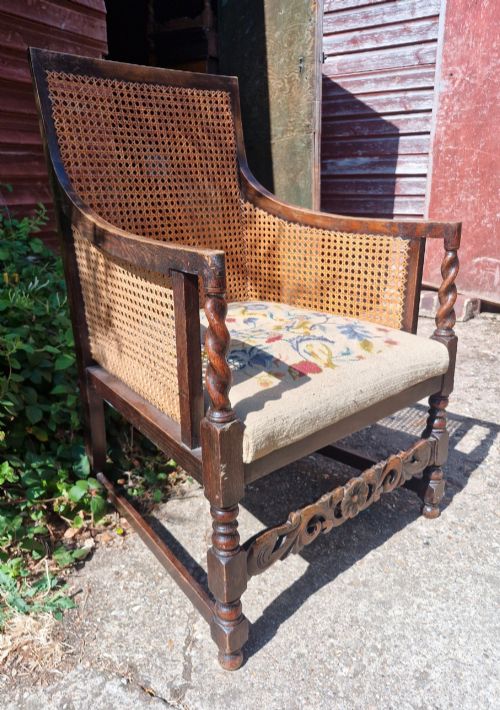
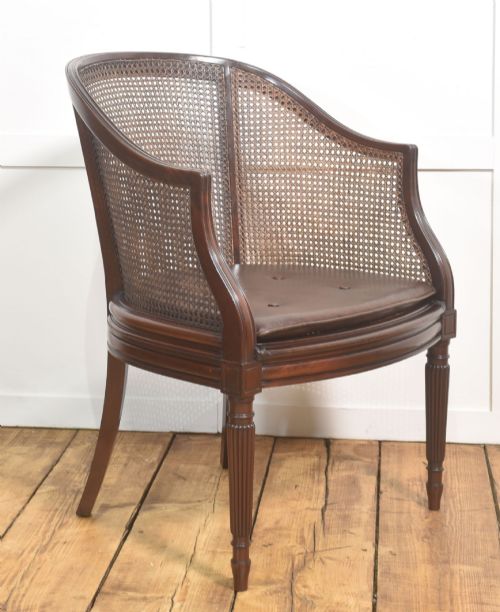
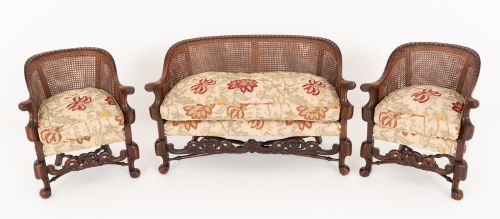
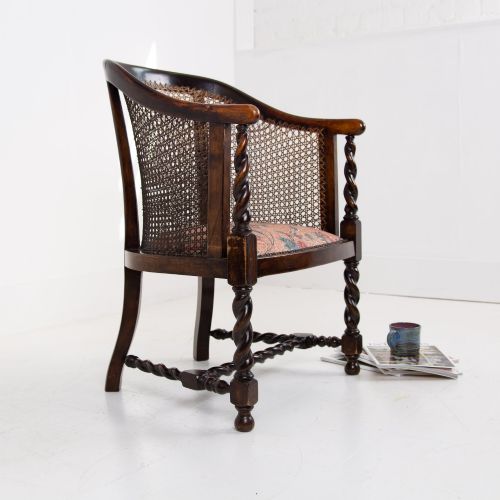
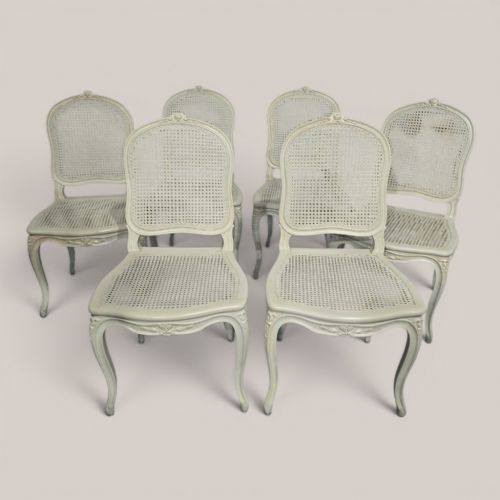
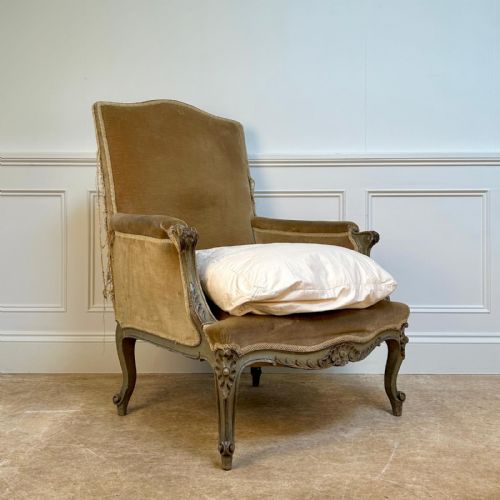
A vintage bergere chair is a deep, enclosed armchair featuring woven cane panels on the back and sides, designed for relaxed seating. The pieces gathered here range from nineteenth century French library seats to Edwardian mahogany frames and walnut easy chairs from nineteen twenty.
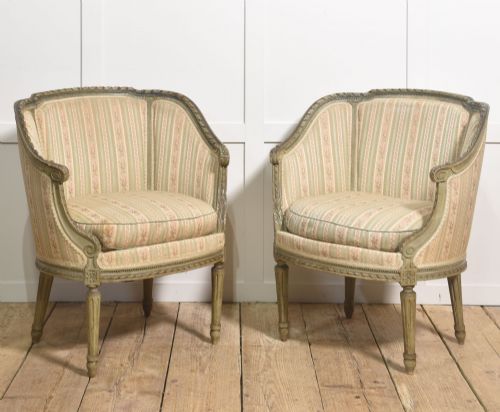
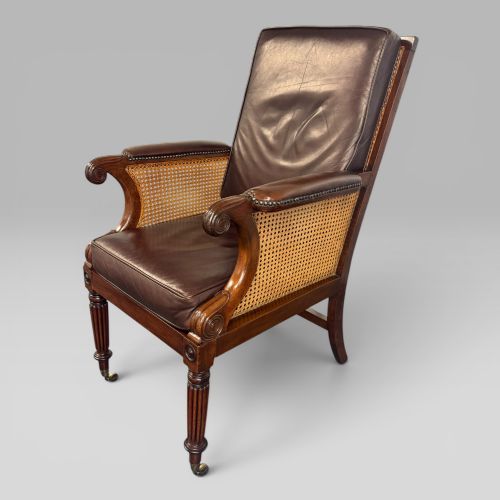
Most examples encountered on this page follow classic continental designs, notably the curved lines of Louis fifteenth and sixteenth styles alongside sturdy Regency library models. Seating options extend from single tub shaped armchairs to matched pairs and larger suites.
Origin and period shape the character of each piece, spanning solid ebony, carved oak, and painted finishes originating from nineteenth century chateaux to early twentieth century workshops.
Materials and construction methods
Frames are constructed from dense hardwoods such as mahogany, walnut, oak, and beech, frequently shaped with hand carved detailing or finished in original paint and giltwood. Solid ebony and rosewood also appear in select Regency pieces.
Caning, described as cane or split cane, is meticulously woven through holes pierced in the wooden frame to form the distinctive supportive back and arm panels. Many examples incorporate drop in upholstered seat cushions covered in velvet, leather, fabric, or coral velvet.
Several armchairs survived by quietly residing in French chateaux before finding their way onto the open market.
Distinctions in quality
Quality rests upon the crispness of the timber carving and the integrity of the structural frame, where substantial mahogany or walnut supports outlast lighter substitutes. The tightness and uniformity of the hand woven cane work also signal superior craftsmanship.
Original surfaces, such as untouched old paint or patinated mahogany, elevate a piece above later refinishing. Cohesion in matched pairs and the survival of original secondary elements like brass fittings further distinguish the finer examples.
The Vintage Bergere Chair Glossary
- Bergere
- An enclosed upholstered armchair with wooden framing and cane side panels. This form originated in France during the eighteenth century and remained popular through subsequent revival periods.
- Caned
- Fitted with woven cane panels using rattan strips. This technique provides flexible support while maintaining a light visual profile.
- Tub armchair
- A chair with a continuous curved back and arms forming a circular enclosure. It offers wrap around support for the sitter.
- Fauteuil
- An open framed French armchair with upholstered back and armrests. It shares stylistic origins with the bergere but lacks solid side panels.
Vintage Bergere Chair: Frequently Asked Questions
What is a bergere chair?
A bergere chair is a traditional enclosed armchair characterised by wooden framing and woven cane side panels. It provides a deep, comfortable seat that bridges formal period aesthetics and practical relaxation.
Originating in France, these chairs developed through various revival periods into the nineteenth and early twentieth centuries. They appear in forms ranging from compact library tub seats to large carved walnut armchairs.
How do I care for cane panels?
Cane panels require gentle cleaning with a soft brush and occasional light conditioning to prevent the natural rattan from drying out and snapping. Keeping the chairs away from direct heat sources preserves the flexibility of the woven strands.
When sitting in a vintage bergere chair, the weight is distributed across the cane mesh, but placing cushions correctly helps protect the tension of the weave over decades of daily use.
Are these chairs comfortable for daily sitting?
Yes, the deep proportions and angled backs of these armchairs provide natural support for reading and relaxing. Most examples feature drop in upholstered cushions filled with traditional materials for a soft seat.
Adding a feather or foam pad updates the comfort while retaining the supportive tension of the underlying cane frame. Their generous proportions suit modern living spaces as accent or reading chairs.
How can I tell the period of a chair?
Dating relies on timber selection, structural joinery, and stylistic details such as the carved motifs associated with Regency, Edwardian, or Louis periods. Mahogany and rosewood frequently indicate earlier nineteenth century pieces, while oak and specific beech turnings often point towards nineteen hundred and beyond.
Examining the underside of the frame reveals tool marks and construction methods that help separate original nineteenth century production from later twentieth century revivals.