




Carved Wall Weather Instrument
These carved wall weather instruments combine precision engineering with elaborate woodwork, offering a functional centrepiece for the home.
Carved Wall Weather Instrument
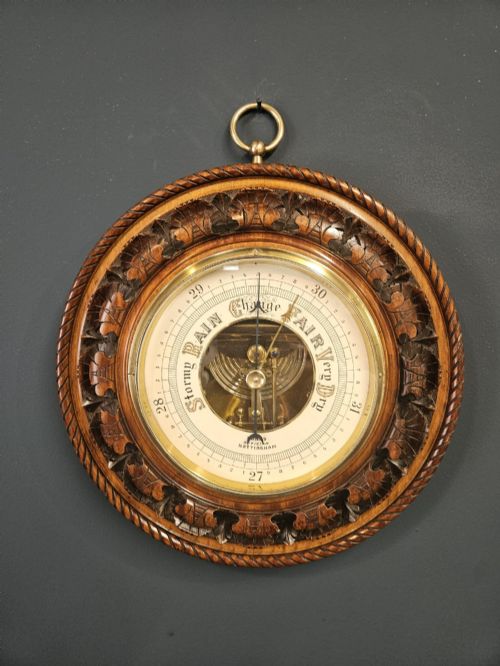
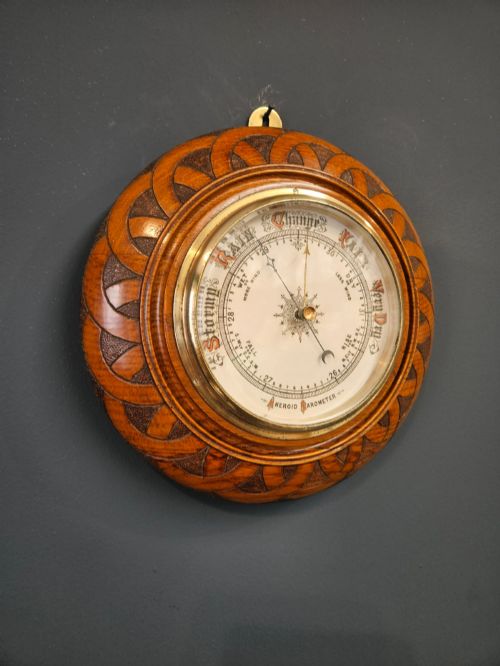
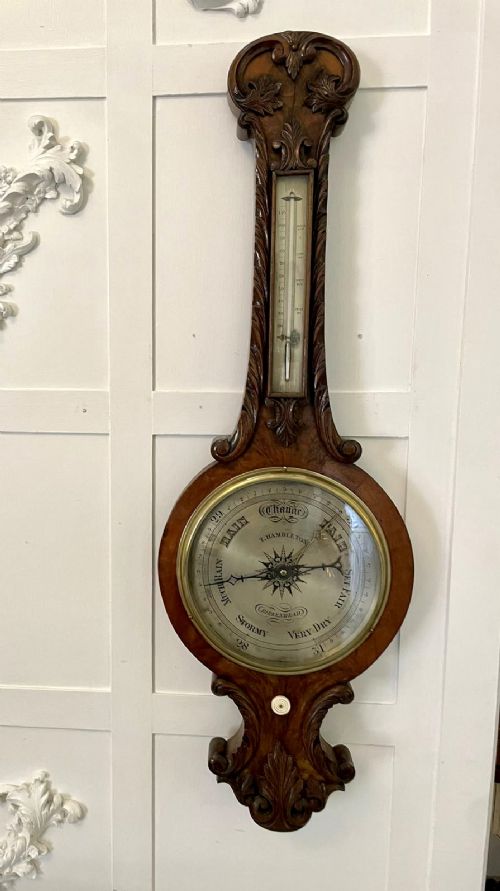
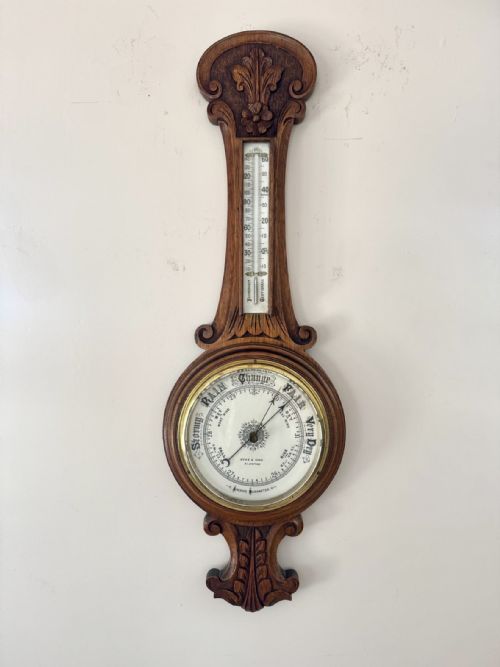
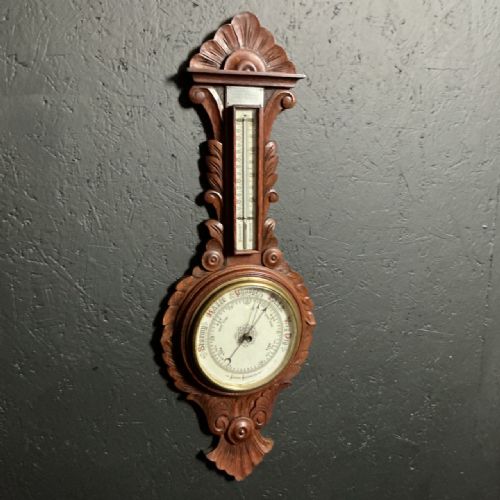
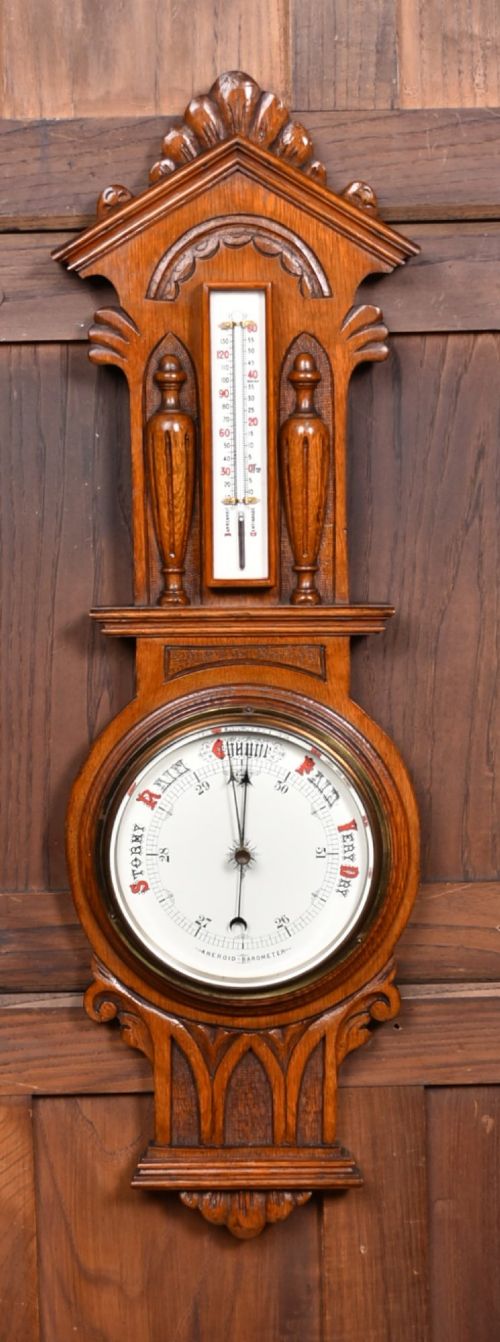
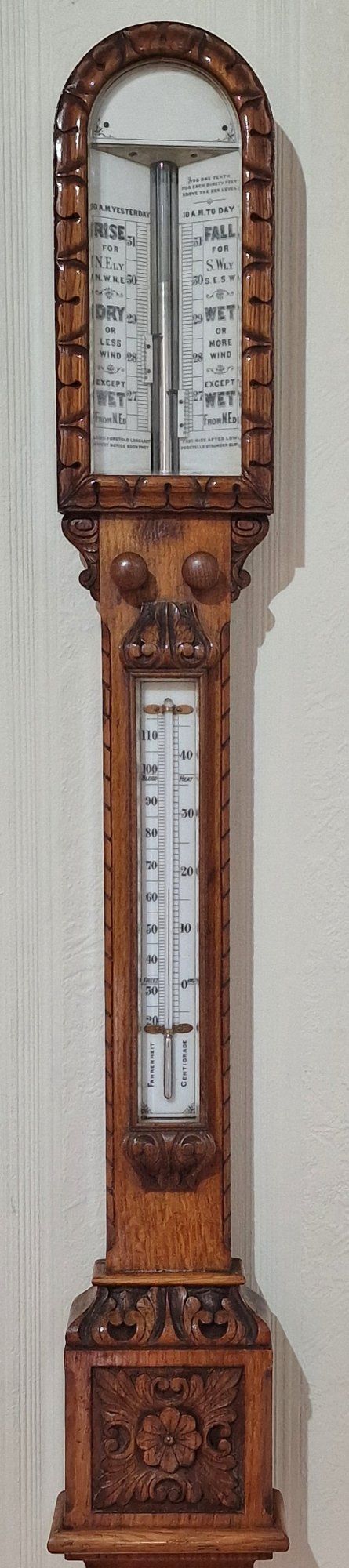
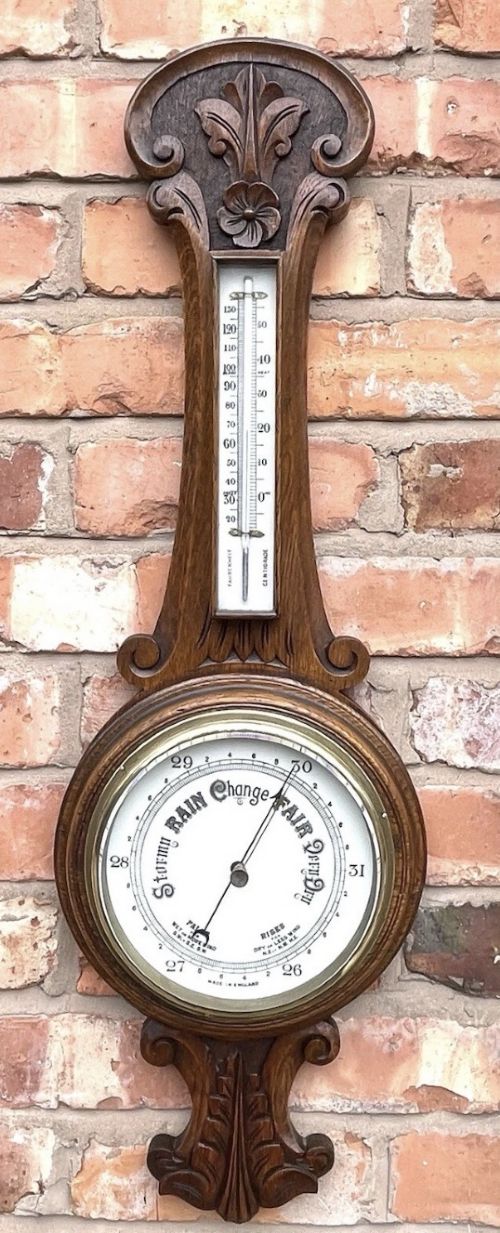
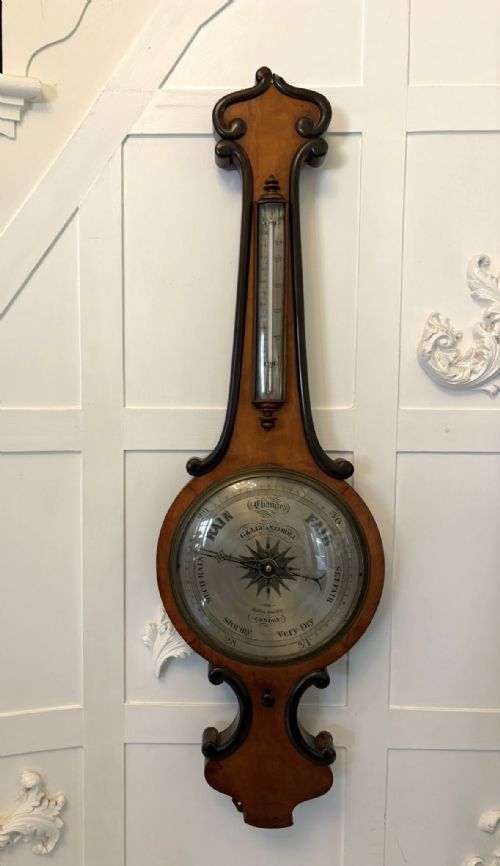
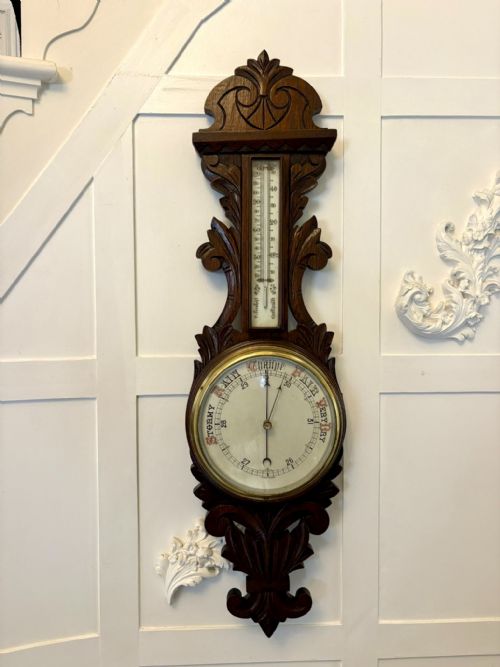
A carved wall weather instrument serves both a domestic utility and a decorative function, recording atmospheric changes with mechanical dials or glass tubes. When exploring carved wall weather instruments, you will encounter diverse forms ranging from banjo barometers to stick barometers and wheel barometers.
The selections span periods from the Georgian era through the Victorian and Edwardian periods, with Victorian examples appearing most frequently. These pieces often incorporate thermometers alongside the primary barometer dial.
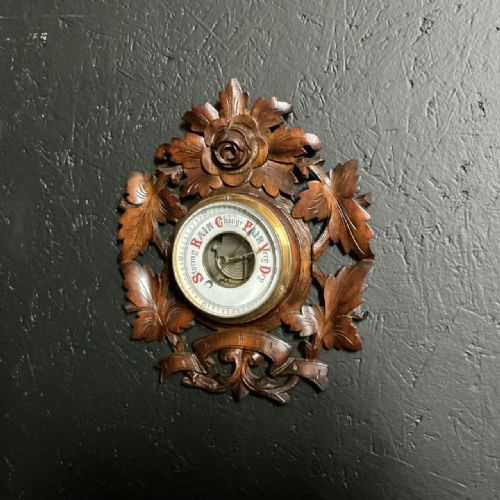
Originating from British workshops as well as continental centres such as the Black Forest, these instruments utilise regional woodworking traditions. Buyers choose them to bring period character and mechanical interest to hallway or study walls.
Materials and construction
Cabinet makers constructed the chassis of these instruments from dense hardwoods including oak, walnut, mahogany, and rosewood, often shaping the timber into flowing foliage or geometric relief. Carvers worked directly into the solid wood or applied intricate mouldings to frame the instrument dials.
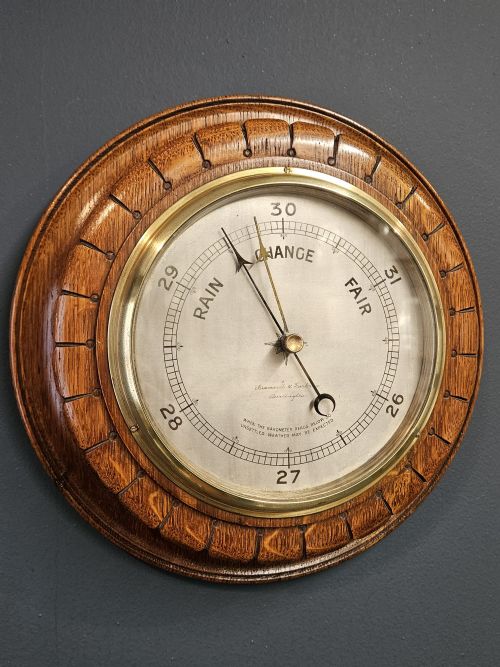
The internal mechanisms relied on sensitive components, pairing glass barometer tubes filled with mercury or aneroid metal chambers with brass bezels and silvered metal dials. Bone and ceramic elements frequently appeared on scale plates and subsidiary dials for temperature readings.
Several pieces feature intricately carved wooden birds peering permanently over the weather dials, keeping eternal watch on the pressure.
Distinguishing quality
Quality in these instruments rests upon the depth and crispness of the timber carving and the sophistication of the case architecture. Pieces featuring deep relief work, such as carved birds or naturalistic foliage, demonstrate superior craftsmanship compared to simpler moulded frames.
The legibility and engraving quality of the silvered brass dial further separate standard examples from finer items. Signed dials bearing the names of established instrument makers indicate higher workshop standards than unsigned equivalents.
Hyde & Sons Sleaford·G & L Guanziroli London·Bramwell & Harbron of Darlington·Negretti & Zambra·W Watson & Sons·J Hughes London
The Carved Wall Weather Instrument Glossary
- Aneroid barometer
- An instrument measuring atmospheric pressure without liquid, using an expanding and contracting metal chamber connected to an indicator needle. This design allowed barometers to be built into compact wall-hanging banjo and wheel formats.
- Stick barometer
- A tall, vertical instrument containing an open-ended glass tube filled with mercury to display barometric pressure directly against a scale. These often feature protective glass doors and precise vernier scales.
- Banjo barometer
- A household weather glass housed in a distinctive curved wooden case shaped vaguely like a banjo, typically combining a dial barometer with a thermometer.
- Silvered dial
- A brass clock face treated with a silver compound to produce a matte white finish that highlights the engraved numbers and inscriptions.
- Skeletonised barometer
- An instrument design where the dial plate is cut away to expose the mechanical levers and aneroid springs beneath.
Carved Wall Weather Instrument: Frequently Asked Questions
How do I read an aneroid barometer?
Read the main pointer against the pressure scale marked in inches or millibars to see current atmospheric pressure. Use the secondary manual pointer, turned by the knob on the glass cover, to mark your starting pressure and track movement.
Rising pressure generally indicates improving weather, while falling pressure suggests approaching rain or wind. Compare readings over several hours to forecast local changes.
Where should I hang a wall barometer?
Mount the instrument on an interior wall away from direct sunlight, radiators, and draughty doorways to protect the delicate wooden case and internal mechanism. Consistent room temperatures prevent false pressure readings caused by thermal expansion.
Ensure the wall fixing is secure, as heavier carved hardwood and mercury-filled stick barometers require sturdy support. Position the dial at eye level for easy daily observation.
How do I tell Victorian from Edwardian barometers?
Victorian instruments, produced during the nineteenth century, often display heavy Gothic Revival influences, ornate carved birds, or dark walnut and rosewood cases. Their decorative carving tends to be deep, dense, and elaborate.
Edwardian pieces from the early twentieth century lean towards lighter oak frames, simpler geometric patterns, or restrained Arts and Crafts influences. Dials on Edwardian models frequently feature cleaner, less cluttered typography.
Are mercury barometers safe to keep?
Enclosed stick barometers containing sealed glass tubes of mercury present no hazard during normal domestic display and use. The liquid remains securely housed within the glass reservoir and tube.
Exercise caution only if moving or relocating the instrument, ensuring the cistern is properly locked or the tube tilted correctly to prevent air entering the column.