




Edwardian Barometer Thermometer
Edwardian barometer thermometer pieces combine atmospheric pressure measurement with temperature reading, offering period charm and practical weather tracking for the home.
Edwardian Barometer Thermometer
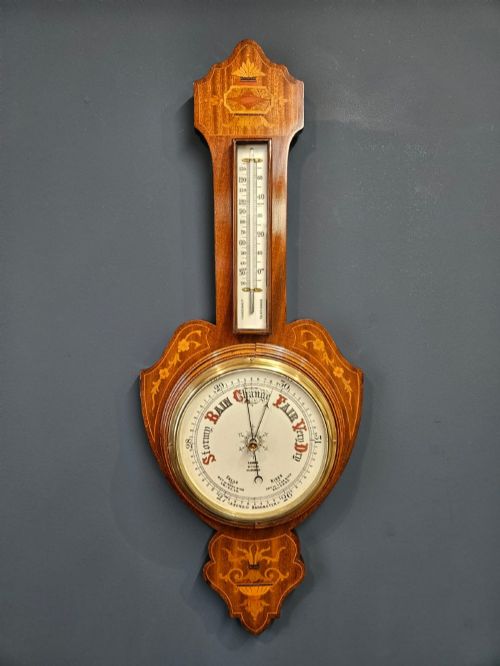
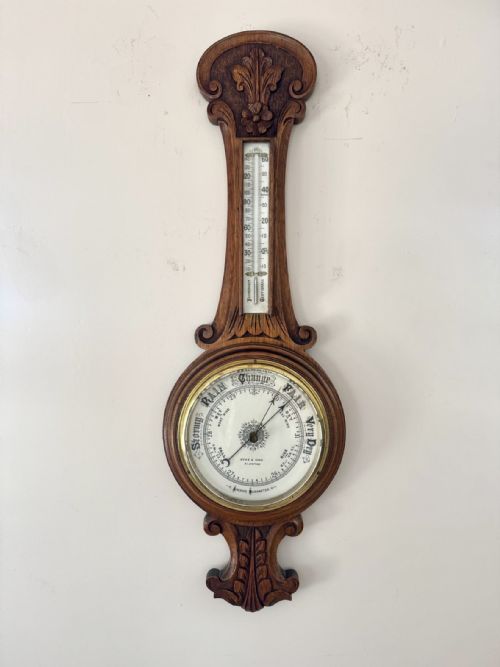
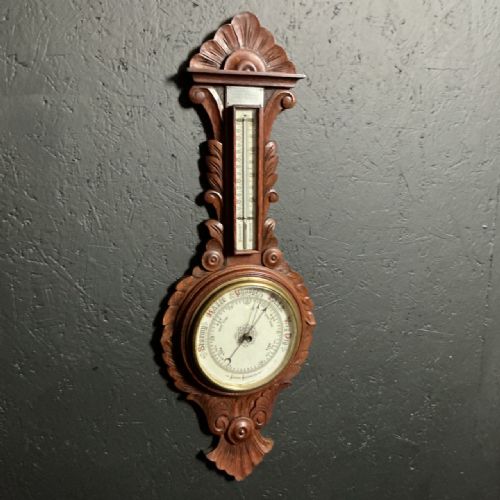
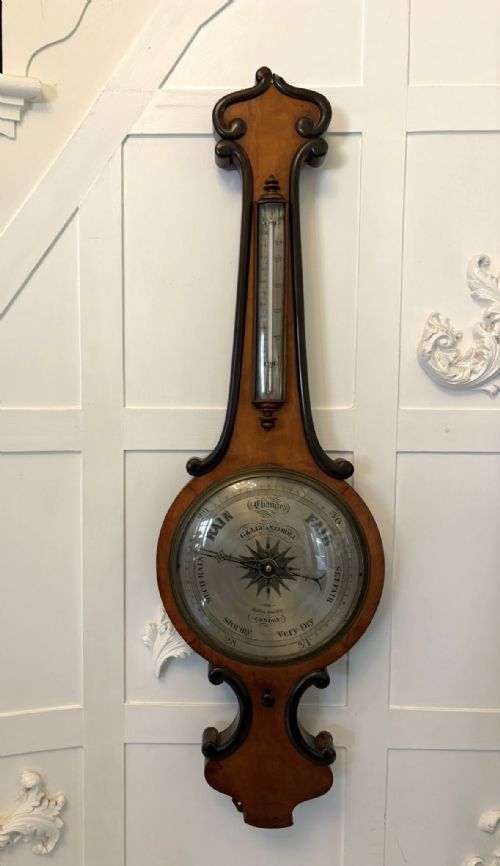
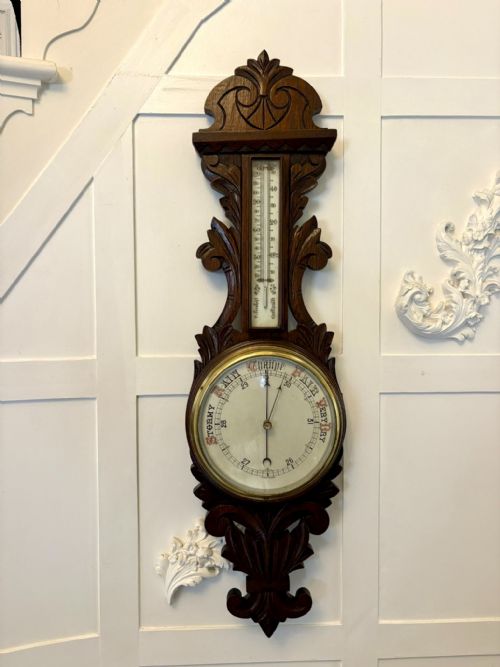
When you examine an edwardian barometer thermometer, you encounter instruments designed to measure atmospheric pressure alongside temperature variations. These pieces frequently appear as wall-hanging banjo or wheel barometers, incorporating both dials within carved wooden frames.
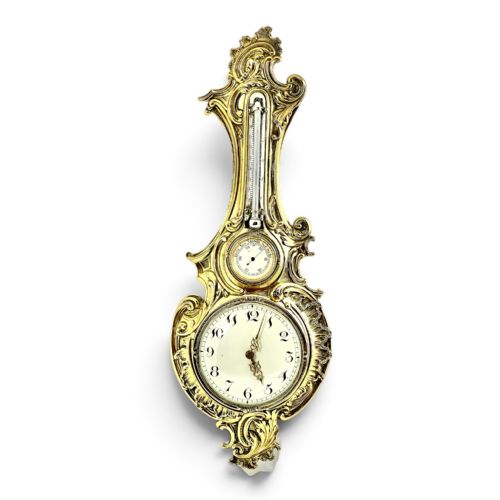
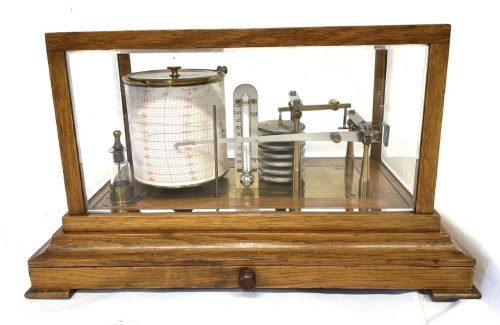
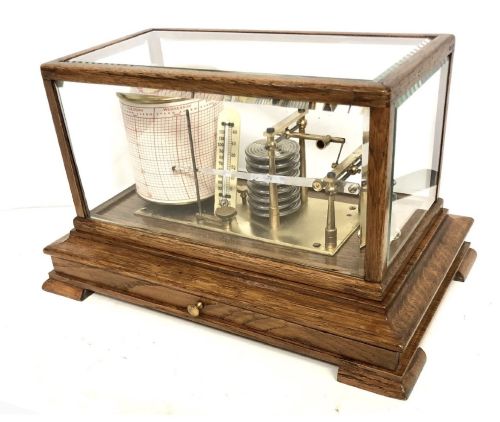
The selection on this page draws from several periods, including Edwardian and Victorian eras, with oak and mahogany being the primary timbers. You will also find desk clocks and barographs that integrate thermometer scales into their wooden cases.
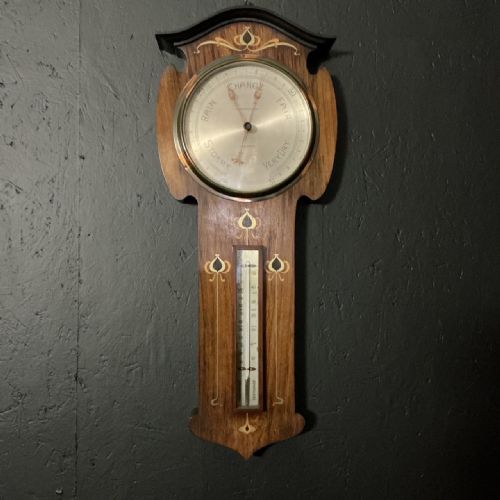
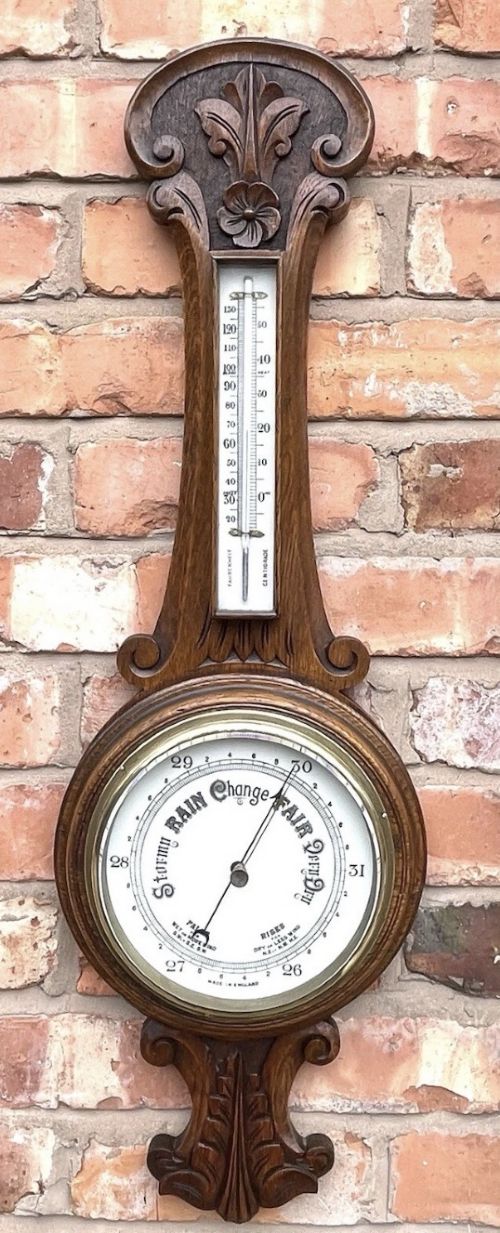
Makers from London and provincial towns produced these instruments, utilising styles ranging from Arts and Crafts to Neo-Classical marquetry. The most common format met here is the carved oak banjo barometer featuring a visible thermometer tube alongside the main dial.
Materials and construction methods
The construction of these instruments relies heavily on dense timbers such as oak, mahogany, walnut, and rosewood, often shaped into banjo or wheel formats. Carpenters carved decorative motifs, foliage, and birds directly into the wood housings, while cabinetmakers applied delicate wood inlay and marquetry patterns.
Glass protects the delicate paper or metal dials, frequently featuring bevelled edges to catch the light. Brass bezels secure the glass faces, and internal movements employ steel and brass components to drive the aneroid or mercurial mechanisms.
Listings feature eight distinct periods ranging from seventeen hundred to nineteen forty, with nineteen hundred representing the most frequent date.
Distinctions in craftsmanship and materials
The upper tier of these instruments is defined by the precision of the carved timber work and the clarity of the dial inscriptions. Skilled makers utilised heavily figured walnut or meticulously matched mahogany veneers, complemented by cast brass bezels and heavy bevelled glass.
Simpler examples rely on plain oak with modest mouldings and standard printed dials. The presence of secondary instruments, such as integrated clocks or charting drums with drawers, separates standard wall units from superior weather stations.
Hyde and Sons Sleaford·G and L Guanziroli London·Negretti and Zambra London·James Murray·Dobbie Son and Hutton London·Jules Richard
The Edwardian Barometer Thermometer Glossary
- Aneroid barometer
- An instrument that measures atmospheric pressure using a flexible metal box called an aneroid cell, without employing liquid mercury. This design allowed makers to produce compact wall and desk instruments.
- Banjo barometer
- A wall-mounted weather glass named for its distinctive stringed-instrument shape, featuring a circular dial at the top and a long trunk containing a thermometer below. This form dominated late nineteenth and early twentieth century hallways.
- Barograph
- A recording meteorological instrument that plots barometric pressure over time onto a rotating paper chart driven by a clockwork mechanism. These units are typically housed in glazed mahogany or oak cases with chart drawers.
- Marquetry
- The art and craft of applying pieces of veneer to a structure to form decorative patterns and pictures. Makers utilised contrasting timbers like satinwood and walnut to create geometric or floral scenes on the instrument backboards.
- Mercurial barometer
- A traditional device that measures air pressure by balancing the weight of a column of mercury against atmospheric pressure. These older stick barometers require careful handling due to the exposed liquid metal column.
Edwardian Barometer Thermometer: Frequently Asked Questions
How do I read an aneroid barometer?
Read the main dial by observing the position of the pointer relative to weather descriptors such as rain, change, and fair. Tapping the glass gently before reading ensures the needle settles at the true current pressure.
Compare the primary pointer with the secondary moveable indicator needle set by hand. Movement away from the set needle indicates whether pressure is rising or falling.
Where should I hang a wooden barometer?
Mount the instrument on an interior wall away from direct sunlight, radiators, and draughty doors. Temperature extremes disrupt the internal metal components and affect accuracy.
Choose a location at eye level in a hallway or study where stable ambient temperatures prevail. Ensure the fixing screw anchors securely into solid wall material rather than plaster alone.
How do I distinguish Edwardian from Victorian models?
Victorian instruments frequently display heavy, deep-relief carved oak cases with elaborate scrollwork and gothic or rococo revival influences. Mahogany wheel barometers with visible mercury tubes also typify this earlier era.
Edwardian versions often present lighter carved oak or inlaid mahogany frames with cleaner lines influenced by Arts and Crafts or Georgian revival aesthetics. Dials tend to feature simpler sans-serif typography.
Can these old barometers be recalibrated?
Most aneroid barometers feature a small adjustment screw located on the back of the case. Turning this screw shifts the internal linkage to match known local barometric readings.
Obtain the correct local pressure from a reliable meteorological source before making adjustments. Turn the screw in small increments until the indicator matches the reference figure.