

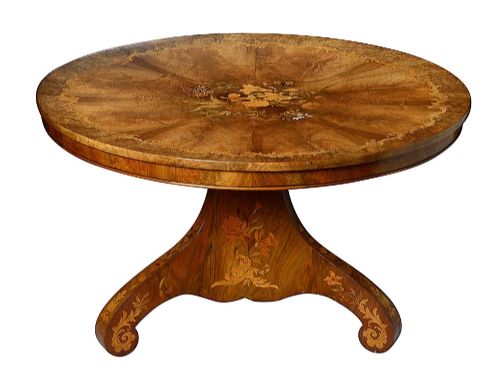
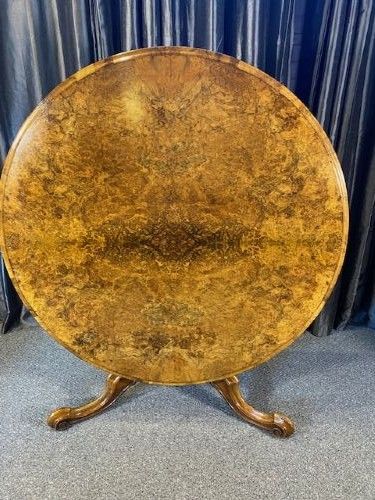
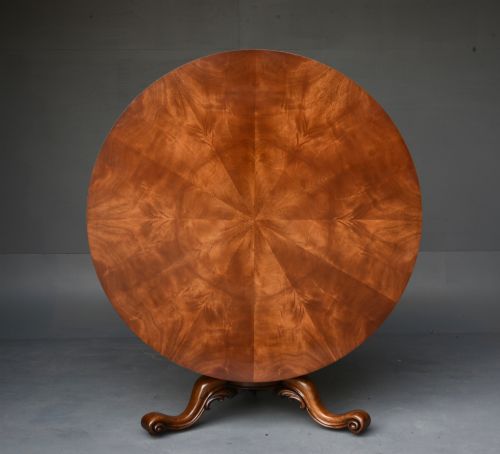
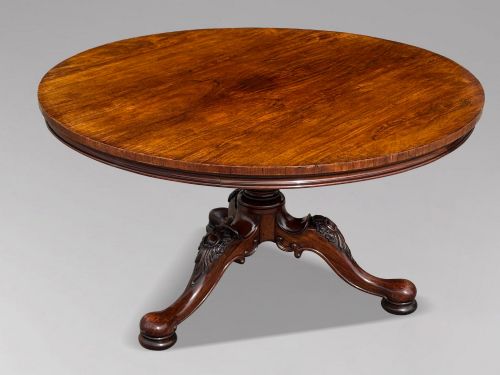

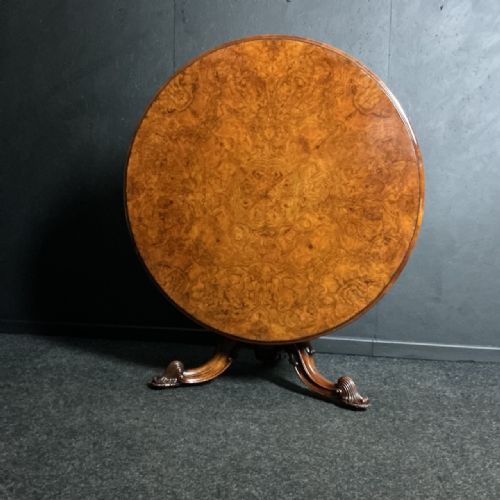
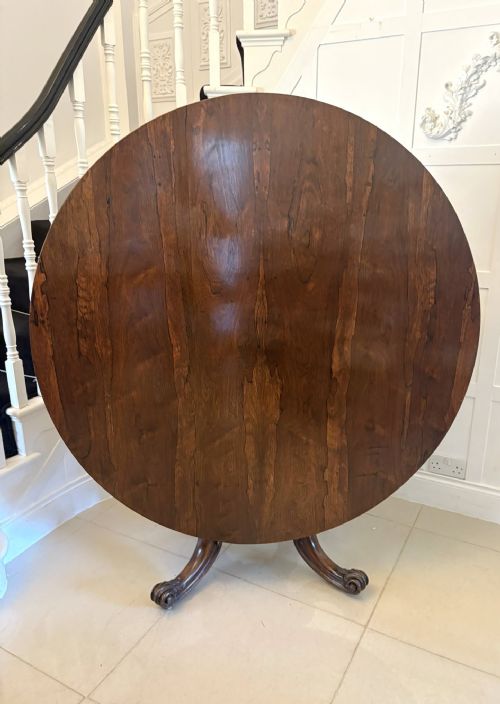
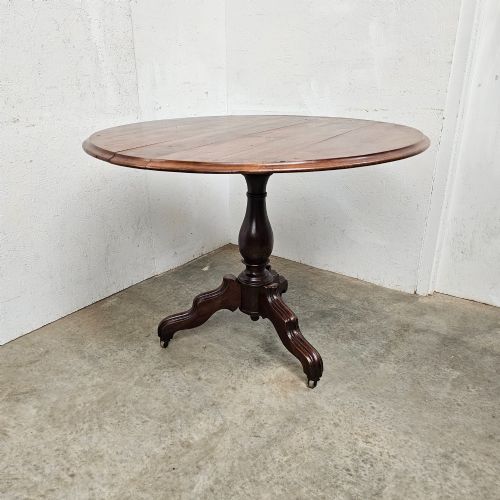
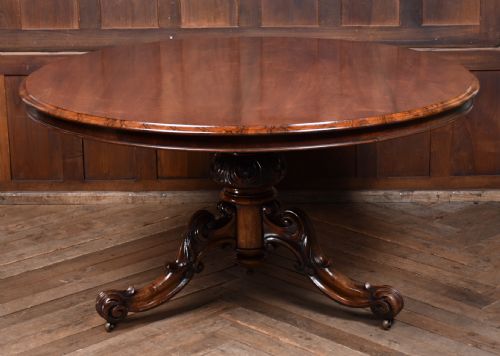


Carved Tripod Dining Table
A carved tripod dining table brings centring elegance and clever tilt-top utility to a room.
Carved Tripod Dining Table
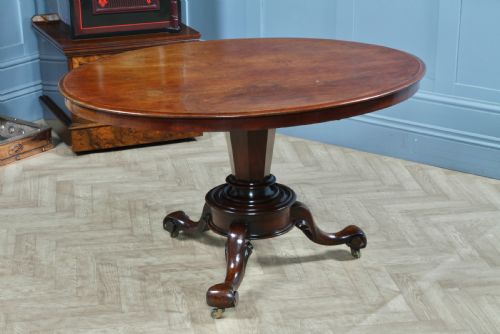
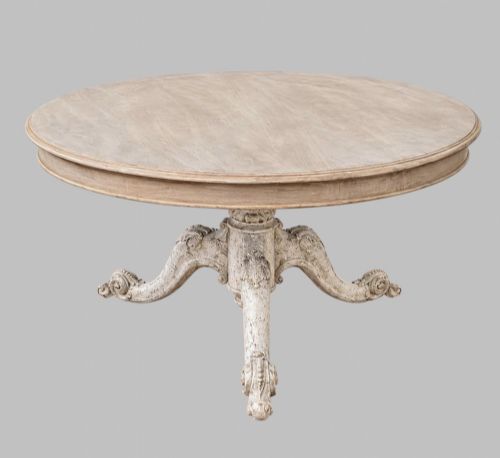
A carved tripod dining table is a versatile surface supported by a central pillar and three feet, designed for dining and central room placement. You will frequently find these pieces originating from the 18th century, the Regency period, and the Victorian era.
The selection on this page spans George III, Victorian, Regency, and William IV styles, alongside occasional Anglo-Indian Colonial and Qing Dynasty forms. These tables appear as circular dining tables, tilt-top variants, snap-top supper tables, and dumb waiters.
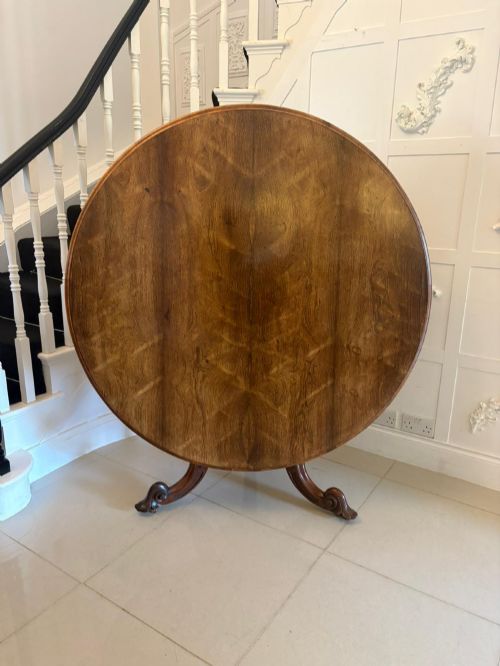
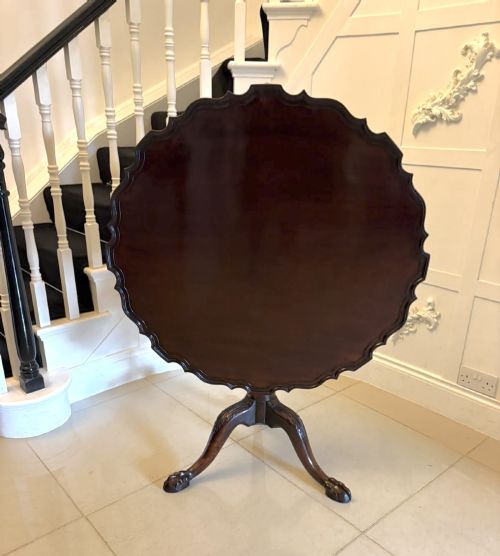
Mahogany, burr walnut, and rosewood form the core of the furniture available here, often enhanced by flame mahogany veneers or intricate wood inlay. Many examples utilise a tilting mechanism, allowing the top to flip vertically when not in use.
How they were made
Cabinetmakers constructed these tables using dense timbers such as mahogany, rosewood, and walnut, frequently applying figured or flame veneers to create striking surface patterns. Marquetry inlay and satinwood details appear on finer examples to add decorative contrast.
The distinctive three-footed pedestal base relies on robust joinery to support the central column and heavy top. Brass fittings, such as castors and tilt-top mechanisms, provide functional mobility and stability to the heavy timber structures.
Carved Tripod Dining Table Retail Price Guide 2026
Typical asking prices for carved tripod dining table among the pieces listed under this phrase on Sellingantiques today, from the lower quarter to the upper quarter. They describe what is for sale here now, not the wider market.
Listings feature woods including mahogany, burr walnut, rosewood, and satinwood across George III, Regency, and Victorian periods.
What varies in quality
The choice of primary timber and veneer figure dictates much of the visual distinction, with richly figured flame mahogany and burr walnut sitting at the higher end. Subtle carving on the pillar and legs demonstrates the skill of the original workshop.
The precision of the tilt-top or snap-top mechanism influences day-to-day utility, ensuring the table locks firmly into position without wobble. Integration of marquetry inlay and secondary timbers reveals the level of craftsmanship invested in each piece.
The Carved Tripod Dining Table Glossary
- Tilt-top table
- A table with a hinged top that can be rotated vertically to save space against a wall when not in use. This mechanism often includes a brass catch.
- Snap-top table
- A variation of the tilt-top table featuring a spring-loaded catch that snaps the top securely into a horizontal position. It offers stable dining utility.
- Marquetry
- The art of applying decorative pieces of veneer to a structure to form intricate patterns or pictures. It frequently incorporates diverse woods like satinwood.
- Dumb waiter
- A tiered set of revolving or stationary circular trays supported by a central pillar, used for serving food. These pieces date back to the Regency period.
- Piecrust edge
- A raised, carved decorative border along the perimeter of a tabletop, shaped to resemble pastry work. This detail is typical of fine George III examples.
Carved Tripod Dining Table: Frequently Asked Questions
How do I use a tilt-top table?
Release the brass catch beneath the surface to pivot the top into a vertical position for storage.
Return it to the horizontal locked position before placing items on the surface.
What is the difference between a centre table and a dining table?
Centre tables are designed to stand freely in the middle of a room, finished on all sides for aesthetic impact.
Dining tables are generally scaled specifically for seated dining use, though many forms overlap.
How do I date a Victorian table?
Examine the timber species, construction methods, and secondary woods used in the hidden framing beneath.
Stylistic cues such as heavy rosewood carving or burr walnut marquetry typically point towards the mid to late nineteenth century.
Are these tables suitable for daily dining?
Solid mahogany and walnut construction provides the sturdiness required for regular daily meals.
Use heat mats and coasters to protect polished veneer surfaces from marks and moisture.