

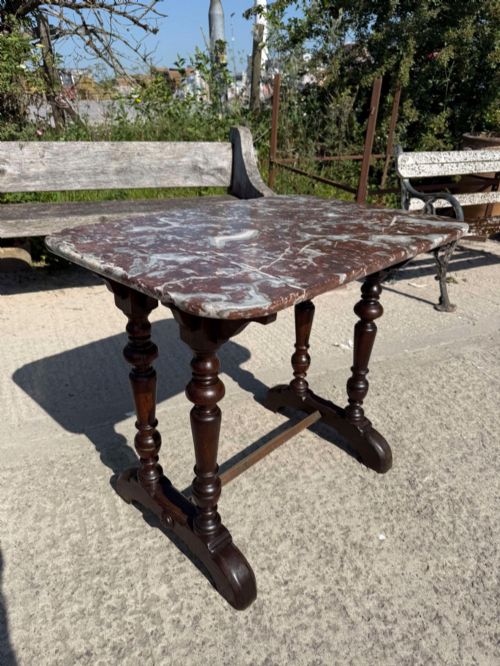
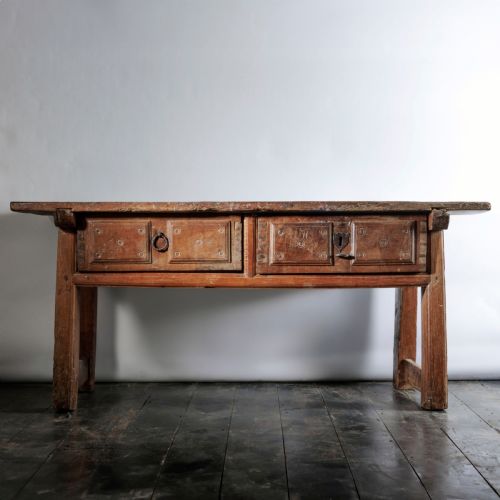
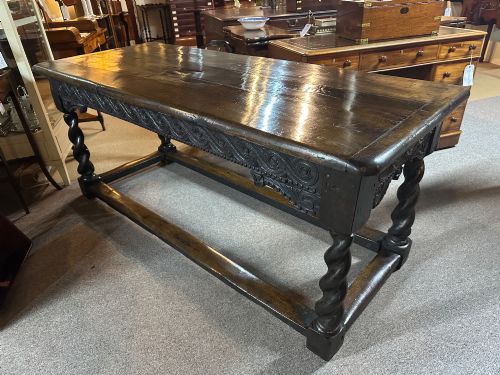
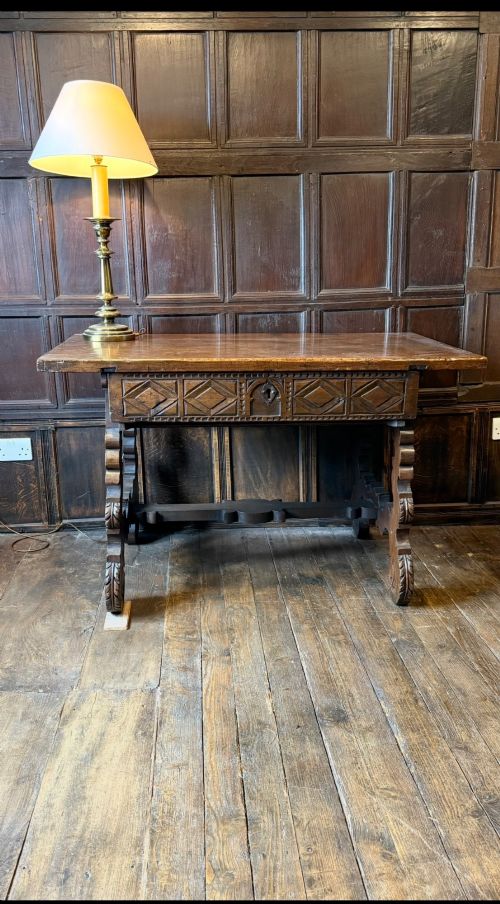
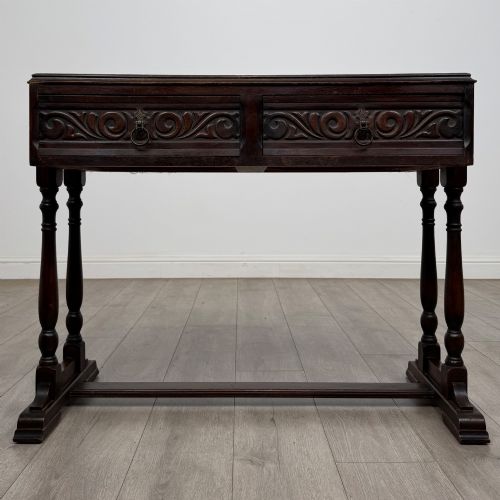
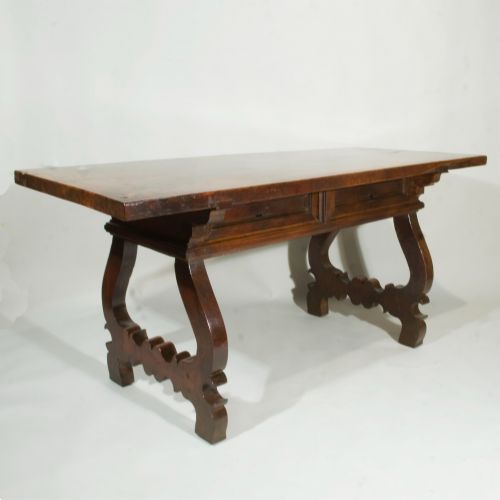

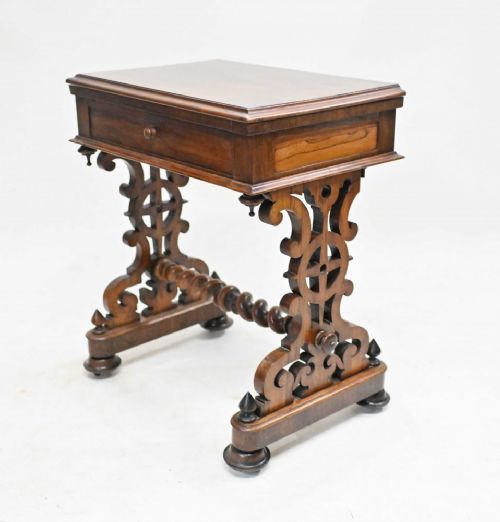
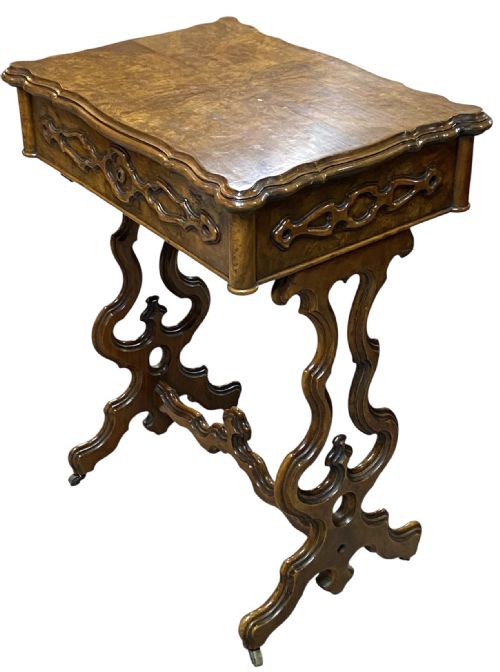
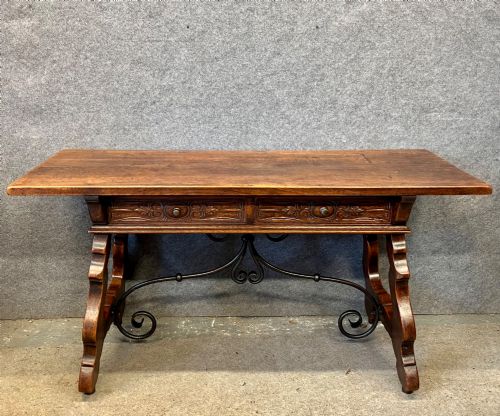


Carved Trestle Side Table
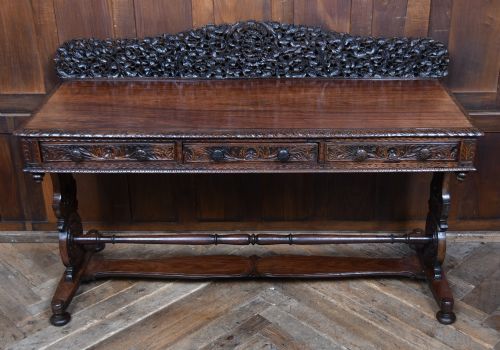
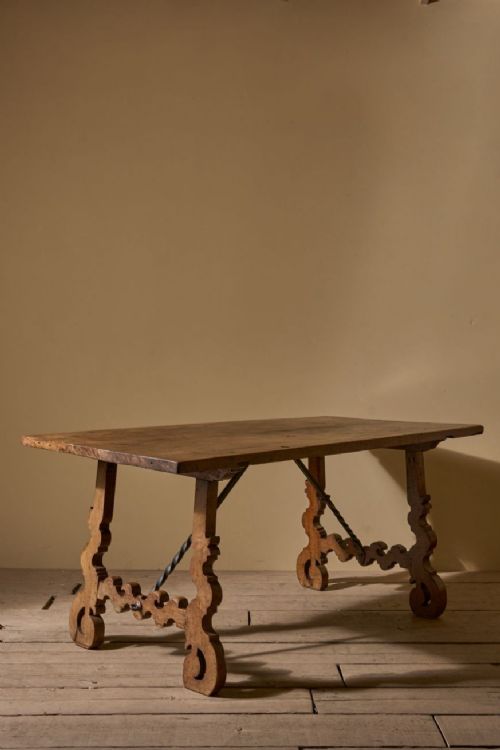
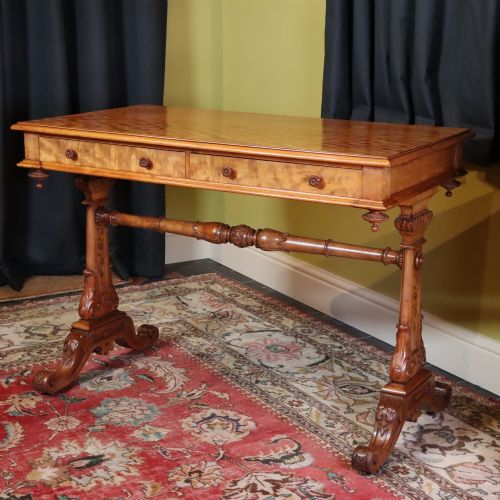
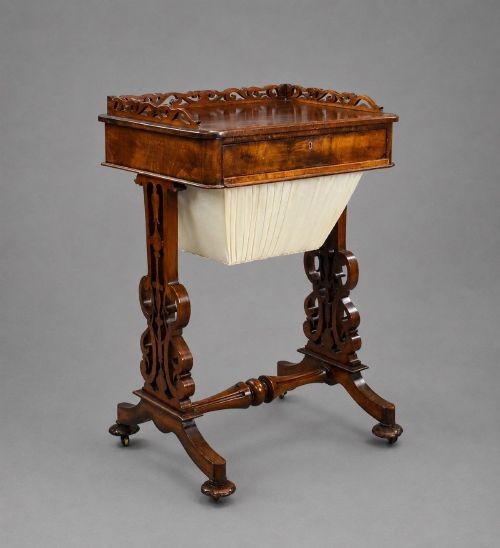
A carved trestle side table brings structural weight and rich timber grain to an interior, grounded by sturdy supports and period joinery.
Carved Trestle Side Table
A carved trestle side table provides a substantial surface supported by architectural ends rather than traditional corner legs. When searching this phrase, buyers encounter formats spanning compact lamp surfaces to long console and hall designs.
The examples gathered here draw heavily on European walnut and oak frameworks from the seventeenth and eighteenth centuries, alongside nineteenth-century Gothic Revival and Victorian interpretations in mahogany and burr walnut.
Many of these pieces function flexibly as side, lamp, or console furniture, anchored by decorative trestle ends that display period carving.
How they were made
Makers utilised dense timbers such as walnut, oak, and rosewood, often highlighting burr figuring or rich grain patterns across the top surface. Solid construction methods rely on pegged joints and sturdy underframe stretchers.
Carved Trestle Side Table Retail Price Guide 2026
Typical asking prices for carved trestle side table among the pieces listed under this phrase on Sellingantiques today, from the lower quarter to the upper quarter. They describe what is for sale here now, not the wider market.
Some nineteenth-century tables cleverly concealed fold-over game boards for chess and backgammon beneath their carved tops.
What varies in quality
The depth and crispness of the carved woodwork separate standard production from superior pieces. Hand-chiselled detailing on the trestle supports commands greater attention than flat or machine-routed decoration.
Timber selection dictates the visual impact, with well-figured walnut, burr veneers, and dense oak displaying superior depth. Original patination and intact structural joinery further distinguish the finest examples.
Gillows·AW Pugin·Charles Bevan
The Carved Trestle Side Table Glossary
- Trestle
- A supporting structure consisting of a horizontal beam fixed to two vertical feet or uprights. This arrangement leaves maximum legroom beneath the top surface.
- Console table
- A wall-mounted or freestanding table designed to stand against a vertical surface. These pieces often feature decorative front supports and flat backs.
- Burr walnut
- Timber taken from a tree growth where the grain has swirled into intricate knot formations. Cabinetmakers slice this wood into decorative veneers for table tops.
- Gothic Revival
- An architectural and decorative style drawing on medieval ecclesiastical forms. Pieces in this manner display pointed arches, tracery, and heavy chamfered framing.
- Patina
- The surface sheen and colour developed by timber over decades of handling and polishing. Good surface age reflects natural wear and waxing.
Carved Trestle Side Table: Frequently Asked Questions
Where should I place a trestle side table?
These pieces suit entrance halls, living rooms, and long corridors where their architectural ends can be seen clearly.
Position them against a flat wall or behind a sofa to display lamps, books, and decorative objects.
How do I care for antique walnut timber?
Keep wooden furniture away from direct heat sources and sudden temperature shifts to prevent timber splitting.
Apply a traditional beeswax polish occasionally and buff gently with a soft cloth to maintain the surface sheen.
Are these tables sturdy enough for daily use?
The braced design of a trestle support offers inherent stability across heavy wood constructions.
Solid oak and walnut examples handle everyday placement easily when the joints remain tight and secure.
How do I identify a Gothic Revival piece?
Look for architectural motifs such as pointed arches, quatrefoils, and heavy chamfered framing elements.
These designs often utilise dark oak or pine and reflect medieval church influences popular during the nineteenth century.