

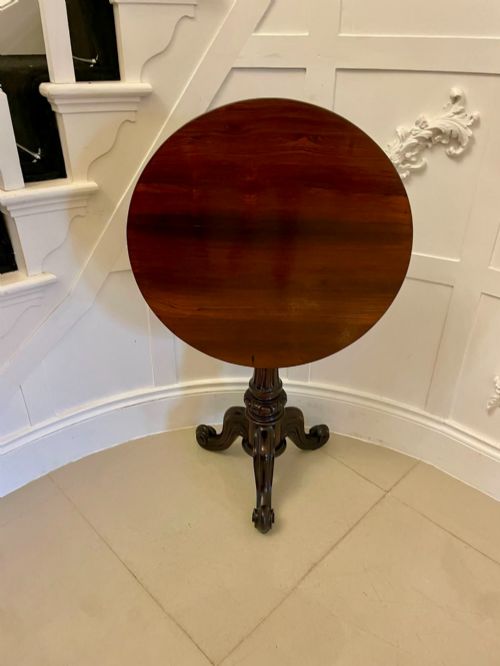
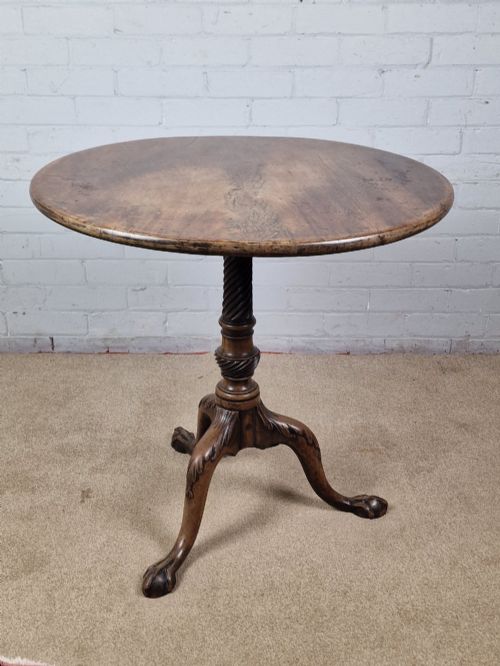

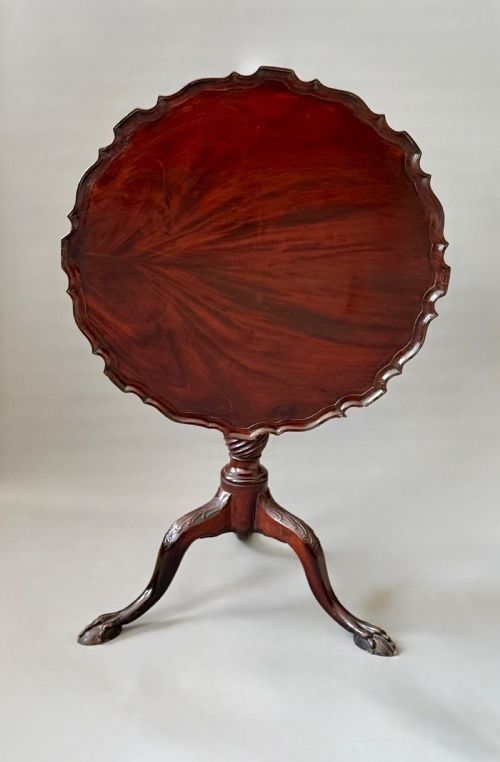
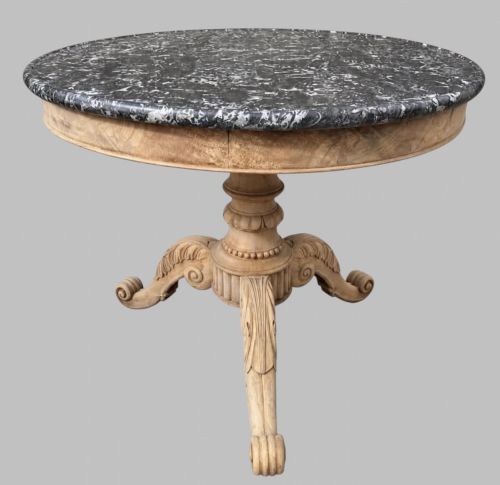
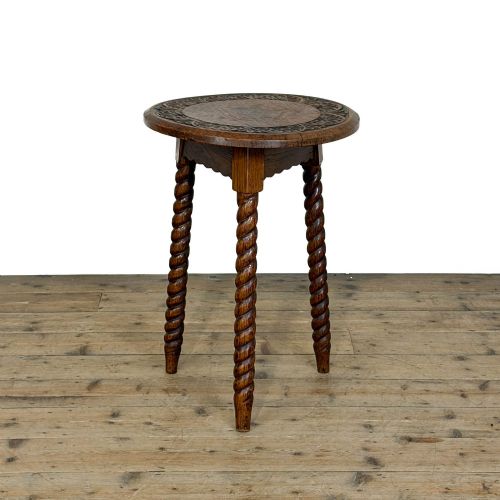
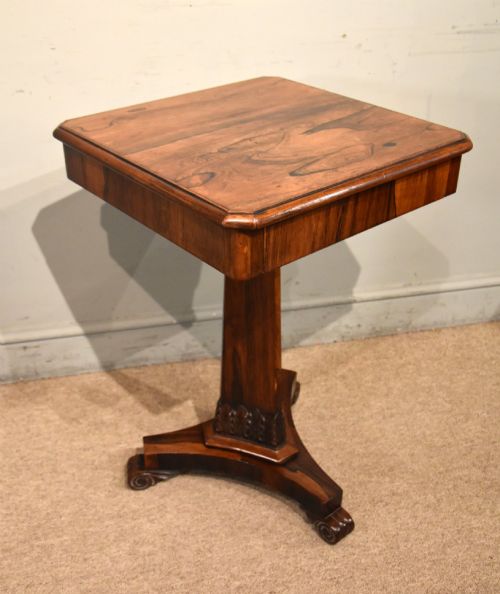
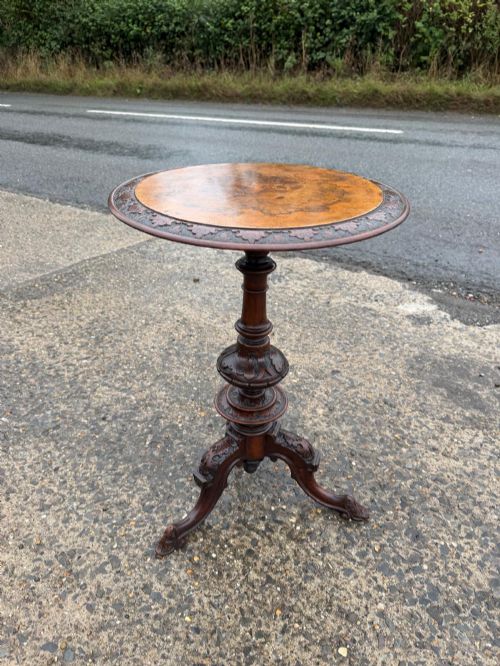
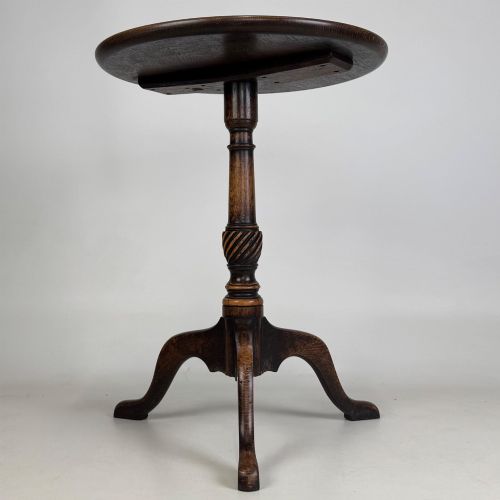
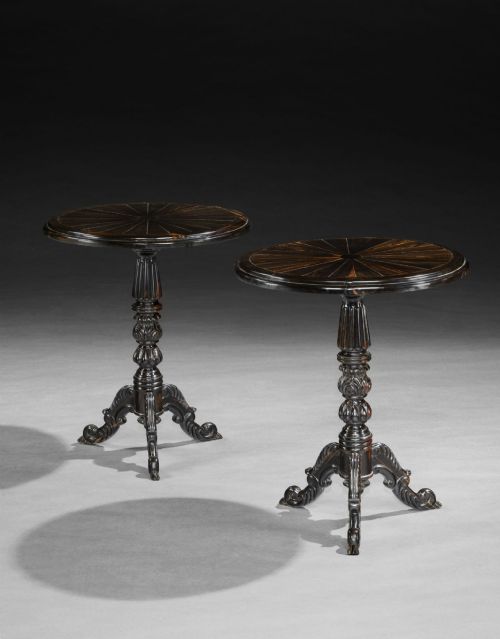
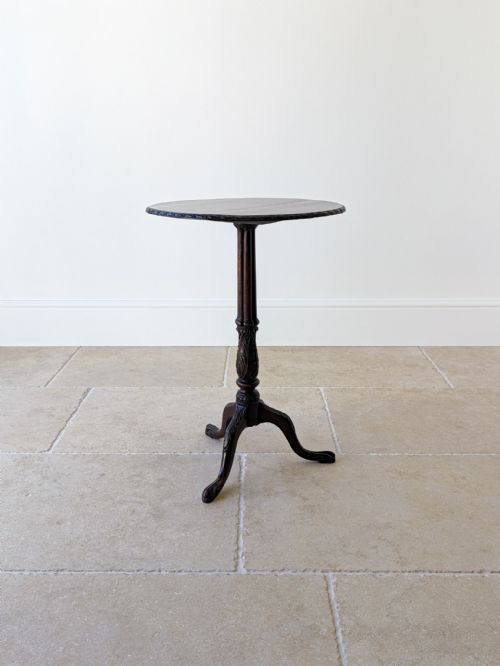
Carved Top Wine Table
A carved top wine table is a compact pedestal piece designed to hold glasses or lamps, offering period charm and practical surface space.
Carved Top Wine Table
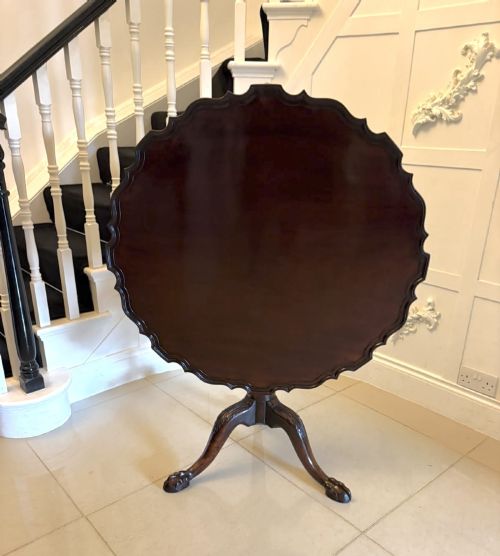
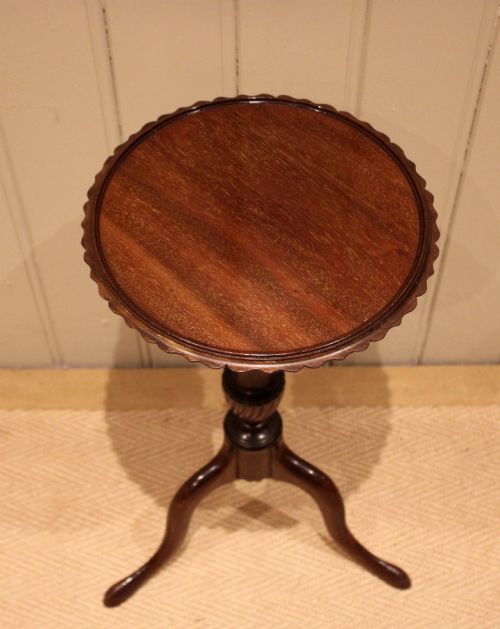
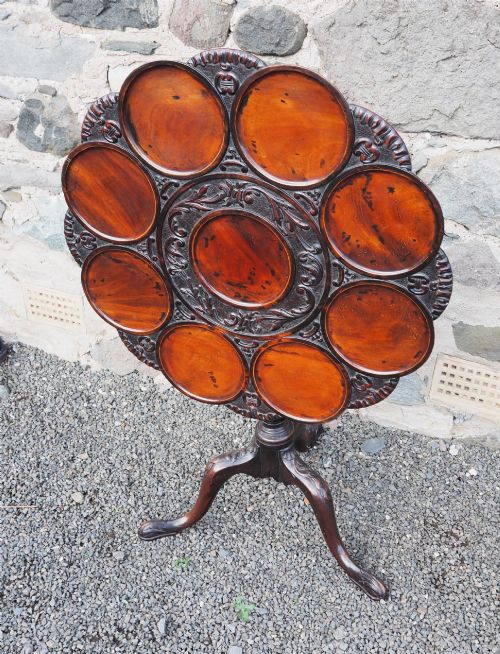
A carved top wine table serves as a functional small support piece, historically used for beverages or candle lighting in principal rooms. These compact items appear frequently in nineteenth-century and eighteenth-century forms, including tilt-top and tripod variations.
The selection ranges from Georgian George III mahogany tripod examples to Edwardian mahogany pieces and later Chippendale revival interpretations. Makers often utilised circular or octagonal tops supported by a central pillar and three legs.
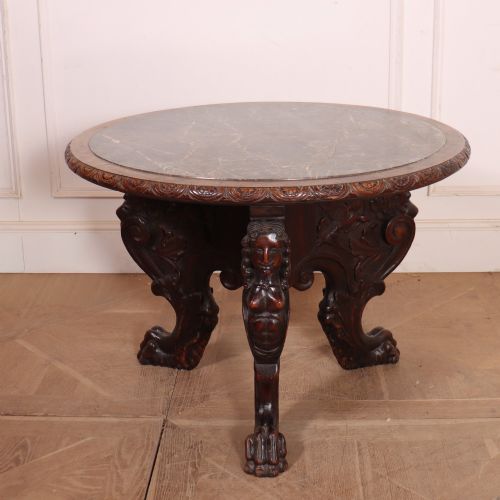
Alongside traditional wine tables, buyers encounter related formats such as occasional tables, lamp tables, and kettle stands. Walnut, rosewood, and oak frequently form the structure of these versatile furnishings.
How They Were Made
Cabinetmakers constructed these pieces primarily from dense hardwoods like mahogany, walnut, and rosewood, occasionally incorporating burr wood veneers and marquetry inlay. Skilled hands shaped solid timber into slender tripod bases and turned central pedestals to support the upper surface.
Listings feature mahogany, walnut, and rosewood alongside oak and marble surfaces.
What Varies in Quality
The distinction between standard and superior pieces rests upon the crispness of the timber carving and the selection of figured veneers like burr walnut or rosewood. Master craftsmen executed mouldings and tripod legs with balanced proportions and robust joinery that survives centuries of use.
Sophisticated mechanical elements, such as functioning birdcage blocks and well-fitted tilt-top catches, separate basic production from exceptional workshop output. The harmony between the carved top, the turned column, and the stability of the base dictates the overall standing of the piece.
Gillow
The Carved Top Wine Table Glossary
- Tripod table
- A small stand supported by a central pillar resting on three legs. This construction became standard for eighteenth and nineteenth-century occasional furniture.
- Tilt-top table
- A table featuring a hinged mechanism that allows the surface to fold vertically when not in use. This design saved space in period interiors.
- Pie crust edge
- A raised, carved border shaped in undulating curves resembling pastry work. Cabinetmakers applied this detail to high-status mahogany and walnut table tops.
- Birdcage mechanism
- A wooden framework beneath the table top that permits the surface to both tilt and rotate. It represents a mark of sophisticated eighteenth-century joinery.
- Kettle stand
- A small low table designed to hold a tea kettle or lamp. These pieces often share the tripod form and carved details of wine tables.
Carved Top Wine Table: Frequently Asked Questions
What is a carved top wine table used for?
These pieces function as small movable stands designed to hold drinks, lamps, or decorative objects beside seating furniture. Their compact footprint allows them to fit easily into corners or tight spaces within a room.
Historically, owners moved them about the house as needed for evening entertaining or quiet reading. Today, they serve the same practical purpose while adding period character to an interior.
What is a pie crust edge?
A pie crust edge is a decorative carved border raised around the perimeter of a circular table top. The wood is shaped into a series of small, flowing curves resembling pastry work.
This labor-intensive detail appears on finer eighteenth-century and revival pieces. It provides both a tactile finish and a slight barrier to prevent items from sliding off.
How do I care for antique mahogany furniture?
Maintain antique timber by keeping it away from direct heat sources and strong sunlight, which can dry out and fade the wood. Dust regularly with a soft, dry cloth to protect the polished surface.
Applying a traditional beeswax polish occasionally helps nourish the grain and preserve the patina. Avoid modern liquid cleaners that may damage historic finishes.