

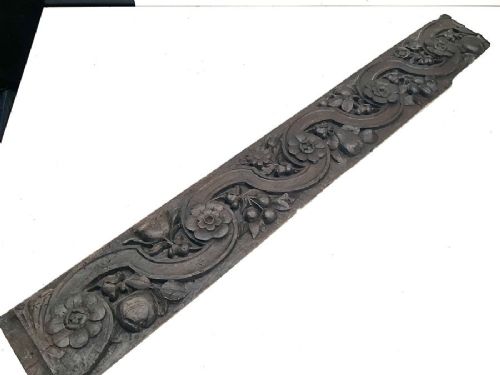




Carved Timber Moulding
These pieces of carved timber moulding bring architectural depth and historical texture to interior spaces.
Carved Timber Moulding
Carved timber moulding encompasses architectural elements and decorative architectural salvage drawn from periods ranging from the seventeenth century through to the twentieth century. When exploring carved timber moulding, buyers encounter fragments such as friezes and overdoor pediments shaped from oak, walnut, teak, and fruitwood.
The selection reflects diverse regional styles including Jacobean, Tudor, French Provincial, and Portuguese Colonial influences. These pieces originate from larger architectural settings, retaining the handcrafted character of historical joinery.
Materials and Construction
Craftsmen shaped these architectural elements using traditional hardwoods like oak, walnut, fruitwood, and teak, often employing hand-carving techniques to create deep relief profiles and ripple mouldings. The physical evidence shows straightforward carpentry methods typical of historical joinery and architectural woodwork.
Mouldings and friezes rely on the natural grain and density of timber, sometimes augmented by metal elements such as brass and iron in related salvaged items. Surface characteristics result from age and historical usage rather than modern finishing.
A massive gingerbread mould featuring a man on horseback proves that historic bakers took their equestrian biscuits remarkably seriously.
Assessing Quality and Character
Quality in carved timber moulding rests upon the crispness of the hand-carved detail and the depth of the relief work. Pieces exhibiting strong sculptural definition and well-preserved joinery display superior craftsmanship compared to simpler linear runs.
The choice of dense hardwoods such as oak or walnut enhances the longevity and tactile presence of the carving. Patina and the integrity of the original timber surface distinguish finer architectural fragments from utilitarian remnants.
The Carved Timber Moulding Glossary
- Frieze
- A decorative band adorning the upper part of a wall or architectural structure. In these listings, it appears as a carved timber element.
- Pediment
- A triangular or segmental architectural feature placed above a door or window. The examples here include overdoor pediments in pollard oak.
- Ripple moulding
- A series of small, wave-like parallel curves carved into wood. This technique creates a distinctive textured surface seen on larger coffers.
- Architectural salvage
- Building components rescued from demolition or alteration. These items are repurposed for interior decoration and display.
Carved Timber Moulding: Frequently Asked Questions
What is carved timber moulding used for?
These pieces function as decorative architectural elements, wall hangings, or focal points in period interiors. They bring historical texture to plain walls and modern spaces.
Buyers often mount them above doorways or display them as standalone wooden sculptures to highlight traditional hand-carved details.
How do I identify the period of a moulding?
Dating relies on stylistic markers such as Jacobean geometric relief or Tudor floral motifs, alongside the choice of native woods like oak and walnut. Tool marks and construction methods further indicate the era of production.
Comparing the carving style to documented architectural fragments helps narrow down the century of origin.
How should I clean carved wood?
Dusting gently with a soft, dry brush preserves the accumulated patina and protects the dry timber surface. Avoid using harsh chemical cleaners or excess moisture on antique wood.
Applying occasional neutral wax helps maintain the condition of older hardwoods without altering their historical appearance.
Can these mouldings be installed on walls?
Most fragments are suitable for interior wall mounting with appropriate fixings that support the weight of dense hardwoods like oak and teak. Professional installation ensures the timber remains secure without causing structural damage to the piece.
Placement should avoid areas with high humidity or direct heat sources to prevent the wood from warping.