
Carved Timber Folk Art
Carved timber folk art objects are hand-wrought wooden sculptures, decoys, and domestic utensils shaped by vernacular makers to collect for their honest character.
Carved Timber Folk Art
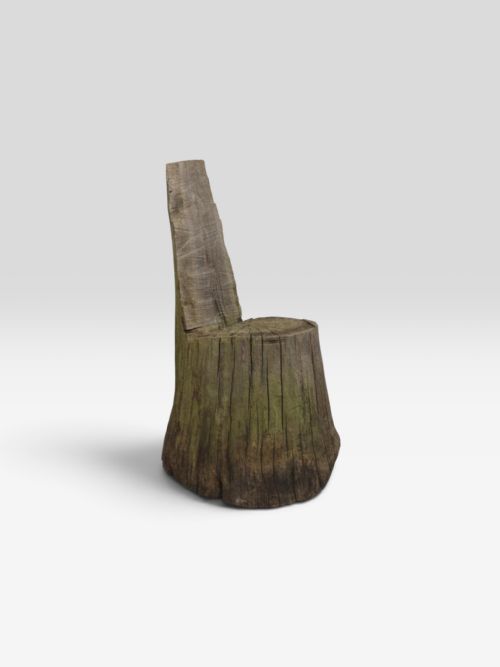
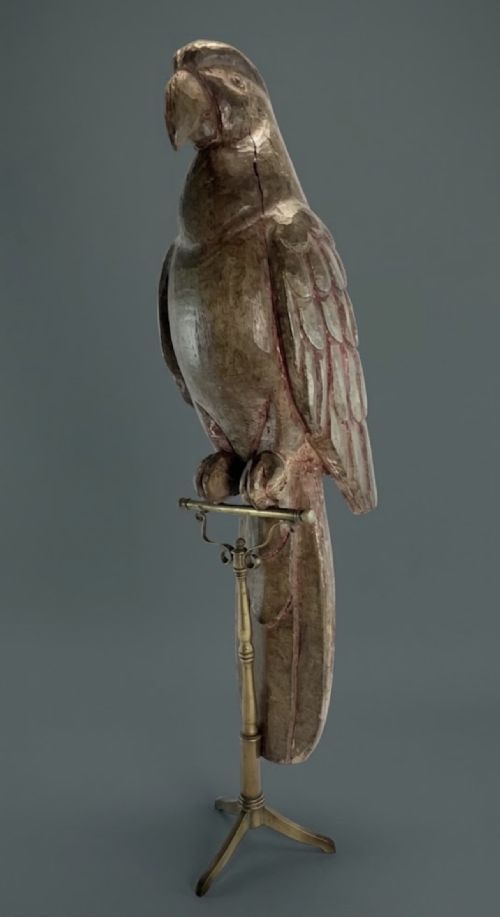
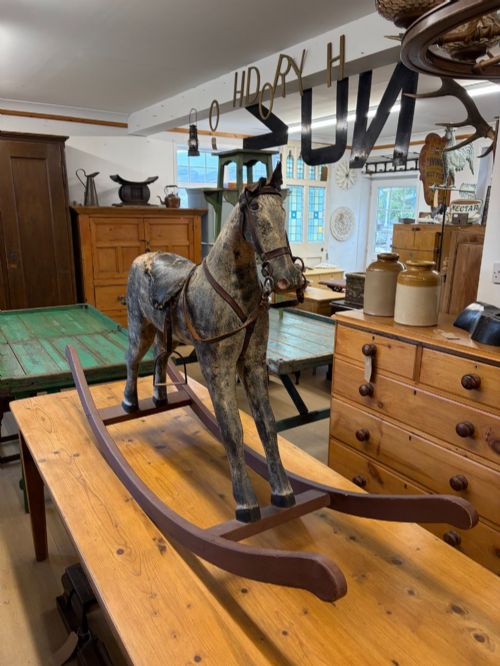
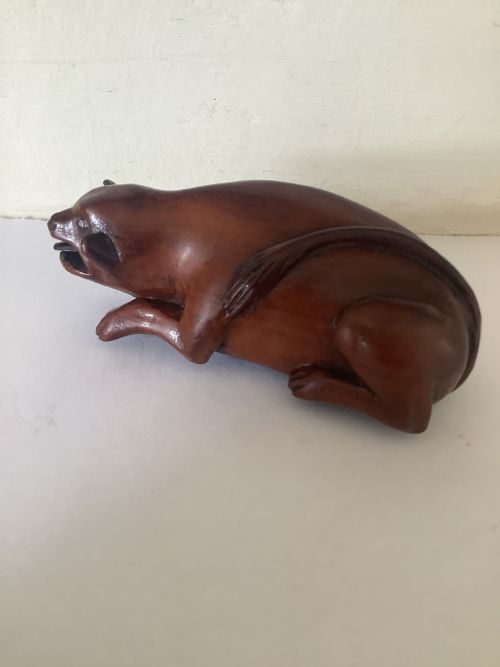
Carved timber folk art encompasses domestic utensils, animal sculptures, and decoy figures shaped by vernacular makers. These pieces emerge from everyday rural life across different regions, reflecting local traditions rather than courtly academies.
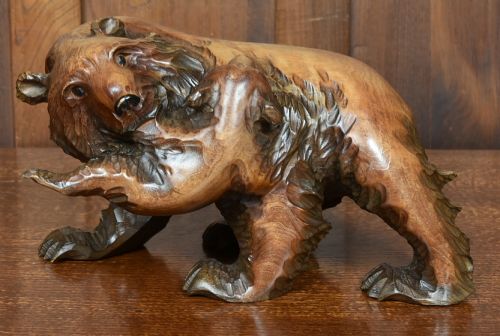
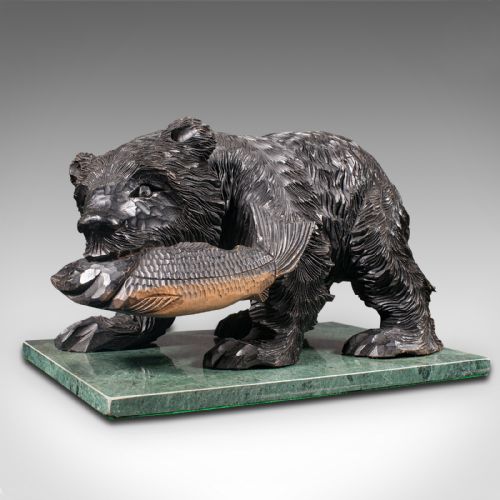
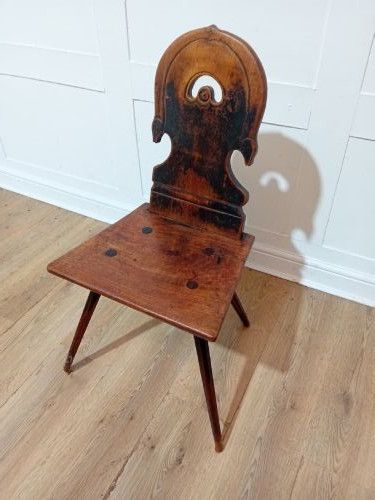
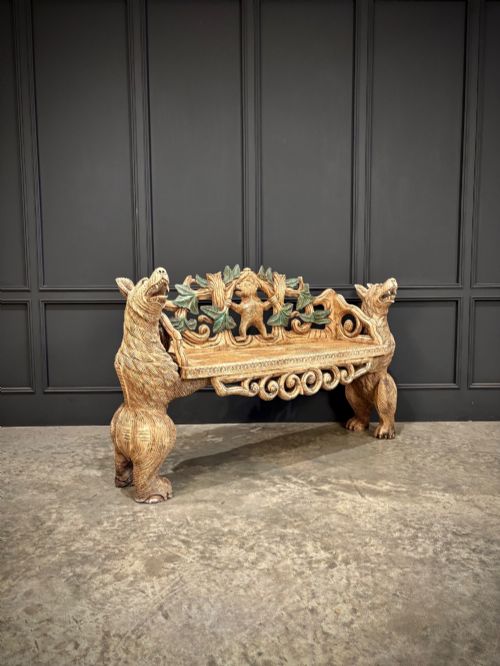
Geographic diversity shapes the inventory, ranging from English and Scandinavian country pieces to Japanese bear carvings and Black Forest furniture. Each region imparts distinct regional motifs to the worked timber.
How they were made
Maker tools typically involved pocket knives, gouges, and hand saws applied directly to available local timbers such as oak, pine, and mixed hardwoods. Craftsmen worked green or seasoned wood entirely by hand, leaving tool marks across the finished surfaces.
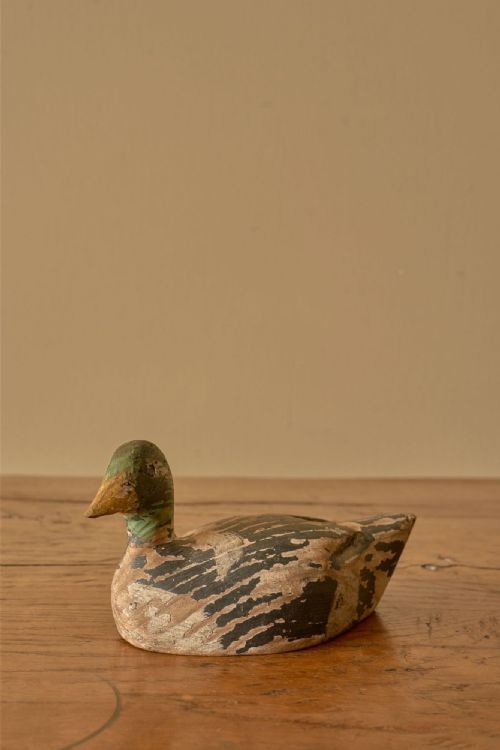
Surfaces often received protective or decorative treatments including oil, wax, and lead-based paint. Many animal figures and decoys display polychrome painted details applied to simulate feathers or natural markings.
One nineteenth-century sheep-shearer clearly loved his work enough to carve an entire Saint Bernard dog out of timber.
What varies in quality
Quality rests upon the confidence of the carving and the expressive force of the naive form. Stronger pieces display assured knife work that captures the essential posture of an animal or human figure without excessive detail.
Surface history dictates desirability, particularly where original paint or wax retains deep patination from handling and age. Worn tool marks and integrated structural repairs from active use enhance the visual depth of the timber.
The Carved Timber Folk Art Glossary
- Treen
- Small handmade wooden domestic objects produced prior to mass manufacturing. These items include utilitarian wares like spoons, boxes, and knitting sheaths shaped for daily household tasks.
- Decoy
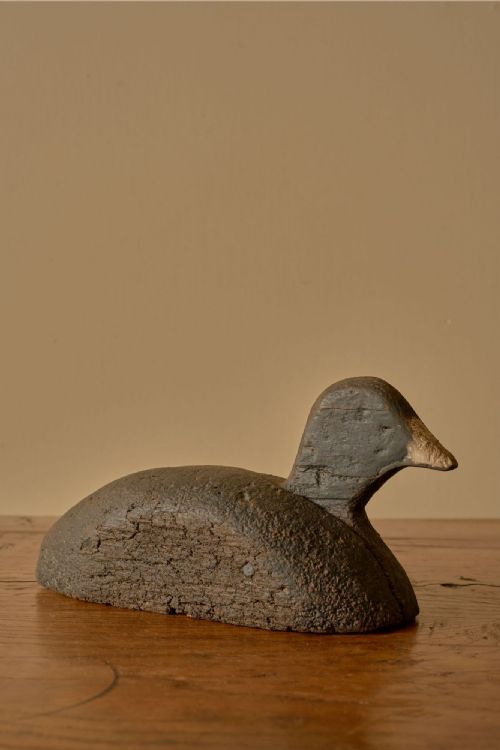
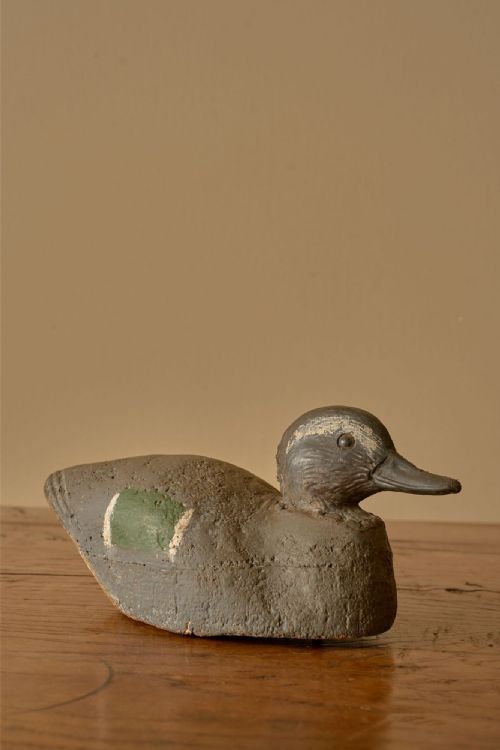
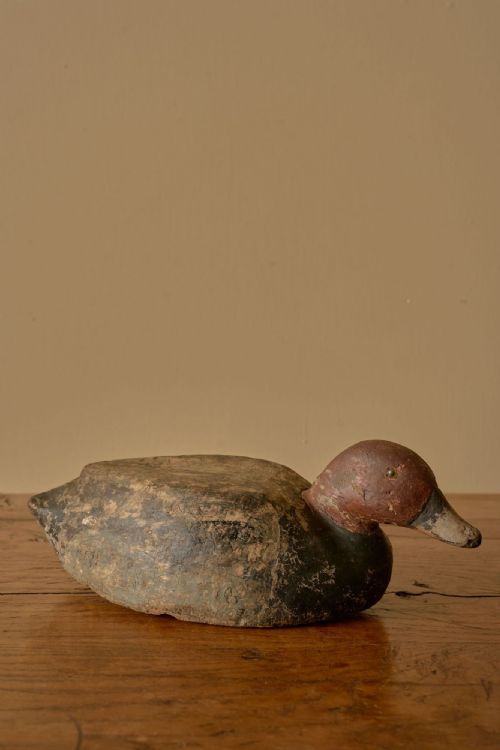
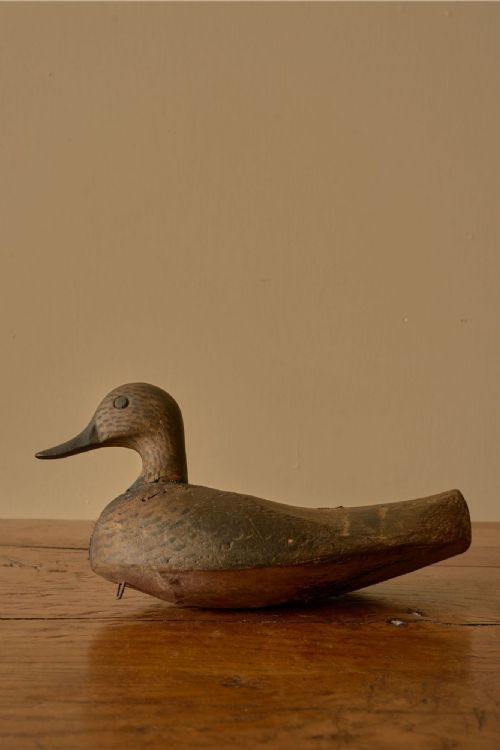
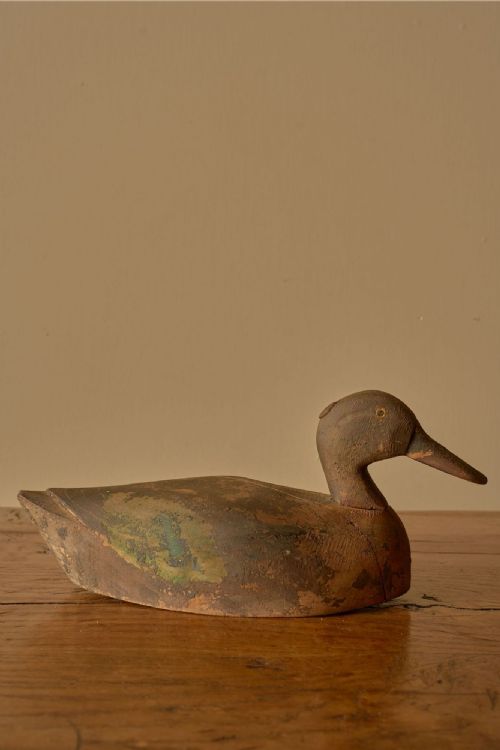
- A carved and painted wooden bird or animal used by hunters to attract wildlife. Makers shaped these objects with flat bases and hollow or solid bodies to float or sit upright.
- Mangle board
- A carved wooden board used historically in Scandinavia to smooth linen by wrapping fabric around a roller. Handles typically take the form of horses or stylized animal heads.
- Lovespoon
- A decorative wooden spoon traditionally carved by suitors to present to a beloved. These ceremonial pieces feature intricate cut-out links, initials, and symbolic motifs.
- Polychrome
- Decorated in multiple colours using painted pigments applied directly to the timber. This technique appears frequently on decoys, figures, and bowls.
Carved Timber Folk Art: Frequently Asked Questions
How were decoy ducks used?
Decoy ducks were floated on water or placed on shorelines by hunters to lure wild waterfowl within range. Makers carved and painted these wooden bodies to mimic the plumage and posture of specific birds.
Over decades of exposure to outdoor environments, working decoys acquired weathered paint surfaces and natural wear. Collectors value these items today for their sculptural silhouettes and historic patination.
What is treen?
Treen describes small wooden objects created for domestic use before the advent of factory production. The category encompasses items such as snuff boxes, knitting sheaths, spoons, and small bowls.
These functional objects were shaped using simple hand tools and seasoned timbers. Years of handling impart a smooth tactile quality to the wood surface.
How do I care for wooden folk art?
Wooden folk art requires stable indoor environmental conditions away from direct sunlight and rapid temperature fluctuations. Excessive heat causes timber to dry out and split, while dampness encourages decay.
Applying a light microcrystalline wax occasionally helps preserve dry unpainted surfaces. Painted items should be dusted gently without liquid cleaners to protect the historic pigment.