




Carved Timber Daybed
A carved timber daybed offers an inviting spot to recline, bringing centuries of craftsmanship and rich materials into a modern room.
Carved Timber Daybed
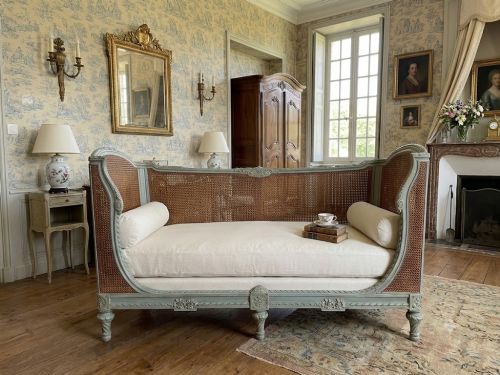
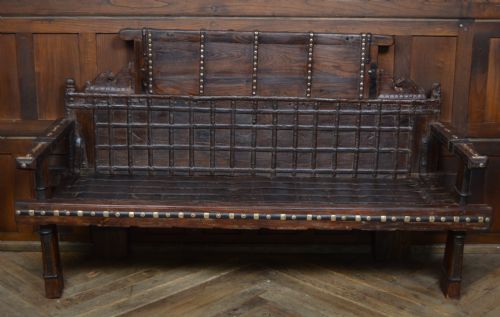
A carved timber daybed encompasses various forms designed for resting, from French painted cane day beds to Chinese hardwood sofas and Indian benches. These pieces emerge primarily from the nineteenth century, taking shape through periods such as the Regency, Victorian, and Qing Dynasty.
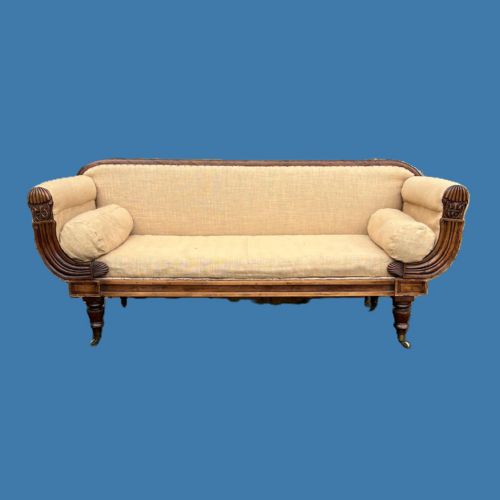
The version most commonly encountered on this page is the nineteenth-century daybed or chaise longue, often rendered in solid mahogany, walnut, or exotic hardwoods. Their diverse origins span French Louis XVI style frames, Anglo-Indian caned settees, and country house day beds.
Buyers seek these objects for their versatility and architectural presence within a domestic interior, serving as functional seating or lounging furniture. Each example demonstrates distinct regional woodworking traditions, whether through European painted finishes or dense Asian timbers.
Materials and construction
Construction relies heavily on dense timbers such as mahogany, walnut, hardwood, and simulated rosewood, which provide structural integrity for elaborate carving. Artisans shaped these materials using traditional joinery, often integrating cane panels or upholstered elements like linen and fabric.
Surface treatment varies according to origin, encompassing natural timber finishes, painted French surfaces, and Chinese lacquered details. Additional components like brass hardware and iron fittings occasionally appear to secure joints and support the heavy wooden frames.
Assessing quality and execution
Quality in a carved timber daybed is defined by the crispness and depth of the wood carving, where finer examples display masterly hand-chiselled detail rather than mechanical repetition. The choice of timber also dictates standard, with dense hardwoods and figured mahogany marking superior production.
Structural honesty and the preservation of original elements, such as intact caning or period frames, distinguish finer pieces from heavily restored or altered examples. The cohesion of regional style - whether Louis XVI, Regency, or Qing Dynasty - reflects the maker's adherence to traditional design canons.
The Carved Timber Daybed Glossary
- Chaise Longue
- An upholstered long chair for reclining, typically featuring an elongated seat and one raised end or backrest. These pieces function as both seating and daybeds.
- Canapé Corbeille
- A French basket-shaped sofa or settee, often characterised by a curved back flowing into the armrests. This style appears frequently in nineteenth-century French seating.
- Takhat
- A traditional Indian low table or platform, frequently constructed from heavy timber and utilised for sitting or lounging. These sturdy wooden forms double as low daybeds.
- Campaign Sofa
- Portable furniture designed for travel by military officers, typically featuring clever dismantling mechanisms and sturdy timbers. These pieces combine practicality with refined Regency aesthetics.
Carved Timber Daybed: Frequently Asked Questions
What is a carved timber daybed used for?
These pieces serve primarily as functional seating and lounging furniture, offering an elongated surface for resting during the day.
In historic interiors, they functioned in drawing rooms, bedrooms, or antechambers, combining the utility of a chair with the comfort of a bed.
How do I identify the period of a daybed?
Period identification relies on observing the stylistic markers, such as the neoclassical lines of Regency pieces or the carved motifs of Victorian furniture.
Material choices, construction methods, and regional design traits further anchor the piece to centuries like the nineteenth or early twentieth.
Where were these daybeds made?
Originating from diverse geographic regions, these pieces reflect local workshops in Europe, China, and India.
European examples often follow French or English classical styles, while Asian pieces showcase native hardwoods and distinct regional joinery.
How do I care for antique timber furniture?
Maintain timber daybeds by keeping them away from direct sunlight and extreme temperature fluctuations to prevent wood splitting.
Apply suitable wax polishes sparingly and dust regularly with a soft cloth to preserve the natural patina of the wood.