
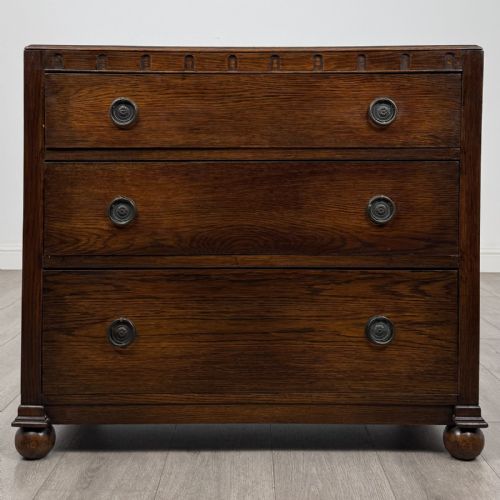
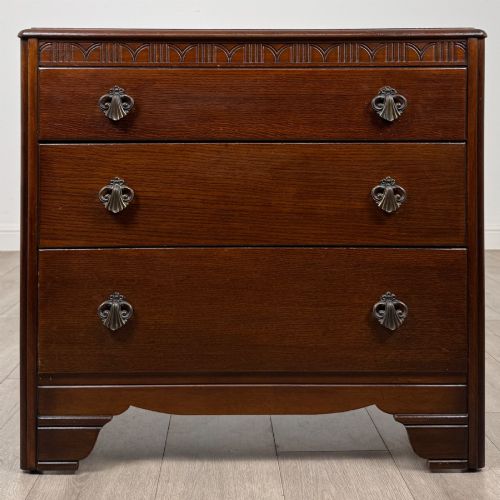
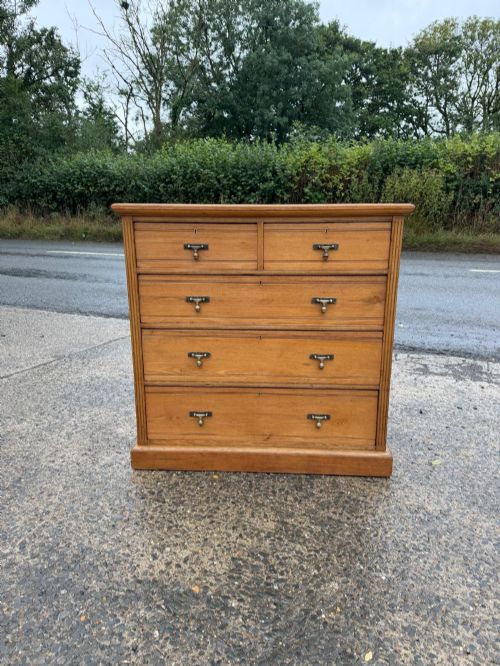
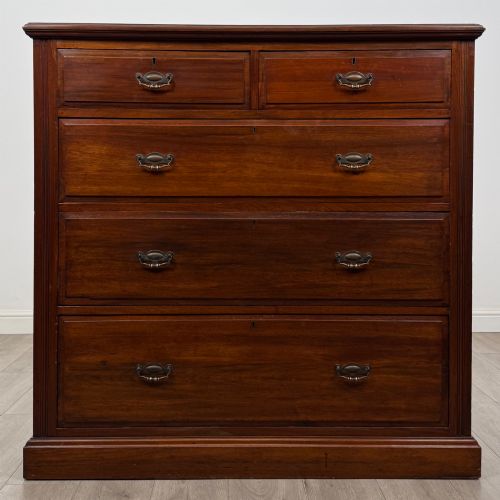
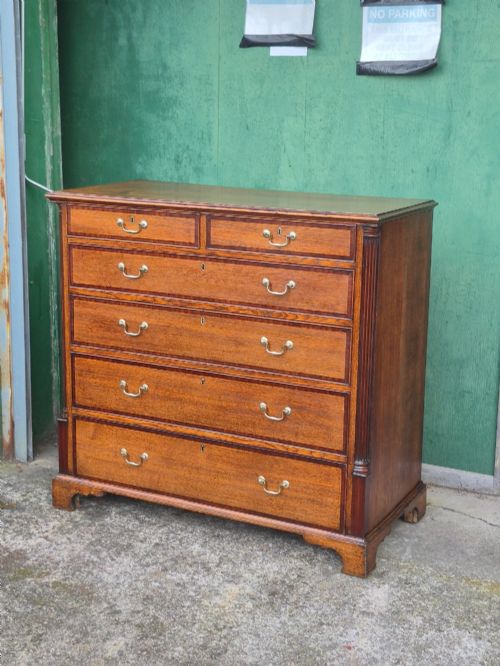
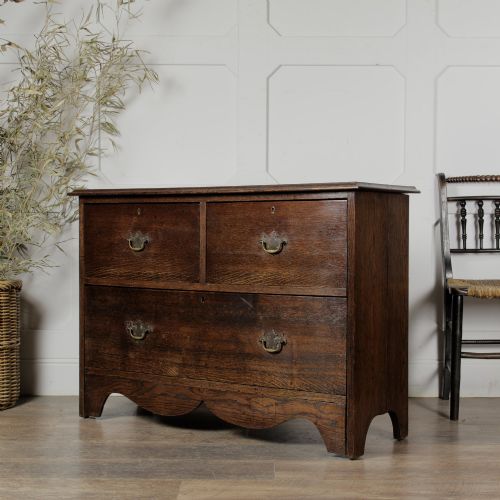

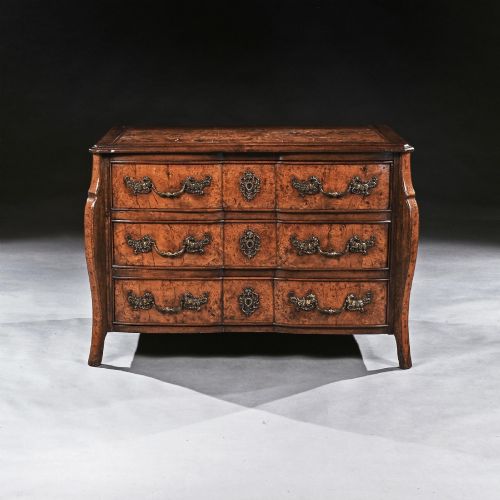
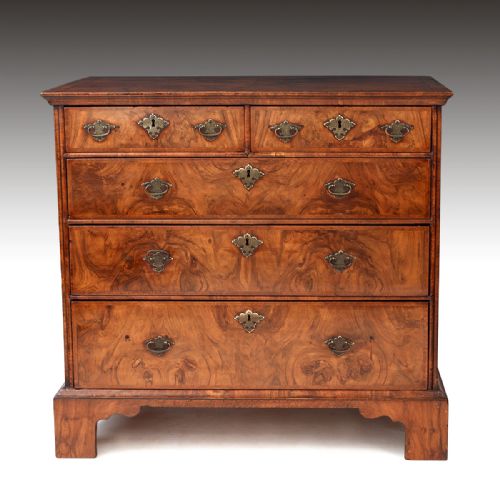
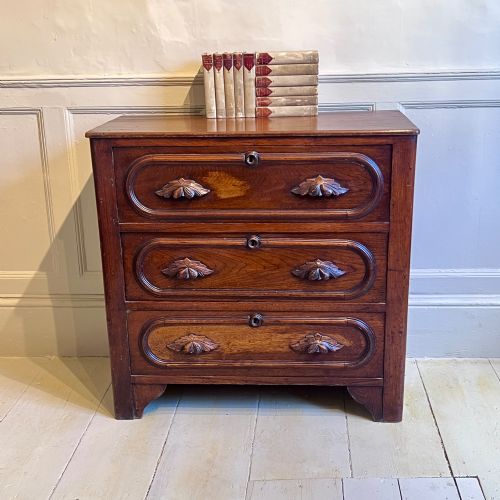
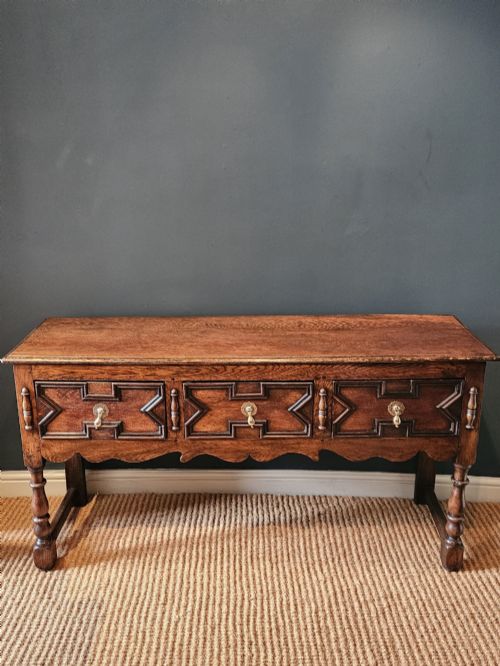
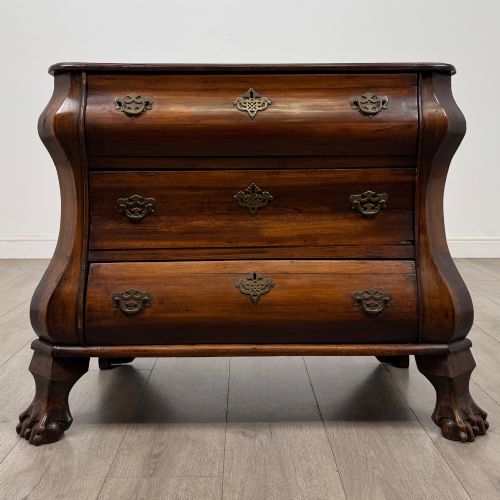
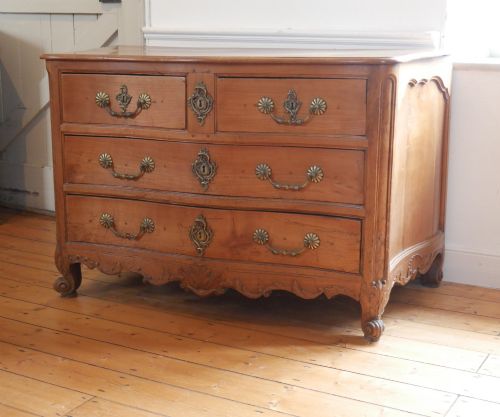
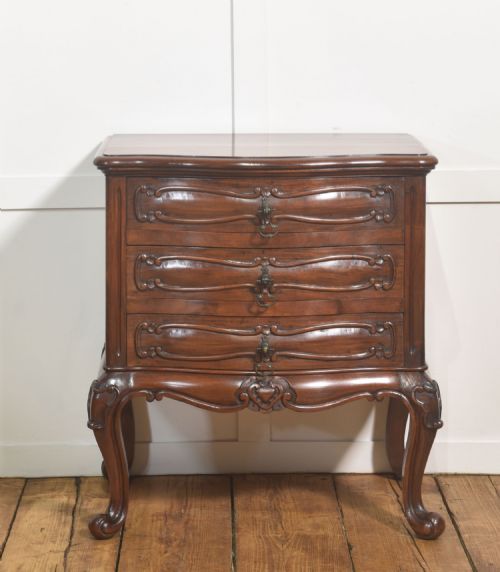
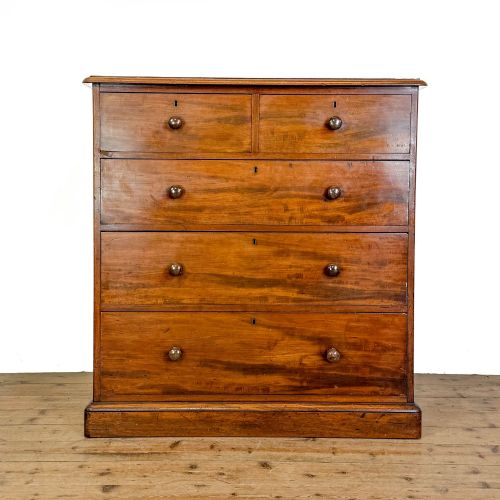
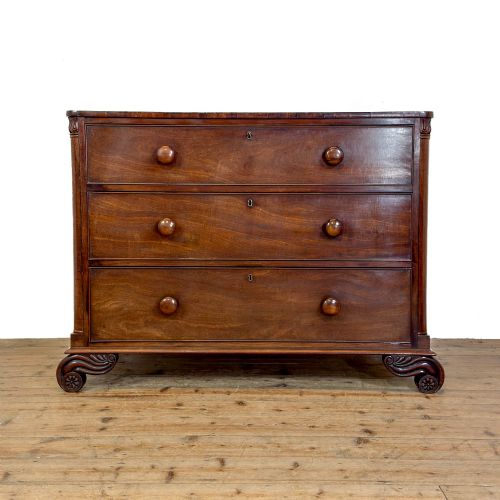
Carved Three Drawer Chest
A carved three drawer chest provides practical storage with sculptural presence, anchoring a room through solid timber and hand-carved detail.
Carved Three Drawer Chest
A carved three drawer chest brings together useful timber storage and decorative surface work across various historical periods. Buyers seeking this form encounter pieces originating from English, French, and Italian workshops spanning several centuries.
The selection here encompasses regional European commodes, English country furniture, and formal Georgian or Victorian formats. Oak and walnut dominate the structural forms, while pine and mahogany appear frequently across the periods.
Format variations include provincial bombé shapes, geometric moulded fronts, and serpentine profiles alongside standard upright drawer arrangements. Many examples integrate carved motifs directly into the timber frame or drawer panels.
Materials and construction
Cabinet makers utilised dense hardwoods such as oak, walnut, and mahogany alongside regional fruitwoods and pine. Timber selection dictated whether the piece received clear finishing, painted decoration, or bleached surfaces.
Construction methods relied on traditional joinery, including hand-cut dovetails for drawer boxes and mortise and tenon frames. Carving was executed directly onto solid wood panels or applied as moulded decorative elements.
Surface treatments range from natural wax polishes highlighting grain patterns to historic painted finishes and marble tops. Brass hardware, including drop handles and escutcheons, completed the assembly of these functional items.
Listings span oak, walnut, mahogany, pine, and painted wood across the 17th, 18th, 19th, and 20th centuries.
Distinguishing quality levels
Quality rests upon the crispness of the hand-carved elements and the structural integrity of the timber used throughout the piece. Superior examples display deep, deliberate carving that integrates harmoniously with the architectural lines of the chest.
The grade of timber and the precision of the joinery define the upper tier of execution. Heavier gauge solid hardwoods, well-figured veneers like burr elm or flame mahogany, and intact original hardware distinguish finer workshops from utilitarian production.
The Carved Three Drawer Chest Glossary
- Bombe
- A swelling, outward-curving chest profile associated with continental European furniture design. This curvaceous form requires advanced woodworking skill to construct.
- Commode
- A low chest of drawers or cabinet, frequently used in French and Italian interior contexts. The term often denotes decorative pieces with serpentine or shaped fronts.
- Serpentine
- A front contour characterised by a convex centre flanked by concave curves. This undulating line demands precise cutting of the timber drawers and frame.
- Escutcheon
- A protective plate surrounding a keyhole, usually fashioned from brass. These fixtures often contribute decorative metalwork detail to the drawer fronts.
- Dovetail
- An interlocking joint used in drawer construction to secure corners with high tensile strength. Hand-cut variations indicate older craftsmanship standards.
Carved Three Drawer Chest: Frequently Asked Questions
Where should I place a carved three drawer chest?
These chests suit entryways, bedrooms, or living spaces where surface display and medium-scale storage are required. Their compact footprint allows them to function effectively against smaller wall spaces.
Ensure the clearance allows drawers to open fully without obstruction from nearby furniture. The top surface accommodates lamps, mirrors, or decorative objects comfortably.
How do I care for antique timber surfaces?
Maintain the timber by dusting regularly with a soft cloth and applying traditional beeswax periodically to nourish the wood. Avoid placing furniture in direct sunlight or near heat sources to prevent timber splitting.
Keep moisture away from the surface by using coasters under glasses or vases. Gentle cleaning preserves the historic patina developed over centuries.
What is the difference between an English and a French chest?
English chests generally emphasise rectilinear geometry, solid oak or mahogany construction, and understated proportions. French commodes often feature curved profiles, decorative paintwork, and more elaborate carving.
Regional variations also influence hardware choices and foot styling, such as paw feet versus bracket feet. Both traditions prioritize durable joinery and functional drawer capacity.
How do I identify the period of a chest?
Period identification relies on examining construction techniques, hardware styles, and the specific moulding profiles used on the frame. Seventeenth and eighteenth-century pieces typically show hand-split timbers and early dovetailing.
Later Victorian and Edwardian examples often incorporate machine assistance or standardised fixings alongside period-specific aesthetic revivals. Comparing the timber ageing and secondary woods aids in confirming the date.