





Carved Stretcher Chair
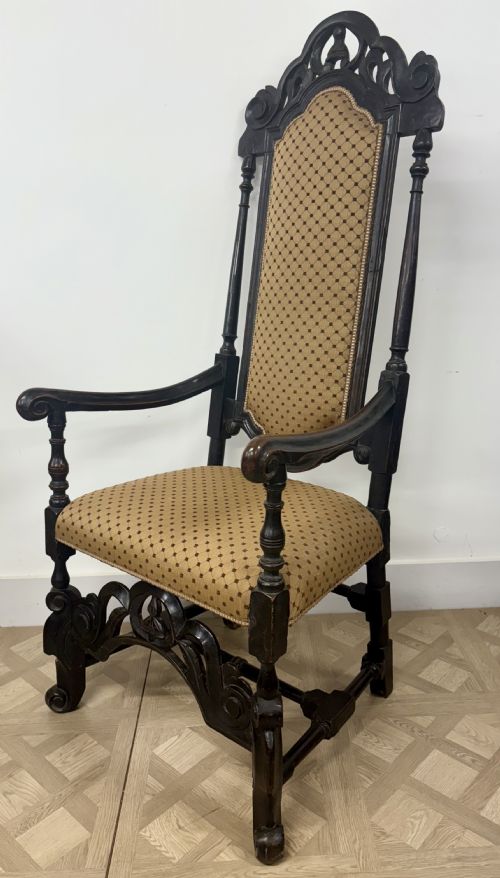
A carved stretcher chair is a sturdy seat defined by elaborate woodwork below the seat, drawing attention through bold scrollwork and turned bracing.
Carved Stretcher Chair
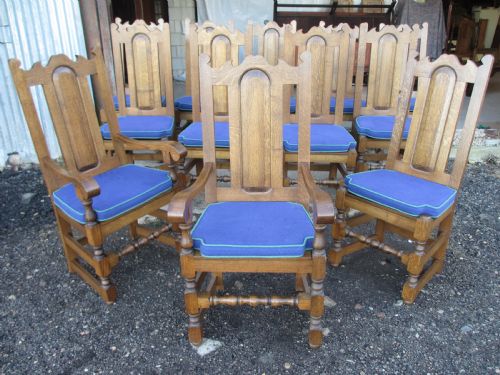
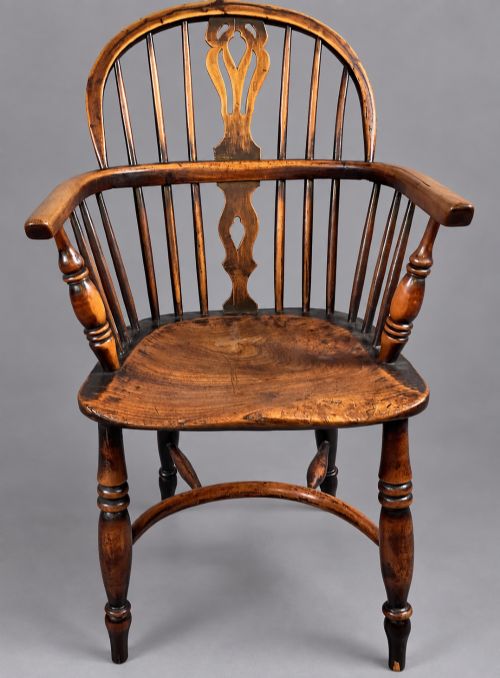
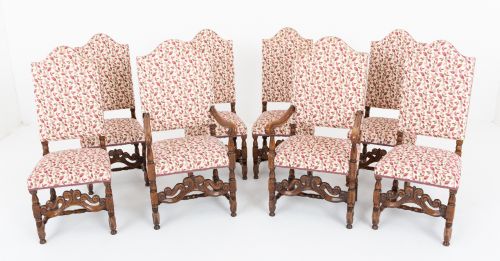
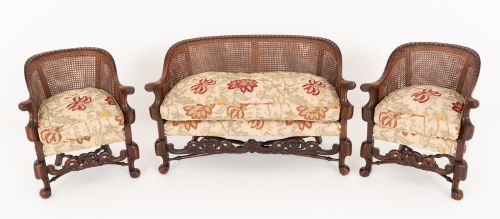
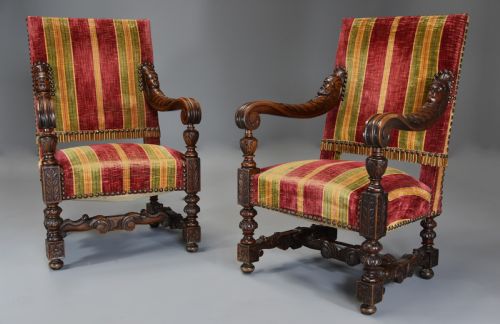
A carved stretcher chair brings substantial presence to a room, appearing in forms from high-backed side chairs and library armchairs to expansive bergere suites and dining sets. Buyers searching for a carved stretcher chair typically encounter 17th-century originals alongside later 19th-century revivals that lean heavily into Carolean, Jacobean, and French Baroque idioms.
The heavy woodwork characteristic of these pieces anchors the lower half of the furniture, uniting the legs with horizontal bracing. These lower rails provide both structural stability and a primary surface for ornamental carving, ranging from barley twist supports to pierced scrollwork.
Materials and construction methods
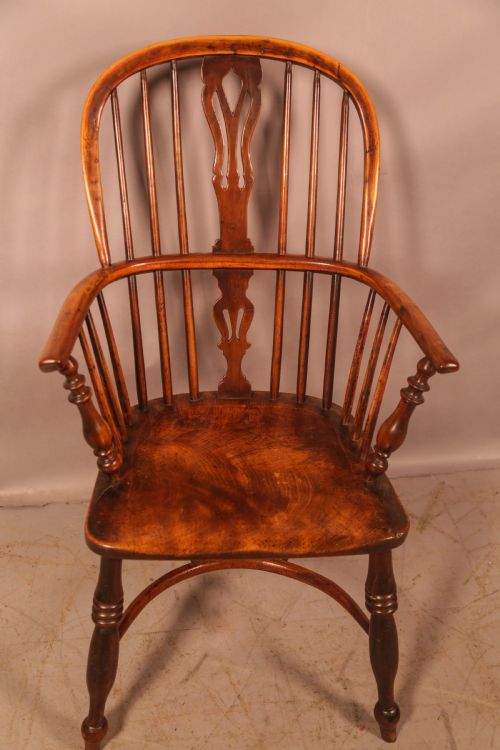
Carpenters utilised dense hardwoods such as oak, walnut, beech, and yew to support deep chisel work and structural weight. These timbers allowed craftsmen to fashion robust frames capable of holding detailed relief patterns along the structural rails and uprights.
Joinery methods relied on mortise and tenon joints to secure the heavy legs and lower braces, while secondary materials like cane, velvet, tapestry fabric, and leather provided seating surfaces. Turned elements and hand-carved details were applied directly to the solid timber components before final assembly.
Carved Stretcher Chair Retail Price Guide 2026
Typical asking prices for carved stretcher chair among the pieces listed under this phrase on Sellingantiques today, from the lower quarter to the upper quarter. They describe what is for sale here now, not the wider market.
Several armchairs come disguised under names like porter's chairs and throne chairs, ready for an afternoon read.
Distinguishing quality in construction and carving
Quality rests in the depth and sharpness of the hand-carved detail along the lower bracing and crest rails, where crisp lines distinguish skilled work from soft, mechanical moulding. The integrity of the timber joints and the weight of the primary hardwood determine how firmly the underframe holds against daily use.
The choice of secondary materials, such as hand-woven cane panels or heavy upholstery fabric, shifts the overall finish. Superior examples display thoughtful integration between the carved wooden framework and the upholstered or caned inserts.
The Carved Stretcher Chair Glossary
- Stretcher
- A horizontal wooden brace connecting the legs of a chair to provide structural stability and support.
- Carolean
- A 17th-century English style associated with the reign of Charles II, known for rich carving, scrolls, and cane panels.
- Bergere
- An enclosed upholstered armchair with a wooden frame, often featuring cane work on the back and sides.
- Barley twist
- A type of turning shaped like a spiralling rope, commonly found on 17th-century and Victorian support legs and stretchers.
- Wainscot chair
- An early heavy wooden armchair constructed primarily of oak with panelled backrests and solid seats.
Carved Stretcher Chair: Frequently Asked Questions
How do I spot a reproduction?
Examine the tooling marks along the lower bracing and joints to see if hand chisels or modern machinery shaped the timber. Patina and wear patterns around the foot and lower rails should match the age indicated by the style.
Compare the timber shrinkage and joint construction with known period examples. Revivals from the 19th century often use softer machine turning alongside hand-applied surface details.
Can I use these chairs daily?
Sturdy hardwood frames handle regular seating provided the joints remain tight and the lower stretchers are secure. Walnut and oak structures offer lasting strength for everyday use in living spaces.
Delicate caning or antique tapestry fabric requires more care than modern materials. Placing the furniture away from direct heat sources protects the dry timber from splitting.
Where should I place one?
High-backed elbow chairs and library armchairs anchor empty corners or serve as focal points in studies and hallways. Their sculptural lower bracing makes them suitable for placement where the sides and rear remain visible.
Pairing a single imposing armchair with simpler surrounding furniture lets the carved wooden elements stand out. Dining sets with carved lower rails work well around large central tables.