


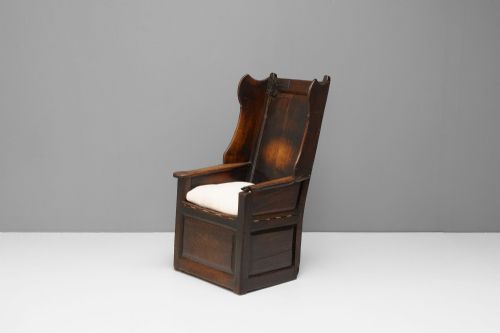


Carved Oak Wingback
A carved oak wingback is a sturdy fireside armchair offering draught protection, prized for solid timber frames and comfortable upholstered seating.
Carved Oak Wingback
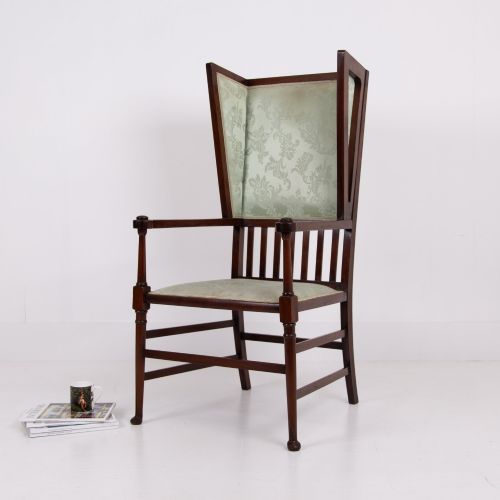
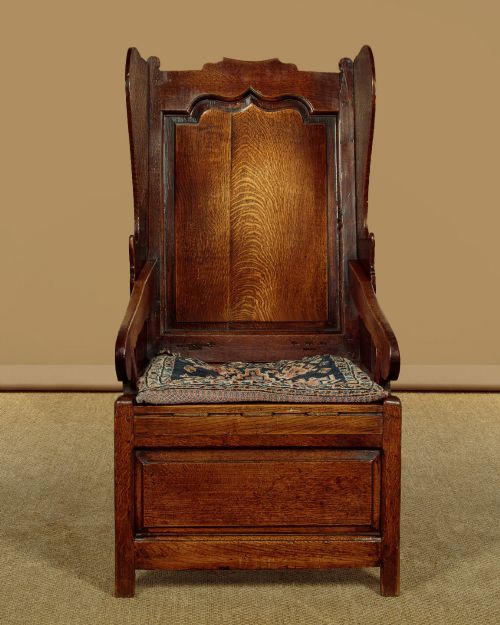
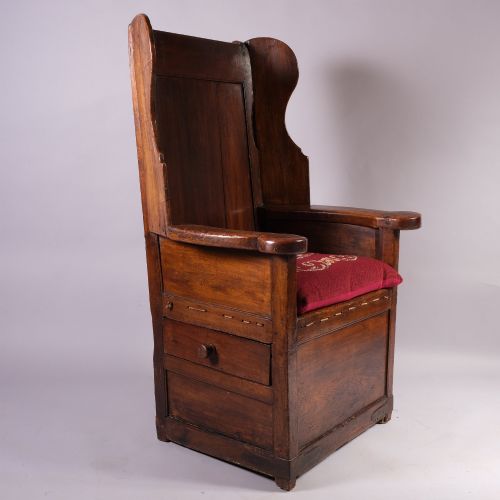
When you search for a carved oak wingback, you look at traditional armchairs designed to shield the sitter from draughts by enclosing the head and shoulders in wooden or upholstered wings. The examples you meet on this page span the eighteenth century, the nineteenth century, the Victorian era, and the Edwardian period, appearing in forms such as lambing chairs, reading chairs, and heavy revival styles.
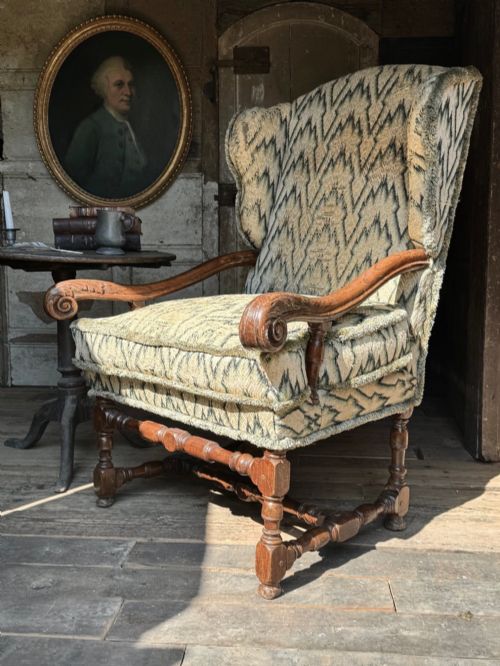
Makers drew on Georgian country, Georgian vernacular, Carolean revival, Victorian Jacobean revival, French provincial, and French chateau styles to shape these seats. Frames are constructed from oak and hardwood, while upholstery ranges from leather and velvet to fabric, textile, and damask fabric, often complemented by brass details.
Materials and construction
The primary material across these pieces is solid oak, supplemented by other hardwoods used for interior framing and structural support. Joinery relies on traditional carpentry methods suited to heavy timber, creating rigid armchairs capable of supporting daily use over centuries.
Upholstery materials include leather, velvet, damask fabric, and standard textiles fixed to the frames, sometimes secured or accented with brass hardware. Carved ornamentation is worked directly into the exposed oak elements, reflecting the decorative vocabulary of Carolean or Jacobean revival periods.
Carved Oak Wingback Retail Price Guide 2026
Typical asking prices for carved oak wingback among the pieces listed under this phrase on Sellingantiques today, from the lower quarter to the upper quarter. They describe what is for sale here now, not the wider market.
Listings feature oak and hardwood frames paired with leather, velvet, and damask fabric across eighteenth-century and Edwardian periods.
Judging quality in oak wingback chairs
Quality rests on the depth and crispness of the carved woodwork and the proportional balance of the wings and arms. Better examples display carefully selected oak with straight grain and substantial timber thickness that imparts genuine heft to the frame.
The standard of upholstery and the harmony between the textile choice and the period of the frame dictate the overall refinement of the piece. Chairs retaining early leather or appropriate period fabric display a more convincing integrity than those with unsympathetic modern replacements.
The Carved Oak Wingback Glossary
- Lambing chair
- A traditional vernacular armchair featuring solid wooden sides and a high back designed to keep draughts away from the hearth. These pieces often incorporate a small drawer beneath the seat or enclosed storage compartments.
- Carolean revival
- A nineteenth-century design movement imitating the ornate, scrolled woodwork and rich upholstery characteristic of the late seventeenth-century reign of Charles II. Furniture in this style makes heavy use of carved oak and crown motifs.
- Wingback
- An armchair style featuring protective side panels attached to the armrests and extending up to the back of the head. The design originally served to trap heat from a fireplace and block cold air currents in older homes.
- Vernacular
- Furniture made by local craftsmen for everyday use, following regional traditions rather than formal academic design patterns. These pieces prioritise practical utility and local timber availability over high-style ornamentation.
Carved Oak Wingback: Frequently Asked Questions
What is a lambing chair?
A lambing chair is a traditional form of vernacular seating featuring high wooden wings and enclosed sides designed to block cold draughts around a fireplace. They were commonly used in rural farmhouses and cottages during the eighteenth century.
Many examples include integrated storage beneath the seat or a simplified solid oak construction. They represent a specific, highly functional subset of the broader wingback category.
How do I date an oak armchair?
Dating relies on examining the construction methods, tool marks left on the timber, and the style of any carved ornamentation. Eighteenth-century pieces generally show hand-cut joinery and simpler vernacular forms, whereas Victorian and Edwardian examples often reflect revival movements.
Comparing the timber patination and the wear patterns on the oak frame helps establish age. Revival pieces from the nineteenth century frequently employ heavier, more theatrical carving inspired by earlier Carolean or Jacobean eras.
Are these chairs comfortable for daily use?
Most of these armchairs are surprisingly comfortable due to the ergonomic protection offered by the high back and enclosed wings. The physical comfort depends heavily on the quality and condition of the internal cushioning and upholstery.
Pieces upholstered in leather or soft textiles provide a welcoming seat for reading or fireside relaxation. Buyers should check the firmness of the seat base and the support offered by the backrest.
How should I care for antique oak furniture?
Antique oak benefits from stable indoor humidity levels and protection from direct sunlight, which can dry out the timber and fade upholstery. Regular dusting with a soft, dry cloth keeps the surface clean without damaging the patina.
Applying a traditional beeswax polish occasionally helps nourish the exposed hardwood and maintain its natural lustre. Avoid placing these chairs near direct heat sources like radiators to prevent the wood from warping.