
Carved Solid Oak Chair
A carved solid oak chair brings centuries of robust craftsmanship, rich timber grain and enduring architectural presence into any room.
Carved Solid Oak Chair
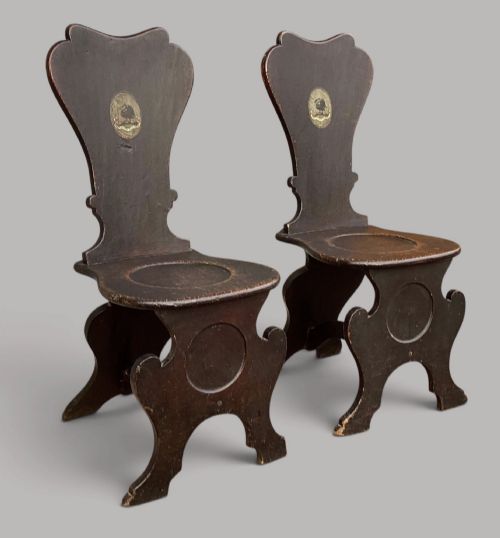
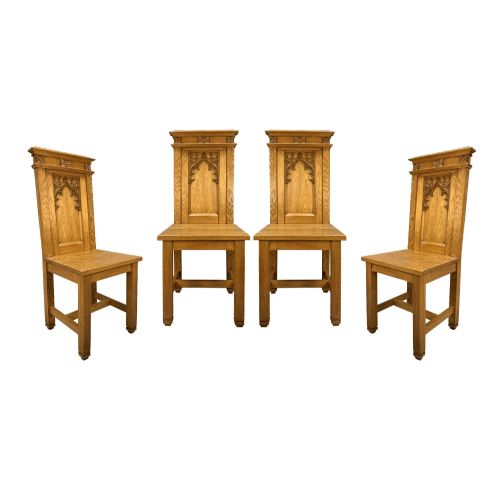
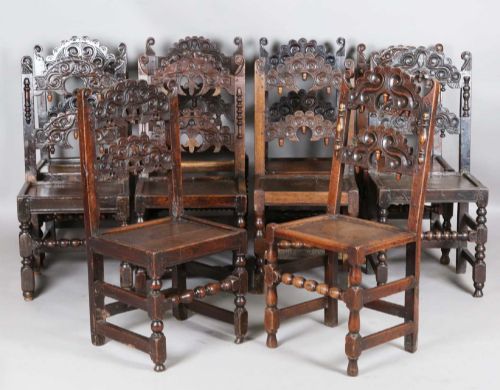
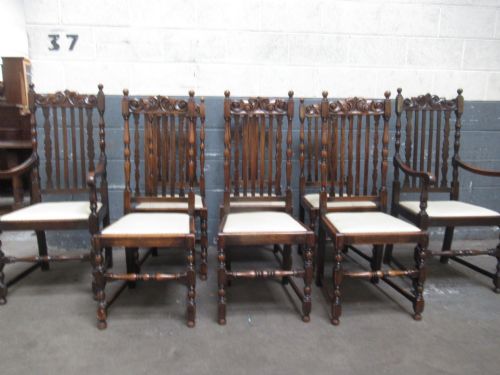
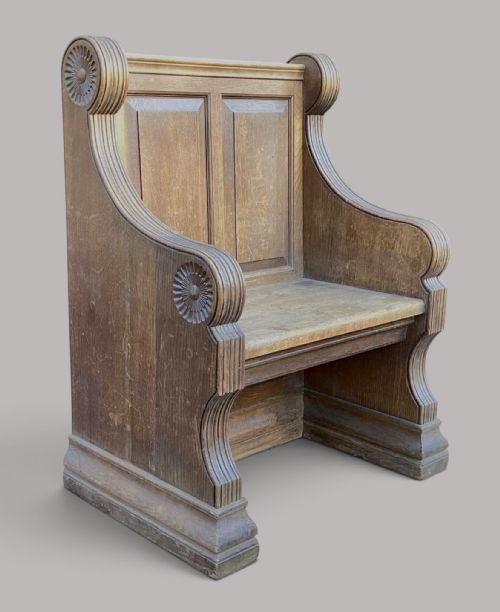
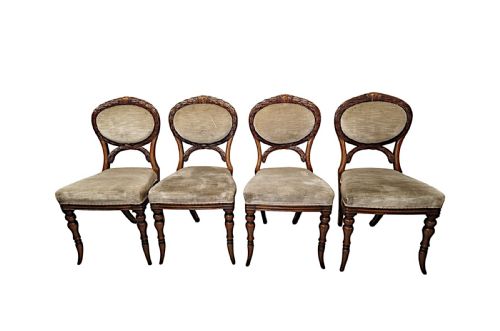
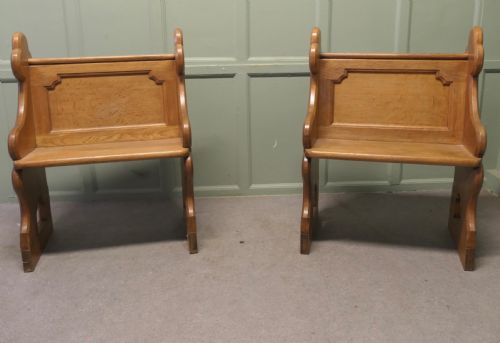
When you search for a carved solid oak chair, you encounter a diverse array of seating ranging from early wainscot and panel-backed armchairs to later Gothic revival hall chairs and Windsor variations. These pieces span multiple centuries, including seventeenth-century country house examples, eighteenth-century high-backs and nineteenth-century revivalist designs.
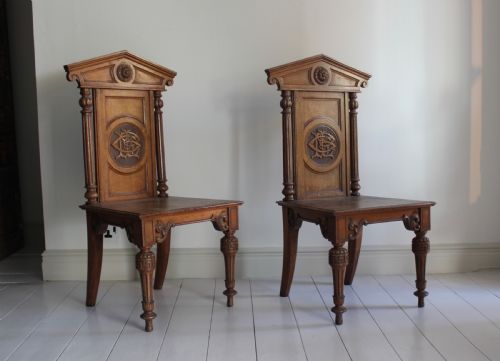
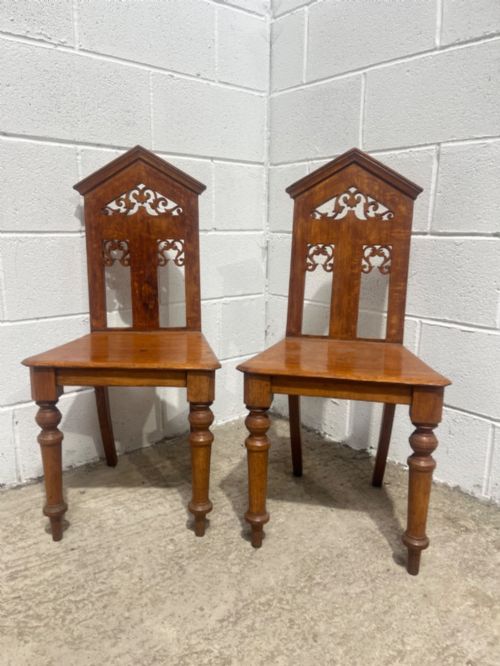
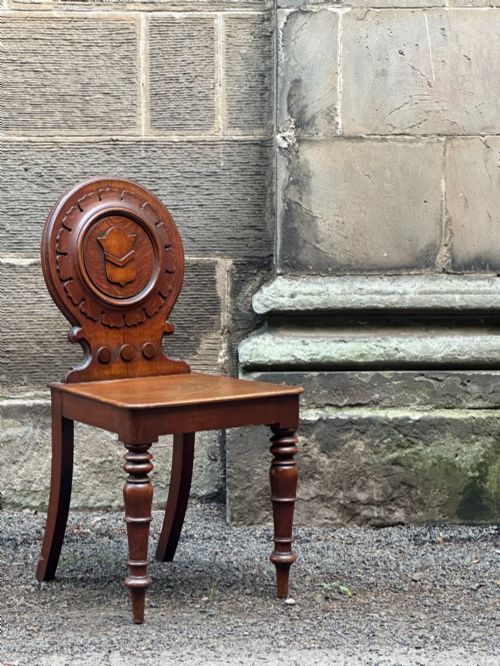
The version most commonly met on this page is the nineteenth-century Victorian or Gothic revival hall chair, often featuring an ornately carved shield or armorial back. Alongside these sit sturdy dining chairs, desk chairs, and occasional armchairs fashioned entirely from heavy native timber.
Originating predominantly from English, Scottish, Irish and Welsh workshops, these utilitarian and reception seats demonstrate heavy timber construction meant to withstand generations of daily use. The forms reflect both formal period revivals and vernacular country traditions.
What varies in quality
The standard of a carved solid oak chair is defined by the depth, crispness, and artistic ambition of the hand carving rather than mechanical uniformity. Crisp relief work with well-defined undercut details distinguishes superior workshop production from simpler, later vernacular pieces.
Timber selection and ageing also determine quality, with dense, deeply patinated heartwood displaying superior colour and figuring compared to dry or overly bleached boards. Original joinery integrity, minimal timber replacement, and untouched surface patination separate museum-grade survivals from heavily restored examples.
Several chairs feature carved heraldic shields so proud they practically demand you announce your lineage before sitting down.
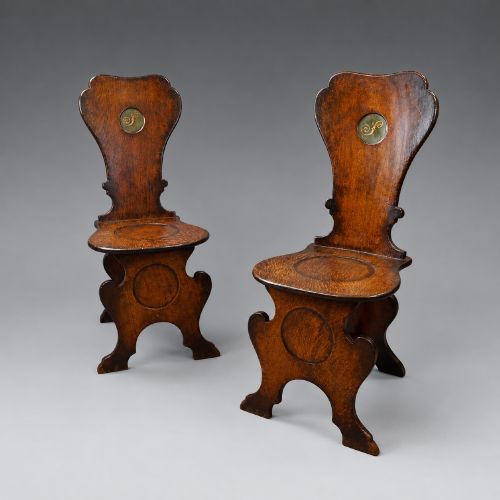
Strahan of Dublin
The Carved Solid Oak Chair Glossary
- Wainscot chair
- An early heavy wooden armchair with a paneled back and solid wooden seat, typically constructed during the seventeenth century. These substantial seats often served as principal chairs of authority in domestic interiors.
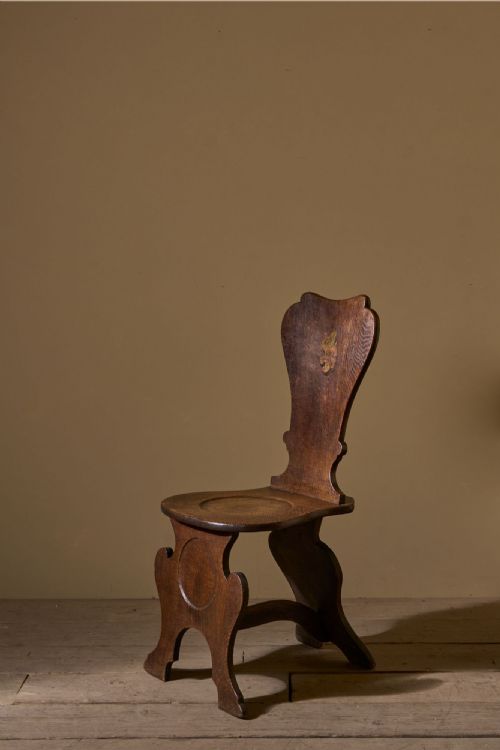
- Sgabello
- A Renaissance-style chair featuring a carved wooden back and solid trestle supports instead of conventional legs. They functioned primarily as decorative hall seats in grand houses.
- Gothic Revival
- An architectural and decorative style popular during the nineteenth century that reinterpreted medieval pointed arches, tracery, and quatrefoils. Pieces in this style utilise heavy carved oak to create ecclesiastical or baronial effects.
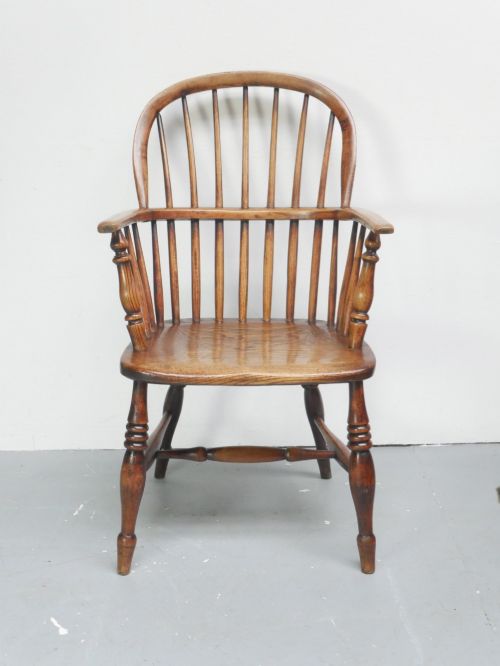
- Smoker's Bow
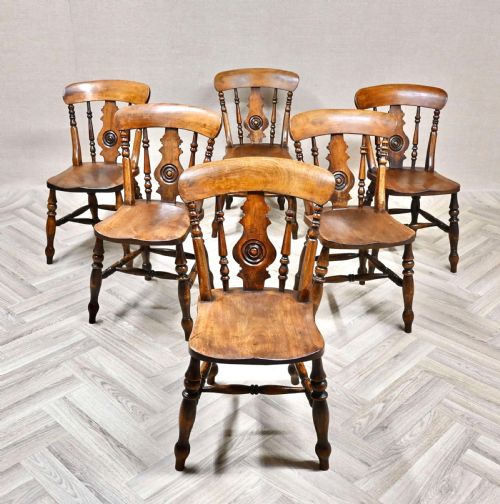
- A sturdy, low wooden armchair with a continuous curved back rail supported by turned spindles, originating in nineteenth-century country taverns and domestic kitchens. These comfortable seats rely on steam-bent elements.
Carved Solid Oak Chair: Frequently Asked Questions
How do I date an oak chair?
Dating relies on examining the construction methods, tool marks, timber preparation, and stylistic motifs present in the woodwork. Hand-split boards, pegged joints, and vernacular wear patterns usually indicate earlier seventeenth or eighteenth-century origin.
Later nineteenth-century revival pieces often display machine-assisted sawn timber or softer secondary woods alongside more stylised historical carving. Comparing the joinery details to established regional furniture types helps clarify the period of manufacture.
Where should I place a hall chair?
Hall chairs were originally designed for entranceways, corridors, and reception rooms where guests waited briefly. Their upright proportions and shallow seats make them ideal for narrow spaces, hallways, or as decorative accent pieces against a plain wall.
Because many feature elaborate heraldic or carved backrests, they are best positioned where the rear design remains visible rather than pushed entirely beneath a table.
Are these chairs comfortable for daily use?
Early wooden hall and panel-backed chairs prioritise rigid architectural form and posture over soft cushioning. While exceptionally sturdy, solid timber seats lack upholstery and encourage an upright posture rather than lounging.
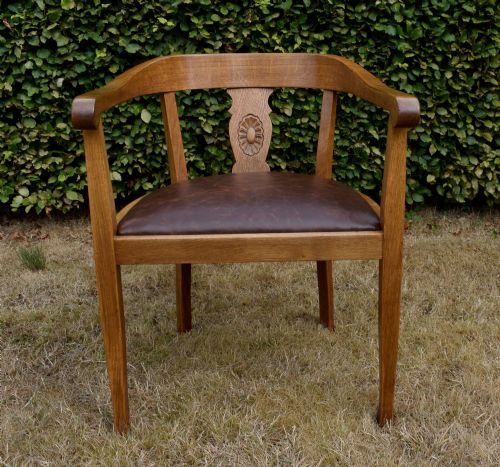
Desk chairs and Windsor variations from later periods offer more ergonomic contours and arm support suited for extended sitting at a desk or dining table.
How do I maintain solid oak furniture?
Maintenance requires keeping the timber away from direct heat sources and extreme humidity fluctuations that cause wood to split or warp. Regular dusting with a soft dry cloth preserves the natural surface sheen.
Applying a traditional beeswax polish occasionally nourishes the dry grain and enhances the historical patina without building up synthetic residues.