

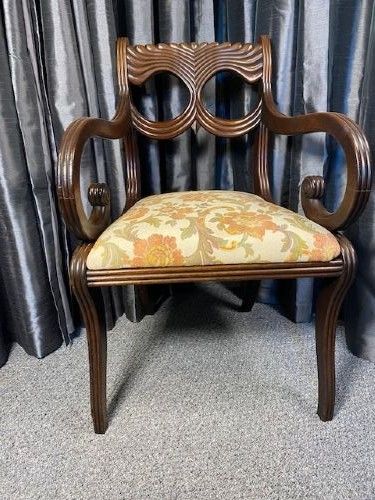


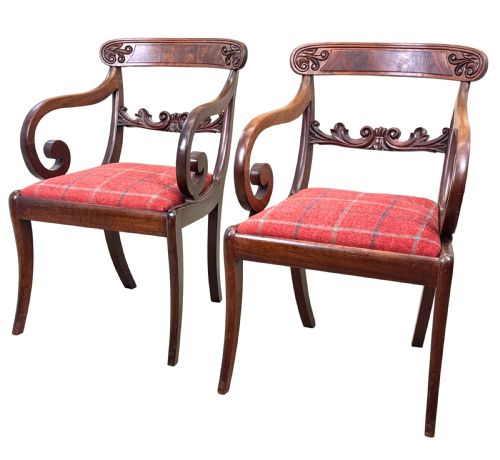


Carved Scroll Arm Armchairs
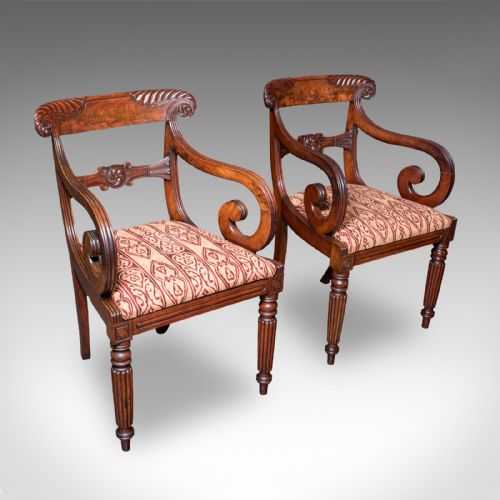
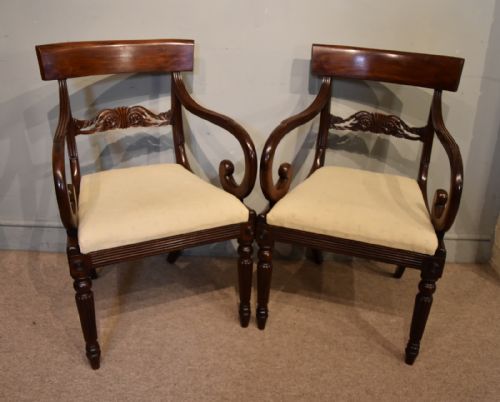
Carved scroll arm armchairs are substantial seating pieces defined by sweeping wooden terminals, offering both structural presence and distinctive period character.
Carved Scroll Arm Armchairs
When searching for carved scroll arm armchairs, buyers encounter a diverse selection of seating designed for libraries, dining rooms, and drawing rooms. The pieces span multiple centuries, with particular concentrations from the Regency, William IV, and Victorian eras.
Mahogany forms the core of the available selection, frequently accompanied by rosewood, walnut, oak, and exotic hardwoods. Forms range from single carver chairs and desk chairs to matched pairs and larger dining sets.
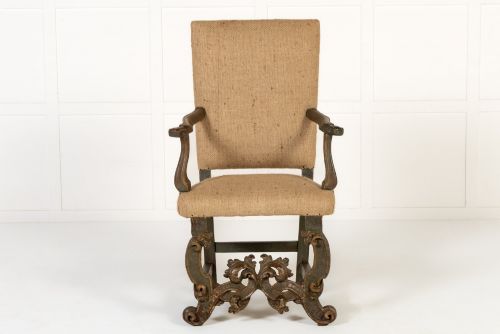
Stylistic influences vary widely across the inventory, drawing on French Rococo Revival, Italian Baroque, Chippendale Revival, and Carolean designs. Buyers frequently meet elbow chairs and library armchairs featuring prominent scrolled timber supports.
How they were made
Construction relies heavily on dense timbers such as mahogany, rosewood, and walnut, shaped through traditional joinery and hand-carving techniques. Wood is frequently turned and sculpted to form the characteristic scroll arms and supportive frames.
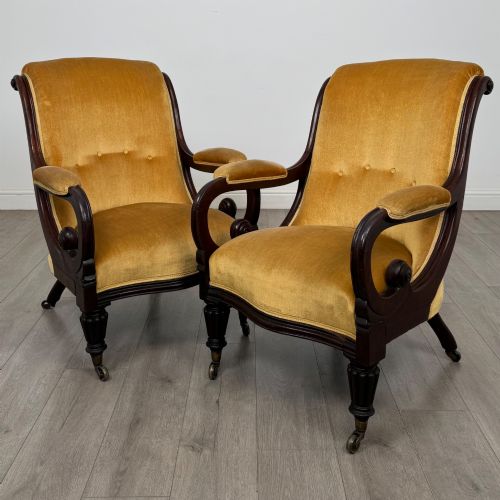
Upholstery methods incorporate traditional stuffing materials beneath outer coverings of leather, velvet, fabric, and needlepoint. Decorative details such as brass inlays and gilt finishes appear across specific Regency and French pieces.
Support elements often include integrated castors on the lower legs, particularly on nineteenth-century library and desk chairs designed for mobility.
Listings feature items spanning from the seventeenth century through to the Edwardian era, with a strong concentration of nineteenth-century mahogany pieces.
What varies in quality
The standard of carving defines the distinction between standard production and exceptional examples. Crisp execution in the scrollwork and frame ornamentation indicates superior craftsmanship.
Timber selection and grain matching significantly affect the overall impact of the piece. Dense, well-figured mahogany or rosewood elevates the visual weight of the armchair.
Gillows
The Carved Scroll Arm Armchairs Glossary
- Carver chair
- An armchair designed to match a set of dining chairs, typically featuring open arms that allow fuller seating clearance. These chairs often sat at the head of a dining table.
- Elbow chair
- A traditional term for an armchair with low armrests, frequently found in morning rooms and reception spaces. They offer comfortable seating without the bulk of a full armchair.
- Bergere
- An enclosed upholstered armchair with wooden framing exposed around the sides and back. The style originated in France and often incorporates cane work or upholstered panels.
- Showwood
- Furniture construction where the polished timber frame remains visible around the upholstered sections. This highlights the quality of the underlying wood and carving.
Carved Scroll Arm Armchairs: Frequently Asked Questions
Where were carved scroll arm armchairs used?
These armchairs served multiple purposes throughout the home, appearing in libraries, studies, and formal dining rooms as carver chairs.
They also functioned as desk chairs or occasional seating in reception and morning rooms.
What woods are commonly found?
Mahogany forms the primary material across the majority of nineteenth-century examples.
Rosewood, walnut, oak, and assorted hardwoods also appear frequently in specific revival and period pieces.
How do Regency and Victorian styles differ?
Regency pieces often display cleaner classical lines, brass inlay, and restrained mahogany frames.
Victorian examples tend toward heavier proportions, deeper button upholstery, and more exuberant carved walnut or mahogany framing.
Are these chairs suitable for daily use?
Many of these sturdy hardwood armchairs remain entirely practical for regular seating in contemporary interiors.
Buyers should consider the condition of the internal upholstery and supporting frame structure before daily placement.