




Carved Sarcophagus Box
A carved sarcophagus box brings classical dignity to a room, offering both sculptural presence and practical storage for precious items.
Carved Sarcophagus Box
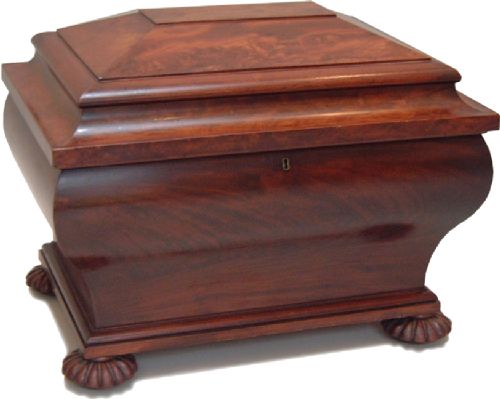
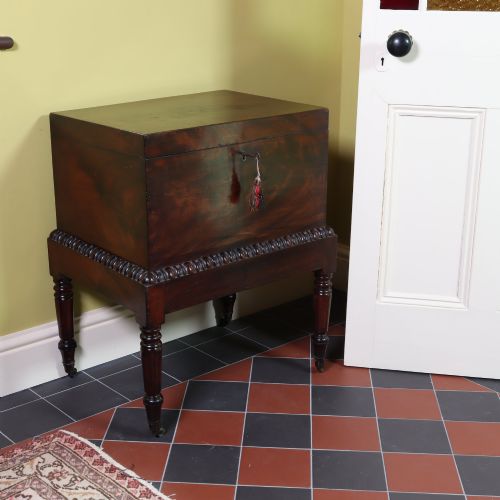
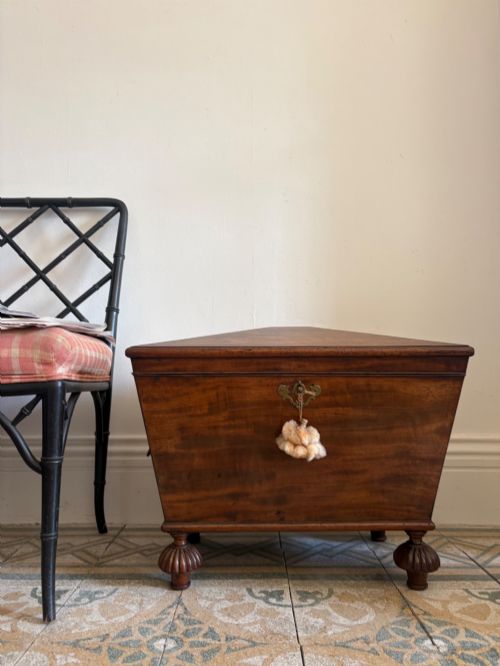
When you search for a carved sarcophagus box, you encounter container forms modelled on ancient burial vaults, typically featuring a steep lid and tapering sides.
The pieces listed on this page span the Georgian, Regency, William IV, and Victorian periods, alongside later examples from the early twentieth century.
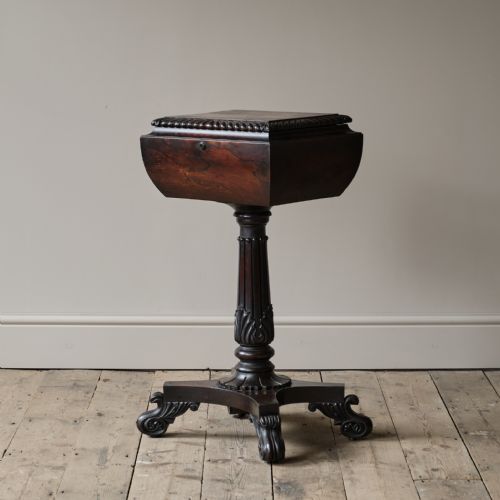
These items primarily function as wine coolers, cellarettes, tea caddies, teapoys, and decorative jewellery caskets rather than utilitarian storage.
How they were made
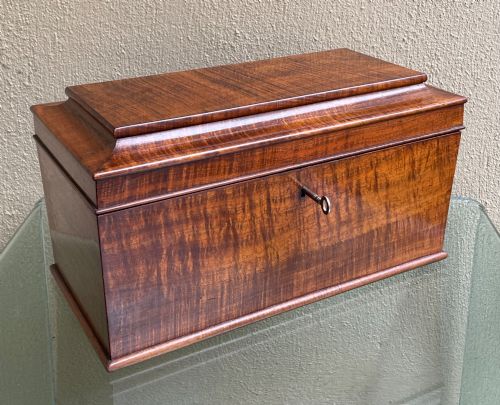
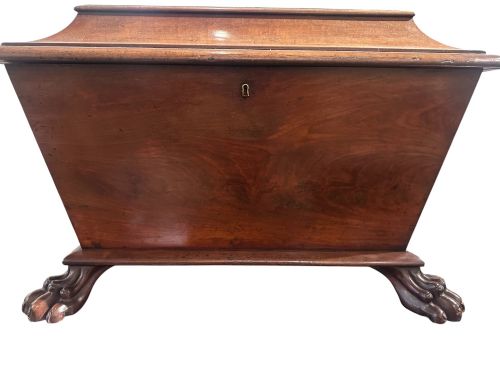
Cabinet makers utilised dense timbers such as mahogany, rosewood, and walnut, often selecting figured varieties or flame veneers to accentuate the sloping surfaces.
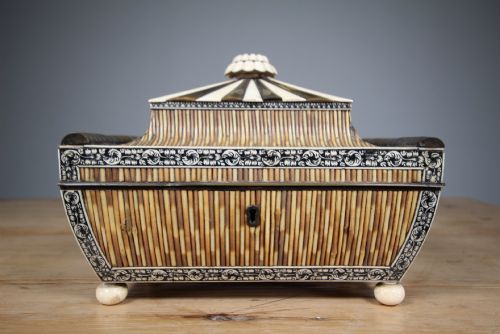
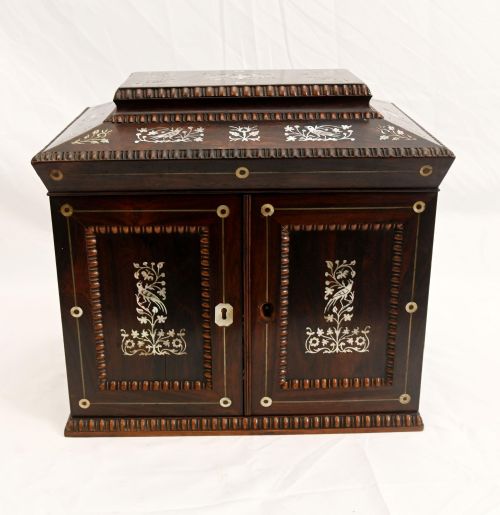
Construction frequently incorporated brass mounts, lead liners within the cooler forms, and delicate bone or mother of pearl inlay work.
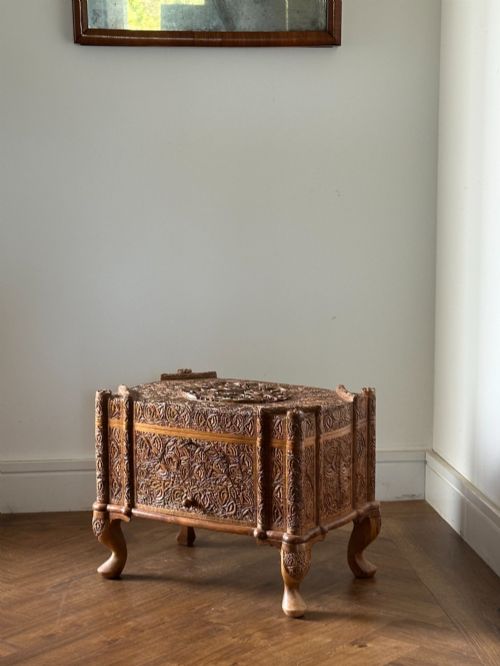
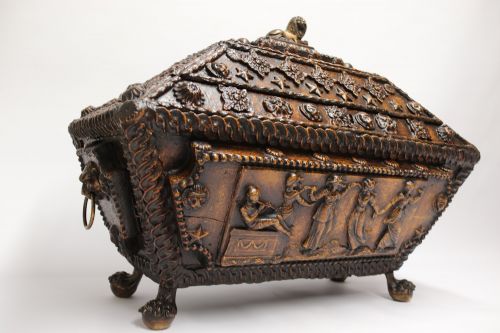
Carving technique appeared on paw feet, classical moulding, and gesso decoration, transforming sturdy storage into sculptural display pieces.
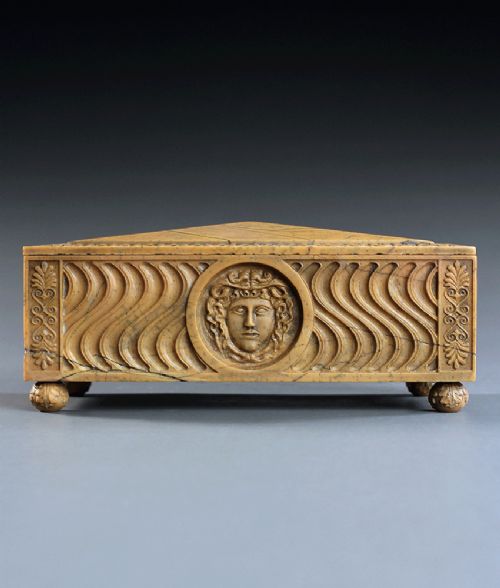
One Grand Tour example arrives carved from solid Siena marble, proving that not every sarcophagus needed a wooden exterior.
What varies in quality
The standard of execution rests upon the depth and precision of the timber carving and the fidelity to classical proportions.
Superior examples display harmonious grain selection across all visible panels, integrated brass handles, and original internal fittings rather than later replacements.
Freemans of Norwich·T.Feetham
The Carved Sarcophagus Box Glossary
- Cellarette
- A lockable container used for storing wine bottles near the dining table. Many take the sarcophagus form with lead linings.
- Teapoy
- A small stand or table supporting a lidded box designed to hold various types of tea. They often sit on a central pillar with branching feet.
- Flame mahogany
- Timber cut from the fork of the mahogany tree to produce a distinctive flickering flame pattern. Cabinet makers favoured this for principal display surfaces.
- Gesso
- A plaster mixture applied to a wooden base before gilding or painting. It allowed makers to carve crisp classical relief ornament.
Carved Sarcophagus Box: Frequently Asked Questions
What is a sarcophagus box used for?
These boxes served multiple domestic roles depending on their internal layout. Larger versions functioned as wine coolers or cellarettes to hold bottles in dining rooms, while smaller editions stored dry tea leaves or jewellery.
Today, they adapt easily to desktop organisation or tabletop display. Their robust construction allows them to hold substantial items securely.
How do I identify a Regency period piece?
Regency pieces draw heavily on classical architectural motifs, featuring bold proportions, carved paw feet, and sometimes brass inlay. The timber choice leans toward dark mahogany and rosewood.
They reflect an early nineteenth century fascination with antiquity. The sarcophagus shape itself became popular during this design movement.
Did these boxes always have lead linings?
Only the examples intended for wine cooling or cellarette use typically retained lead linings. These liners kept ice and bottles contained without damaging the wood.
Tea caddies and jewellery chests featured partitioned wooden interiors instead. These compartments organised dry leaf canisters or precious trinkets.
Are teapoys and tea caddies the same?
A tea caddy is a portable box meant to sit on a sideboard or table. A teapoy is a larger standalone piece featuring a box mounted on a pedestal base.
Both items served the same fundamental purpose of protecting valuable tea. The tea caddy offered portability, whereas the teapoy provided a fixed station.