


Late Georgian Wine Cooler
A late georgian wine cooler keeps bottles chilled at table while showing the finest cabinet work of the period in timber and metal.
Late Georgian Wine Cooler
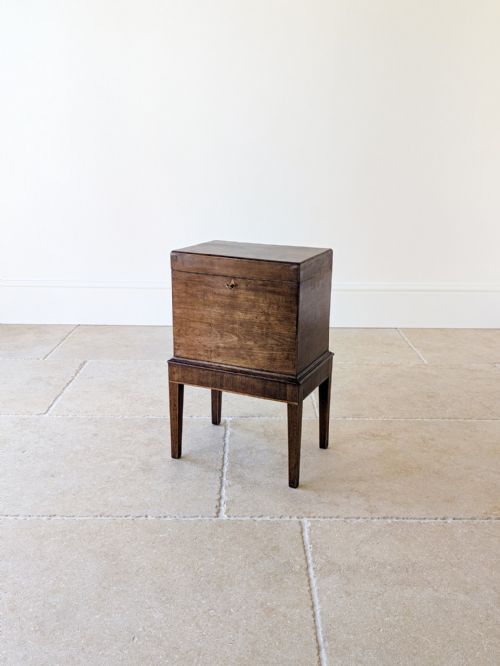
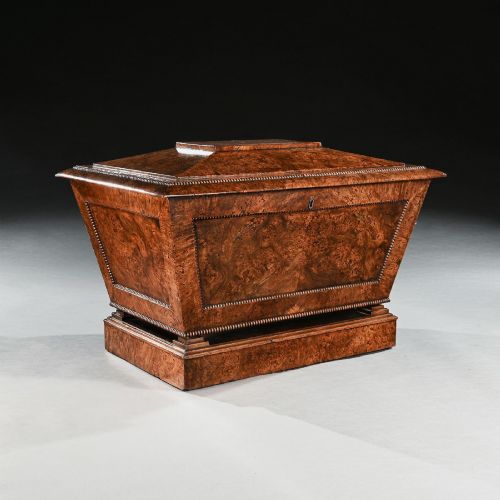
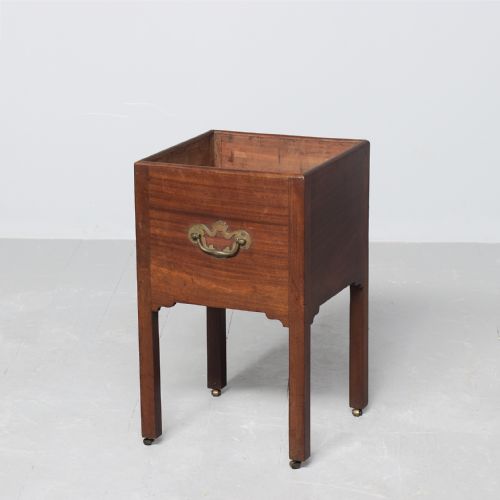
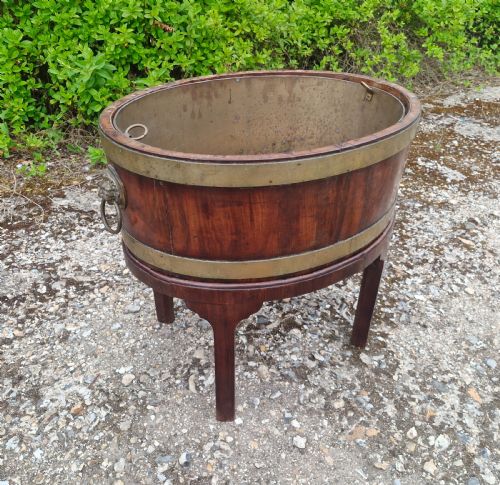
When you search for a late georgian wine cooler, you are looking at substantial vessels designed to hold wine bottles and ice during dining. These pieces emerge primarily from the Georgian, Regency, and late eighteenth or nineteenth century periods, taking forms such as cellarettes, buckets, scuttles, and sarcophagus shapes.
The versions you are most likely to meet on this page are constructed from rich timbers like mahogany or pollard oak. Many examples serve a dual purpose as jardinières or plant stands, adapting their original function for modern rooms.
The origins span various British cabinet-making traditions of the era, reflecting formal dining rituals. Whether shaped as an oval bucket or a low sarcophagus, each piece represents the heavy service requirements of grand houses.
How they were made
Cabinet makers utilised dense, durable timbers such as mahogany and pollard oak to build these vessels, ensuring they could hold heavy loads of ice and liquid. Carpenters joined the staves or panels with precision to contain moisture without splitting the wood.
Metalwork played a structural and decorative role, featuring stout brass bands and bindings that secured the wooden staves together. Handles and liners completed the construction, combining joinery and metal smithing to create robust containers.
Several pieces double happily as wine coolers or plant jardinières, depending on whether the evening calls for claret or ferns.
What varies in quality
The distinction between ordinary and superior pieces rests on the depth of the timber's grain and the preservation of its original surface. Fine examples display rich colour and patination built up through generations of care, while lesser ones appear dry or overly stripped.
The quality of the metal mounts and the retention of original interior fittings elevate an object's standing. Heavy, well-cast brass bands and original lead or metal liners demonstrate a higher grade of workshop production than later replacements.
The Late Georgian Wine Cooler Glossary
- Cellaret
- A lockable container used to hold wine bottles beneath the sideboard or beside the dining table. They often feature fitted interiors to separate individual bottles.
- Sarcophagus
- A monumental architectural shape resembling a stone coffin, popular for large wine coolers during the Regency period. These low-lying chests usually rest on paw feet or a plinth base.
- Pollard oak
- Timber taken from trees that have been pollarded, producing a heavily knotted and decorative grain pattern. Cabinet makers valued this wood for its rich visual movement.
- Patina
- The deep, lustrous surface sheen acquired by antique timber over centuries of handling and polishing. It serves as a visual indicator of age and continuous use.
Late Georgian Wine Cooler: Frequently Asked Questions
How were wine coolers used?
Servants filled these vessels with ice and water to chill wine bottles before and during formal meals. The robust wooden staves and metal linings kept the temperature low for hours.
After dining, the coolers doubled as storage chests or waste receptacles for empty bottles.
Can I use one as a plant stand?
Many late Georgian pieces naturally adapt to holding potted plants due to their waterproof metal linings. The sturdy timber construction easily supports damp earth and foliage.
This practical secondary use has kept surviving buckets and jardinières active in domestic interiors.
How do I tell Regency from Georgian?
Regency pieces often exhibit heavier classical architectural influences, such as the sarcophagus shape and carved paw feet. They favour dramatic woods like pollard oak alongside traditional mahogany.
Earlier Georgian items tend toward simpler bucket forms with crisp brass hoops and straightforward stave construction.