




Carved Rosewood Mirror
A carved rosewood mirror brings rich grain and deep tones to a room, offering both practical reflection and substantial period presence.
Carved Rosewood Mirror
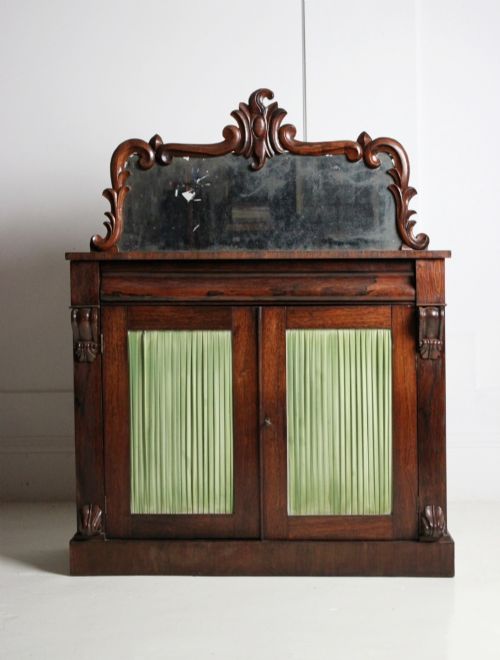
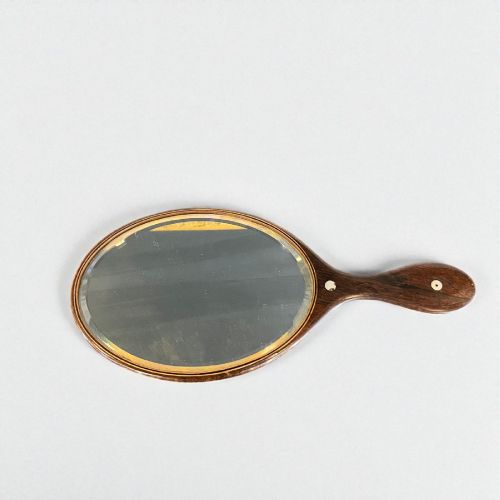
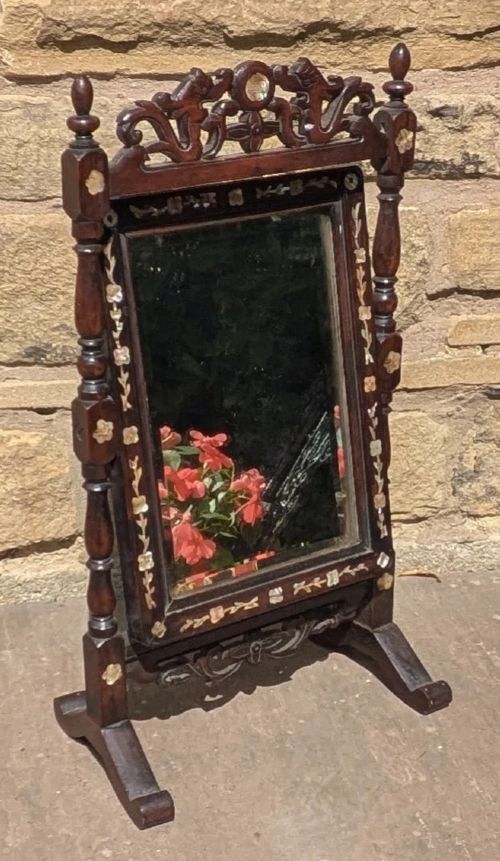
A carved rosewood mirror is a reflective glass framed in dense tropical timber, appearing across periods from the Regency era through the Edwardian years. Buyers searching for a carved rosewood mirror will encounter wall mirrors, overmantel pieces, and table mirrors alongside larger furniture forms that incorporate mirrored glass.
The most common examples on this page date from the Victorian and Edwardian periods, frequently displaying the dark reddish-brown hues characteristic of rosewood. These pieces range from simple wall-hanging frames to grand overmantels designed to sit above a fireplace.
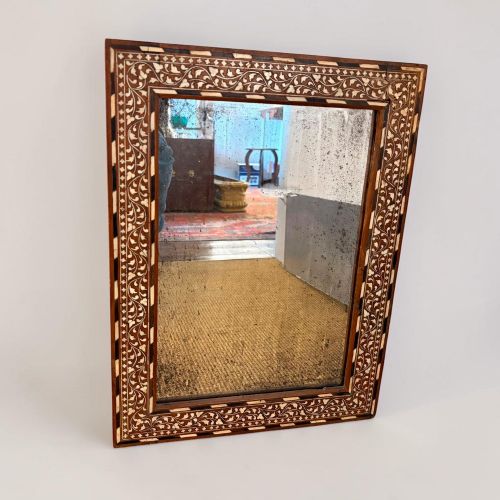
Regional variations appear in the selection, including Anglo-Indian and Chinese Qing pieces that demonstrate distinct carving traditions on the same dense timber. Whether found in a compact hall mirror or a large overmantel, the core material remains consistent.
Materials and construction
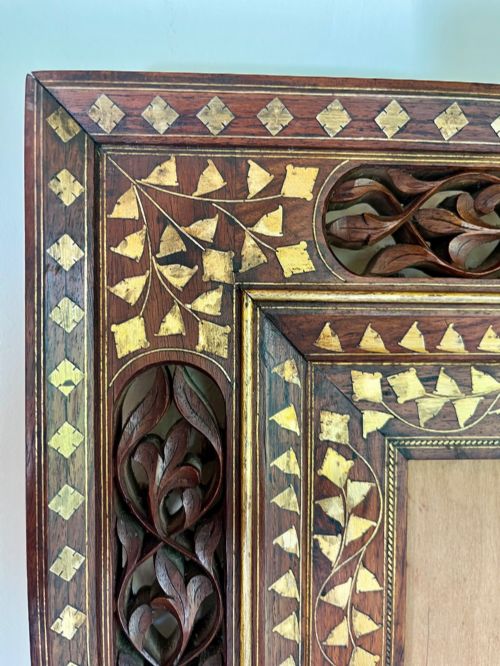
Makers utilised heavy rosewood for the primary frames, often selecting stock with pronounced figuring and deep natural oils. Inlaid details in satinwood, boxwood, and mother-of-pearl provide contrast against the dark background of the wood.
Carving was executed directly into the dense timber, allowing for crisp relief work on pediments and borders. Secondary woods and structural backboards support the heavy frames, while mercury or bevelled mirror glass is secured within the rebate.
Carved Rosewood Mirror Retail Price Guide 2026
Typical asking prices for carved rosewood mirror among the pieces listed under this phrase on Sellingantiques today, from the lower quarter to the upper quarter. They describe what is for sale here now, not the wider market.
The documented pieces span from the early Regency period through to Edwardian production, incorporating materials such as brass, marble, and mother-of-pearl.
Judging quality in rosewood mirrors
Quality rests upon the crispness of the timber carving and the depth of the rosewood grain visible beneath the finish. Superior pieces exhibit hand-carved relief that remains sharp and well-defined, rather than soft or mechanical shaping.
The integration of marquetry and contrasting inlay, such as boxwood or satinwood stringing, separates standard frames from finer workshop productions. Original mirror glass with appropriate ageing adds to the integrity of the piece.
Howard and Sons
The Carved Rosewood Mirror Glossary
- Rosewood
- A dense, heavy timber prized for its dark purple-brown colour and contrasting black grain lines. It polishes to a high lustre and accepts intricate carving without splintering.
- Overmantel mirror
- A large horizontal mirror designed to hang specifically on the wall directly above a mantelpiece. These frames often match the architectural scale of period fireplaces.
- Marquetry
- The art of applying decorative pieces of veneer to a structure to form geometric or floral designs. Lighter woods like boxwood and satinwood are frequently used for this purpose.
- Parcel-gilt
- A decorative technique where selected portions of a carved wooden frame are partially covered in gold leaf. This highlights specific mouldings against the dark rosewood background.
- Bevelled edge
- A glass edge angled and polished to a thinner profile near the perimeter. This creates a prismatic refraction of light around the border of the mirror.
Carved Rosewood Mirror: Frequently Asked Questions
What rooms suit a rosewood wall mirror?
A compact wall mirror functions effectively in entrance halls, bedrooms, or above smaller side tables. The dark timber and reflective glass help to bounce light into narrower spaces.
Larger overmantels suit living rooms or dining spaces where they anchor the room above a sideboard or fireplace.
How do I clean and care for rosewood?
Dust the carved frame regularly with a dry, soft cloth to prevent buildup in the recesses of the carving. Avoid silicone-based polishes which can dull the antique finish over time.
Apply a traditional beeswax sparingly to nourish the rosewood when the timber appears dry. Keep the mirror away from direct heat sources and strong sunlight.
How can I tell a Victorian mirror from a Regency one?
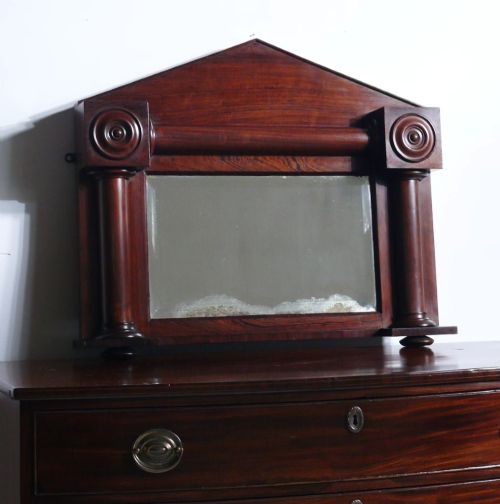
Regency pieces often incorporate classical architectural motifs, parcel-gilt details, and heavier console forms. Victorian examples frequently display more exuberant floral carving, extensive inlay, or darker palisander veneers.
Examine the construction of the backboards and fixings for further clues to the period. Earlier frames tend to use hand-sawn secondary timbers and older assembly methods.