


Carved Rosewood Hall Chairs
These carved rosewood hall chairs bring dense timber and formal presence to an entrance, offering sturdy upright seating built to impress visitors.
Carved Rosewood Hall Chairs
Carved rosewood hall chairs span formal British Victorian design, Portuguese baroque, and traditional Chinese export work. When you search for carved rosewood hall chairs, you encounter upright seating shaped primarily for occasional use in hallways and entrance spaces rather than long sitting.
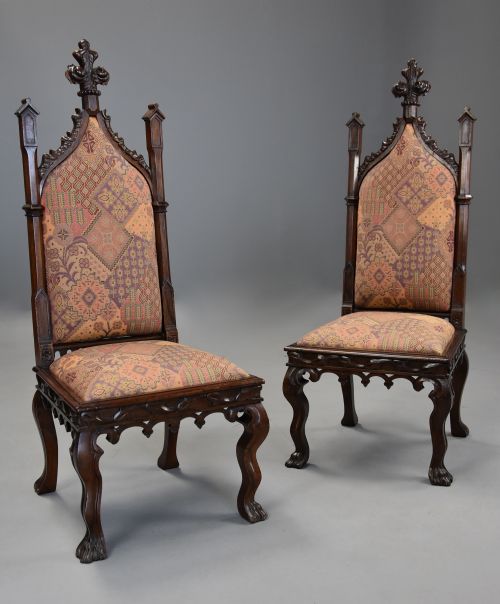
The pieces on this page range from mid-19th-century Victorian Gothic revival pairs to 18th-century Portuguese tall-back chairs and Qing Dynasty carved hardwood furniture. High-back chairs, side chairs, and substantial settles all appear under this heading, reflecting the heavy wood and decorative carving typical of the category.
How they were made
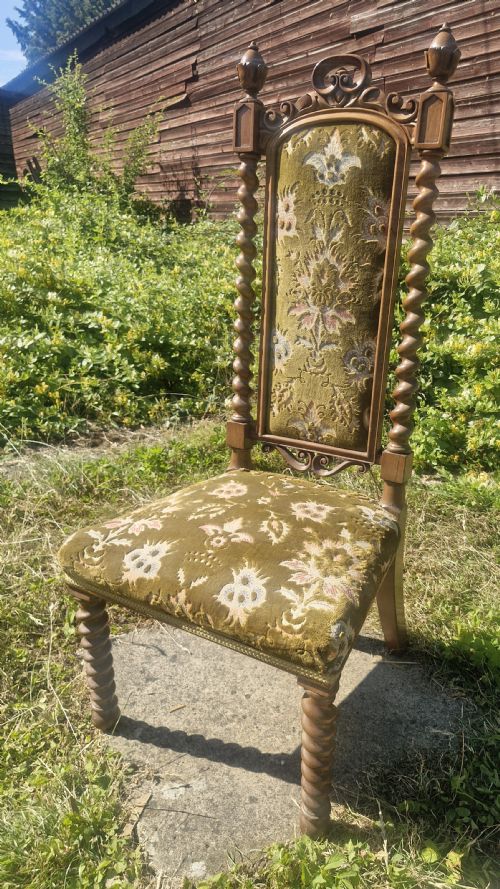
Makers utilised dense rosewood and imported hardwoods, carved directly to produce deep relief dragons, foliate scrolls, and architectural tracery. The structural strength of these timbers allowed for slender barley twists, high pierced splats, and tall panelled backs without losing rigidity.
Upholstery, when present, incorporates tapestry, needlepoint, velvet, and plain fabric fixed with brass tacks or webbing. Joinery relies on traditional mortise and tenon construction, often reinforced to support the substantial weight of the dense timber frame.
Several chairs feature carved dragons keeping watch over your hallway, proving that historic seating took security very seriously indeed.
What varies in quality
The crispness of the carving distinguishes standard production from superior examples, with sharp undercutting and deep relief indicating skilled handwork. Softer, shallower decoration often points to later or more hurried manufacturing.
Timber selection and grain matching also separate ordinary pieces from exceptional ones, particularly in how the natural figuring of the rosewood is displayed across the backrest and seat. Original labels, such as maker marks, elevate historical interest.
W.A. Willcocks
The Carved Rosewood Hall Chairs Glossary
- Rosewood
- A dense, heavily figured timber prized for its dark colour and durability. It takes a fine polish and supports intricate carving.
- Settle
- A wooden bench with a high back, solid arms, and often a storage compartment beneath the seat. It provides heavy structural seating for halls.
- Splat
- The vertical central strip of wood in the back of a chair. In these pieces, it is frequently pierced and heavily carved.
- Barley twist
- A turning technique shaped like a spiral rope. It appears frequently on the legs and uprights of Victorian examples.
Carved Rosewood Hall Chairs: Frequently Asked Questions
Where should I place a hall chair?
These chairs suit hallways, landings, and entrance lobbies where their upright posture and decorative backs act as architectural focal points.
Because they were designed for brief waiting rather than lounging, they work best against a wall or in pairs framing a doorway.
How do I clean carved rosewood?
Dust the deep recesses of the carving regularly with a soft, dry brush to prevent dirt accumulation.
Apply a traditional beeswax polish sparingly to maintain the natural lustre of the timber without building up a heavy residue.
Are these chairs comfortable for daily sitting?
Most examples prioritise formal appearance and upright posture over ergonomic comfort, featuring rigid wooden backs and firm seats.
Upholstered variants provide slightly more cushion, but these pieces remain better suited for occasional use than long periods of relaxation.
How do I date a Victorian hall chair?
Examine the style of the carving, noting whether it leans towards Gothic revival tracery or heavy Victorian scrollwork.
Tool marks on the underside, wood oxidation, and assembly methods help confirm whether a piece originates from the mid or late 19th century.