




Carved Rosewood Embroidered Screen
A carved rosewood embroidered screen brings warmth and texture to a room, offering both a decorative focal point and functional shielding from hearth heat.
Carved Rosewood Embroidered Screen
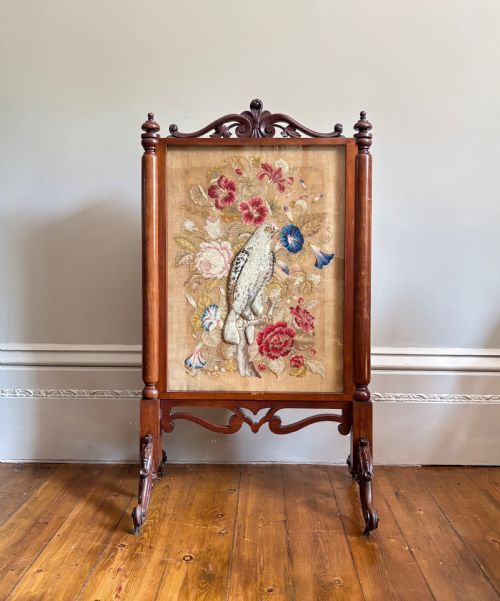
A carved rosewood embroidered screen is an elegant room accessory designed primarily to protect individuals from the intense radiant heat of an open fire. These items encompass a variety of forms including pole screens, cheval screens, table screens, and folding panels originating from the nineteenth century.
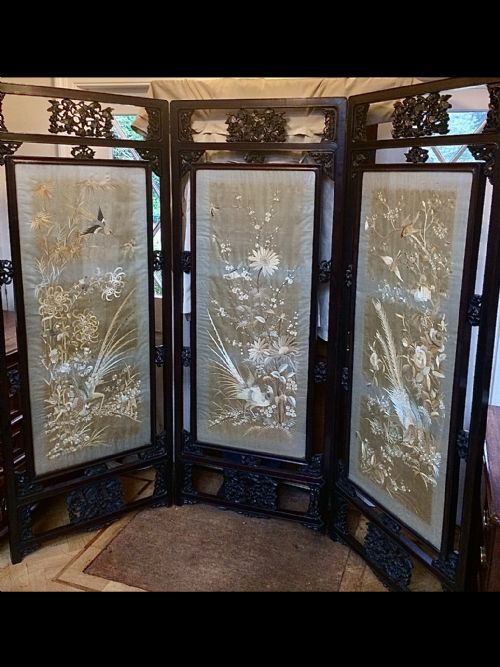
The versions most commonly encountered on this page date from the Victorian and William IV periods, alongside traditional Chinese pieces from the Qing Dynasty. English examples frequently feature needlework or Berlin wool work panels, while Chinese pieces display intricate silk embroidery set into carved hardwood frames.
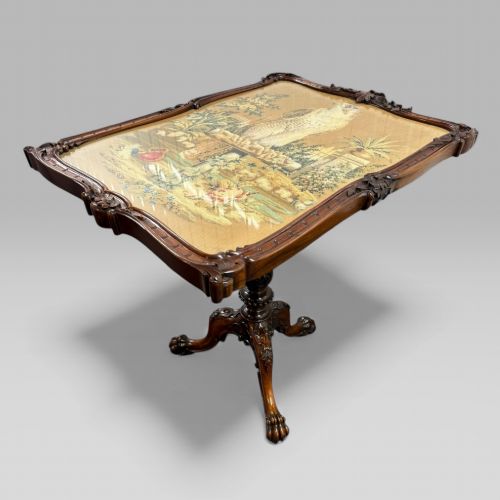
Makers such as Gillows produced refined tripod table fire screens that combined tilt-top functionality with textile panels. Buyers searching for a carved rosewood embroidered screen will find pieces ranging from adjustable pole screens to substantial standing cheval formats.
How they were made
These items were constructed using dense timbers like rosewood and mahogany, which were carved with deep mouldings and decorative motifs. The structural frames support textile elements such as wool, silk, canvas, and needlepoint, often protected behind glass panels.
Techniques combined fine cabinetmaking with traditional needlework crafts like Berlin work and tapestry. Turning and joinery created stable tripod bases or folding frames, while specialised stands for table screens involved delicate fretwork and mortise and tenon joints.
Listings feature rosewood, mahogany, and hardwood frames paired with wool, silk, canvas, and glass elements across nineteenth-century styles.
What varies in quality
The standard of a carved rosewood embroidered screen is largely determined by the crispness of the timber carving and the complexity of the needlework. Finely executed silk embroidery or detailed Berlin work panels distinguish superior examples from simpler iterations.
Structural integrity and the quality of the mechanisms, such as adjustable brass pole screen clutches or smooth tilt-top table hinges, also mark the distinction between standard workshop production and high-end cabinetmakers like Gillows.
Gillows
The Carved Rosewood Embroidered Screen Glossary
- Pole screen
- A vertical standing screen with an adjustable panel that slides up and down a central wooden shaft. This design allowed the user to position the textile shield precisely where heat protection was needed.
- Berlin work
- A popular style of counted-thread embroidery using brightly coloured wool on canvas, charted on squared paper. This technique produced vivid pictorial panels frequently used in Victorian fire screens.
- Cheval screen
- A large standing screen supported by two sturdy side pillars and feet rather than a central pole. It typically offers a broader view and greater stability than smaller tripod formats.
- Needlepoint
- Any embroidered work stitched onto a canvas mesh ground, filling the entire background to create a dense pictorial surface. It provided durable insulation against hearth embers.
- Tilt-top table screen
- A combination piece featuring a table surface that pivots vertically to display an embroidered panel when not in use for serving. These dual-purpose items were favoured in refined drawing rooms.
Carved Rosewood Embroidered Screen: Frequently Asked Questions
What is a pole screen?
A pole screen is a vertical room accessory consisting of a turned wooden shaft mounted on a tripod base, holding an adjustable embroidered panel. Users slid the panel up or down to block the heat from an open fireplace.
These pieces were essential sitting room items in the nineteenth century before central heating regulated indoor temperatures. They often stood near hearths or chairs to protect the face from excessive warmth.
How do I use a table screen?
A table screen is a small decorative panel supported by an intricate carved stand, designed to sit upon a desk, sideboard, or table. They serve primarily as ornamental objects displaying fine silk embroidery or carving.
Unlike large floor-standing screens, table screens were placed in intimate settings to add colour and texture to smaller surfaces within a parlour or study.
How do I distinguish Victorian from William IV styles?
William IV pieces generally date from the 1830s and display robust, classic revival proportions with bold carved details. They often incorporate rich rosewood and heavy tripod bases.
Victorian examples span a broader range from the mid to late nineteenth century, frequently showing greater variety in eclectic ornamentation and diverse textile techniques like Berlin work.