





Chinoiserie Folding Partition
A chinoiserie folding partition creates distinct zones in a room while bringing rich painted panels and carved surfaces into your interior.
Chinoiserie Folding Partition
When you search for a chinoiserie folding partition, you encounter multi-panel screens designed to divide living spaces or act as decorative backdrops. The versions most commonly met on this page span the eighteenth, nineteenth, and early twentieth centuries, arriving from diverse workshops and traditions.
These pieces typically comprise multiple hinged leaves that fold together when not in use. You find formats ranging from three-fold dressing screens up to grand eight-fold room dividers, utilising wood, lacquer, leather, and silk.
The aesthetic draws heavily on East Asian motifs, Chinese Qing Dynasty designs, and Chinese Chippendale interpretations. They function equally well as structural room dividers and as standalone panels of pictorial art.
Materials and construction methods
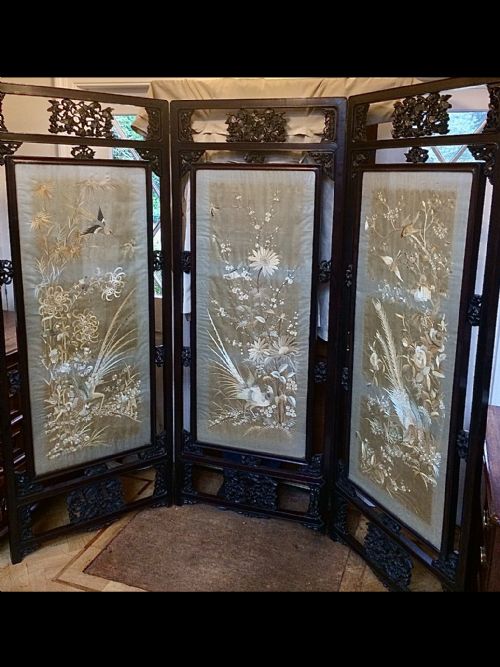
Maker workshops built these partitions using sturdy hardwood or basic wood frames to support panels of lacquer, painted leather, or stretched silk. Brass hardware frequently serves as the hinges connecting the individual leaves together.
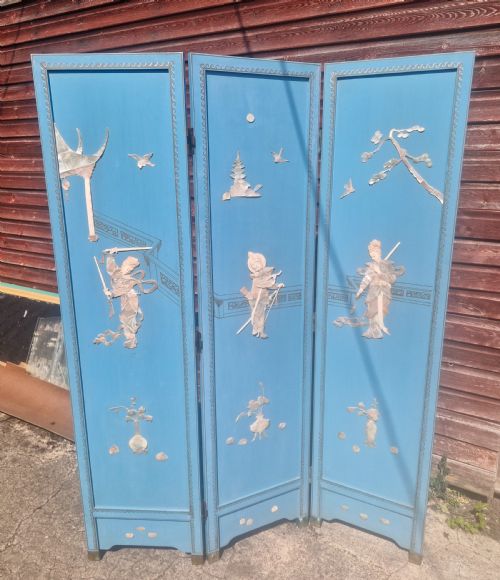
Surface decoration often involves meticulous lacquer work, sometimes enriched with gold leaf and mother-of-pearl inlay. Carved elements depict traditional scenes and dragons directly into the wooden substrate, while other examples employ painted finishes on leather or fabric.
Chinoiserie Folding Partition Retail Price Guide 2026
Typical asking prices for chinoiserie folding partition among the pieces listed under this phrase on Sellingantiques today, from the lower quarter to the upper quarter. They describe what is for sale here now, not the wider market.
Several screens feature fierce dragons carved into wood, standing guard over your sitting room while you simply try to hide the laundry.
Distinctions in craftsmanship
Quality separates partitions by the depth and clarity of the surface carving, alongside the richness of the lacquer and gold leaf application. Finer examples display meticulous hand-painted details on materials like coromandel lacquer or painted leather, showing precise control over pictorial narratives.
The durability of the hinges and the stability of the multi-fold wooden frame determine structural merit. Superior pieces maintain alignment and smooth folding action across numerous panels without sagging or binding at the joints.
The Chinoiserie Folding Partition Glossary
- Chinoiserie
- European artistic style reflecting Chinese and East Asian motifs. It appears extensively in painted and lacquered furniture from the eighteenth century onwards.
- Coromandel
- Form of Chinese incised lacquerwork where designs are cut into a dark ground and filled with colours or gold leaf. It is frequently seen on multi-fold screens.
- Folding Screen
- Movable partition composed of two or more panels joined by hinges. They provide privacy or divide interior spaces.
- Lacquer
- Protective and decorative coating applied to wood in multiple layers. It creates a smooth, glossy surface ready for painting or carving.
- Chinese Chippendale
- Eighteenth-century British furniture style inspired by Chinese design aesthetics. It incorporates fretwork and lattice patterns into wooden frames.
Chinoiserie Folding Partition: Frequently Asked Questions
How do I use a folding partition at home?
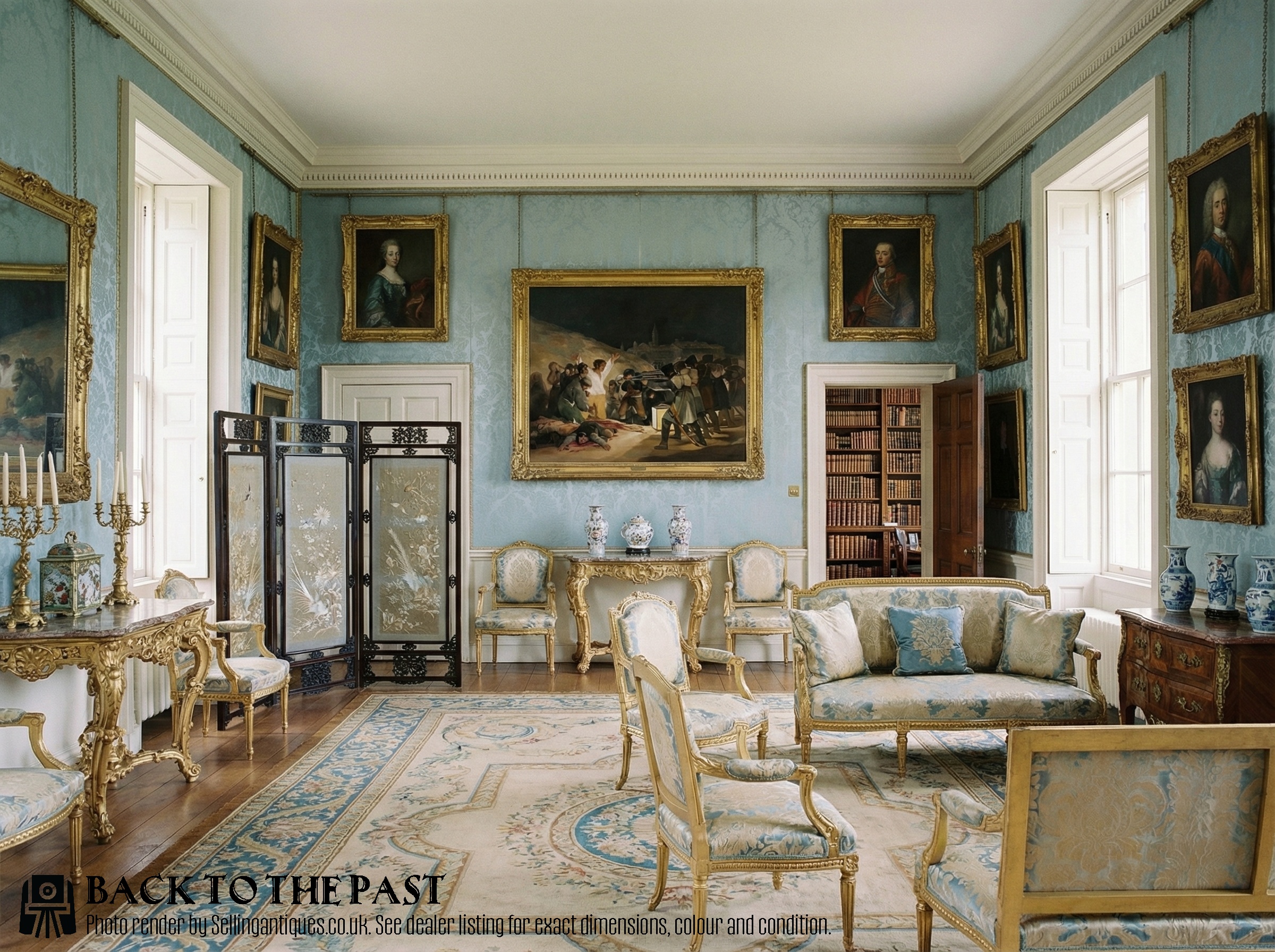
These screens work well to divide large rooms into intimate zones or to conceal storage areas. Position them against a plain wall as a backdrop or angle the panels across a corner to soften the architecture.
Ensure the panels have adequate clearance to fold and unfold without scraping surrounding furniture or walls. They also serve effectively as dressing screens in bedrooms.
What periods do these screens come from?
The available pieces span from the eighteenth century through the nineteenth century and into the early decades of the twentieth century. Earlier examples often feature painted Dutch leather or hand-worked lacquer, while later pieces include twentieth-century interpretations.
Each period brings distinct construction traits, from heavy carved dragon motifs to lighter silk panels. Reviewing the materials and framing techniques helps identify the era of production.
How do I care for lacquered wooden screens?
Keep lacquered surfaces away from direct sunlight and excessive heat sources to prevent the finish from drying or cracking. Dust the panels gently with a dry, soft cloth rather than using liquid polishes.
Handle the hinged leaves carefully when moving the partition to avoid straining the joints. Two people should manage larger multi-fold screens to distribute the weight evenly.
What materials are used in these partitions?
Construction relies primarily on wood and hardwood frames fitted with panels of lacquer, painted leather, or silk. Brass hinges connect the individual leaves, allowing them to fold in alternating directions.
Decoration often incorporates gold leaf and mother-of-pearl inlay to highlight the carved and painted imagery. Each material reacts differently to environmental conditions, requiring mindful placement in the home.