





Vintage Chinese Panel Screen
A vintage chinese panel screen brings rich texture and intricate narrative carving into a room, offering both division and decorative depth.
Vintage Chinese Panel Screen
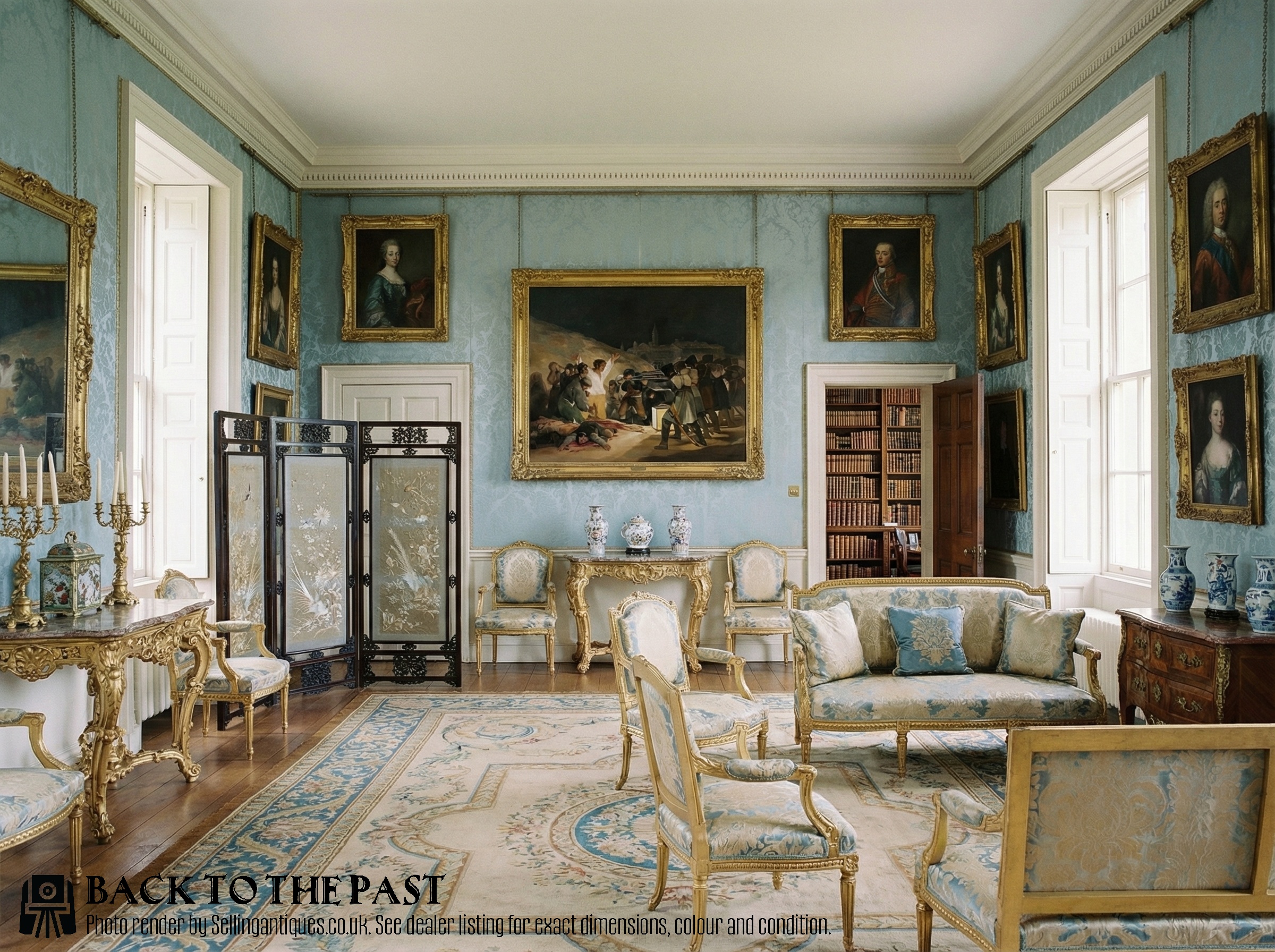
A vintage chinese panel screen serves primarily as a room divider, folding screen, or wall panel, functioning to delineate spaces or decorate vertical surfaces. These pieces emerge from periods spanning the nineteenth century through the mid-twentieth century, capturing traditional and export aesthetics.
The most frequent variations encountered on this page include freestanding folding screens ranging from three to eight folds, alongside paired wall panels and specialised table screens. Materials such as wood and lacquer dominate the forms, often enriched with detailed carving or inlay work.
Materials and construction methods
Construction relies heavily on hardwood and general timber substrates, forming the structural frames and folding leaves of the panels. Artisans applied coats of black lacquer to build up deep, smooth surfaces suitable for subsequent decoration.
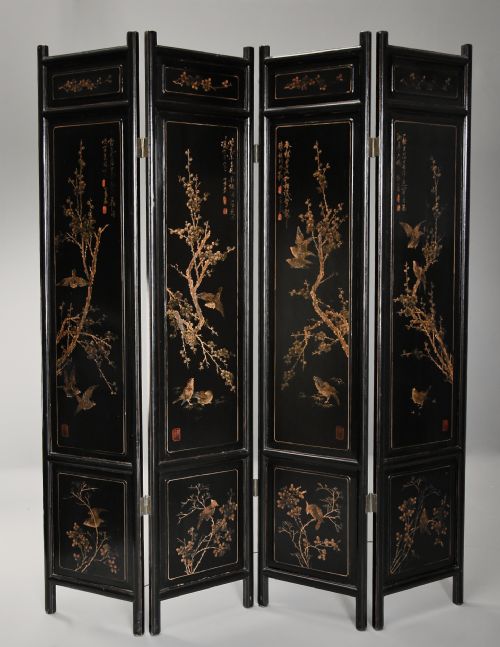
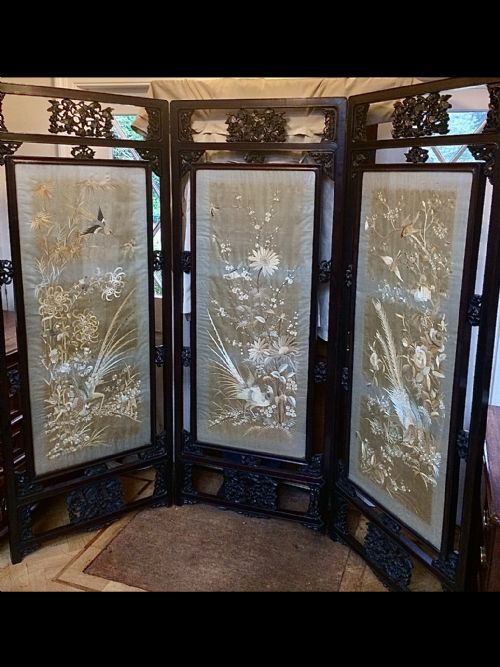
Surface ornamentation involved hand carving directly into wood or lacquer, supplemented by the application of gold leaf, mother of pearl, abalone, and hardstone mounts. Silk panels also appear, featuring delicate textiles supported by intricately carved stands.
Several panels feature elaborate depictions of birds nestled among foliage, captured forever in gleaming mother of pearl and abalone.
Distinctions in craftsmanship and finish
Quality reveals itself in the depth and precision of the hand carving, where superior examples exhibit sharp relief and intricate detailing in figures, foliage, and dragons. The application of inlay materials, such as mother of pearl and hardstone, demands exact fitting rather than rough placement.
The finish of the lacquer and the preservation of gold leaf significantly influence the visual impact of the piece. Finer screens maintain smooth, glossy surfaces and securely mounted decorative elements across multiple folding leaves.
The Vintage Chinese Panel Screen Glossary
- Lacquer
- A durable finish applied in multiple coats to wood substrates, providing a smooth surface for painting or carving. It forms the primary dark background on many traditional panels.
- Hardstone
- Minerals such as jade or soapstone carved and mounted onto screen surfaces to create raised pictorial elements. These additions introduce varied colour and tactile dimension.
- Chinoiserie
- European artistic styles reflecting Chinese motifs and techniques, often intersecting with authentic Chinese export art seen in these pieces. It shapes the decorative vocabulary of certain items.
- Fretwork
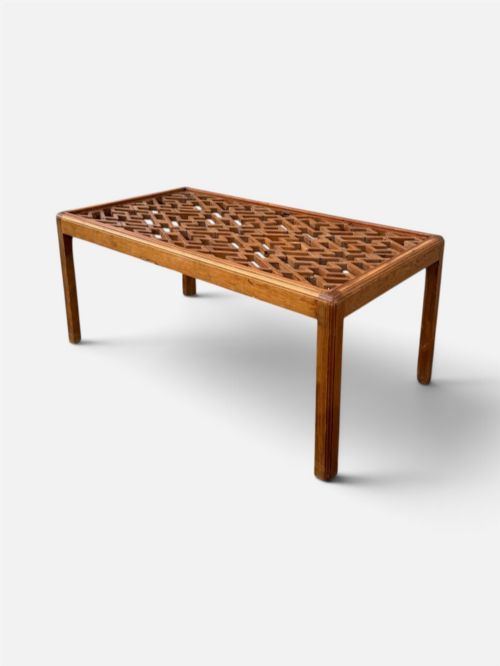
- Openwork ornamentation featuring geometric interlocking patterns, frequently incorporated into panels and associated furniture. It adds lightness and architectural structure.
- Mother of pearl
- The iridescent inner layer of mollusc shells used for inlay work, depicting birds, foliage, and natural scenes. It catches the light against dark lacquer grounds.
Vintage Chinese Panel Screen: Frequently Asked Questions
How were folding screens used?
These screens functioned primarily to divide large rooms, create private dressing areas, or act as decorative backdrops against walls.
Their mobility allowed owners to alter room layouts easily while adding substantial visual interest through narrative carving and rich finishes.
What is a table screen?
A table screen is a smaller decorative object mounted on a carved wooden stand, designed to sit upon furniture rather than stand on the floor.
Often featuring delicate materials like silk or fine carving, these pieces served scholarly and ornamental purposes in domestic interiors.
How do I care for lacquered wood?
Lacquered surfaces require protection from direct sunlight and extreme humidity fluctuations to prevent cracking or fading over time.
Dusting gently with a soft, dry cloth maintains the finish without introducing moisture or abrasive chemicals to the delicate surface.
How are different periods identified?
Dating relies on stylistic markers, construction techniques, and materials characteristic of specific eras like the nineteenth century or the early twentieth century.
Examining the depth of the hand carving and the application of inlay provides clues to the age and manufacturing traditions of each screen.