





Carved Rosewood Display Tables
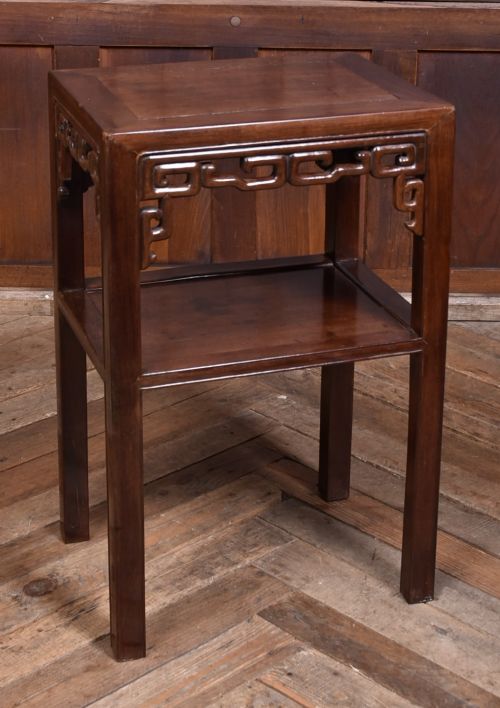
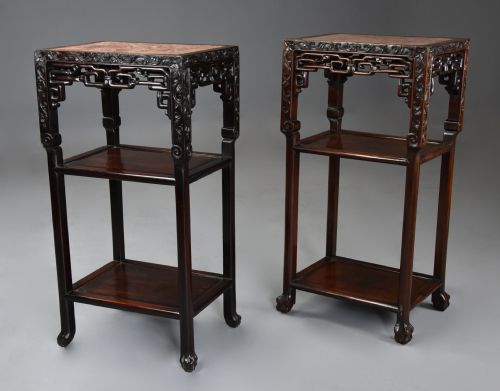
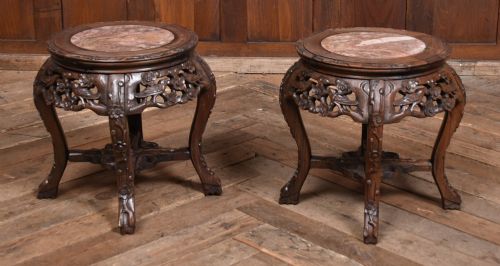
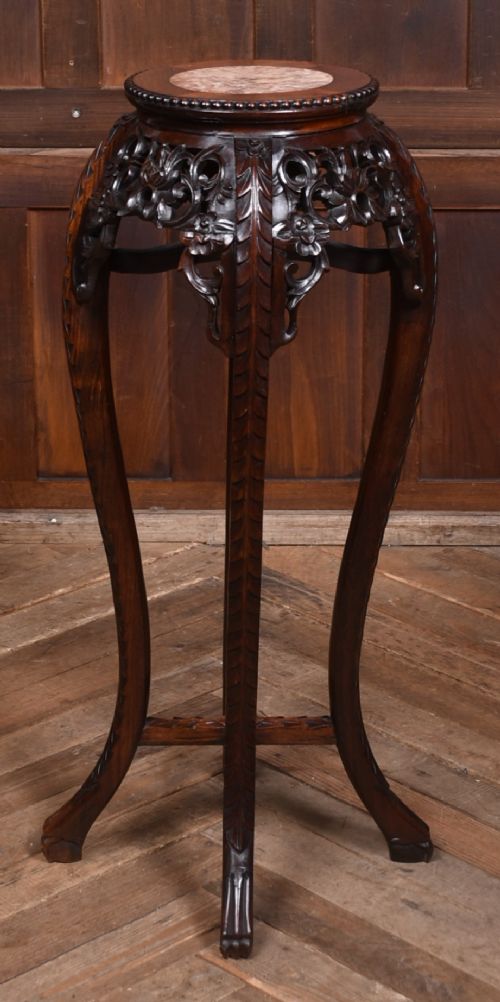
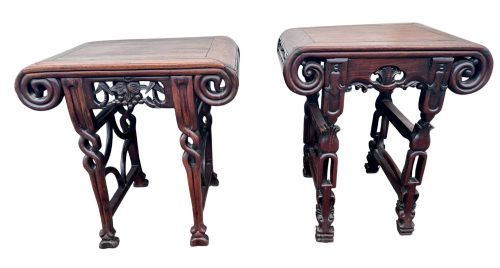
These carved rosewood display tables bring structured timber and cool stone together to elevate plants, vases and precious objects.
Carved Rosewood Display Tables
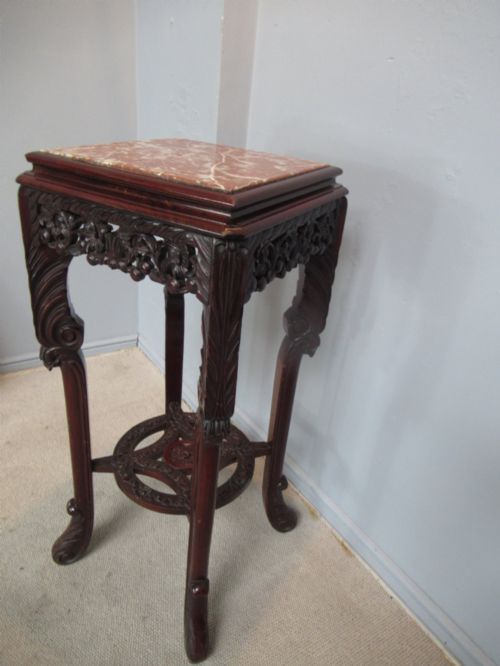
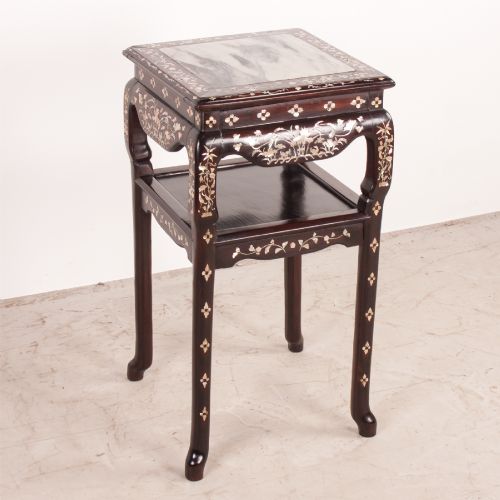
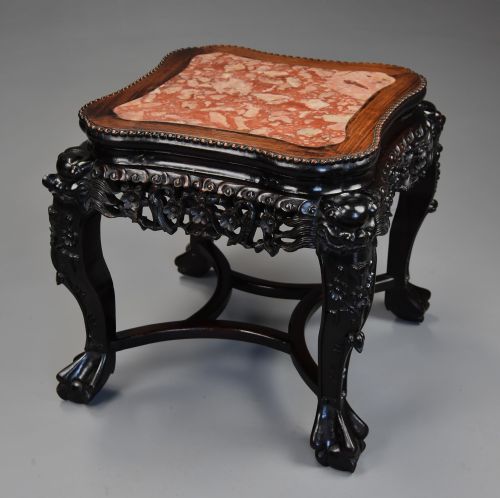
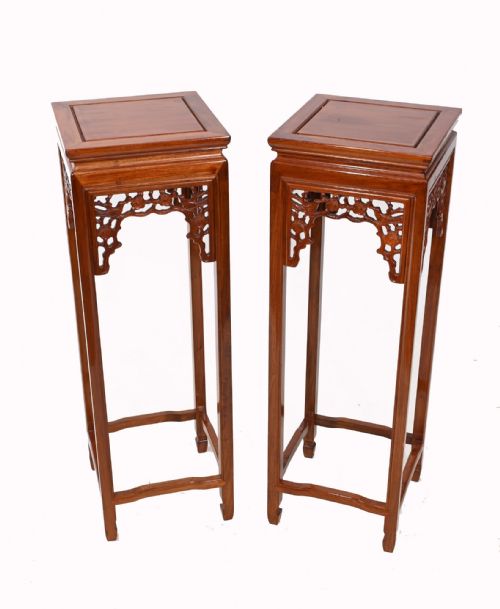
Most examples originate from the nineteenth century, utilising dense tropical timbers paired with inset stone tops. Forms range from low rectangular pot stands to tall pedestal columns and three-tier whatnots.
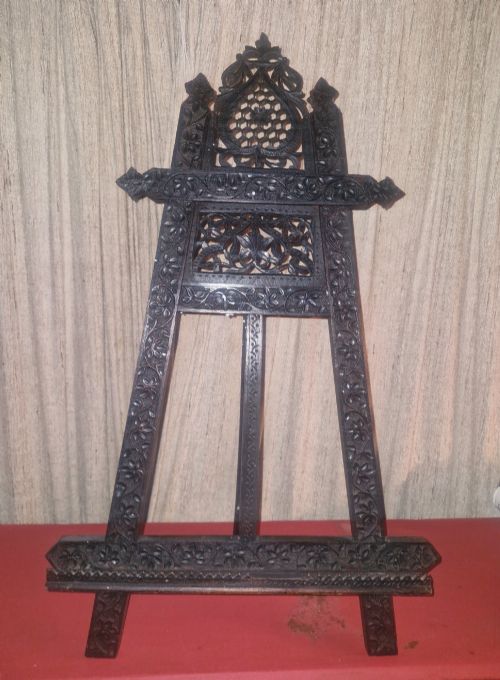
Makers adapted traditional joinery to suit both Chinese domestic markets and Western interior tastes of the Victorian period. The surviving pieces show diverse functions, serving as lamp tables, vase stands and display easels.
Assessing quality in carved tables
The crispness of the carving dictates much of the distinction between standard items and superior works. Relief decoration that retains sharp undercutting and clear floral or geometric motifs demonstrates a higher standard of hand craftsmanship.
The selection of the inset marble top influences the overall substance of the piece, with richly veined rouge or grey marble indicating superior selection. Heavy, dense rosewood or hongmu timbers possess a deeper natural lustre than lighter, more porous secondary woods.
Current listings demonstrate a strong representation of nineteenth-century Chinese hardwood furniture, including marble-top plant stands, pedestal tables and multi-tiered étagères.
The Carved Rosewood Display Tables Glossary
- Rosewood
- A heavy, dense tropical timber prized for its dark grain and ability to hold fine carved detail. It forms the primary structure for many nineteenth-century display tables and plant stands.
- Jardiniere Stand
- A tall table or pedestal specifically designed to support a heavy ceramic plant pot or flower bowl. These pieces frequently feature inset marble tops to resist water damage.
- Étagère
- A set of open shelves or tiers used for displaying small ornaments and curiosities. Victorian examples often incorporate turned supports and multiple display levels.
- Hongmu
- A traditional Chinese term denoting dense red or dark hardwoods used in fine furniture production. It appears frequently in nineteenth-century pedestal and urn stands.
- Pedestal Stand
- A tall, narrow support structure intended to elevate a single vase, sculpture or lamp. They provide vertical emphasis within domestic interiors.
Carved Rosewood Display Tables: Frequently Asked Questions
What were carved rosewood display tables used for?
These tables served primarily to elevate heavy porcelain vases, potted plants, lamps and decorative ornaments within nineteenth-century interiors. Their compact footprints allowed them to occupy corners and hallways where larger furniture could not fit.
Multi-tiered versions like étagères accommodated larger collections of small curiosities and ceramics. The incorporation of marble inserts provided a practical, water-resistant surface for damp plant pots.
How do I distinguish Chinese export pieces from Victorian British tables?
Chinese export pieces typically utilise dense oriental hardwoods such as hongmu or padouk combined with integrated marble panels and deep relief carving. Their joinery often reflects traditional Asian framing techniques.
Victorian British examples constructed from rosewood tend to follow European furniture forms like three-tier whatnots or centre tables with turned legs. The decorative vocabulary shifts towards British revival styles rather than Qing Dynasty motifs.
How do I care for a marble top display table?
Clean the marble insert gently with a damp cloth and mild soap, avoiding acidic cleaning solutions that can etch the polished stone surface. Use protective felt pads beneath heavy ceramic objects to prevent scratching.
Maintain the surrounding rosewood timber with a light application of appropriate furniture wax to preserve the natural grain. Keep the table away from direct heat sources and dramatic humidity fluctuations to protect the wood and joinery.
What periods do these display tables date from?
The majority of these display tables date from the nineteenth century, spanning Victorian Britain and the Qing Dynasty in China. Production methods during this era relied heavily on manual carving and dense imported hardwoods.
Some examples extend into the early twentieth century, reflecting continued demand for oriental plant stands and occasional tables. Dating relies primarily on timber selection, construction methods and stylistic motifs.