



Carved Rosewood Display Cabinet
A carved rosewood display cabinet brings rich grain and figured timber together to hold treasured items behind glass.
Carved Rosewood Display Cabinet
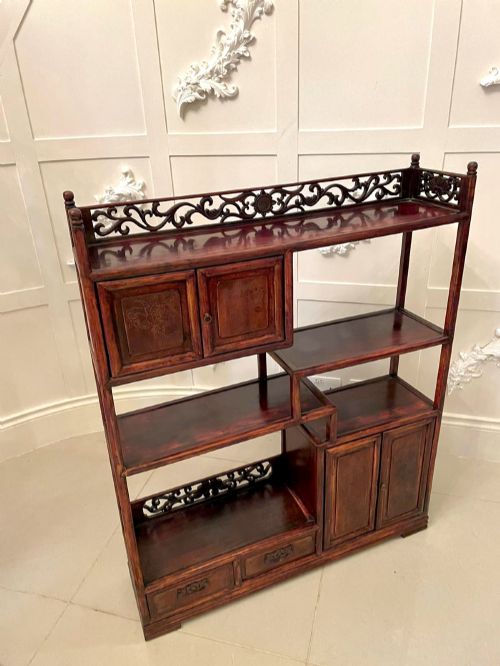
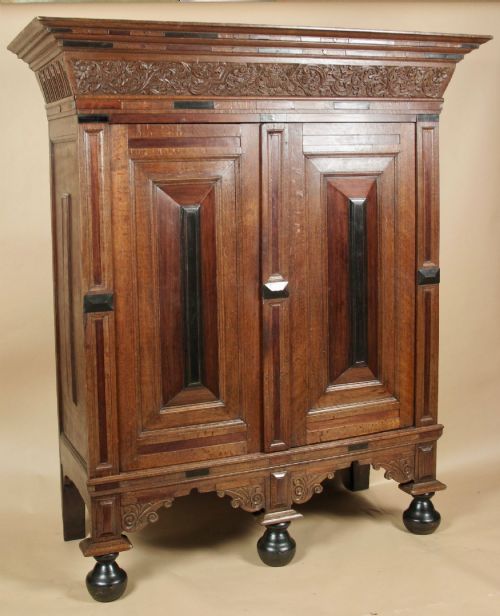
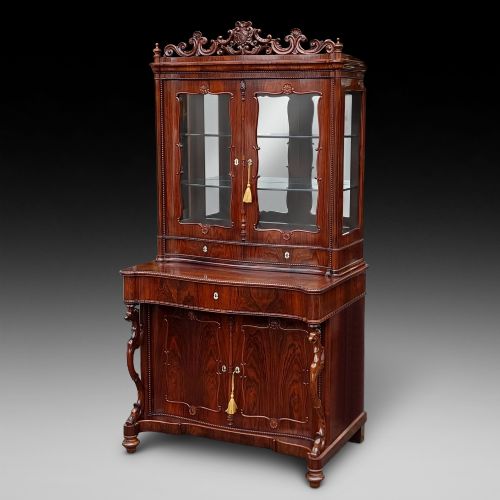
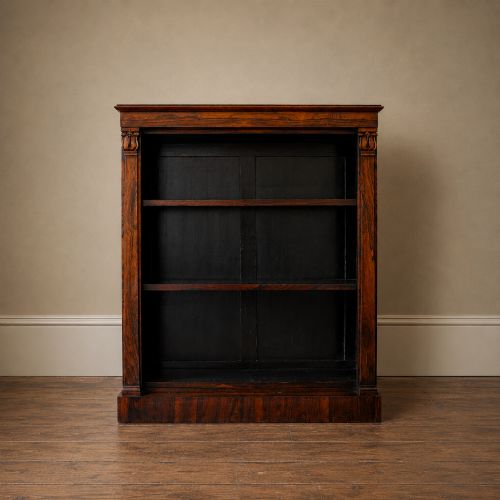
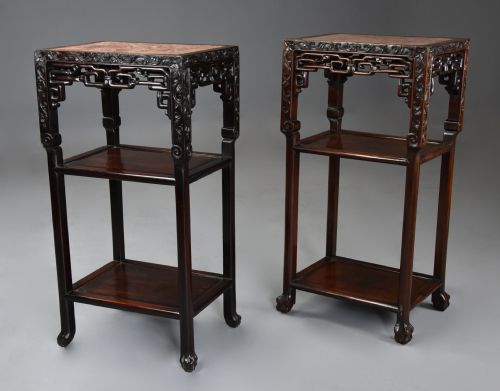
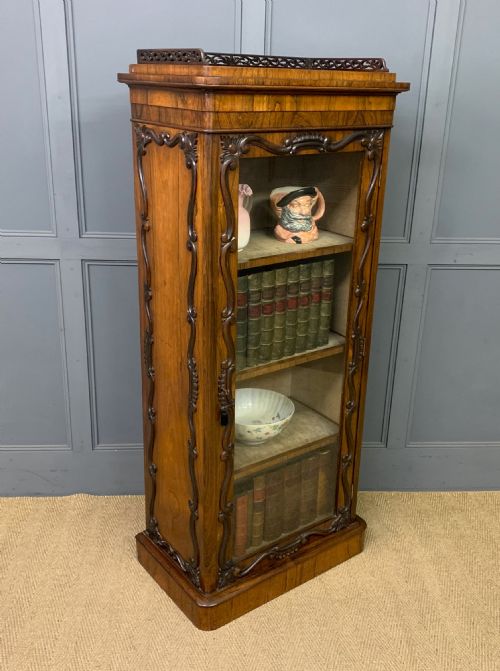
A carved rosewood display cabinet is a storage piece designed to showcase collections, porcelain, or curiosities behind glazed doors or within open shelving. These pieces appear across the nineteenth century, including Victorian, Regency, and Biedermeier periods, alongside Chinese hardwood examples.
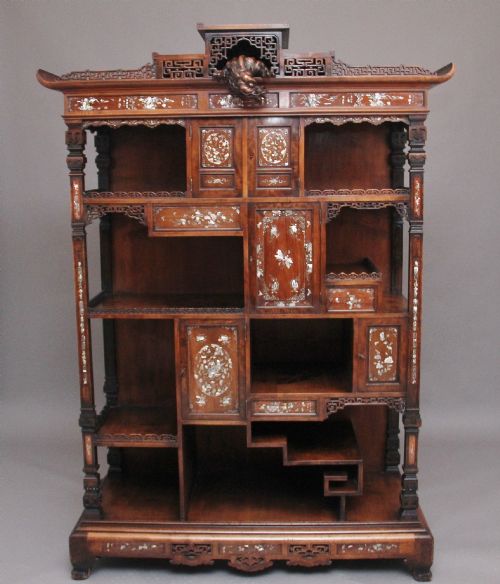
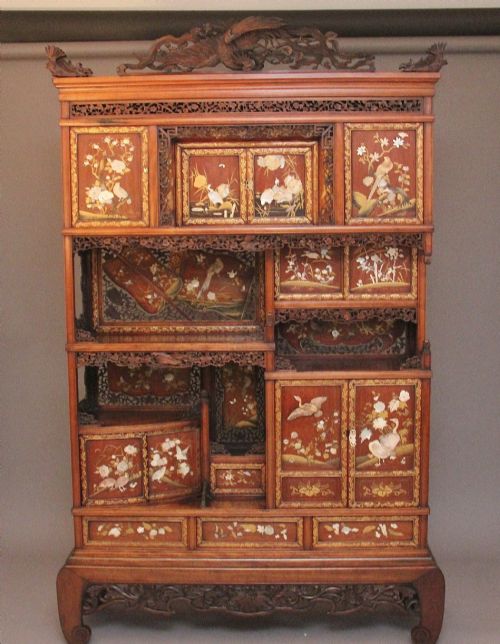
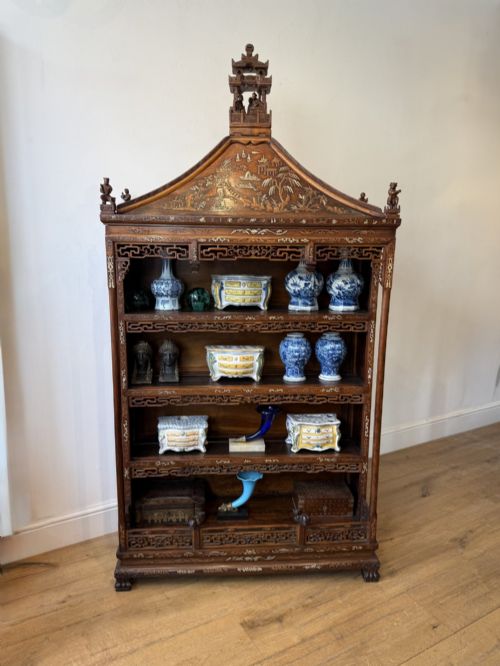
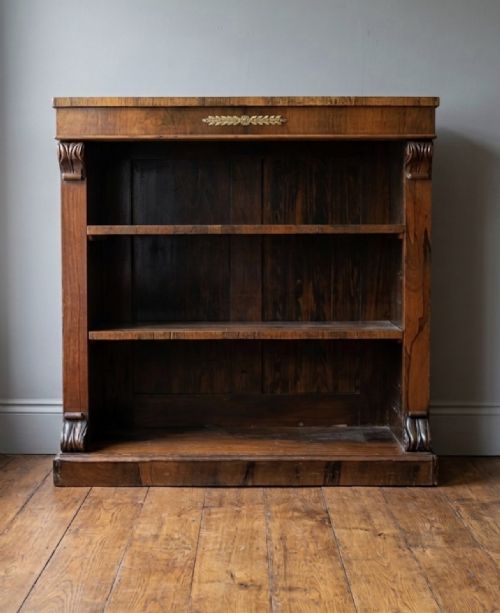
The most common formats on this page include tall glazed bookcases, mirrored side cabinets, and low freestanding cabinets fitted with adjustable shelves. Alongside British and Continental styles, Chinese export pieces and Japanese Meiji period shodana cabinets frequently appear.
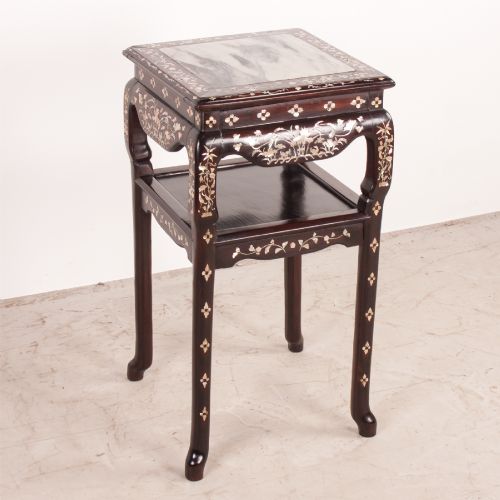
Makers utilised dense tropical timbers alongside native hardwoods to create sturdy furniture suitable for formal parlours and drawing rooms. The presence of brass hardware, marble tops, and mother of pearl inlay distinguishes many of the refined examples found in these listings.
Materials and Construction Techniques
Cabinetmakers constructed these pieces using solid rosewood or applied fine rosewood veneers over secondary softwoods and hardwoods. Frames often incorporated glass panels, mirrored backs, and brass fittings to enhance the internal light and display capacity.
Carving and inlay techniques varied widely, ranging from deep relief floral motifs to delicate mother of pearl inlay on Chinese occasional furniture and cabinets. Joinery relied on traditional housing joints, dovetails, and mortise and tenon frames designed to support heavy timber and glass.
Listings feature nineteenth-century items spanning the Regency, Victorian, and Meiji periods, utilising rosewood, hardwood, marble, and brass.
Distinctions in Quality
Quality rests upon the selection of timber, where tightly figured rosewood grain and balanced veneer matching elevate the appearance of a cabinet. Finer pieces demonstrate crisp, deep hand-carving rather than shallow machine moulding, particularly around glazed door frames and cornices.
Structural integrity and original internal components, such as adjustable wooden shelving and functional brass locks, separate standard production items from workshop pieces created by known makers like James Winter.
James Winter
The Carved Rosewood Display Cabinet Glossary
- Rosewood
- A dense, heavy timber prized for its dark purple-brown grain and oily lustre. It takes a high polish and forms the primary material for nineteenth-century formal cabinets.
- Shodana
- A traditional Japanese multi-tiered display cabinet featuring staggered shelves and small cupboards. These pieces reflect the Meiji period aesthetic of asymmetrical design.
- Chiffonier
- A low sideboard or cabinet developed during the Regency and Victorian periods. They often incorporate glazed doors or mirrored backs above a closed cupboard base.
- Breakfront
- A cabinet design where the central section projects forward from the flanking wings. This architectural arrangement creates depth and shadow across the front elevation.
- Mother of Pearl
- The iridescent inner layer of mollusc shell used for ornamental inlay. Craftsmen set thin pieces into timber surfaces to form floral and geometric patterns.
Carved Rosewood Display Cabinet: Frequently Asked Questions
How do I date a rosewood cabinet?
Dating relies on stylistic markers, construction methods, and secondary timbers visible inside the carcass. Regency and Victorian pieces show distinct proportions and moulding profiles that evolve across the nineteenth century.
Examining the backboards, screw types, and hinge styles helps narrow the period of manufacture. Cabinets from the eighteen-eighties often exhibit heavier revival carving compared to earlier Regency designs.
Where were these cabinets placed originally?
Owners positioned these display pieces in drawing rooms, parlours, and dining spaces to exhibit valuable ceramics and glassware. Mirrored back panels reflected ambient light from oil lamps and windows.
Smaller side cabinets and chiffoniers doubled as serving surfaces while keeping prized possessions secure behind locked glass doors.
How should I care for rosewood furniture?
Protect the timber by avoiding direct sunlight and maintaining stable indoor humidity levels. Sudden environmental changes cause rosewood veneer to shrink or lift from the carcass.
Dust regularly with a dry cloth and apply specialist furniture wax sparingly to preserve the natural lustre of the polished surface.
What is the difference between a chiffonier and a display cabinet?
A chiffonier typically combines a low cupboard base with a raised shelf or mirrored superstructure designed for general storage and display. Display cabinets focus primarily on enclosed glass shelving intended to protect fragile collections.
Many nineteenth-century examples blur these lines by combining glazed upper bookcase sections with solid wood cupboards below.