




Dark Hardwood Display Cabinet
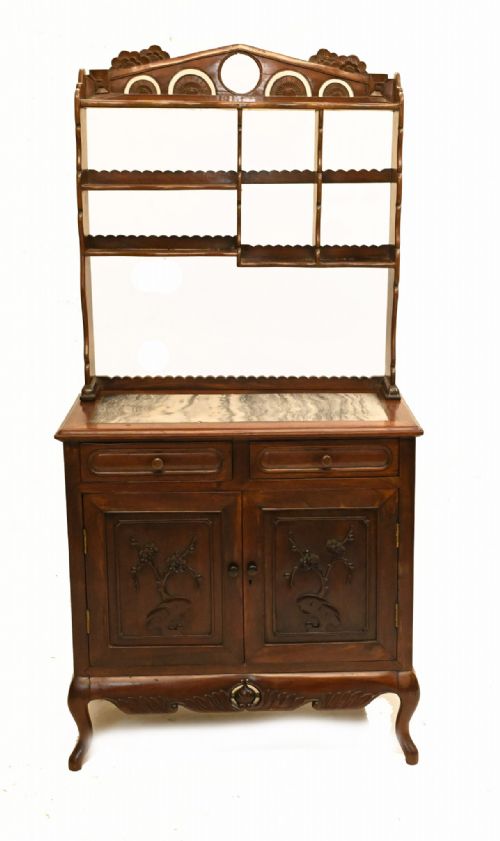
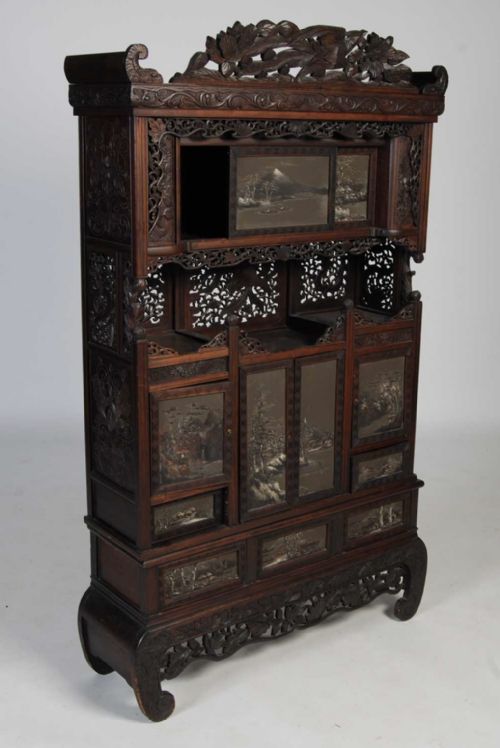
These dark hardwood display cabinet pieces bring dense grains and intricate carving into a room, holding precious objects with quiet authority.
Dark Hardwood Display Cabinet
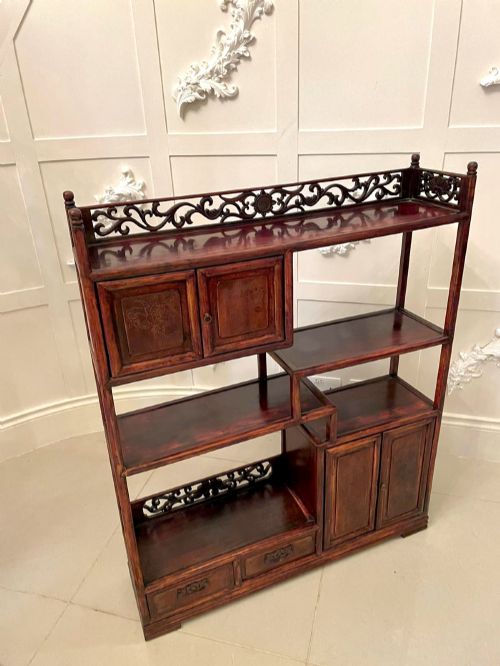
A dark hardwood display cabinet serves to elevate porcelain, jade, and small curios while anchoring a corner or wall with heavy timber. When searching for a dark hardwood display cabinet, buyers encounter nineteenth-century pieces drawing heavily on Chinese Qing Dynasty carving and Japanese Meiji period design.
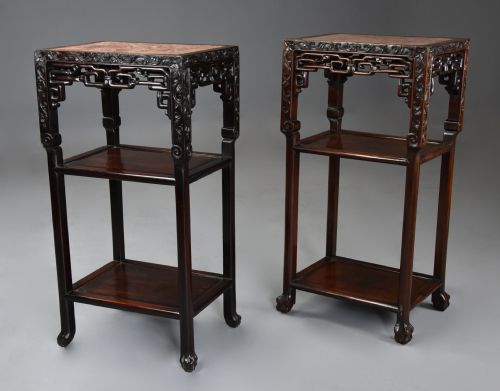
The selection ranges from tall freestanding cupboards and glazed display cases to smaller shodana cabinets and tiered plant stands. Rosewood, Hongmu, and zitan provide the dense, dark foundation for these Asian export forms and domestic British retail pieces.
Materials and Construction
Cabinet makers utilised dense hardwoods such as rosewood and Hongmu, carving deep relief scenes of dragons, foliage, and figures directly into the structural timber. Glass panels were fitted into framed doors to protect delicate contents from dust while maintaining clear visibility.
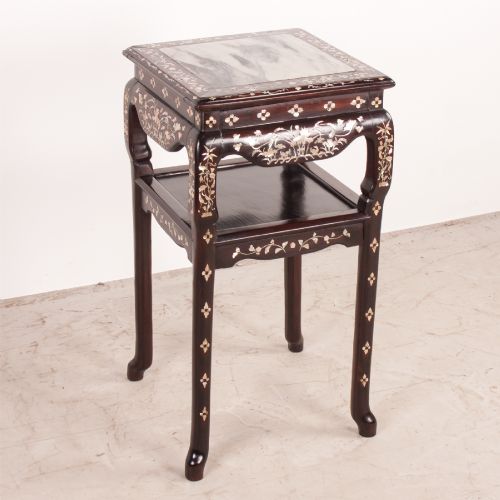
Inlay work incorporated mother of pearl, bone, and marble inserts set flush into the wooden surfaces. Traditional joinery methods allowed these heavy frameworks to support multiple tiers and glazed compartments without metal fasteners.
Listings span the nineteenth and early twentieth centuries, uniting Chinese Qing Dynasty and Japanese Meiji period aesthetics with British shop fittings.
Assessing Quality and Craftsmanship
The distinction between standard utility items and finer examples rests on the depth and precision of the wood carving. Profusely carved surfaces with crisp undercut details and well-matched timber grains separate superior pieces from simpler workshop production.
Integration of secondary materials such as marble inserts and mother of pearl inlay indicates higher ambition in the original commission. Original glazing and stable, tight joinery across complex multi-tiered shodana structures also mark the upper tier of surviving examples.
Gabriel Viardot
The Dark Hardwood Display Cabinet Glossary
- Shodana
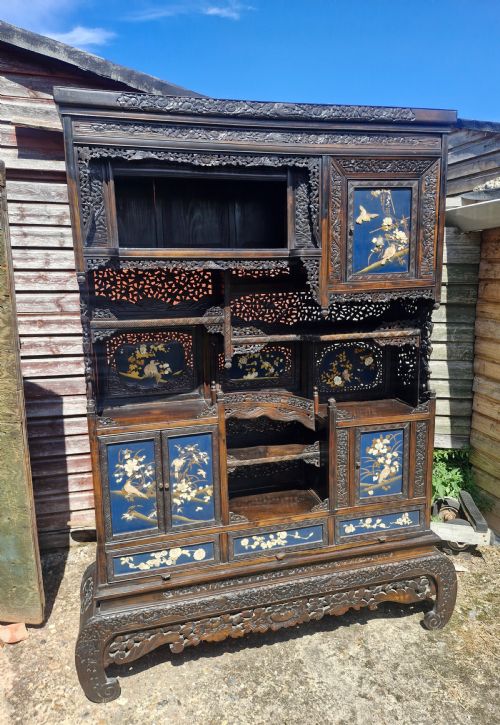
- A Japanese tiered display cabinet featuring asymmetrical shelving, cupboards, and small sliding doors. These pieces were designed to exhibit collections of ceramics and art objects.
- Hongmu
- A traditional Chinese term translating to red wood, applied to dense, dark tropical hardwoods used in fine furniture making. It acquires a deep patina through handling and age.
- Japonisme
- A Western artistic style of the late nineteenth century influenced by Japanese art and design. Makers in Europe adopted these asymmetrical aesthetics and decorative motifs.
- Zitan
- A heavy, dense Asian hardwood prized for its dark purple-black colour and fine grain. It represents one of the most prestigious materials used in Qing Dynasty cabinet making.
- Shibayama
- A Japanese decorative technique using inlaid mother of pearl, ivory, and tortoiseshell to create pictorial panels. These inlays appear on doors and panels of fine cabinets.
Dark Hardwood Display Cabinet: Frequently Asked Questions
What is a shodana cabinet?
A shodana is an Asian display cabinet featuring asymmetrical shelves and small cupboards designed for ceramics and curiosities.
These pieces emerged strongly during the Meiji period and served as focal points for interior decoration.
How do I care for dark hardwood?
Keep hardwood furniture away from direct heat sources and sudden humidity changes to prevent timber splitting.
Dust regularly with a dry cloth and occasionally apply appropriate natural wax to maintain the finish.
Are these cabinets purely decorative?
While built to exhibit precious items, many examples incorporate enclosed cupboards and drawers for storage.
Glazed doors protect collections from dust while allowing full visibility of the contents within.
How do I identify a Qing Dynasty piece?
Qing Dynasty cabinets often feature dense hardwoods like rosewood or zitan alongside deep dragon or floral carving.
Construction relies on traditional joinery techniques without modern metal fixings.