
Brown Glazed Curio Cabinet
These brown glazed curio cabinet selections offer disciplined timber frames and clear glass panels designed to exhibit small collections safely.
Brown Glazed Curio Cabinet
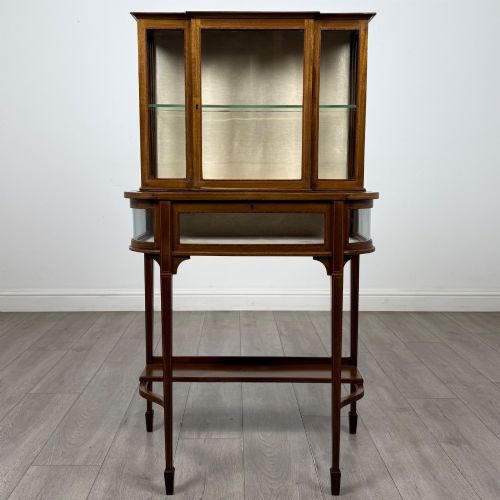
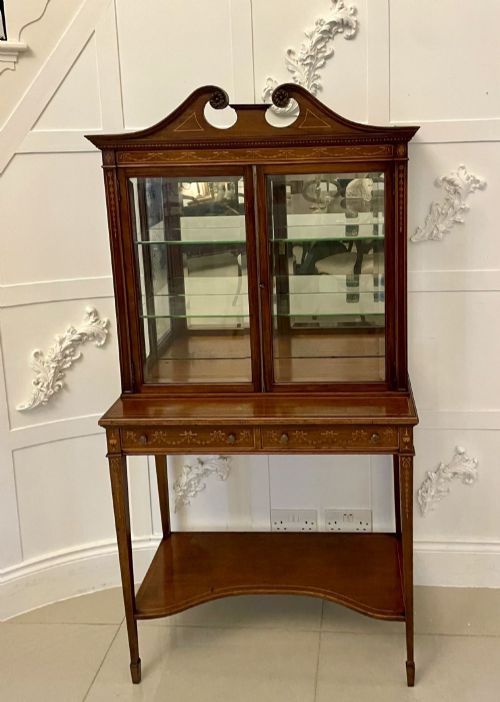
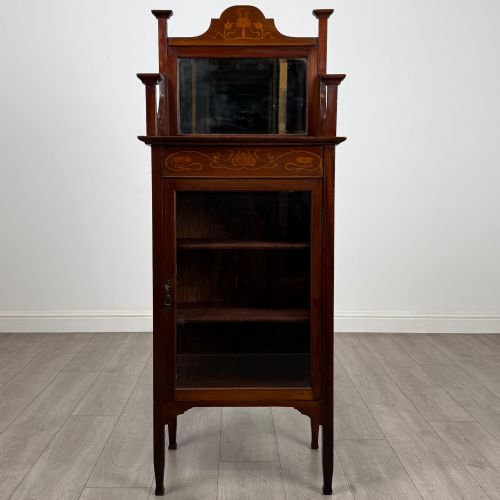
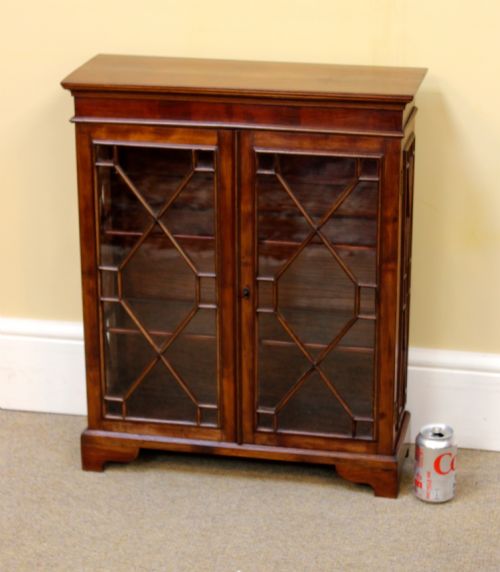
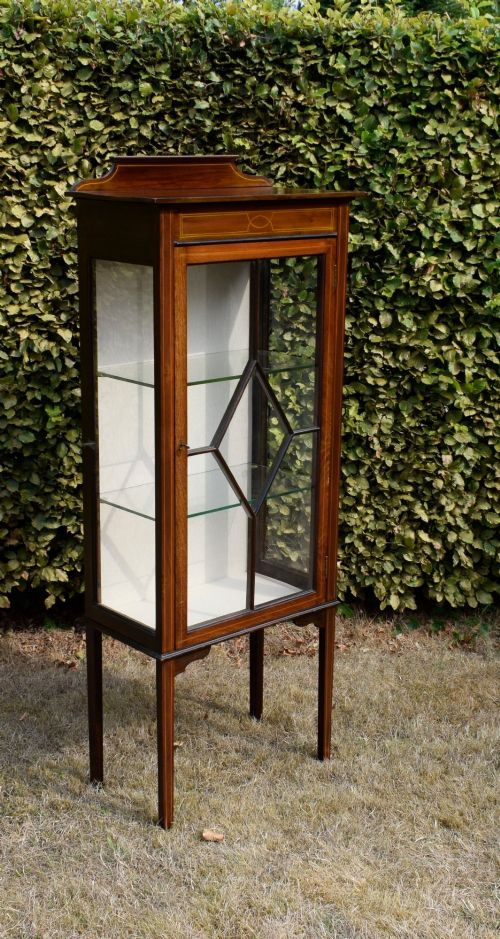
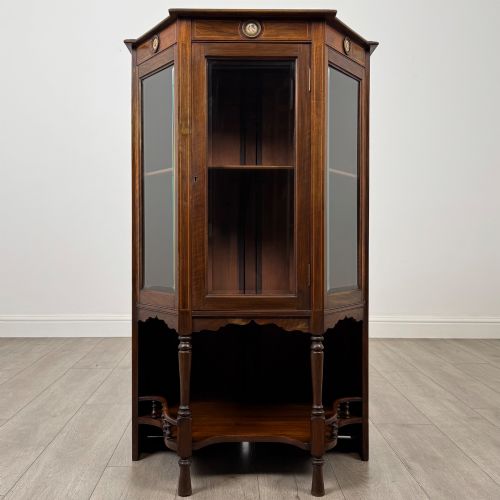
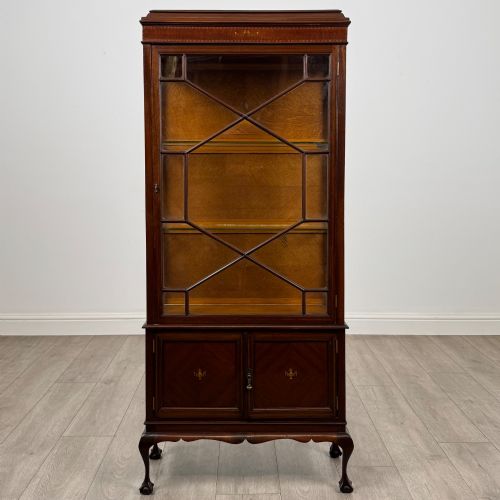
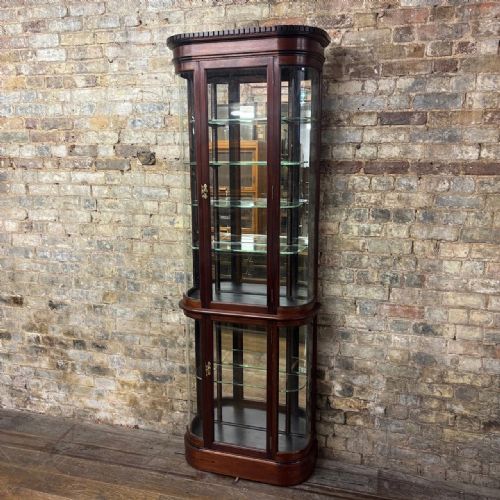
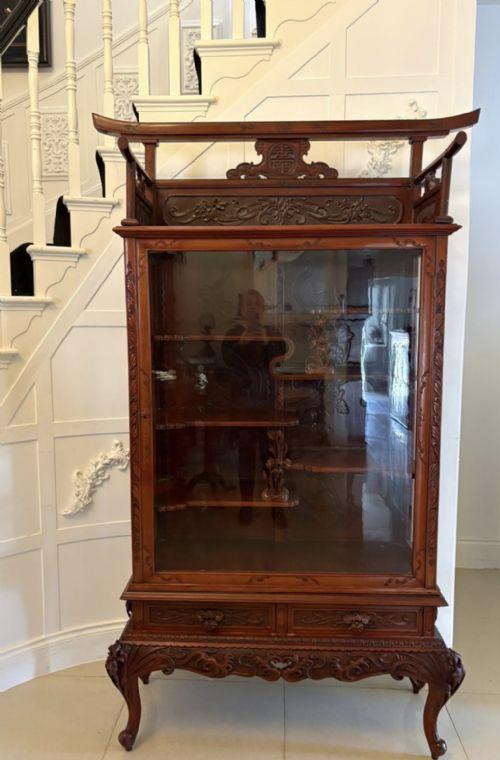
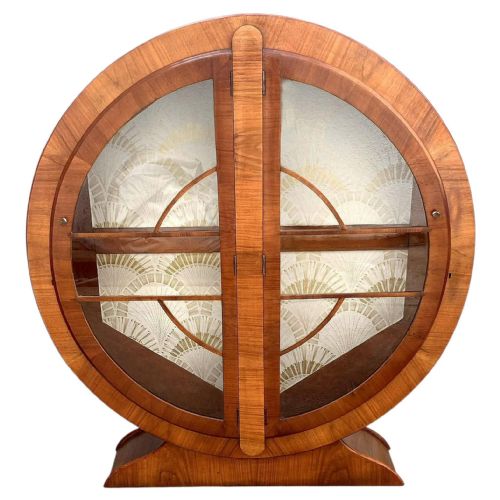
A brown glazed curio cabinet gathers pieces made largely across the Edwardian era, the nineteenth century, and into the nineteen-thirties. You encounter display cabinets, vitrines, wall cabinets, and bijouterie tables shaped from dark woods.
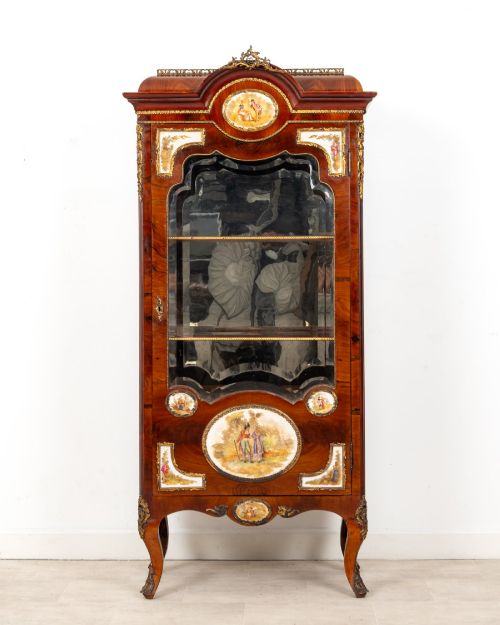
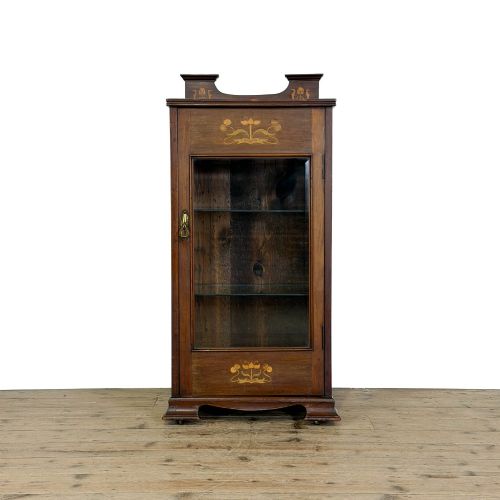
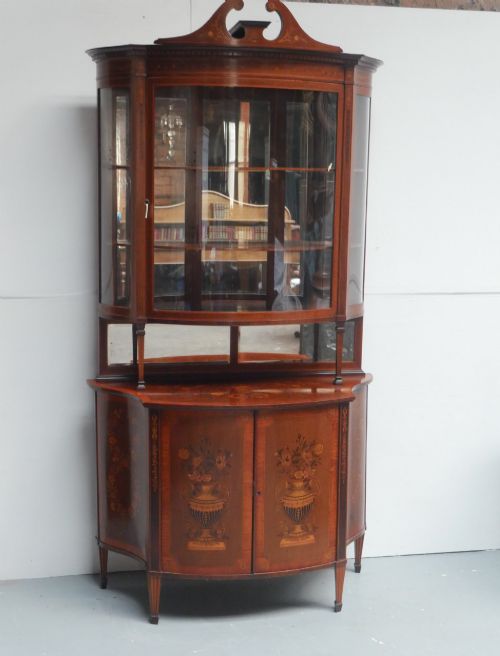
The Edwardian pieces dominate the selection in mahogany and walnut, frequently featuring inlaid borders or satinwood banding. Alongside these sit French vitrines and Dutch marquetry works carrying denser decorative programmes.
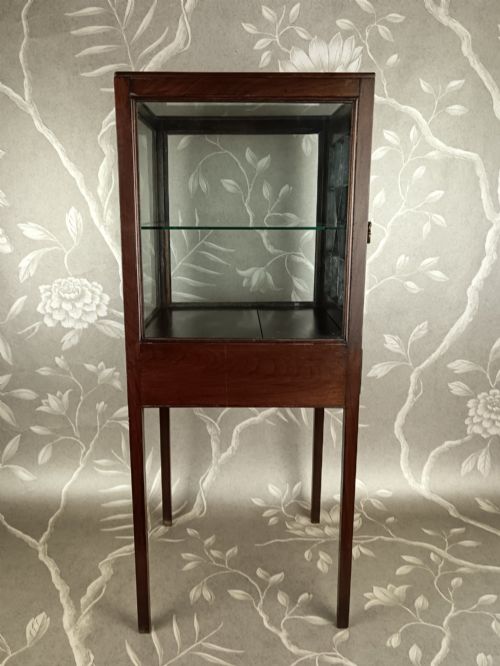
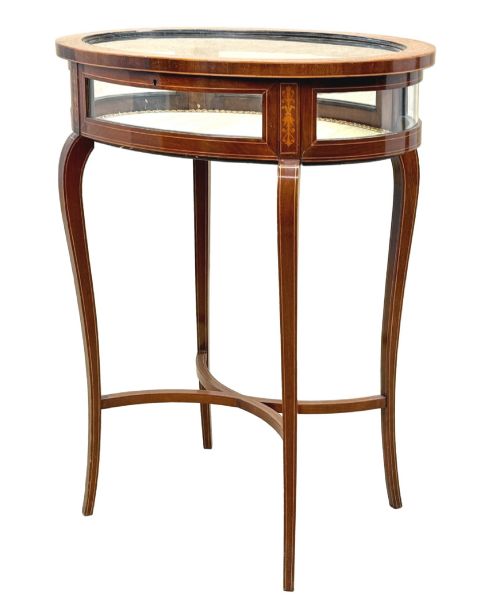
Forms range from tall floor-standing display cases and pedestal cabinets down to compact table-top vitrines and oval bijouterie tables. Each variation serves the primary purpose of housing curiosities behind protective glazing.
Materials and Construction
Cabinet makers relied primarily on solid and veneered mahogany, walnut, kingwood, and occasionally oak, building rigid carcases to support heavy glass doors. Timber selection dictated the foundational brown tone of the furniture, which was then polished to a smooth finish.
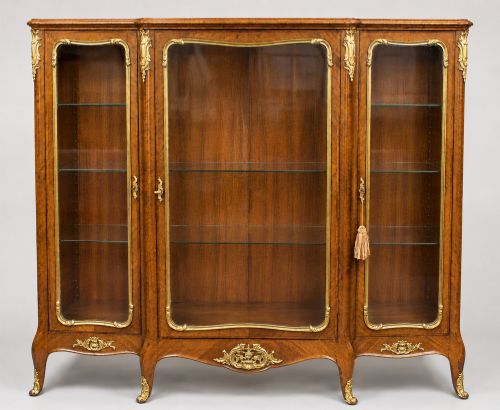
Makers integrated brass, ormolu, and gilt metal mounts to accentuate corners, trim glass frames, and border panel inserts. Delicate floral marquetry, satinwood stringing, and fabric linings completed the interior presentation of these display pieces.
The inventory records pieces spanning the eighteenth century through the nineteen-thirties, dominated by Edwardian mahogany forms.
Standards of Execution
Quality rests upon the precision of the timber joints, the crispness of any inlaid marquetry, and the handling of bronze or ormolu mounts. Finer cabinets display seamless veneer matching and doors that hang true without binding.
The weight and clarity of the glass, together with the refinement of internal shelving and fabric backing, separate standard production pieces from masterworks. Integration of specialist elements like marble tops or hand-painted porcelain plaques further elevates the grade.
Edwards and Roberts·François Linke
The Brown Glazed Curio Cabinet Glossary
- Vitrine
- A glass-fronted cabinet designed specifically for the display of porcelain, curiosities, or fine objects. These enclosures often feature glass on the sides as well as the main door.
- Bijouterie table
- A shallow display table with a glazed top and compartmented interior intended for jewellery and small precious items. They frequently stand on slender legs at a height convenient for viewing objects from above.
- Marquetry
- The art of applying decorative pieces of veneer to a structural structure to form intricate pictorial designs or geometric patterns. Makers utilised contrasting woods like satinwood and mahogany to achieve tonal depth.
- Ormolu
- Gilt bronze ornamentation mounted onto the exterior of furniture frames. This technique saw frequent application on French cabinet work from the nineteenth century.
- Aesthetic Movement
- A late nineteenth-century design current prioritising visual beauty over narrative function. Pieces from this direction often incorporate simplified forms and contrasting timber tones.
Brown Glazed Curio Cabinet: Frequently Asked Questions
What is a brown glazed curio cabinet?
A brown glazed curio cabinet is a piece of furniture built to display collections of small objects behind glass panels. The visible timber framework typically consists of dark hardwoods like mahogany or walnut.
These enclosures range from tall floor-standing display cases to compact table-top vitrines. Their primary function is protecting delicate items from dust while maintaining maximum visibility.
How do I choose between a vitrine and a wall cabinet?
Selecting between a freestanding vitrine and a wall cabinet depends primarily on your available floor space and the weight of your collection. Floor cabinets offer substantial internal volume and independent placement.
Wall cabinets conserve floor space and position smaller groupings at eye level. Both variants rely on glass doors and transparent sides to illuminate their contents.
Where were these cabinets placed historically?
Historically, these display cases stood in principal reception rooms, drawing rooms, and studies where hosts entertained visitors. They functioned as conversation pieces showcasing accumulated travel souvenirs and porcelain.
Table-top versions and bijouterie tables occupied central spaces or parlour tables. Their glass surfaces allowed guests to inspect fine medals, miniatures, and jewellery at close range.
How do I date an Edwardian display cabinet?
Dating an Edwardian display cabinet involves examining the timber characteristics, inlay styles, and manufacturing stamps. Edwardian examples produced around nineteen-hundred often feature lighter mahogany frames with delicate satinwood stringing.
Construction methods also provide clues, as machine-cut elements began appearing alongside traditional hand joinery during this period. Hardware choices, such as brass locks and hinges, help confirm the era of production.