


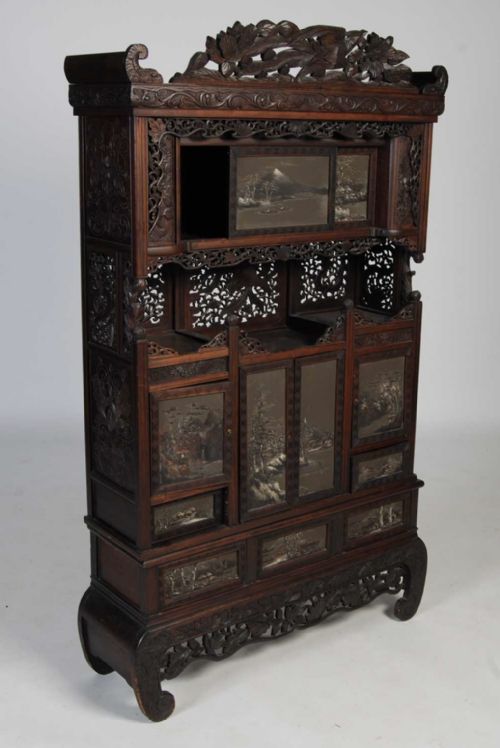


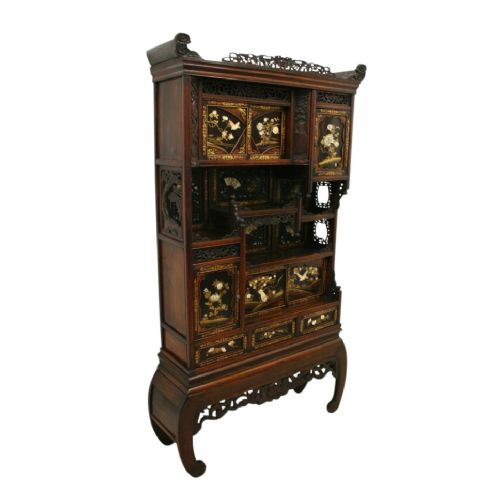
Carved Hardwood Display Shelf
A carved hardwood display shelf gathers intricate East Asian craftsmanship into a practical stage for small treasures.
Carved Hardwood Display Shelf
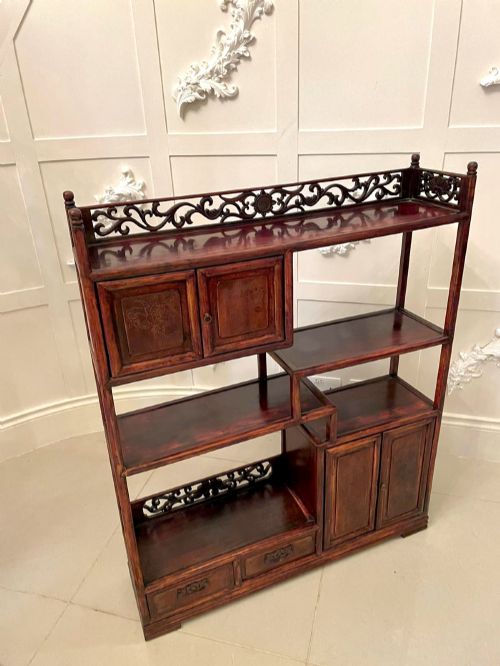
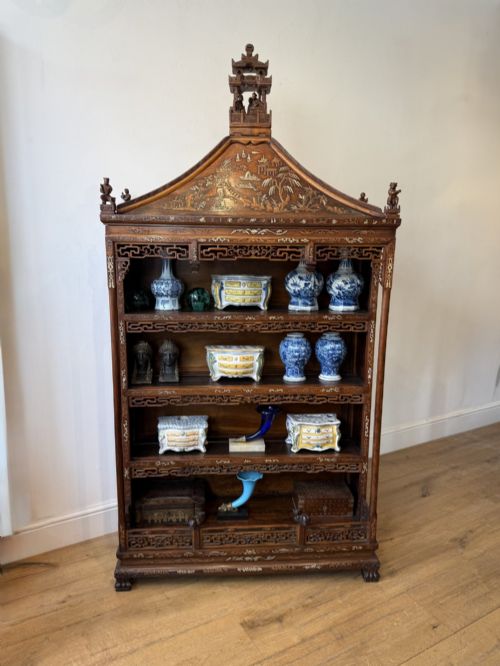
When you search for a carved hardwood display shelf, you encounter pieces designed to exhibit porcelain, jade, and small curiosities. The selection spans the nineteenth and early twentieth centuries, drawing primarily upon Chinese and Japanese traditions. Forms range from compact open stands to large floor cabinets and elaborate shodana pieces.
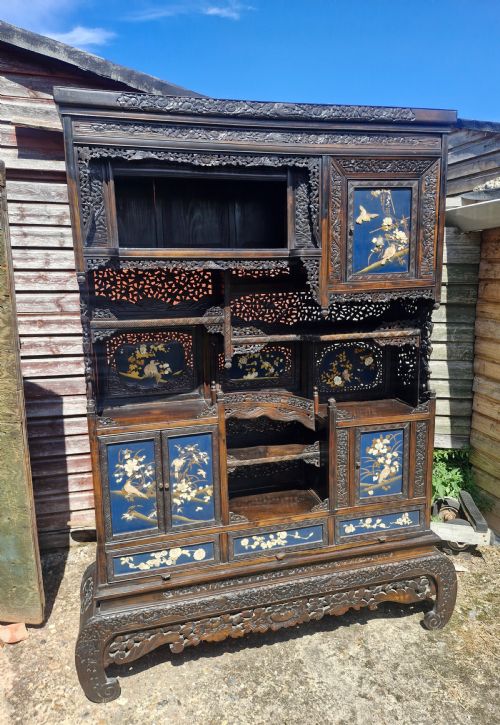
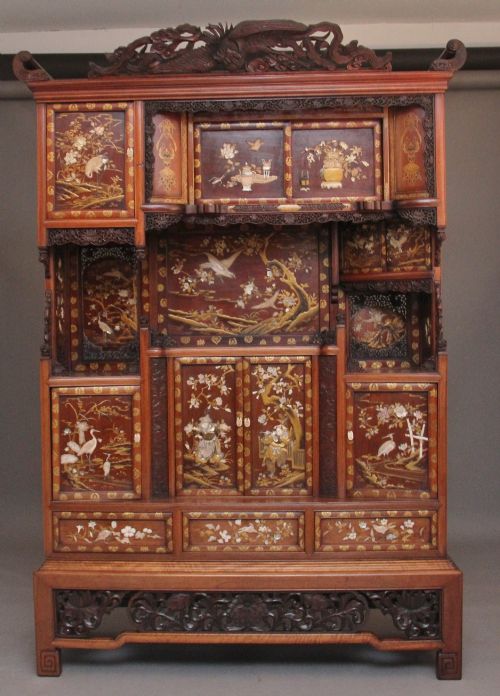
You are most likely to meet Chinese Qing Dynasty cabinets and Japanese Meiji Period shodana shelves on this page. These examples showcase asymmetrical shelving, pierced carving, and compartmented storage designed for display. Many items combine open stages with enclosed cupboards and small drawers.
The origins stretch across Chinese export workshops and Japanese studios, utilising dense timbers like rosewood and hongmu. Whether configured as a dwarf side-cabinet or a pagoda display cabinet, each piece reflects distinct regional aesthetics from the late nineteenth and early twentieth centuries.
How they were made
The construction relies heavily on dense exotic timbers such as rosewood and hongmu, often left with a polished dark finish that highlights the natural grain. Artisans employed traditional joinery techniques to assemble complex tiers and compartments without relying on visible metal fasteners.
Decoration is achieved through deep relief carving, pierced fretwork, and applied details in bone inlay, lacquer, and mother-of-pearl. These decorative elements articulate structural panels, framing doors and borders with floral, geometric, and figurative motifs.
The listings span from the late nineteenth century through to the early twentieth century, including the Meiji Period and Qing Dynasty.
What varies in quality
Quality reveals itself in the depth and crispness of the carving, where master workshops achieved remarkable botanical and figurative detail. Lesser examples feature shallow, mechanical carving that lacks the three-dimensional depth seen in the finest pieces.
The selection of timber and the precision of the joinery set the standard across these cabinets and stands. Heavier, denser hardwoods and meticulous assembly distinguish the top of the range from more routine production.
The Carved Hardwood Display Shelf Glossary
- Shodana
- A Japanese multi-tiered cabinet featuring asymmetrical shelving, sliding doors, and small cupboards. These pieces were traditionally utilised for displaying decorative arts.
- Hongmu
- A dense, dark traditional Chinese hardwood prized for its stability and rich natural colour. It forms the structural basis for many high-quality cabinets and stands.
- Bone Inlay
- A decorative technique where small pieces of bone are set flush into the wooden surface to form intricate patterns. This method adds pale contrast against dark hardwood.
- Chinoiserie
- European artistic tradition reflecting Chinese stylistic influences, often appearing in decorative furniture and lacquerwork. It interprets Eastern motifs through a Western lens.
Carved Hardwood Display Shelf: Frequently Asked Questions
What were these cabinets used for?
These cabinets served as sophisticated storage and presentation furniture for scholarly chambers and reception rooms. Owners placed small jades, bronzes, and ceramics upon the staggered shelves to be admired by guests.
Enclosed cupboards and small drawers provided secure housing for delicate scrolls, writing implements, and personal treasures. The tiered architecture allowed for a balanced yet varied arrangement of disparate objects.
How do I care for hardwood furniture?
Maintain these pieces by keeping them away from direct sunlight and sudden changes in ambient temperature or humidity. This prevents the dense timber from drying out and guards against movement in the joints.
Dust gently with a dry, soft cloth rather than using silicone-based polishes or harsh chemical cleaners. Preserving the original polished surface protects the delicate carving and inlay work over time.
How do I distinguish Chinese from Japanese pieces?
Chinese cabinets often display symmetrical architectural elements, intricate pierced fretwork, and denser rosewood or hongmu timbers. Motifs frequently include traditional floral arrangements and auspicious symbols.
Japanese shodana pieces tend toward distinct asymmetrical shelving arrangements, sliding panel doors, and specific regional lacquer or mother-of-pearl embellishments. The overall composition prioritises balanced irregularity across multiple tiered display levels.
What is a shodana cabinet?
A shodana is a traditional Japanese display cabinet characterised by staggered shelving, small sliding doors, and compartmented storage. It evolved to exhibit collections of small fine art objects.
The layout deliberately avoids strict symmetry, creating dynamic viewing angles for different types of porcelain and lacquer ware placed upon each tier.